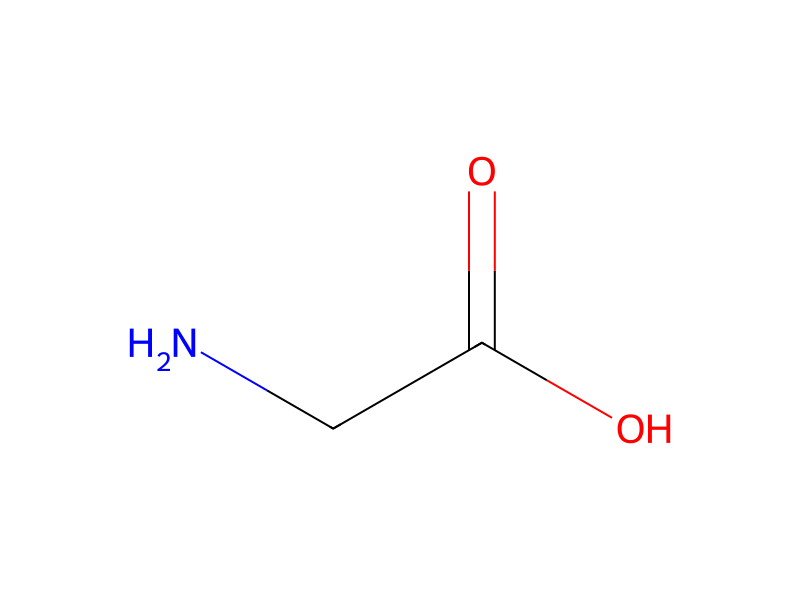
Glycine → HCID 86740511、化合物
反応式

[C:1](=[S:8])([S:3][CH2:4][C:5]([OH:7])=[O:6])[NH2:2].[Na:9].[Na].[OH-].[Na+].N[CH2:14]C(O)=O.C[C@H](N)C(O)=O>C(=S)=S.O>[C:1](=[S:8])([S:3][CH:4]([C:5]([OH:7])=[O:6])[CH3:14])[NH2:2].[Na:9].[Na:9][C:1](=[S:8])([S:3][CH2:4][C:5]([OH:7])=[O:6])[NH2:2].[Na:9].[Na].[OH-].[Na+].N[CH2:14]C(O)=O.C[C@H](N)C(O)=O>C(=S)=S.O>[C:1](=[S:8])([S:3][CH:4]([C:5]([OH:7])=[O:6])[CH3:14])[NH2:2].[Na:9].[Na:9]This example describes the preparation of disodium carboxymethyl dithiocarbamate useful as a suspressant in ore flotation processes. To a 1-Liter round bottom flask fitted with a stirrer, thermometer, reflux condenser and a dropping funnel was added 253 milliliters of water and 84.0 grams (2.1 moles) of sodium hydroxide. After the NaOH had completely dissolved and the temperature had cooled below about 30° C., 75.0 grams (1.0 mole) of glycine was added and the mixture stirred until it was dissolved. Over the next 6 hours 76.14 grams (1.0 mole) of CS2 was slowly added while the temperature was maintained below about 40° C. The reaction product mixture was considered to be a 40 percent aqueous solution of disodium carboxymethyl dithiocarbamate and was used as prepared in the subsequent ore flotation processes. Similarly, disodium 1-carboxyethyl dithiocarbamate was prepared from α-alanine, CS2 and NaOH.
読み込み中…