ホームMCPワークベンチSkills
ホームワークベンチ通知マイページ
llms.txt · MCPガイドプライバシーポリシー · 利用規約 · サポートv1.8.3
  1. ホーム
  2. /反応

Lithium Hydroxide → 3-(Pyridin-3-yloxy)-4,5-dihydroisoxazole

HRID 1614994
印刷

反応式

HRID 1614994 の反応式
Br[C:2]1[CH2:6][CH2:5][O:4][N:3]=1.COC(=O)[C:10]1[CH:15]=[C:14]([OH:16])[CH:13]=[N:12][CH:11]=1.[OH-].[Li+].O1CCCC1>O1CCCC1.O>[N:12]1[CH:11]=[CH:10][CH:15]=[C:14]([O:16][C:2]2[CH2:6][CH2:5][O:4][N:3]=2)[CH:13]=1
参加物実験手順後処理出典と根拠反応ノート

参加物

6

反応物 4

HCID 3939Lithium HydroxideHCID 8028TetrahydrofuranHCID 354317Methyl 5-hydroxypyridine-3-carboxylateHCID 219834983-Bromo-4,5-dihydroisoxazole

生成物 1

HCID 668185323-(Pyridin-3-yloxy)-4,5-dihydroisoxazole

試薬・触媒・溶媒 1

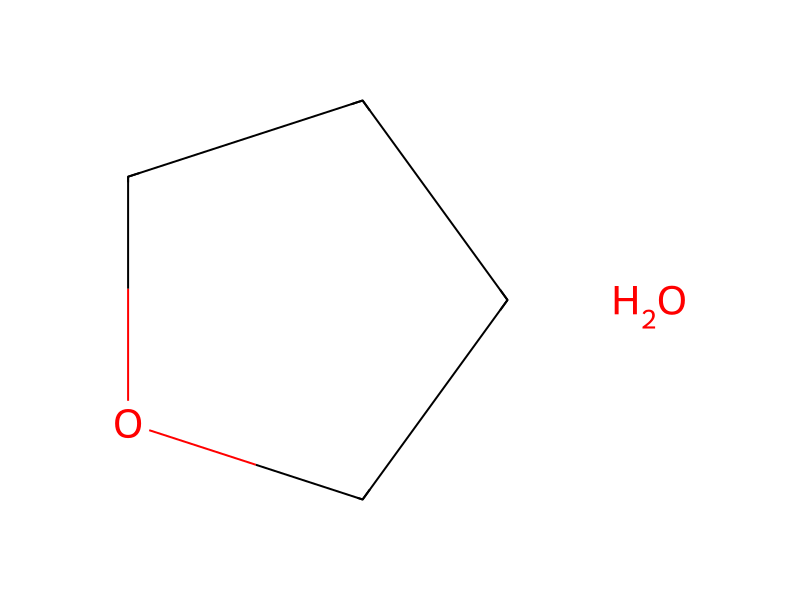
HCID 21881883Oxolane--water (1/1)溶媒

実験手順

The enantiomers of 3-(pyridin-3-yloxy)-4,5-dihydroisoxazole III-74a and III-74b were prepared in 2 steps according to the following procedures: racemic 3-bromo 4,5-dihydroisoxazole III-66 was reacted with 5-hydroxynicotinic acid methyl ester using Method 5. The resulting ester (1.0 equiv) was dissolved in 1:1 tetrahydrofuran/water (0.06 M) and lithium hydroxide (8.0 equiv) was added. The reaction was allowed to stir at room temperature for 1 h after which point the tetrahydrofuran was removed under a stream of nitrogen and the remaining solution was acidified to pH<2 with 1N HCl to provide the racemic desired acid III-74 as a white solid which was isolated via vacuum filtration. These compounds can be separated using chiral HPLC methods known in the art. For example, see chiral HPLC Method disclosed herein. [M+H]+=395.5 m/z. Activity: A


後処理

  1. additionwas added
  2. customwas removed under a stream of nitrogen

出典と根拠

ORDレコード
ord-f320e0728bc8497ab9a6ddbc698743d9
出典データセット
uspto-grants-2014_07
DOI
10.6084/m9.figshare.5104873.v1
特許番号
US08765735B2

反応ノート

このページの内容参加物実験手順後処理出典と根拠反応ノート