Ethyl bromoacetate → Ethyl (7-chloro-2,4-dioxo-3,4-dihydroquinazolin-1(2H)-yl)acetate
反応式

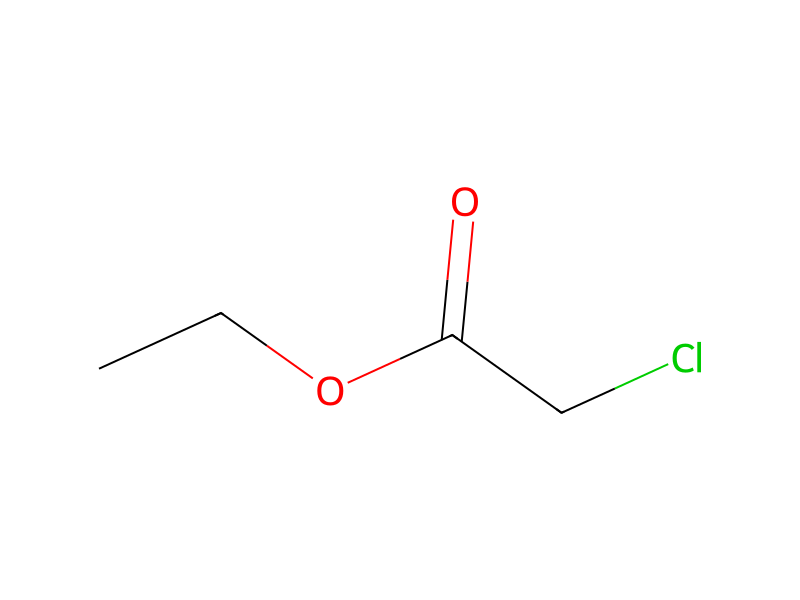
[Cl:1][C:2]1[CH:11]=[C:10]2[C:5]([C:6](=[O:13])[NH:7][C:8](=[O:12])[NH:9]2)=[CH:4][CH:3]=1.ClC1C=C2C(C(O[Si](C)(C)C)=NC(O[Si](C)(C)C)=N2)=CC=1.Cl[CH2:36][C:37]([O:39][CH2:40][CH3:41])=[O:38].BrCC(OCC)=O>>[Cl:1][C:2]1[CH:11]=[C:10]2[C:5]([C:6](=[O:13])[NH:7][C:8](=[O:12])[N:9]2[CH2:36][C:37]([O:39][CH2:40][CH3:41])=[O:38])=[CH:4][CH:3]=1参加物
5



実験手順
7-Chloro-2,4-dioxo-1,2,3,4-tetrahydroquinazoline (10 g) was treated as in Example 1 to give a concentrate containing 7-chloro-2,4-bis(trimethylsilyloxy)quinazoline. To this concentrate were added ethyl chloroacetate (21.70 g) and ethyl bromoacetate (1.70 g), and the reaction was carried out at an internal temperature of 130˜140° C. for 13 hours. This reaction mixture was cooled to ≦70° C. and worked up as in Example 4 to provide ethyl 2-(7-chloro-2,4-dioxo-1,2,3,4-tetrahydroquinazolin-1-yl)acetate (13.76 g).