Oxygen → 3-(2-Nitrophenyl)propanal
反応式

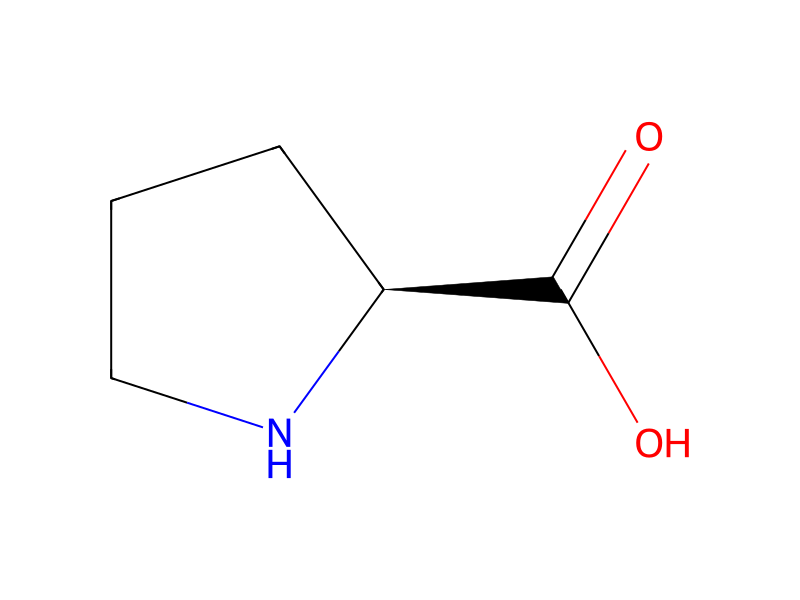
[N:1]([C:3]1[CH:8]=[CH:7][CH:6]=[CH:5][CH:4]=1)=[O:2].[O:9]=O.N1CC[CH2:16][C@H:12]1[C:13](O)=[O:14]>CC#N>[N+:1]([C:3]1[CH:8]=[CH:7][CH:6]=[CH:5][C:4]=1[CH2:16][CH2:12][CH:13]=[O:14])([O-:9])=[O:2]参加物




実験手順
According to Table 1, the α-aminooxylation reaction of 4,5 substituted o-nitro hydrocinnamaldehyde 4a with nitrosobenzene as oxygen source was carried out in the presence of L-proline (20 mol %) in CH3CN at −20° C. for 24 h to obtain α-aminooxylate o-nitrohydrocinnamaldehyde. Since α-aminooxy aldehydes are prone to racemization, it was immediately in situ subjected to catalytic hydrogenation [10% Pd/C, (1 atm) H2] by distilling out CH3CN under reduced pressure and adding MeOH into it, which gave 3-hydroxy THQ 5a in 62% yield with moderate enantioselectivity (82% ee). The low ee could possibly be due to the racemization occurring during the removal of CH3CN at slightly elevated temperature (45° C.). To obtain high enantioselectivity, a mixed solvent system of CH3CN/MeOH (1:3) was used, 5a was obtained in higher enantioselectivity (96% ee) with low yield (52%). In order to improve the yield of THQs, the inventors were further conducted experiments in several solvent systems (CHCl3, CH2Cl2 and THF). However, there was no significant improvement in yields observed in each case. Subsequently, the best result (71% yield, 96% ee) for 5a was obtained when α-aminooxylation was carried out in DMSO and the intramolecular reductive cyclization done, in MeOH in a sequential manner at ambient temperature (entry 7; Table 1).
出典と根拠
- ORDレコード
- ord-f36dc6b453eb433a84ac0176cc0d9119
- 出典データセット
- uspto-grants-2015_10
- 特許番号
- US09163038B2
反応ノート
読み込み中…