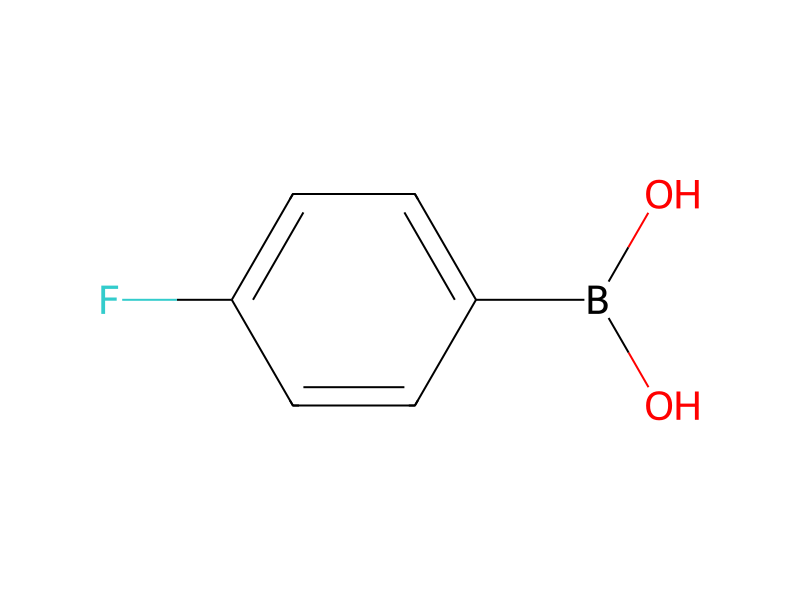
Cl[C:2]1[CH:7]=[CH:6][C:5]([F:8])=[CH:4][C:3]=1[N+:9]([O-:11])=[O:10].[F:12][C:13]1[CH:18]=[CH:17][C:16](B(O)O)=[CH:15][CH:14]=1.C(=O)([O-])[O-].[Na+].[Na+].[OH-].[Na+]>[Br-].C([N+](CCCC)(CCCC)CCCC)CCC.O.C([O-])(=O)C.C([O-])(=O)C.[Pd+2].C(OCC)C>[F:8][C:5]1[CH:6]=[CH:7][C:2]([C:16]2[CH:17]=[CH:18][C:13]([F:12])=[CH:14][CH:15]=2)=[C:3]([N+:9]([O-:11])=[O:10])[CH:4]=1A microwave reaction vessel was charged with 2-chloro-5-fluoronitrobenzene (0.878 g, 5.0 mmol), 4-fluorophenylboronic acid (0.770 g, 5.5 mmol), sodium carbonate (1.590 g, 15.0 mmol), palladium diacetate (0.045 g, 0.2 mmol), tetrabutylammonium bromide (1.612 g, 5.0 mmol) in water (10 mL). The mixture was heated to 165° C. in a microwave reactor for 10 mins. The reaction was cooled to room temperature and poured into diethyl ether and 0.1N aqueous sodium hydroxide. The organic layer was washed with saturated aqueous sodium chloride, dried (anhydrous sodium sulfate), filtered, and concentrated in vacuo. The residue was purified by silica gel chromatography (10-30% methylene chloride/hexanes) to give the desired product as a yellow solid (0.61 g, 52%). 1H NMR (CDCl3, 300 MHz) δ 7.61 (dd, 1H, J=8.1, 2.7 Hz), 7.44-7.30 (m, 2H), 7.30-7.21 (m, 2H), 7.16-7.07 (m, 2H).