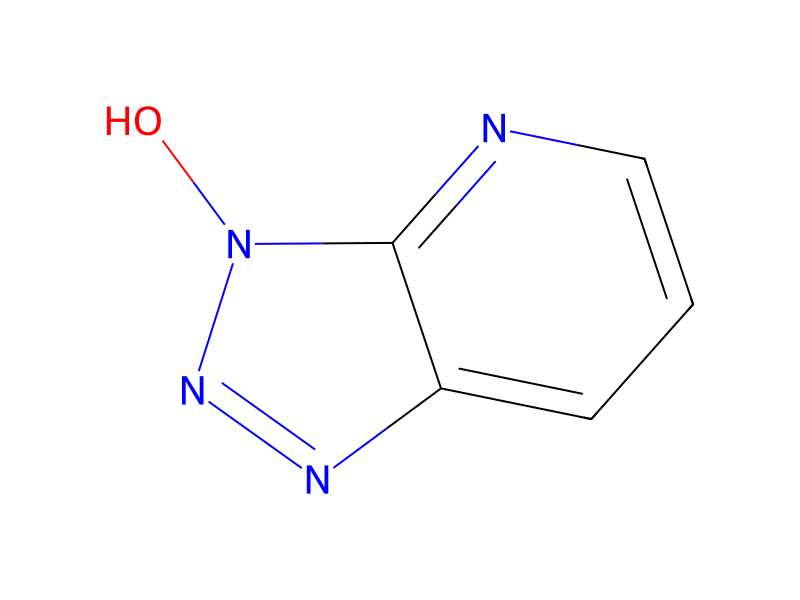
A solution of 2-tetrazol-1-yl-benzoic acid (1.0 g, 5.2 mmol), ammonium chloride (0.56 g, 10.4 mmol), 1-(3-dimethylaminopropyl)-3-ethylcarbodiimide hydrochloride (2.0 g, 10.4 mmol), 1-hydroxy-7-azabenzotriazole (1.4 g, 10.4 mmol) and diisopropylethylamine (3.6 ml, 20.8 mmol) in N,N-dimethylformamide (15 ml) was stirred at room temperature overnight. Water was added and the reaction mixture was extracted with ethyl acetate. The combined organic layers were washed with brine. Drying and solvent evaporation gave 2-tetrazol-1-yl-benzamide; 1H NMR (CD3OD, 400 MHz) δ 9.44 (s, 1H), 7.72 (m, 4H).