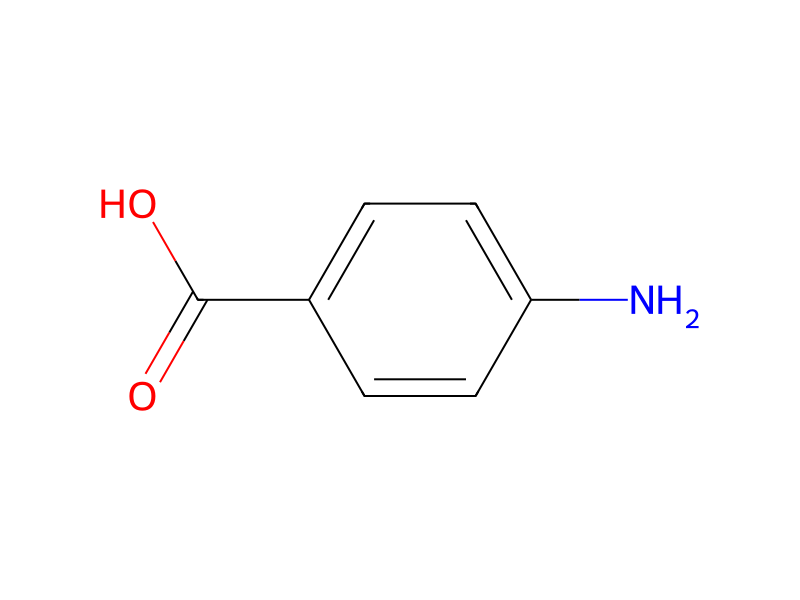
[NH2:1][C:2]1[CH:10]=[CH:9][C:5]([C:6]([OH:8])=O)=[CH:4][CH:3]=1.CN(C(ON1N=NC2C=CC=CC1=2)=[N+](C)C)C.F[P-](F)(F)(F)(F)F.CN(C=O)C.C(N(CC)C(C)C)(C)C.[F:49][C:50]([F:60])([F:59])[C:51]1[CH:58]=[CH:57][C:54]([CH2:55][NH2:56])=[CH:53][CH:52]=1>>[NH2:1][C:2]1[CH:3]=[CH:4][C:5]([C:6]([NH:56][CH2:55][C:54]2[CH:53]=[CH:52][C:51]([C:50]([F:49])([F:59])[F:60])=[CH:58][CH:57]=2)=[O:8])=[CH:9][CH:10]=1To a mixture of p-aminobenzoic acid (5.0 g, 36 mmol) and HBTU (14 g, 36 mmol) in DMF (50 mL, 600 mmol) at 0° C. were added N,N-diisopropylethylamine (19 mL, 110 mmol) and 4-(trifluoromethyl)benzylamine (6.2 mL, 44 mmol). The reaction mixture was slowly warmed to ambient temperature. The reaction mixture was quenched with an equal volume of saturated aqueous sodium bicarbonate and extracted with ethyl acetate (3×). The combined organic layers were washed successively with water, aqueous lithium chloride, and brine, dried over sodium sulfate, filtered and concentrated in vacuo (8.2 g, 70%).