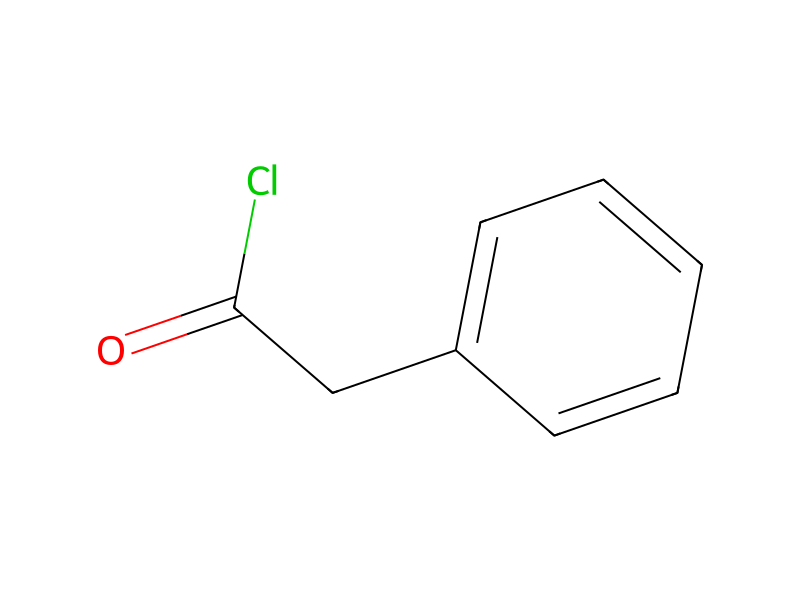
[Cl:1][C:2]1[CH:10]=[CH:9][C:5]([C:6]([NH2:8])=[S:7])=[CH:4][CH:3]=1.N1C=CC=CC=1.[C:17]1([CH2:23][C:24](Cl)=[O:25])[CH:22]=[CH:21][CH:20]=[CH:19][CH:18]=1.O>CC(C)=O>[Cl:1][C:2]1[CH:10]=[CH:9][C:5]([C:6]([NH:8][C:24](=[O:25])[CH2:23][C:17]2[CH:22]=[CH:21][CH:20]=[CH:19][CH:18]=2)=[S:7])=[CH:4][CH:3]=1To a solution of 4-chlorothiobenzamide (0.519 g, 3.02 mmol) in acetone (5 mL) as added pyridine (0.367 mL, 4.53 mmol) and phenylacetyl chloride (0.480 mL, 3.63 mmol). The bright orange reaction mixture was heated to 55° C. for 1 hour. The reaction mixture was allowed to cool to room temperature, and water (20 mL) was added. The precipitate was removed by filtration, washed with water, and dried to provide 0.721 g (82%) of the product as a red solid: 1H NMR (CDCl3) δ 9.34 (br s, 1H), 7.50-7.22 (m, 9H), 3.96 (s, 2H) ppm.