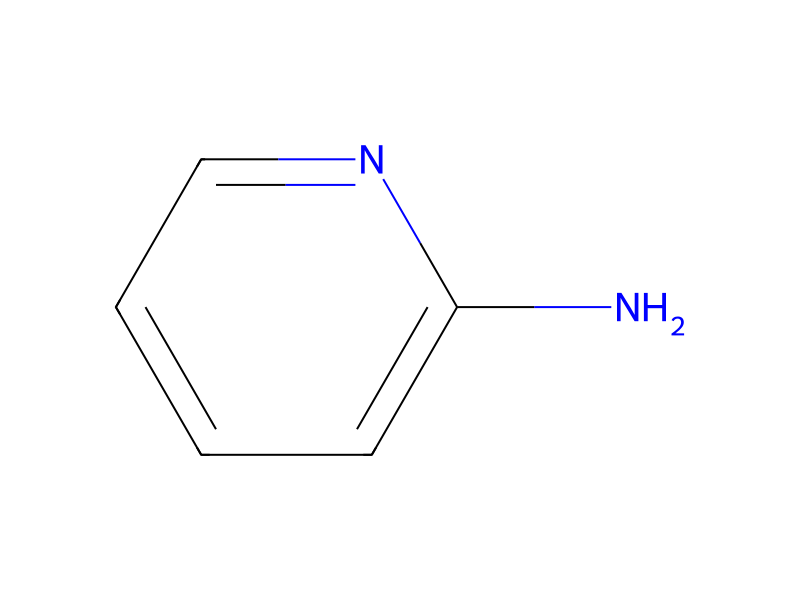
2-Aminopyridine → 2-(4-Ethoxycarbonyl-2-methylamino-5-thiazolyl)imidazo[1,2-a]pyridine
HRID 1905998
反応式

Br[CH2:2][C:3]([C:5]1[S:9][C:8]([NH:10][CH3:11])=[N:7][C:6]=1[C:12]([O:14][CH2:15][CH3:16])=[O:13])=O.[NH2:17][C:18]1[CH:23]=[CH:22][CH:21]=[CH:20][N:19]=1>C(#N)C>[CH2:15]([O:14][C:12]([C:6]1[N:7]=[C:8]([NH:10][CH3:11])[S:9][C:5]=1[C:3]1[N:17]=[C:18]2[CH:23]=[CH:22][CH:21]=[CH:20][N:19]2[CH:2]=1)=[O:13])[CH3:16]参加物
4



実験手順
A solution of ethyl 5-(2-bromoacetyl)-2-methylamino-4-thiazolecarboxylate (2.5 g) and 2-aminopyridine (2.3 g) in acetonitrile (100 ml) was refluxed for 1.5 hours. The reaction mixture was evaporated in vacuo. To the residue was added water and ethyl acetate and the resulting mixture was acidified to pH 0.8 with 10% hydrochloric acid. The separated aqueous layer was adjusted to pH 7.0 with 20% aqueous potassium carbonate and extracted with a mixture of ethyl acetate and tetrahydrofuran. The organic extract was washed with brine, dried over magnesium sulfate and evaporated in vacuo. The residue was recrystallized from a mixture of ethyl acetate and tetrahydrofuran to give 2-(4-ethoxycarbonyl-2-methylamino-5-thiazolyl)imidazo[1,2-a]pyridine (1.5 g). mp 197°-200° C.