Chloroform → 2,3-Bis(4-bromophenyl)quinoxaline
反応式

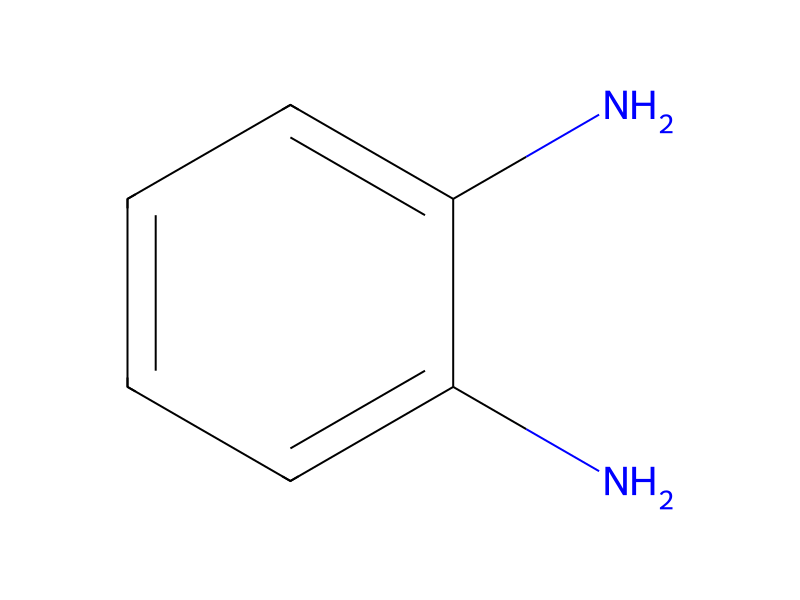
[Br:1][C:2]1[CH:7]=[CH:6][C:5]([C:8]([C:10]([C:12]2[CH:17]=[CH:16][C:15]([Br:18])=[CH:14][CH:13]=2)=O)=O)=[CH:4][CH:3]=1.[C:19]1([NH2:26])[CH:24]=[CH:23][CH:22]=[CH:21][C:20]=1[NH2:25].C(Cl)(Cl)Cl>O>[Br:1][C:2]1[CH:7]=[CH:6][C:5]([C:8]2[C:10]([C:12]3[CH:17]=[CH:16][C:15]([Br:18])=[CH:14][CH:13]=3)=[N:26][C:19]3[C:20](=[CH:21][CH:22]=[CH:23][CH:24]=3)[N:25]=2)=[CH:4][CH:3]=1参加物
5




反応条件
- 温度
- 80 °C
実験手順
In a 500 mL three-necked flask were placed 30 g (82 mmol) of 4,4′-dibromobenzil, 9.3 g (86 mmol) of 1,2-phenylenediamine, and 300 mL of chloroform. This solution was refluxed at 80° C. for 5 hours under a stream of nitrogen. After a predetermined time, the solution was cooled to room temperature, and water was added thereto. This aqueous layer was extracted with chloroform, and the extracted solution was combined with the organic layer and then dried with magnesium sulfate. After drying, the mixture was subjected to suction filtration and the filtrate was concentrated. The obtained solid was dissolved in toluene, and this solution was subjected to suction filtration through Florisil (produced by Wako Pure Chemical Industries, Ltd., Catalog No. 540-00135), Celite (produced by Wako Pure Chemical Industries, Ltd., Catalog No. 531-16855) and alumina. The filtrate was concentrated, and 30 g of a white powder of 2,3-bis(4-bromophenyl)quinoxaline, which was a target substance, was obtained at a yield of 99%.