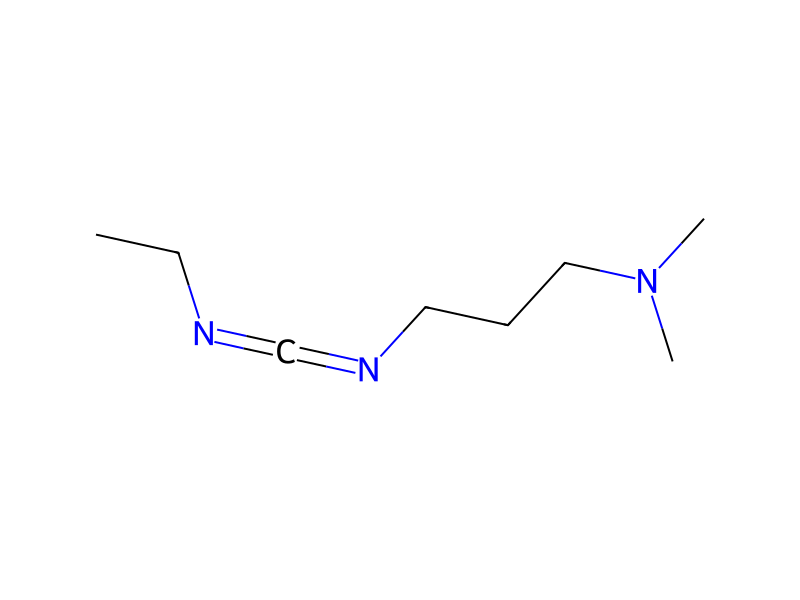
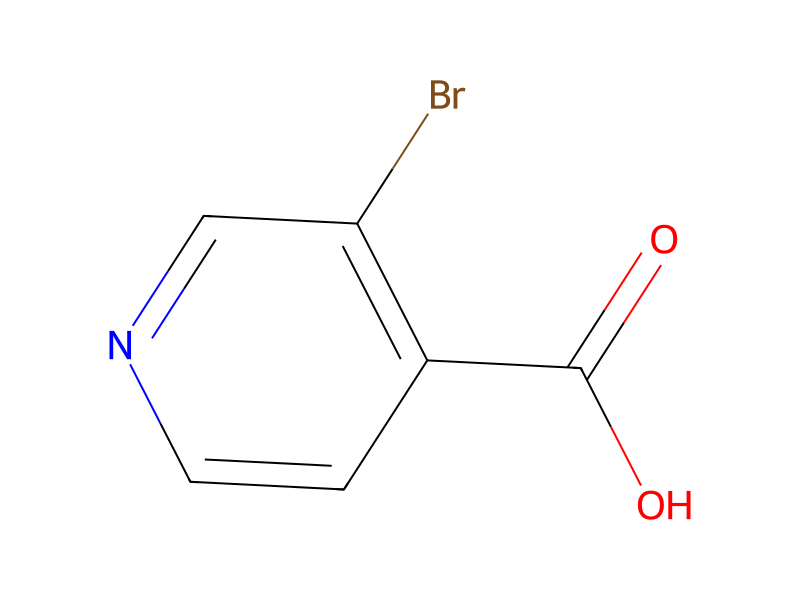
[Br:1][C:2]1[CH:10]=[N:9][CH:8]=[CH:7][C:3]=1[C:4]([OH:6])=O.[NH2:11][C:12]1[CH:17]=[C:16]([C:18]([F:21])([F:20])[F:19])[CH:15]=[CH:14][C:13]=1[OH:22].CCN=C=NCCCN(C)C>N1C=CC=CC=1>[Br:1][C:2]1[CH:10]=[N:9][CH:8]=[CH:7][C:3]=1[C:4]([NH:11][C:12]1[CH:17]=[C:16]([C:18]([F:19])([F:20])[F:21])[CH:15]=[CH:14][C:13]=1[OH:22])=[O:6]A mixture of 0.69 g of 3-bromo isonicotinic acid, 0.60 g of 2-amino-4-(trifluoromethyl)phenol, 1.00 g of WSC and 6 ml of pyridine was stirred while heating at 80° C. for two hours. The reaction mixture was cooled to room temperature, and then concentrated. Water was added to the residue, followed by extraction with ethyl acetate. The organic layer was washed with a saturated sodium chloride solution, then dried over anhydrous sodium sulfate, and concentrated under reduced pressure. The residue was washed with a mixture solvent of ethyl acetate and hexane to give 0.29 g of 3-bromo-N-[2-hydroxy-5-(trifluoromethyl)phenyl]isonicotinamide.