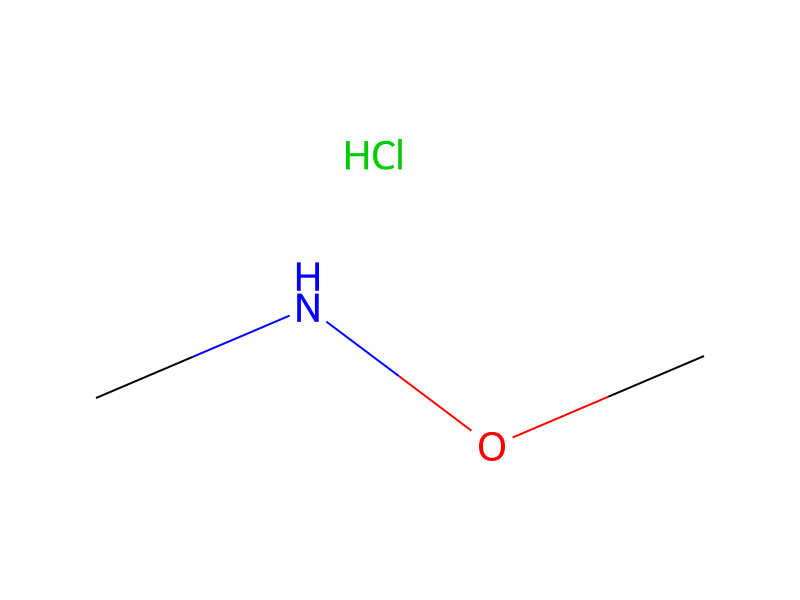
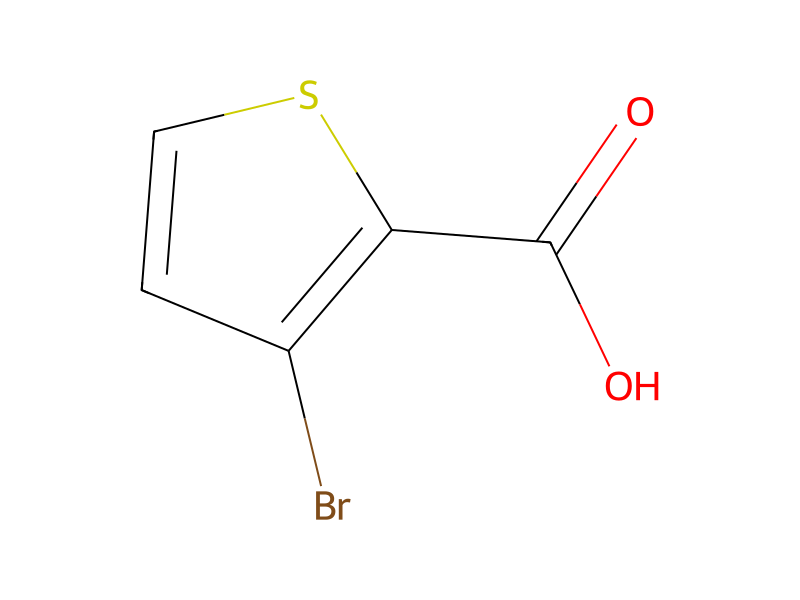
Oxalyl chloride (0.601 mL, 6.99 mmol, 1.2 eq) is added to a mixture of 3-bromothiophene-2-carboxylic acid (1.20 g, 5.80 mmol), N,N-dimethylformamide (several drops, catalytic amount), and anhydrous dichloromethane (25 mL) at ambient temperature under nitrogen over 20 minutes. The reaction is stirred for 17 hours, purged with nitrogen, and concentrated under reduced pressure to afford a tan solid. The crude 3-bromothiophene-2-carbonyl chloride is dissolved in dichloromethane (25 mL) and added dropwise, over 10 minutes, to a 0° C. solution of N,O-dimethylhydroxylamine hydrochloride (843 mg, 8.64 mmol), diisopropylethylamine (2.50 mL, 14.3 mmol), and dichloromethane (25 mL). The reaction is allowed to gradually warm to ambient temperature overnight. The reaction is washed with water, dried over magnesium sulfate, and concentrated under reduced pressure. The crude product is purified by chromatography on silica, eluting with 1:1 ethyl acetate/heptane, to give 3-bromo-thiophene-2-carboxylic acid methoxy-methyl-amide, as a white solid: TLC Rƒ0.33 (silica, 1:1 ethyl acetate/heptane); LC/MS: (M+H 249.94, RT=2.18 minutes); 1H NMR [(CD3)2SO), 300 MHz]: δ 7.85 (d, 1H, J=5.3 Hz), 7.17 (d, 1H, 5.3 Hz), 3.62 (s, 3H), 3.24 (s, 3H).