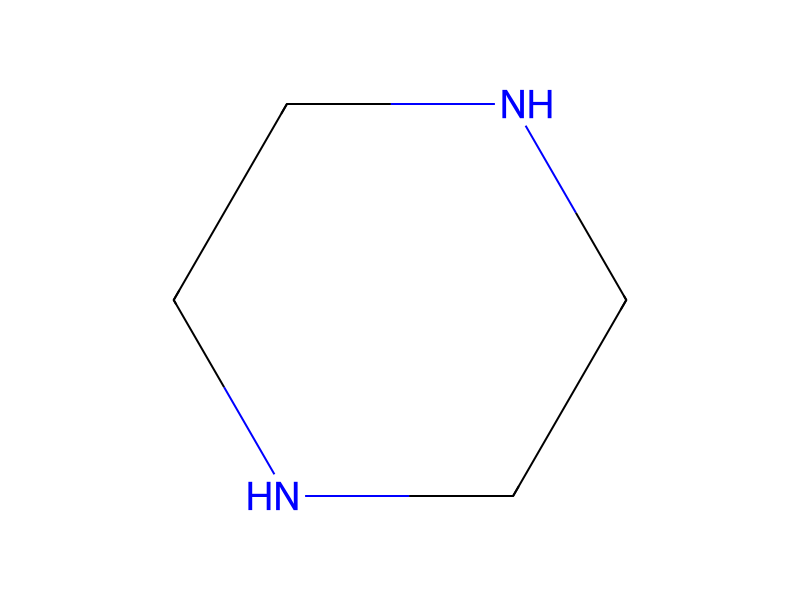
Thionyl chloride was added to (±)-(4-fluorophenyl)phenylmethanol, and the mixture was stirred at a room temperature overnight. After the completion of the reaction was confirmed by HPLC, ethyl acetate was added thereto, and water was added to the mixture. The resulting mixture was neutralized with sodium hydrogen carbonate, and then washed water twice and dried over magnesium sulfate. After the solvent was distilled off, the residue was dissolved in acetonitrile, and piperazine (1.7 g, 20 mmol), potassium iodide (3.3 g, 20 mmol), and potassium carbonate (3.3 g, 24 mmol) were added thereto. The mixture was refluxed overnight. After the completion of the reaction was confirmed by HPLC, the insoluble matter was removed, and the solvent was distilled off. The resulting residue was dissolved in ethyl acetate and washed with water 3 times. The organic layer was dried over magnesium sulfate, and then the solvent was distilled off. Thus the title compound (3.9 g, 72.7%) was obtained as a yellowish white solid.