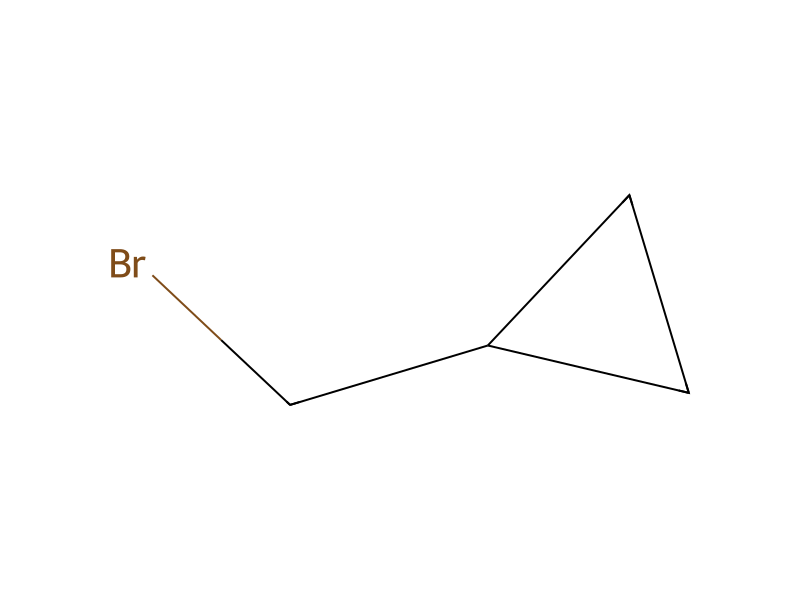
[C:1]([O:5][C:6]([N:8]1[CH2:14][CH2:13][CH2:12][N:11]([C:15]2[NH:19][C:18]3[CH:20]=[CH:21][CH:22]=[CH:23][C:17]=3[N:16]=2)[CH2:10][CH2:9]1)=[O:7])([CH3:4])([CH3:3])[CH3:2].[H-].[Na+].Br[CH2:27][CH:28]1[CH2:30][CH2:29]1>CN(C)C=O>[C:1]([O:5][C:6]([N:8]1[CH2:14][CH2:13][CH2:12][N:11]([C:15]2[N:16]([CH2:27][CH:28]3[CH2:30][CH2:29]3)[C:17]3[CH:23]=[CH:22][CH:21]=[CH:20][C:18]=3[N:19]=2)[CH2:10][CH2:9]1)=[O:7])([CH3:4])([CH3:2])[CH3:3]Treat a solution of 1-(t-butoxycarbonyl)-4-(1H-benzimidazol-2-yl)[1,4]diazepan (0.50 g, 1.58 mmol, Preparation 9) and dimethylformamide (10 mL) with sodium hydride (0.083 g, 2.08 mmol, 60% dispersion in oil) at room temperature. After 15 minutes, add (bromomethyl)cyclopropane (0.21 mL, 2.17 mmol, Aldrich Chemical Company) and heat two hours at 80° C. Cool the reaction and partition between dichloromethane (150 mL) and NaHCO3 solution (40 mL). Wash the organic phase with brine (40 mL), dry (MgSO4), filter and concentrate the filtrate to afford 4-(1-cyclopropylmethyl-1H-benzoimidazol-2-yl)-[1,4]diazepane-1-carboxylic acid tert-butyl ester (0.71 g, Rf=0.87, silica gel, 95:5:0.5 dichloromethane:methanol:ammonium hydroxide).