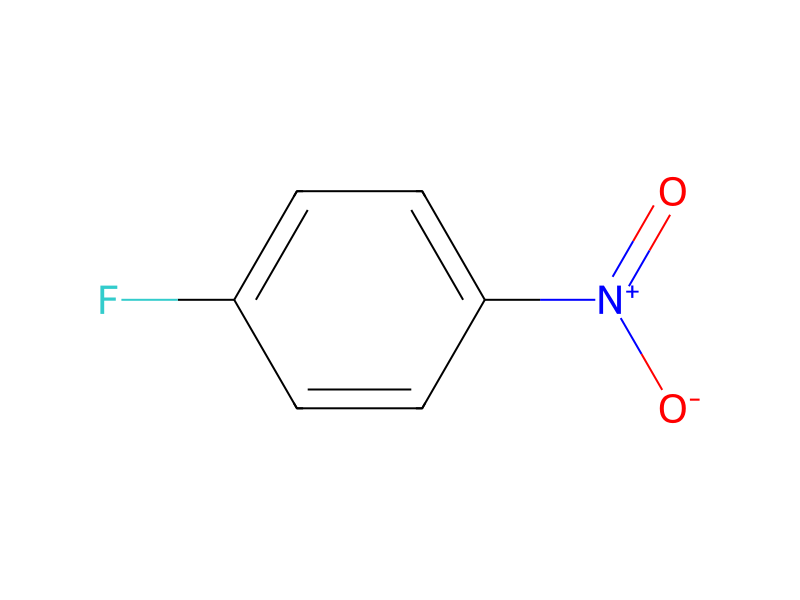
To a solution of 4-fluoro-1-nitrobenzene (12.5 g, 89 mmol) and 1H-tetrazole (6.21 g, 89 mmol) in DMF (89 mL) stirred at room temperature, potassium carbonate (12.24 g, 89 mmol) was added in one portion. The resulting mixture was stirred at 80° C. overnight, and then reaction mixture was worked up by the addition of water at 80° C., then cooled to room temperature, and stirred at room temperature for 30 minutes. The yellow solid was collected by filtration, washed with water, air-dried for 2 hours, and dried in an vacuum oven at 60° C. for 2 hours to afford a mixture of 4-(1H-tetrazol-1-yl)-1-nitrobenzene and 4-(2H-tetrazol-2-yl)-1-nitrobenzene. The product thus obtained was re-dissolved in THF (209 mL) and, while stirring at room temperature, platinum(IV) oxide (0.45 g, 1.982 mmol) was added in one portion. The resulting mixture was stirred at room temperature overnight under a hydrogen atmosphere, after which the reaction mixture was worked up by filtration through a celite pad and the solvent removed by evaporation. The residue was purified and separated by CombiFlash® (0-50% EtOAc/toluene; Teledyne Isco, Inc., Lincoln, Nebr.) to afford the desired 4-(2H-tetrazol-2-yl)aniline as a yellowish solid. 1H NMR (400 MHz, DMSO-d6): δ 9.08 (s, 1H), 7.72 (d, 2H), 6.73 (d, 2H), 5.75 (s, 2H).