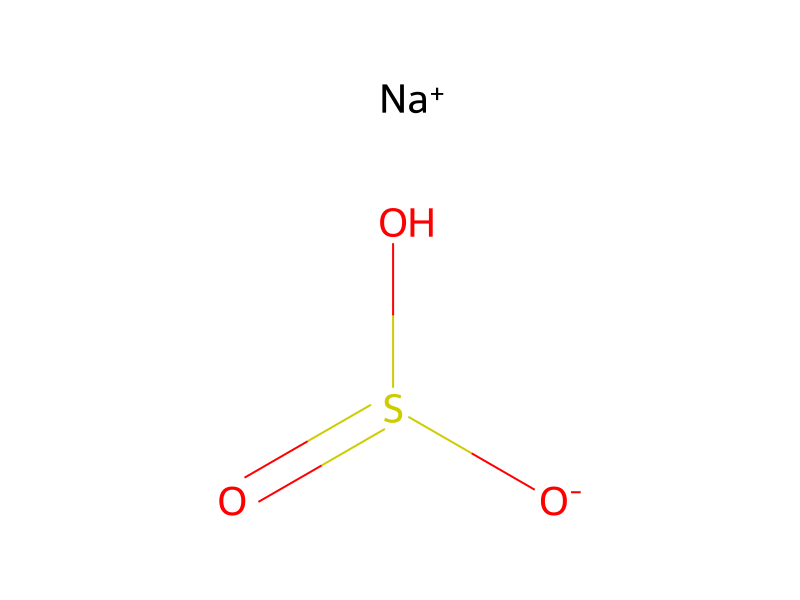
[Cl:1][C:2]1[CH:25]=[CH:24][C:5]([CH2:6][NH:7][C:8]([C:10]2[CH:11]=[N:12][C:13]3[C:18]([C:19]=2[OH:20])=[CH:17][C:16]([S:21][CH3:22])=[CH:15][C:14]=3[F:23])=[O:9])=[CH:4][CH:3]=1.CN(C=[O:30])C.ClC1C=CC=C(C(OO)=O)C=1.S(=O)(O)[O-].[Na+]>C(Cl)(Cl)Cl>[Cl:1][C:2]1[CH:3]=[CH:4][C:5]([CH2:6][NH:7][C:8]([C:10]2[CH:11]=[N:12][C:13]3[C:18]([C:19]=2[OH:20])=[CH:17][C:16]([S:21]([CH3:22])=[O:30])=[CH:15][C:14]=3[F:23])=[O:9])=[CH:24][CH:25]=1A suspension of 150 mg of N-(4-chlorobenzyl)-8-fluoro-4-hydroxy-6-(methylsulfanyl)-3-quinolinecarboxamide from Example No. 170 and 0.75 mL of DMF in 15 mL of chloroform is treated with 79 mg of m-chloroperbenzoic acid. After stirring for 10 min the mixture is treated with 10 mL of a concentrated aqeous solution of sodium bisulfite. After stirring an addtional 5 min the phases are separated and the organic layer is washed with 15 mL of a saturated aqueous solution of sodium bicarbonate. The organic layer is dried (MgSO4) and the solvent was evaporated at reduced pressure. The residual solid is washed with a small volume of diethyl ether and dried to give 95 mg of a white solid.