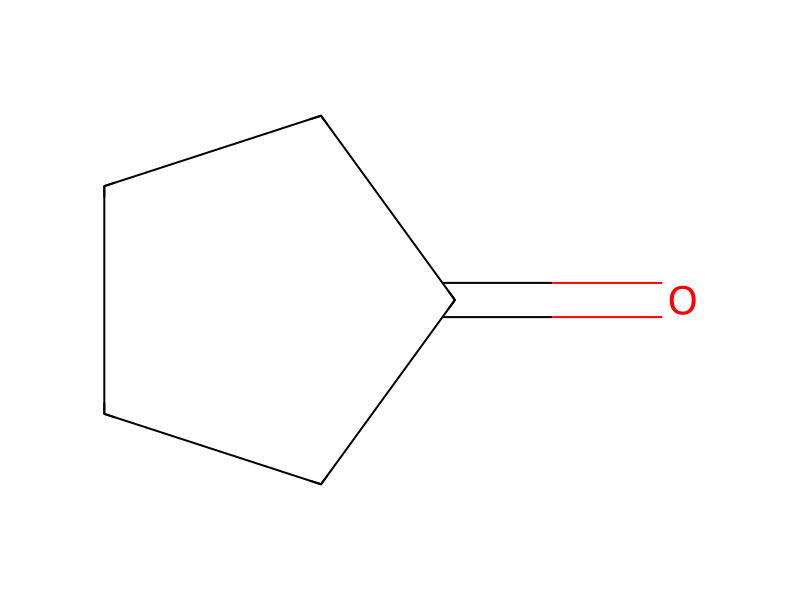
Trichloroacetyl chloride → Cyclopentanone
反応式

ClC(Cl)(Cl)C(Cl)=O.[Cl:8][C:9]1([Cl:14])[CH2:12][C:11](=[O:13])[CH2:10]1.ClC1[CH:21]=[CH:20][CH:19]=[C:18]([C:22]([O:24]O)=O)C=1.C(=O)([O-])O.[Na+].ClC(Cl)=C=O.[N+](=C)=[N-]>[Zn].ClCCl.C(O)(=O)C>[C:22]1(=[O:24])[CH2:18][CH2:19][CH2:20][CH2:21]1.[Cl:8][C:9]1([Cl:14])[CH2:12][C:11](=[O:13])[CH2:10]1参加物
反応物 6






生成物 2
試薬・触媒・溶媒 3



実験手順
The compound (b) is reacted with trichloroacetyl chloride in a solvent such as diethyl ether, dimethoxyethane or tetrahydrofuran to give the dichlorocyclobutanone compound (f) (Alternatively, when it is reacted with diacetyl chloride, a monochloro-compound is obtained. The monochloro-compound can also be obtained by reacting with trichioroacetyl chloride, followed by treating with acetic acid.), and then the product is treated with a reducing agent such as zinc dust, whereby the cyclobutanone compound represented by the formula (g) can be obtained. The reaction temperature is preferably 10 to 50° C. When the compound (g) is treated with a peroxide such as 3-chloroperbenzoic acid in the presence of sodium hydrogen carbonate in a solvent such as dichloromethane, the lactone compound represented by the formula (h) can be obtained. The reaction temperature is preferably in the range of from room temperature to 40° C. When the compound (b) is treated with dichloroketene and diazomethane, a cyclopentanone compound in the formula (f) is obtained, and when the compound (g) is treated with diazomethane, a cyclopentanone compound in formula (g) is obtained. When the cyclopentanone compound is further treated with diazomethane, a cyclohexanone compound is obtained.
後処理
- customcan be obtained
- customis preferably 10 to 50° C
- customcan be obtained
- customis preferably in the range of from room temperature to 40° C
出典と根拠
- ORDレコード
- ord-5d9d17d59d7c4ad89a69e281dabe93ce
- 出典データセット
- uspto-grants-2002_12
- 特許番号
- US06498159B1
反応ノート
読み込み中…