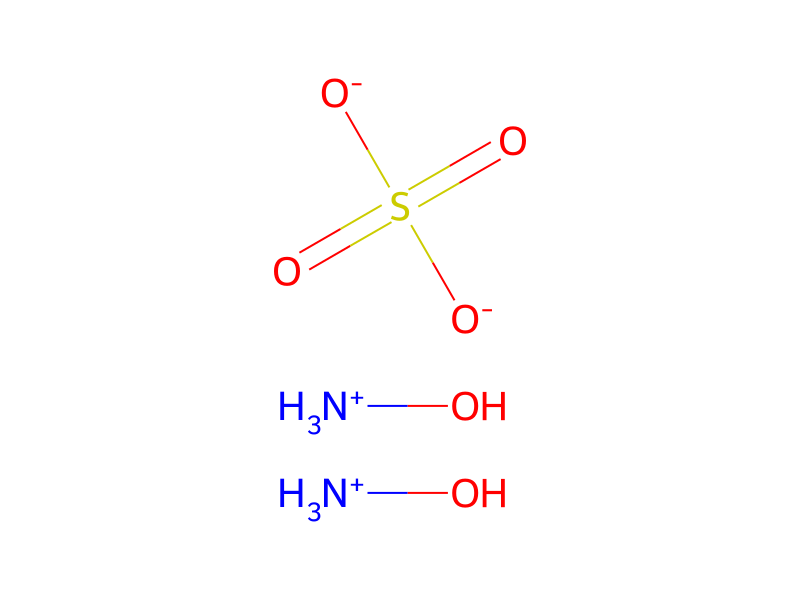
24 g (0.03 mol) of 50% strength aqueous sodium hydroxide solution and 200 ml of water were initially charged at 25° C. and admixed a little at a time with a total of 25 g (0.0152 mol) of hydroxylammonium sulfate. 50 g (0.0267 mol) of the ketal (Example 2) were then added dropwise, and the reaction mixture was stirred at 50° C. (pH=7-8) for 9 hours. A pH of 5-6 was then set using aqueous sodium hydroxide solution, and the mixture was stirred at 50° C. for 48 hours. Another 25 g of hydroxylammonium sulfate and 24 g of 50% strength aqueous sodium hydroxide solution were then metered in, and the mixture was stirred at 50° C. for another 20 hours. 300 ml of methyl tert-butyl ether were then added. The solid which is insoluble in the two-phase mixture was filtered off, washed with a little hexane and dried. This gave 9 g of the title compound (phys. data of the E,E-isomers see Tab. 2). The organic phase of the two-phase mixture obtained as mother liquor was dried over sodium sulfate and subsequently concentrated on a rotary evaporator. This gave another 17.5 g of the title compound.