Triethylamine → HCID 15232777、化合物
HRID 2399536
反応式

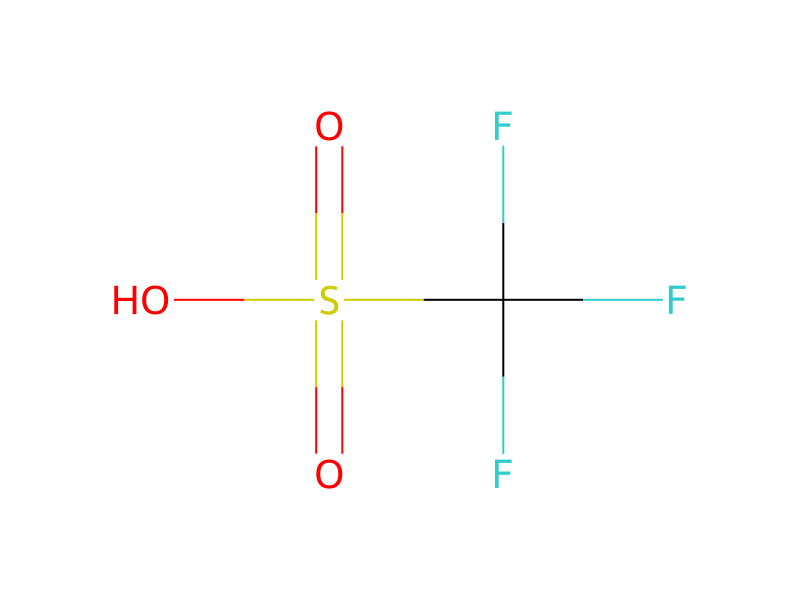
[F:1][C:2]([F:8])([F:7])[S:3](O)(=[O:5])=[O:4].[NH2:9][C:10]1[S:11][C:12]([C:23]2[CH:28]=[CH:27][C:26]([O:29][CH3:30])=[CH:25][CH:24]=2)=[C:13]([C:15]2[CH:20]=[CH:19][C:18]([O:21][CH3:22])=[CH:17][CH:16]=2)[N:14]=1.C(N(CC)CC)C>C(Cl)(Cl)Cl>[F:1][C:2]([F:8])([F:7])[S:3]([NH:9][C:10]1[S:11][C:12]([C:23]2[CH:28]=[CH:27][C:26]([O:29][CH3:30])=[CH:25][CH:24]=2)=[C:13]([C:15]2[CH:16]=[CH:17][C:18]([O:21][CH3:22])=[CH:19][CH:20]=2)[N:14]=1)(=[O:5])=[O:4]参加物
5




実験手順
13.5 g of anhydrous trifluoromethanesulfonic acid was slowly dropped into a solution of 5.0 g of 2-amino-4,5-bis(4-methoxyphenyl)thiazole and 5.0 ml of triethylamine in chloroform under stirring in a nitrogen atmosphere at -20° to -15° C., and the resulting mixture was stirred as such for 2 hours. Then the reaction mixture was successively washed with diluted hydrochloric acid, a saturated aqueous solution of sodium hydrogencarbonate and water in this order and dried over anhydrous magnesium sulfate. After distilling off the solvent under reduced pressure, the reaction product was separated with a silica gel column by using chloroform/ethyl acetate as a developer. The crystals thus obtained were recrystallized from isopropyl ether/ethyl acetate to give 1.9 g of 2-trifluoromethanesulfonylamino-4,5-bis(4-methoxy-phenyl)thiazole. The melting point of this product was from 240° to 242° C.