反応式

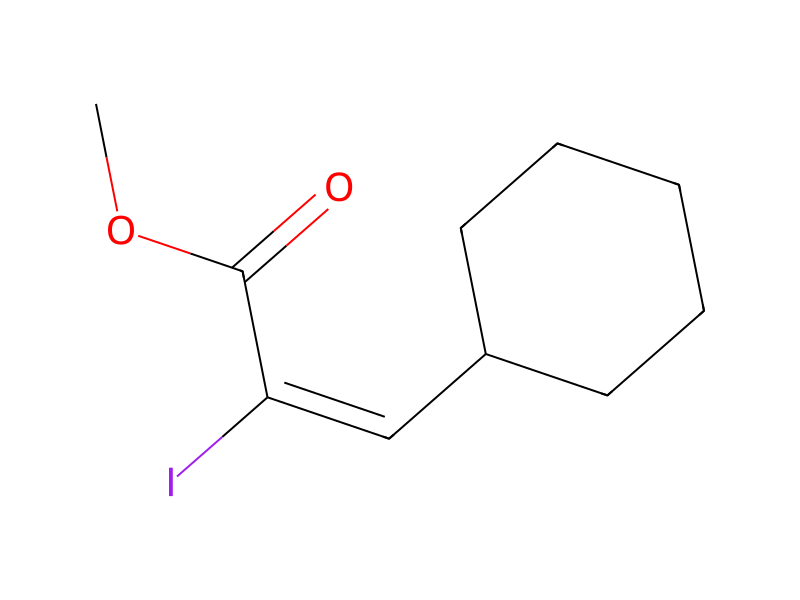
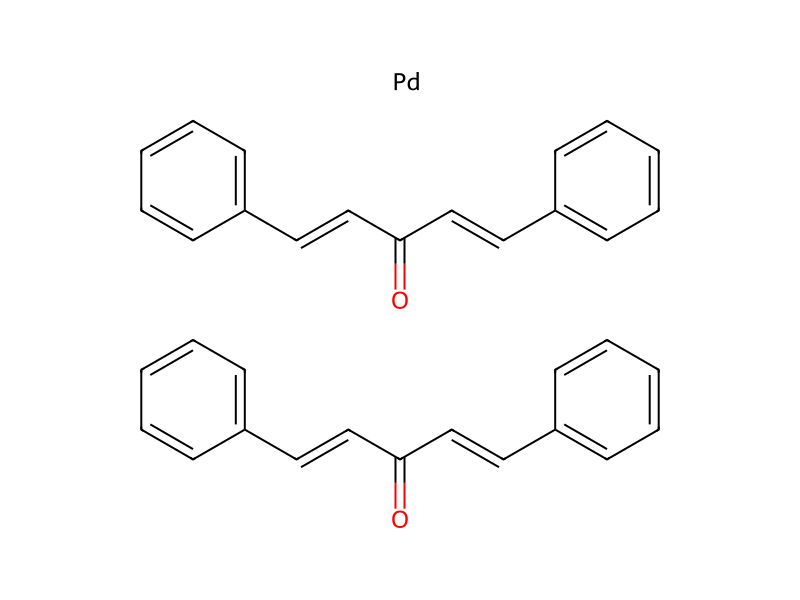
BrCCBr.C[Si](Cl)(C)C.[CH3:10][O:11][C:12](=[O:22])/[C:13](/I)=[CH:14]\[CH:15]1[CH2:20][CH2:19][CH2:18][CH2:17][CH2:16]1.C1(P(C2C=CC=CC=2)C2C=CC=CC=2)C=CC=CC=1.[CH3:42][S:43]([C:46]1[CH:51]=[CH:50][C:49](Br)=[CH:48][CH:47]=1)(=[O:45])=[O:44].[Cl-].[NH4+]>O1CCCC1.[Zn].C1C=CC(/C=C/C(/C=C/C2C=CC=CC=2)=O)=CC=1.C1C=CC(/C=C/C(/C=C/C2C=CC=CC=2)=O)=CC=1.[Pd]>[CH3:10][O:11][C:12](=[O:22])/[C:13](/[C:49]1[CH:50]=[CH:51][C:46]([S:43]([CH3:42])(=[O:45])=[O:44])=[CH:47][CH:48]=1)=[CH:14]/[CH:15]1[CH2:20][CH2:19][CH2:18][CH2:17][CH2:16]1参加物
反応物 6





生成物 1

試薬・触媒・溶媒 3


反応条件
- 温度
- 25 °C
実験手順
A mixture of zinc dust (2.6 g, 40 mmol, Aldrich, −325 mesh) and dry tetrahydrofuran (3 mL) under argon was treated with 1,2-dibromoethane (0.37 g, 2 mmol). The zinc suspension was then heated with a heat gun to ebullition, allowed to cool, and heated again. This process was repeated three times to make sure the zinc dust was activated. The activated zinc dust suspension was then treated with trimethylsilyl chloride (217 mg, 2 mmol), and the suspension was stirred for 15 min at 25° C. The reaction mixture was then treated dropwise with a solution of (E)-3-cyclohexyl-2-iodo-acrylic acid methyl ester (5.88 g, 20 mmol) in dry tetrahydrofuran (5 mL) over 5 min. During the addition, the temperature rose to 50° C. The reaction mixture was then stirred at 40-45° C. for 1 h and then stirred overnight at 25° C. The reaction mixture was then diluted with dry tetrahydrofuran (10 mL), and the stirring was stopped to allow the excess zinc dust to settle down (˜2 h). In a separate reaction flask, bis(dibenzylideneacetone)palladium(0) (270 mg, 0.5 mmol) and triphenylphosphine (520 mg, 2 mmol) in dry tetrahydrofuran (25 mL) was stirred at 25° C. under argon for 10 min and then treated with 4-bromophenyl methyl sulfone (4.23 g, 18 mmol) and the freshly prepared zinc compound in tetrahydrofuran. The resulting brick red solution was heated at 50° C. for 24 h, at which time, thin layer chromatography analysis of the reaction mixture indicated the absence of starting material. The reaction mixture was cooled to 25° C. and then poured into a saturated aqueous ammonium chloride solution (150 mL), and the organic compound was extracted into ethyl acetate (3×100 mL). The combined organic extracts were washed with a saturated aqueous sodium chloride solution (1×200 mL), dried over anhydrous magnesium sulfate, filtered, and concentrated in vacuo. Flash chromatography (Merck Silica gel 60, 230-400 mesh, 3/2 hexanes/ethyl acetate) afforded (E)-3-cyclohexyl-2-(4-methanesulfonyl-phenyl)-acrylic acid methyl ester (5.79 g, 99%) as a low melting white solid: EI-HRMS m/e calcd for C17H22O4S (M+) 322.1238, found 322.1236.
後処理
- temperatureto cool
- temperatureheated again
- additionDuring the addition
- customrose to 50° C
- stirringThe reaction mixture was then stirred at 40-45° C. for 1 h
- stirringstirred overnight at 25° C
- custom(˜2 h)
- stirringwas stirred at 25° C. under argon for 10 min
- temperatureThe resulting brick red solution was heated at 50° C. for 24 h, at which time, thin layer chromatography analysis of the reaction mixture
- temperatureThe reaction mixture was cooled to 25° C.
- extractionthe organic compound was extracted into ethyl acetate (3×100 mL)
- washThe combined organic extracts were washed with a saturated aqueous sodium chloride solution (1×200 mL)
- dry with materialdried over anhydrous magnesium sulfate
- filtrationfiltered
- concentrationconcentrated in vacuo
出典と根拠
- ORDレコード
- ord-9b8c6ede57214e33b5f781e84b58e7a5
- 出典データセット
- uspto-grants-2002_03
- 特許番号
- US06353111B1
関連ノート
読み込み中…