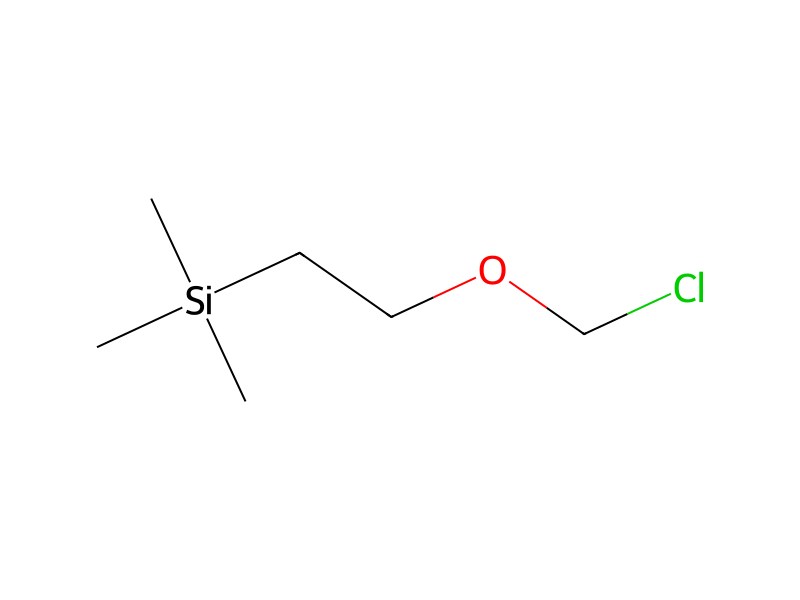
5 g (31.93 mmol) of 5-chloro-4-hydroxybenzaldehyde are dissolved in 300 ml of methylene chloride and 6.7 ml (38.3 mmol) of N,N-diisopropyl-N-ethylamine and 5.9 ml (33.52 mmol) of 2-trimethylsilylethoxymethyl chloride (SEMCl) are added to this at 0° C. The mixture is allowed to return to room temperature and stirred overnight. Water is then added and the mixture is extracted with methylene chloride. The organic phase is dried and the solvent is evaporated off. The product of the title is obtained, which is purified by chromatography on a silica gel column, eluting with a 95/5 and then 9/1 heptane/ethyl acetate mixture.