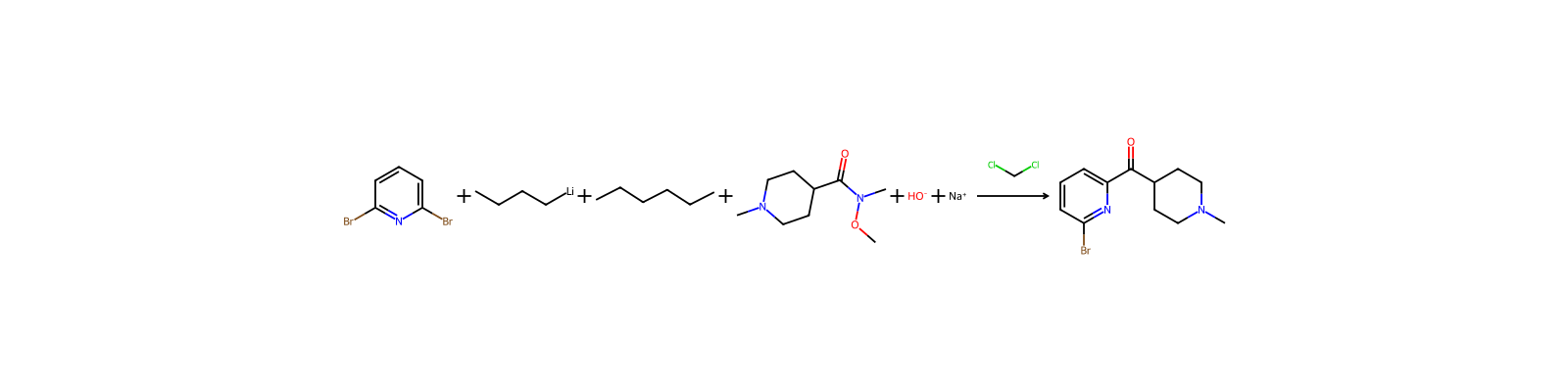
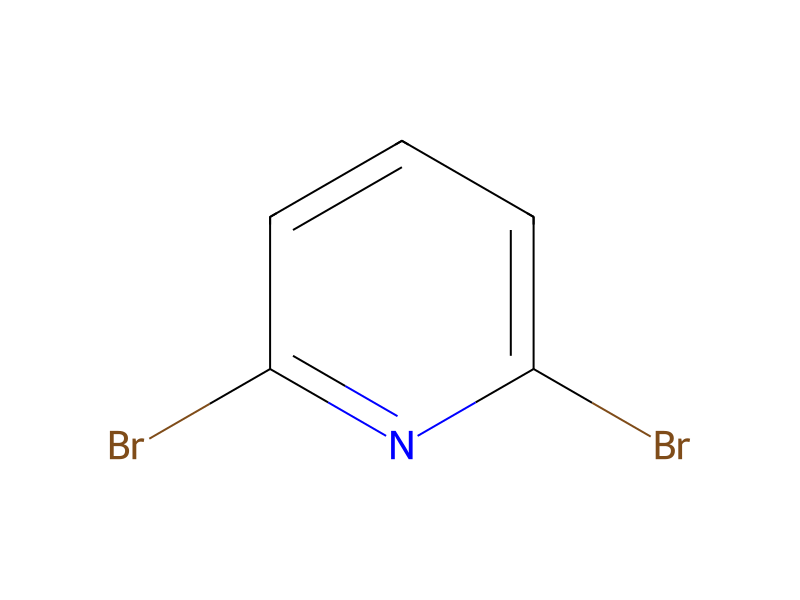
Dissolve 2,6-dibromopyridine (5.5 g, 23.2 mmol) in anhydrous dichloromethane (140 mL) under a nitrogen atmosphere. Cool the reaction mixture to −78° C. Add a solution of n-butyl lithium in hexane (1.6 M, 15.8 mL, 25.3 mmol) very slowly via a syringe. After the addition is complete, stir the reaction at −78° C. for 1 hr. Add a solution of 1-methyl-N-methyl-N-methoxy-piperidine-4-carboxamide (2 g, 11 mmol) in anhydrous dichloromethane (10 mL) dropwise to the reaction mixture. Stir the reaction at −78° C. for 2 hrs, and then allow the mixture to slowly warm to room temperature overnight. Quench the reaction with 0.1 N NaOH. Dilute the solution with dichloromethane (100 mL), transfer into a separatory funnel and shake with 2 N NaOH (50 mL). Separate the organic layer, dry it over anhydrous sodium sulfate, and then evaporate the solvent under reduced pressure. Further purify the residue by chromatography on asilica gel column (6%, 2M NH3 in methanol/CH2Cl2 ) to obtain 2-bromo-6-(1-methylpiperidin-4-ylcarbonyl)-pyridine e (2.3 g, 74% yield). Mass spectrum (ion spray): m/z 283 (M+1).