ホームMCPワークベンチSkills
ホームワークベンチ通知マイページ
llms.txt · MCPガイドプライバシーポリシー · 利用規約 · サポートv1.8.1
  1. ホーム
  2. /反応

Triphenylphosphine → N,N-dimethyl-2-(3-nitro-2-pyridinyl)ethenamine

HRID 362621
印刷

反応式

HRID 362621 の反応式
C1(P(C2C=CC=CC=2)C2C=CC=CC=2)C=CC=CC=1.[N+](C1C=NC=CC=1)([O-])=O.[CH3:29][C:30]1[C:35]([N+:36]([O-:38])=[O:37])=[CH:34][CH:33]=[CH:32][N:31]=1.[CH3:39][N:40]([CH:42](OC)OC)[CH3:41]>[Pd].C1(P(C2C=CC=CC=2)C2C=CC=CC=2)C=CC=CC=1.C1(P(C2C=CC=CC=2)C2C=CC=CC=2)C=CC=CC=1.C1(P(C2C=CC=CC=2)C2C=CC=CC=2)C=CC=CC=1.C1(P(C2C=CC=CC=2)C2C=CC=CC=2)C=CC=CC=1.C1(C)C=CC=CC=1.CO.N1C=CC=CC=1>[CH3:39][N:40]([CH3:42])[CH:41]=[CH:29][C:30]1[C:35]([N+:36]([O-:38])=[O:37])=[CH:34][CH:33]=[CH:32][N:31]=1
参加物実験手順後処理出典と根拠反応ノート

参加物

9

反応物 4

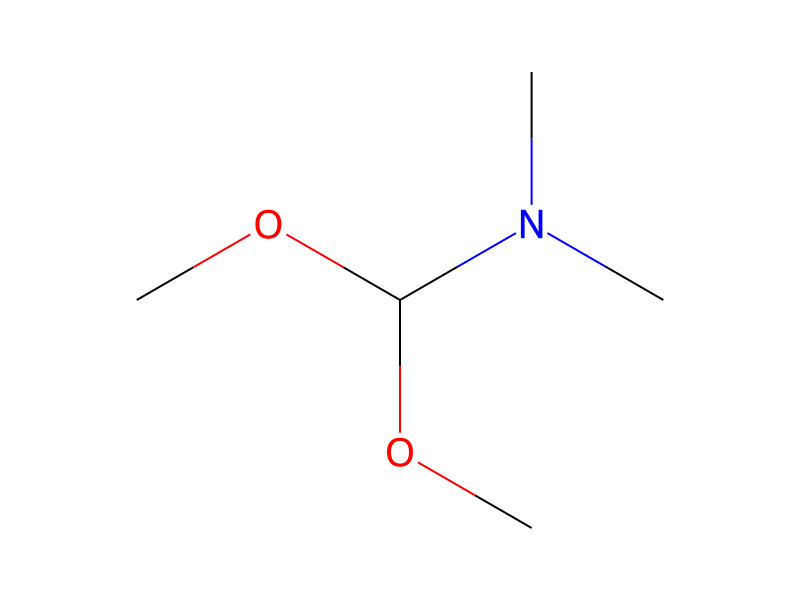
HCID 11776TriphenylphosphineHCID 78373Dimethylformamide dimethyl acetalHCID 1376303-NitropyridineHCID 3293602-Methyl-3-nitropyridine

生成物 1

HCID 53415175N,N-dimethyl-2-(3-nitro-2-pyridinyl)ethenamine収率 84%

試薬・触媒・溶媒 4

HCID 11979704
Tetrakis(triphenylphosphine)palladium
触媒
HCID 887Methanol溶媒
HCID 1049Pyridine溶媒2 回
HCID 1140Toluene溶媒

実験手順

Particularly key to an efficient synthesis of 3-AP or 3-AMP is the high-yield introduction of a methyl or vinyl group, preferably vinyl, at the 2 position of the pyridine moiety utilizing a Heck or Stille vinylation reaction or a methylation reaction under Suzuki conditions. These reactions proceed at the 2-position of a pyridine moiety in high yield (generally, greater than 50% and in most instances, greater than 70%). The advantage of the vinylation reaction is that the 2-vinyl group may be readily converted to a 2-carboxaldehyde group for further conversion to the 2-thiosemicarbazone using a high yield ozonolysis reaction conducted in a polar solvent, such as methanol. The preferred vinylation reaction is a Heck or Stille vinylation reaction performed utilizing a reagent selected from among the following: Bu3SnCH=CHR3, (OH)2B--CH=CHR3, ClZnCH=CHR3 and XMgCH=CHR3. The vinylation reaction takes place in the presence of triphenylphosphine (PPh3) and/or tetrakis(triphenylphosphine) palladium [Pd(PPh3)4 ] usually in a solvent such as toluene in the presence of heat. The advantages of the methylation reaction under Suzuki conditions over the two step methylation of the prior art include a greatly improved yield, reduction in the number of steps and therefore handling required and ease in scaling the synthesis up for commercial production. Alternatively, to introduce a vinyl group at the 2-position of 3-nitropyridine, one may advantageously react 2-methyl-3-nitropyridine with dimethylforamamidedimethylacetal (DMFDMA) to produce 2-dimethylamino vinyl-3-nitropyridine compound 3a, followed by oxidation with sodium periodate (NaIO4) to produce carboxaldehyde 4 in an unexpectedly high 84% yield.


後処理

  1. customParticularly key to an efficient synthesis of 3-AP or
  2. customa Heck or Stille vinylation reaction
  3. customa methylation reaction under Suzuki conditions
  4. customin high yield (generally, greater than 50%
  5. customThe advantage of the vinylation reaction
  6. customa high yield ozonolysis reaction
  7. customThe preferred vinylation reaction
  8. customa Heck or Stille vinylation reaction
  9. customThe vinylation reaction
  10. temperatureof heat
  11. customThe advantages of the methylation reaction under Suzuki conditions over the two step methylation of the prior art
  12. customthe synthesis up for commercial production

出典と根拠

ORDレコード
ord-c0f47db4acb248c598e50d2e4bee931c
出典データセット
uspto-grants-1999_02
DOI
10.6084/m9.figshare.5104873.v1
特許番号
US05869676

反応ノート

このページの内容参加物実験手順後処理出典と根拠反応ノート