Trimethylamine → 1,2,3,9-Tetrahydro-9-methyl-3-methylene-4H-carbazol-4-one
反応式
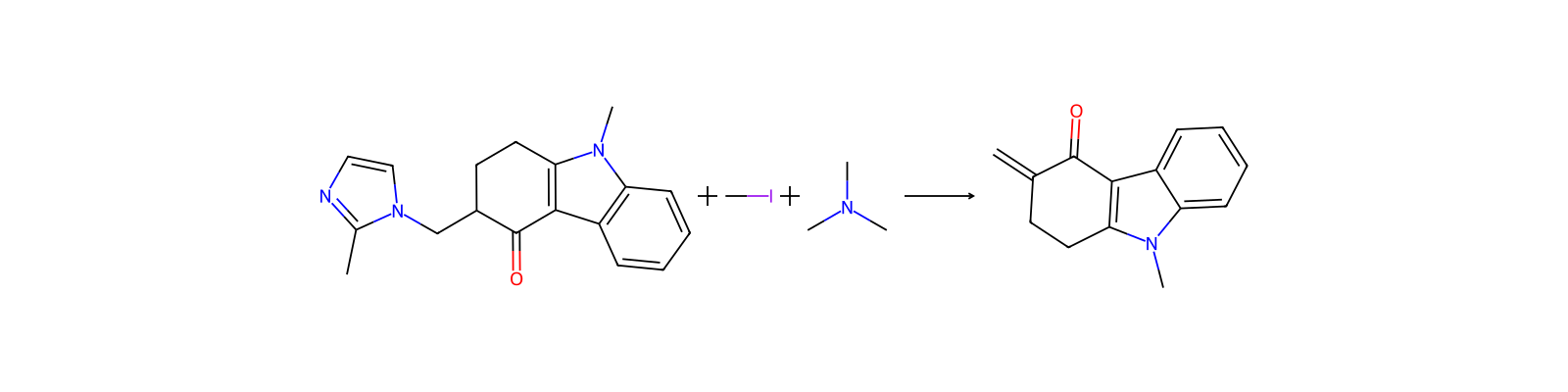
CC1N([CH2:7][CH:8]2[C:21](=[O:22])[C:12]3[C:13]4[CH:14]=[CH:15][CH:16]=[CH:17][C:18]=4[N:19]([CH3:20])[C:11]=3[CH2:10][CH2:9]2)C=CN=1.CI.CN(C)C>>[CH3:20][N:19]1[C:11]2[CH2:10][CH2:9][C:8](=[CH2:7])[C:21](=[O:22])[C:12]=2[C:13]2[C:18]1=[CH:17][CH:16]=[CH:15][CH:14]=2参加物
4




実験手順
Peculiarly, the above-said patent specification indicates this tertiary amine to be known per se and, in addition, ondansetron can be prepared therefrom in an other way, too. After quaternizing the tertiary amine with methyl iodide, trimethylamine is split off from the obtained methoiodide by Hofmann's elimination reaction to give 9-methyl-3-methylene-1,2,3,9-tetrahydro-4H-carbazol-4-one. The thus-obtained electrophilic conjugated enone is subjected to an addition reaction with 2-methylimidazole (see Example 8 of the specification). The surprisingly moderate yield of 43.2% of the reaction shows that the significance of this simple direct addition, starting from the separated enone, should not be overestimated.