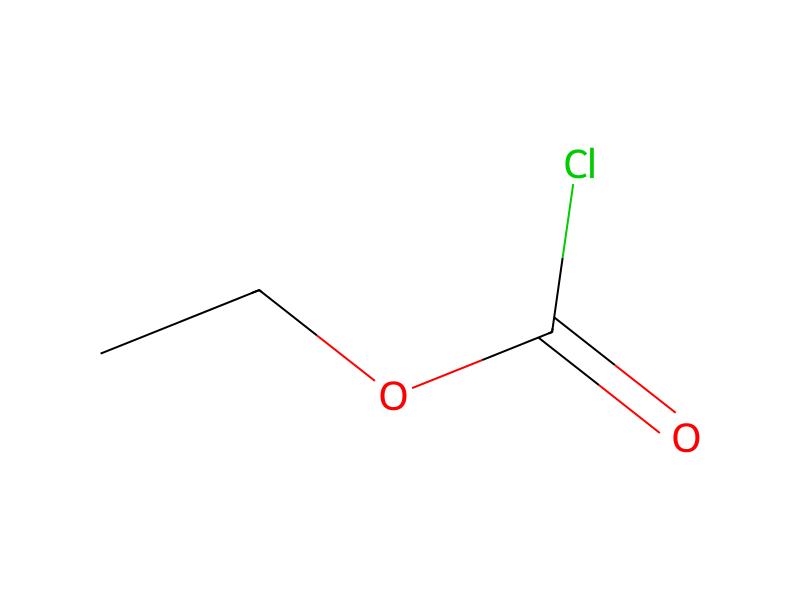
Ethyl chloroformate → Ethyl 3-methyl-3-[6-(p-chlorophenyl)-3-pyridazinyl]carbazate
HRID 372717
反応式

[Cl:1][C:2]1[CH:7]=[CH:6][C:5]([C:8]2[N:13]=[N:12][C:11]([N:14]([CH3:16])[NH2:15])=[CH:10][CH:9]=2)=[CH:4][CH:3]=1.C(N(C(C)C)CC)(C)C.Cl[C:27]([O:29][CH2:30][CH3:31])=[O:28]>O1CCOCC1>[CH3:16][N:14]([C:11]1[N:12]=[N:13][C:8]([C:5]2[CH:4]=[CH:3][C:2]([Cl:1])=[CH:7][CH:6]=2)=[CH:9][CH:10]=1)[NH:15][C:27]([O:29][CH2:30][CH3:31])=[O:28]参加物
5




実験手順
A 2.0 g. portion of 6-(p-chlorophenyl)-3-(1-methylhydrazino)pyridazine and 1.30 g. of diisopropylethylamine in 50 ml. of dioxane is warmed slightly in a flask. A 1.0 g. portion of ethyl chloroformate is added and the reaction mixture is stirred for one hour. The dioxane is removed on a rotary evaporator, ethanol and water are added to the residue and a precipitate results. The solid is recrystallized from ethanol to give a pure white solid, m.p. 170°-172° C.