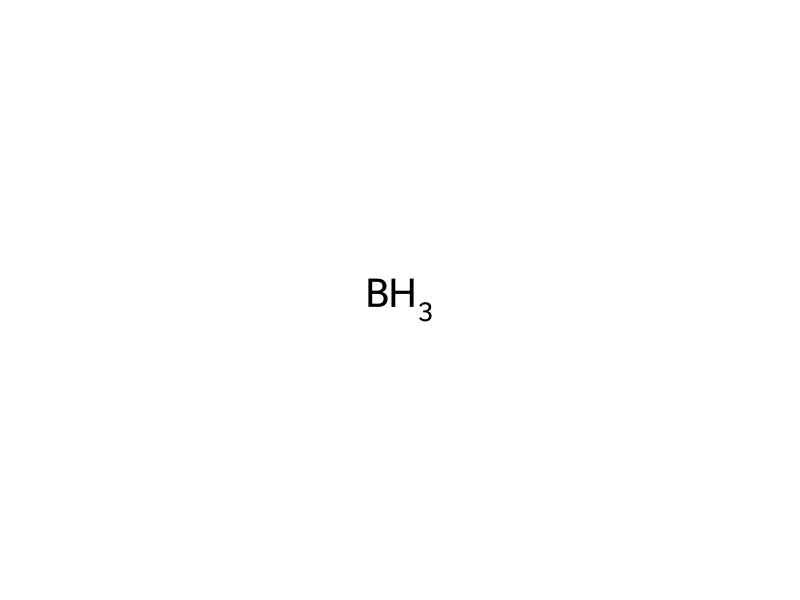
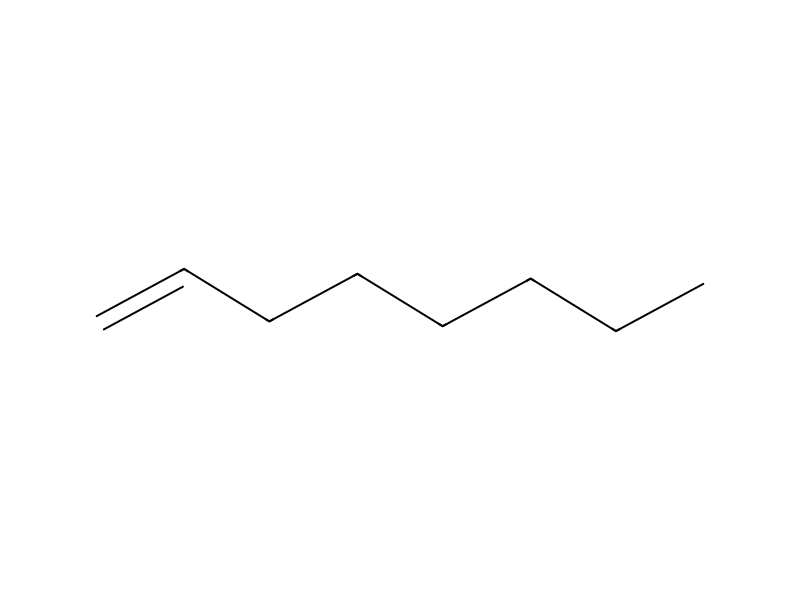
Borane → 1-Octene
反応式

[BH3:1].B#B.O1[CH2:8][CH2:7][CH2:6][CH2:5]1>>[CH2:5]=[CH:6][CH2:7][CH2:8][CH2:5][CH2:6][CH2:7][CH3:8].[CH2:5]([B:1]([CH2:5][CH2:6][CH2:7][CH2:8][CH2:5][CH2:6][CH2:7][CH3:8])[CH2:5][CH2:6][CH2:7][CH2:8][CH2:5][CH2:6][CH2:7][CH3:8])[CH2:6][CH2:7][CH2:8][CH2:5][CH2:6][CH2:7][CH3:8]参加物
5



実験手順
In the practice of the invention, borane adducts of N,N-diisopropylalkylamines are prepared by passing diborane into a neat amine until no more diborane is absorbed. The adduct with N,N-diisopropylisobutylamine is liquid above 0° C., 4.6M in borane, and is stable over prolonged periods at room temperature. The adduct with N,N-diisopropyl-sec-butylamine is a liquid 3.3M in borane when freshly prepared at 0° C., slowly losing borane at room temperature. All of the adducts of this invention hydroborate 1-octene in tetrahydrofuran at room temperature in less than 1 hour to give trioctylborane. They are also soluble in diethyl ether and dichloromethane. Alternatively, neat adducts can be used for hydroboration.
後処理
- customis absorbed
- customliquid above 0° C., 4.6M in borane
- waitover prolonged periods at room temperature
- customfreshly prepared at 0° C.
- customat room temperature
出典と根拠
- ORDレコード
- ord-c20380f3143c4eeb803404dc60b4e7d9
- 出典データセット
- uspto-grants-1996_01
- 特許番号
- US05481038
反応ノート
読み込み中…