反応式

Cl.[NH2:2][C:3]1[C:12]2[C:7](=[CH:8][CH:9]=[CH:10][CH:11]=2)[C:6]([OH:13])=[CH:5][CH:4]=1.C([Li])CCC.C(OC(OC(C)(C)C)=O)(OC(C)(C)C)=O.C(OC(NC1C2C(=CC=CC=2)C(O)=CC=1)=O)(C)(C)C.Cl.Cl[CH2:55][CH2:56][N:57]1[CH2:62][CH2:61][O:60][CH2:59][CH2:58]1.C(=O)([O-])[O-].[K+].[K+]>C(#N)C.C1COCC1>[NH2:2][C:3]1[C:12]2[C:7](=[CH:8][CH:9]=[CH:10][CH:11]=2)[C:6]([O:13][CH2:55][CH2:56][N:57]2[CH2:62][CH2:61][O:60][CH2:59][CH2:58]2)=[CH:5][CH:4]=1参加物
反応物 6


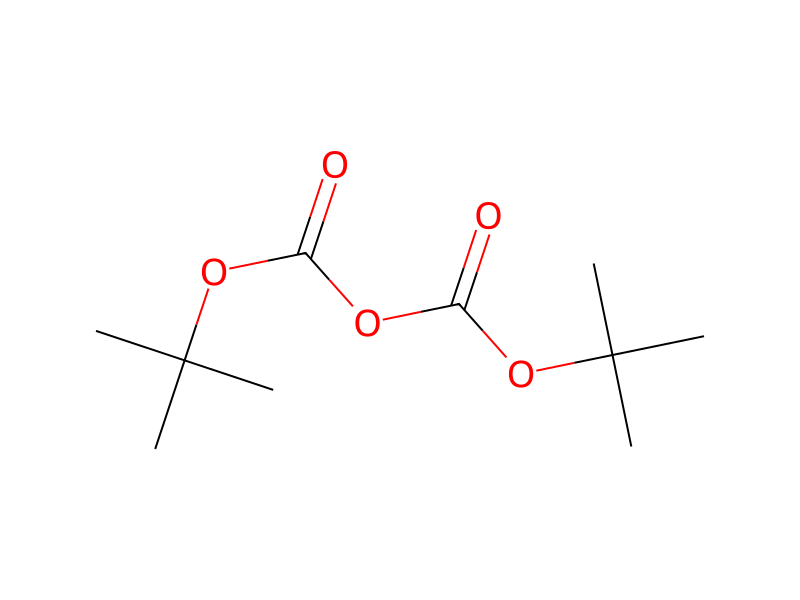



生成物 1

試薬・触媒・溶媒 2


実験手順
4-Amino-1-naphthol hydrochloride (40) can be neutralized with a base, such as n-butyl lithium, in a non-protic solvent, such as THF, and reacted with di-tert-butyl dicarbonate ((BOC)2O) at temperatures between −78 −25° C. The product, 4-tert-butyloxycarbonylamino-1-naphthol (41) can be alkylated with 4-(2-chloroethyl)morpholine hydrochloride in a non-protic solvent, such as acetonitrile, with a base, such as powdered potassium carbonate, at temperatures between 60-80° C. Purification of the product 4-tert-butyloxycarbonylamino-1-(2-(morpholin-4-yl)ethoxy)naphthalene (42) can be accomplished by silica gel chromatography. Removal of the BOC-protecting group can be accomplished with HCl in a non-protic solvent, such as dioxane, to furnish 1-amino-4-(2-(morpholin-4-yl)ethoxy)naphthalene (39) as the hydrochloride salt.
後処理
- customPurification of the product 4-tert-butyloxycarbonylamino-1-(2-(morpholin-4-yl)ethoxy)naphthalene (42)
- customRemoval of the BOC-
出典と根拠
- ORDレコード
- ord-844f0f60a1534f33862cdc29d3c2f42a
- 出典データセット
- uspto-grants-2001_10
- 特許番号
- US06297381B1
関連ノート
読み込み中…