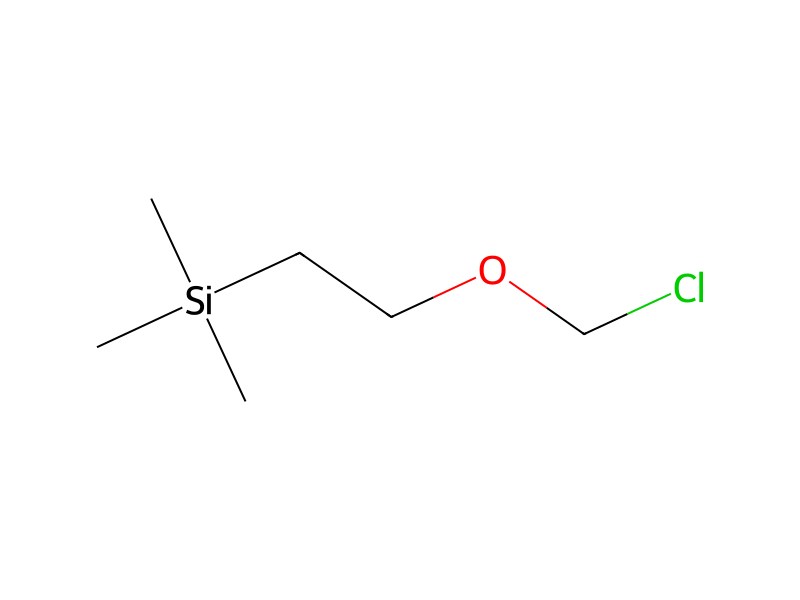
To a mixture of 3-[5-(2-chlorophenyl)-2-iodo-1,3-oxazol-4-yl]-1H-1,2,4-triazole (26.0 g, 70.0 mmol), SEM-Cl (16.6 g, 100.0 mmol) and potassium iodide (1.6 g, 10.0 mmol) in DMF (400 mL) was added NaH (4.0 g, 100 mmol). The reaction mixture was allowed to stir at rt until the reaction was complete (as judged by TLC analysis). The reaction mixture was poured into water and extracted with EtOAc. The organic solutions were combined, dried over MgSO4, filtered and concentrated. The residue was purified by column chromatography to give 3-[5-(2-chlorophenyl)-2-iodo-1,3-oxazol-4-yl]-4-{[2-(trimethylsilyl)-ethoxy]methyl}-4H-1,2,4-triazole (3.9 g, 11%) plus two other SEM regioisomers (9.39 g, 26.2%). All three isomers could be separated and could be used for the following steps.