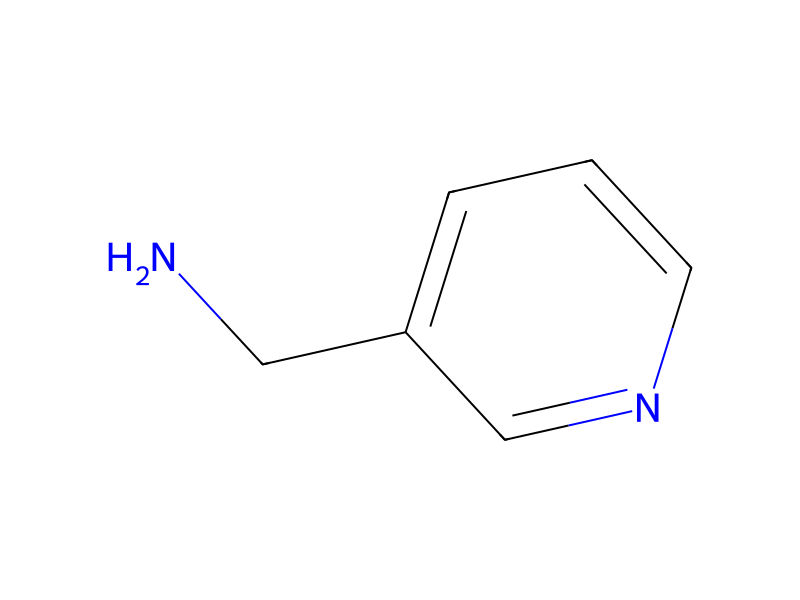
To a solution of 2-bromo-4-methylthiazole-5-carboxylic acid (10.00 g, 45.00 mmol) and 4-methylmorpholine (6.5 mL, 59.0 mmol) in tetrahydrofuran (150 mL) was added isobutyl chloroformate (6.5 mL, 49.6 mmol) at 0° C. The resulting mixture was stirred at room temperature for 1 hour and 3-(aminomethyl)pyridine (5.2 mL, 51.4 mmol) was added. The reaction mixture was stirred at ambient temperature for 17 hours, and then concentrated in vacuo. The residue was purified by column chromatography to afford 2-bromo-4-methyl-N-(pyridin-3-ylmethyl)thiazole-5-carboxamide in 52% yield (7.3 g): 1H NMR (300 MHz, CDCl3) δ 8.39-8.80 (m, 2H), 7.80-7.72 (m, 1H), 7.40-7.35 (m, 1H), 6.47 (br s, 1H), 4.60 (d, J=6.0 Hz, 2H), 2.64 (s, 3H); MS (ES+) m/z 312.1 (M+1), 314.1 (M+1).