ホームMCPワークベンチSkills
ホームワークベンチ通知マイページ
llms.txt · MCPガイドプライバシーポリシー · 利用規約 · サポートv1.8.3
  1. ホーム
  2. /反応

Triethylamine → 1-(5-Bromo-2-fluorophenyl)ethanone

HRID 593336
印刷

反応式

HRID 593336 の反応式
[Br:1][C:2]1[CH:3]=[CH:4][C:5]([F:11])=[C:6]([CH:10]=1)[C:7]([OH:9])=O.[CH2:12](N(CC)CC)C.Cl.CN(C)CCCN=C=NCC.CNOC.C[Mg]Cl.BrC1C=CC(F)=C(C=1)C(N(OC)C)=O>ClCCl.CN(C)C1C=CN=CC=1.O1CCCC1>[Br:1][C:2]1[CH:3]=[CH:4][C:5]([F:11])=[C:6]([C:7](=[O:9])[CH3:12])[CH:10]=1
参加物実験手順後処理出典と根拠反応ノート

参加物

10

反応物 6

HCID 8471TriethylamineHCID 14232N,O-DimethylhydroxylamineHCID 27239391,3-Propanediamine, N'-(ethylcarbonimidoyl)-N,N-dimethyl-, monohydrochlorideHCID 27363155-Bromo-2-fluorobenzoic acidHCID 606295205-bromo-2-fluoro-N-methoxy-N-methylbenzamideHCID 178418332HCID 178418332、化合物

生成物 1

HCID 22607476
1-(5-Bromo-2-fluorophenyl)ethanone

試薬・触媒・溶媒 3

HCID 142844-(Dimethylamino)pyridine触媒HCID 6344Dichloromethane溶媒2 回HCID 8028Tetrahydrofuran溶媒2 回

実験手順

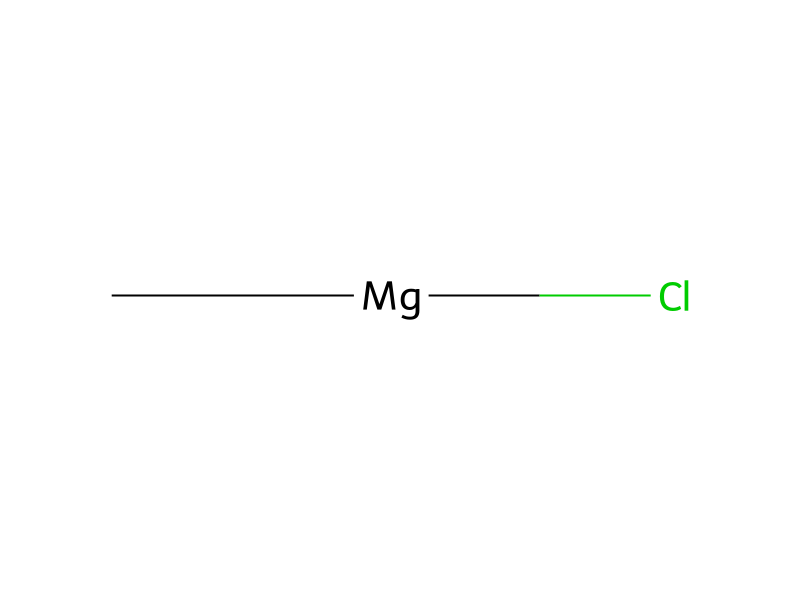
A solution of 5-bromo-2-fluoro-benzoic acid (3.50 g, 16 mmol) in dichloromethane (70 ml) was cooled to 0° C. and treated with triethylamine (1.725 g, 17 mmol), N-(3-dimethylamino-propyl)-N′-ethyl-carbodiimide hydrochloride (3.032 g, 16 mmol), 4-dimethylamino-pyridine (0.097 g, 0.8 mmol), and N,O-dimethyl-hydroxylamine (1.774 g, 18 mmol). The reaction mixture was left to warm to room temperature and stirred for 16 hours. For the workup, the reaction mixture was diluted with dichloromethane (100 ml) and, consecutively, extracted with water (50 ml), citric acid (10%, 50 ml), and saturated sodium hydrogen carbonate solution (50 ml). The organic layer was dried over sodium sulphate, then evaporated. The crude 5-bromo-2-fluoro-N-methoxy-N-methyl-benzamidematerial (3.73 g, 91%) was sufficiently pure and was directly engaged in the next step. In a dried flask, a solution of methylmagnesium chloride (3M in tetrahydrofuran, 5.69 ml, 17 mmol) in tetrahydrofuran (24 ml) was treated at 12-16° C. with a solution of 5-bromo-2-fluoro-N-methoxy-N-methyl-benzamide (3.73 g, 14.2 mmol) in tetrahydrofuran (24 ml). After complete addition, the reaction mixture was heated to reflux. After 20 minutes, the white suspension was quenched under ice cooling with a saturated solution of ammonium chloride (25 ml). After dilution with ethyl acetate (50 ml), the aqueous layer was separated and re-extracted with ethyl acetate (50 ml). The combined organic layers were washed with brine (20 ml), dried over sodium sulphate, and evaporated at reduced pressure. 1-(5-bromo-2-fluoro-phenyl)-ethanone was obtained as a light yellow solid (2.6 g, 84%), which was directly engaged in the next step. Rf: 0.55 (silica gel; eluent: heptane/ethyl acetate=4/1).


後処理

  1. waitThe reaction mixture was left
  2. extractionconsecutively, extracted with water (50 ml), citric acid (10%, 50 ml), and saturated sodium hydrogen carbonate solution (50 ml)
  3. dry with materialThe organic layer was dried over sodium sulphate
  4. customevaporated
  5. additionAfter complete addition
  6. temperaturethe reaction mixture was heated to reflux
  7. waitAfter 20 minutes
  8. customthe white suspension was quenched under ice cooling with a saturated solution of ammonium chloride (25 ml)
  9. customAfter dilution with ethyl acetate (50 ml), the aqueous layer was separated
  10. extractionre-extracted with ethyl acetate (50 ml)
  11. washThe combined organic layers were washed with brine (20 ml)
  12. dry with materialdried over sodium sulphate
  13. customevaporated at reduced pressure

出典と根拠

ORDレコード
ord-6d7243494c0d422e92f9e131499785a7
出典データセット
uspto-grants-2016_01
DOI
10.6084/m9.figshare.5104873.v1
特許番号
US09242943B2

反応ノート

このページの内容参加物実験手順後処理出典と根拠反応ノート