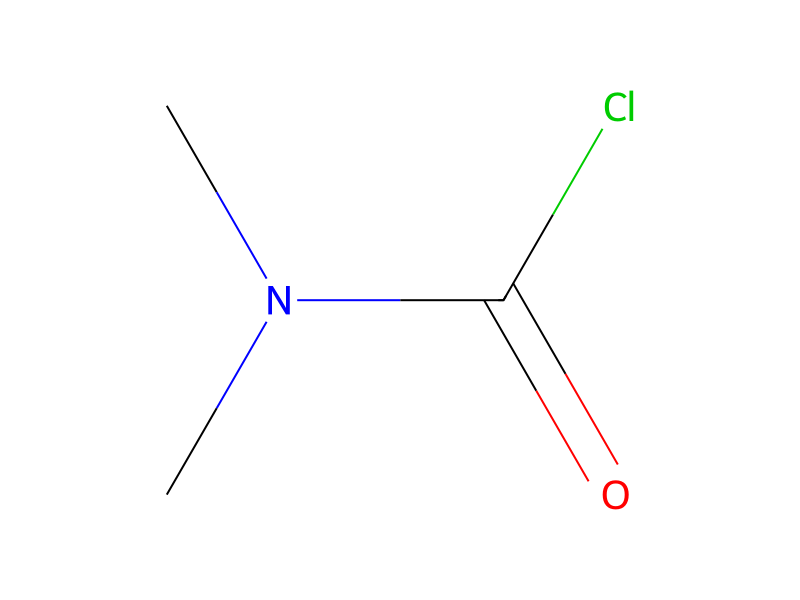
Cl.[CH3:2][O:3][C:4]1[C:21]([OH:22])=[CH:20][C:7]2[CH2:8][N:9]([NH:13][C:14]3[CH:19]=[CH:18][N:17]=[CH:16][CH:15]=3)[CH2:10][CH2:11][CH2:12][C:6]=2[CH:5]=1.[CH3:23][N:24]([CH3:28])[C:25]([Cl:27])=[O:26].C(N(CC)CC)C.C(=O)(O)[O-].[Na+]>C(Cl)(Cl)Cl.ClCCl>[ClH:27].[CH3:2][O:3][C:4]1[C:21]([O:22][C:25](=[O:26])[N:24]([CH3:28])[CH3:23])=[CH:20][C:7]2[CH2:8][N:9]([NH:13][C:14]3[CH:19]=[CH:18][N:17]=[CH:16][CH:15]=3)[CH2:10][CH2:11][CH2:12][C:6]=2[CH:5]=1To a solution of [7-methoxy-8-hydroxy-1,3,4,5-tetrahydrobenzo[c]azepin-2-yl]-4-pyridinylamine hydrochloride 0.25 hydrate (500 mg) in chloroform (10 ml) was added dimethylcarbamyl chloride (170 μl) and triethylamine (0.75 ml). The reaction mixture was heated under reflux for 3 hrs, then cooled to room temperature, and dichloromethane (200 ml) and saturated sodium bicarbonate solution (100 ml) were added. The aqueous phase was extracted with dichloromethane (2×5 ml), the organic extracts were combined, dried over anhydrous magnesium sulfate, filtered, and the filtrate was concentrated in vacuo. The residue was chromatographed over silica gel eluting with dichloromethane:methanol (9:1). The appropriate fractions were collected and concentrated. The residue was dissolved in methanol (5 ml), and concentrated hydrochloric acid was added. The mixture was concentrated in vacuo, and the residue was crystallized from diethyl ether-dichloromethane to give 320 mg (52%) of product, mp 95-110° C.