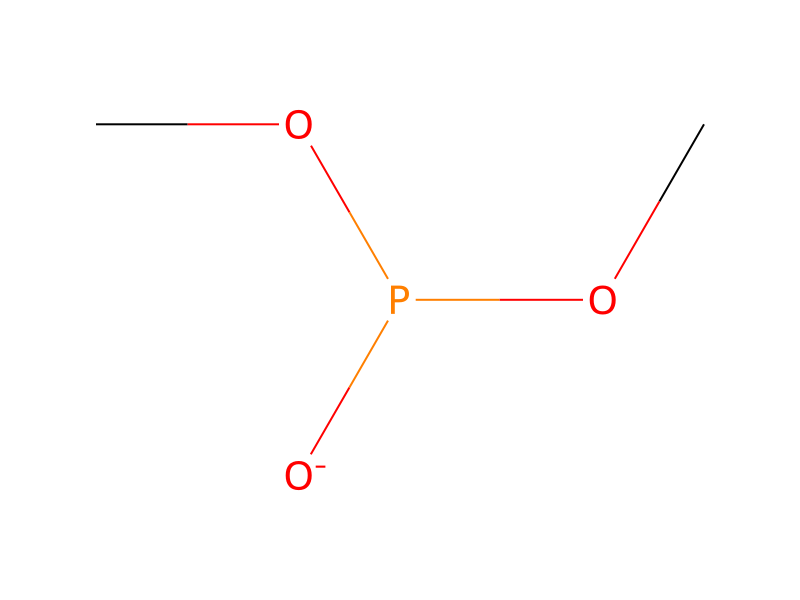
In a stirred reaction vessel was placed 2.31 grams (0.010 mole) of 2-chloro-6-(trichloromethyl)pyridine, 20 ml of N-methylpyrrolidone and 1.35 grams (0.011 mole) of dimethylphosphite. The mixture was heated for about 21/2 hours. During this period, 50 percent aqueous sodium hydroxide was slowly added to maintain the pH slightly basic. At the end of the reaction period, there was 1% of the pyridine starting material remaining. Additionally, it was found that 0.0225 mole of the aqueous sodium hydroxide had been added. The reaction mixture was poured into water, extracted with methylene chloride, dried and the methylene chloride removed by evaporation, to yield 1.6 grams (80% of theoretical) of crude 2-chloro-6-(dichloromethyl)pyridine.