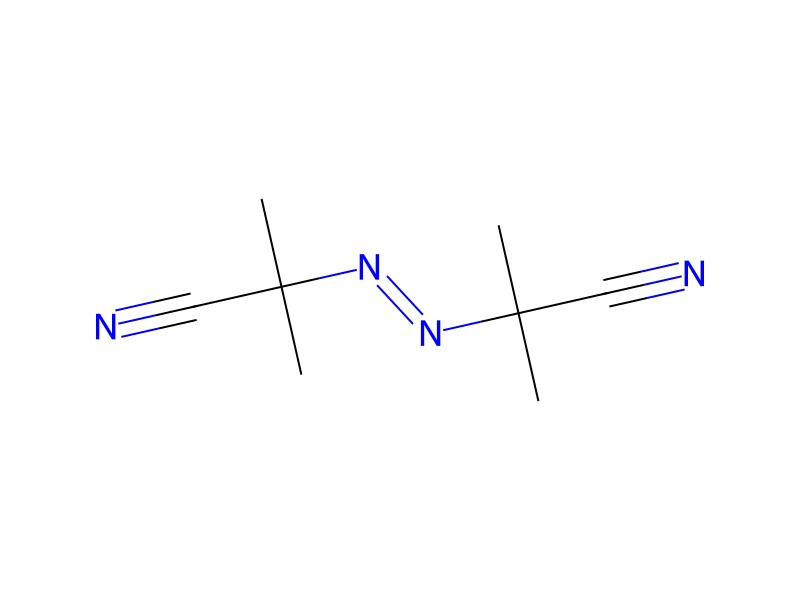
To a mixture of 1B (373 mg, 2.09 mmol), 2,2′-azobisisobutyronitrile (37.2 mg, 0.209 mmol) and N-bromosuccinimide (395 mg, 2.40 mmol) under N2 was added CCl4 (10 ml). The mixture was degassed under vacuum, purged twice with N2, and heated to 80° C. for 1 h. The mixture was allowed to cool to room temperature and the solid was removed by filtration. The filtrate was washed with cold, dilute sodium bicarbonate solution and cold brine, dried over sodium sulfate and concentrated under vacuum. The resulting solid was dissolved in THF (3 ml) and triethylamine (0.7 ml) was added. The mixture was allowed to stir at room temeperature overnight. The newly formed solid was collected by filtration, washed with THF and diethyl ether, dried under a flow of nitrogen, then under high vaccum to give 14A (323 mg, 43%) as a solid. 1H-NMR (400 MHz, DMSO-d6): 8.47 (s, 1H), 7.94 (m, 2H), 7.64 (dd, J1=6.8 Hz, J2=0.8 Hz, 1H), 5.38 (s, 2H), 3.07 (q, J=7.2 Hz, 6H), 1.27 (t, J=7.2 Hz, 9H).