홈MCP워크벤치Skills
홈워크벤치알림마이페이지
llms.txt · MCP 가이드개인정보처리방침 · 이용약관 · 지원v1.8.0
  1. 홈
  2. /화합물

다이사이안 다이아미드

Dicyandiamide

HCID 10005
새 노트새 반응견적 요청하기
인쇄 미리보기
기본 정보개요이름 및 식별자물성안전 및 규제화학 및 산업관련 반응화합물 노트
부분 구조 검색유사 구조 찾기

기본 정보

CAS
461-58-5
표준 SMILES
N#CN=C(N)N
InChIKey
QGBSISYHAICWAH-UHFFFAOYSA-N
분자식
C2H4N4
평균 분자량
84.08 g/mol
단동위원소 질량
84.04359615

개요

Cyanoguanidine is a guanidine in which one of the amino hydrogens of guanidine itself is substituted by a cyano group. It is used in the manufacture of fertilizers, pharmaceuticals, explosives, oil well drilling muds, and dyestuffs. It has a role as a nitrification inhibitor, a fertilizer, an explosive, a curing agent and a flame retardant. It is a nitrile and a member of guanidines.

이름 및 식별자

우선 이름
Dicyandiamide
IUPAC
2-cyanoguanidine
현지명
다이사이안 다이아미드
영어명
Dicyandiamide
분자식
C2H4N4
분자량
84.08

이름 및 동의어

DicyandiamideCYANOGUANIDINE461-58-5DicyanodiamideN-Cyanoguanidine1-CyanoguanidineDicyandiamidoPyroset DODicyandiaminEpicure DICY 7Epicure DICY 15Araldite HT 986
이름 더 보기
1-시아노구아니딘2-시아노구아니딘N-시아노구아니딘구아니딘,시아노다이사이안다이아마이드디시아노디아미드다이사이안다이아미드디시안디아마이드시아노구아니딘디시안디아미드다이사이안다이아마이드1-사이아노구아니딘DCDDicy다이딘다이사이아노다이아마이드다이사이안다이아민사이아노구아니딘DICYDCD2-CyanoguanidineMetformin impurity AMetformin EP Impurity ADSEP
Bakelite VE 2560Araldite XB 2879BAraldite XB 2979BACR-H 3636XB 2879BDTXSID1020354AI3-14632M9B1R0C16H

데이터베이스 식별자

CAS
461-58-5、55295-98-2
PubChem CID
10005
DTXSID
DTXSID1020354
ChEMBL
CHEMBL3183942
ChEBI
CHEBI:147423
UNII
M9B1R0C16H
EC Number
207-312-8、611-249-5
Nikkaji
J3.635H

물성

구조 계산 물성

XLogP
-1.2
극성 표면적
88.2 Ų
수소 결합 공여자 수
2
수소 결합 수용자 수
2
회전 가능 결합 수
0
무거운 원자 수
6
형식 전하
0
복잡도
100

실험 및 물리화학적 성질

Chemical ClassesNitrogen Compounds -> Other Nitrogen Compounds
PesticidesEnvironmental transformation -> Pesticide transformation products (metabolite, successor)
LogP · 3건

Log P= -1.15

-1.5 (estimated)

-1.15

OdorOdorless
Density · 3건

1.400 @ 25 °C/4 °C

1.4 g/cm³

1.4 @25 °C

Color/Form · 2건

MONOCLINIC PRISMATIC CRYSTALS FROM WATER OR ALCOHOL

PURE WHITE CRYSTALS

Solubility · 2건

SOLUBILITY IN H2O @ 13 °C: 2.26%; MORE SOL IN HOT H2O; SOLUBILITY IN ABS ETHANOL @ 13 °C: 1.26%, IN ETHER @ 13 °C: 0.01%; SOL IN LIQUID AMMONIA, INSOL IN BENZENE & CHLOROFORM

Solubility in water, g/100ml at 25 °C: 4.13

Melting Point · 3건

209.5 °C

211 °C

209.5 °C

Vapor Pressure · 2건

0.000171 [mmHg]

3 [mm Hg]

안전 및 규제

안전 정보는 참고용이며, 공급업체의 물질안전보건자료(SDS), 관련 법규 및 전문가 평가를 대체하지 않습니다.

GHS 분류

GHS Classification · 5건

This chemical does not meet GHS hazard criteria for 81.4% (896 of 1101) of all reports.

Warning

H302 (16.4%): Harmful if swallowed [Warning Acute toxicity, oral]

P261, P264, P270, P271, P280, P301+P317, P302+P352, P304+P340, P317, P321, P330, P362+P364, and P501 (click each P-code to see the statement)

Aggregated GHS information provided per 1101 reports by companies from 7 notifications to the ECHA C&L Inventory. Each notification may be associated with multiple companies.

유해성 정보

Regulatory Information · 5건

Chemical: Guanidine, cyano-

Commission Regulation (EC) No 33/2008

Guanidine, N-cyano- is listed on the EPA's Chemical Data Reporting (CDR) system. Manufacturers and importers of Guanidine, N-cyano- are required to report information about their production and use of this chemical to the EPA under the Toxic Substances Control Act (TSCA). (40 eCFR Part 711)

REACH registered substance: Cyanoguanidine (EC: 207-312-8)

Dicyandiamide: Non hazardous

Fire HazardsNot combustible. Gives off irritating or toxic fumes (or gases) in a fire.
Fire PotentialNON-FLAMMABLE.
Hazards SummaryNo listed effects of short-term or long-term exposure; [ICSC] A skin irritant, based on animal studies; [eChemPortal: SIDSUNEP] May cause irritation; May induce methemoglobinemia; Oral LD50 (mouse) >10 gm/kg; [MSDSonline]
Special Reports · 4건

WHO/IPCS; Dicyandiamide. International Chemical Safety Card (1993). A chemical fact sheet which provides acute hazards of dicyandiamide.

An automated colorimetric method for the determination of cyanoguanine in water.[Pretorius DC et al; Water SA (Pretoria) 17 (4): 273-80 (1991)]

Bowman A et al; Contact Dermatitis 13 (3): 189 (1985). Sensitizing potential of dicyanodiamide /is presented/.

화학 및 산업

용도 및 제조

Uses · 6건

Used as a curing agent (epoxy resins), flotation depressant (copper ores), intumescent paint ingredient, electrostatic powder coating ingredient, plasticizer (starch adhesives), fertilizer additive, nitrocellulose stabilizer, antioxidant (fats and oils), fire-proofing compound, case-hardening additive, cleaning and soldering compound, thinner for oil-well drilling muds, detergent stabilizer, and starch modifier; Also used in dye-stuffs and explosives; [HSDB]

Heat Treating [Category: Heat or Machine]

IN PLASTICS INDUSTRY (MFR OF MELAMINE); IN PHARMACEUTICAL INDUSTRY (BARBITURATES, GUANIDINE DERIV)

Heat-cured epoxy resin curing agent; flotation depressant (copper ores); intumescent paint ingredient; electrostatic powder coating ingredient; plasticiser (starch adhesives).

Used as a chemical intermediate for the synthesis of acetoguanamine; benzoguanamine; cyanamide-formaldehyde resins; cyclobarbital; Fluorescent Brightener 179; guanidine nitrate; guanylurea sulfate; heptabarbital; hexobarbital; melamine; metformin; moroxydine; pentobarbital; poly(hexamethylenebiguanide) hydrochloride; o-tolylbiguanide.

IN FERTILIZERS; NITROCELLULOSE STABILIZER; ORG SYNTHESIS... DYE-STUFFS; EXPLOSIVES; RETARDING RANCIDITY IN FATS AND OILS; FIRE-PROOFING CMPD; CASE-HARDENING PREPN; CLEANING /AND/...SOLDERING CMPD; ACCELERATOR; THINNER FOR OIL-WELL DRILLING MUDS.

U.S. Production2023: 8,500,000 - <10,000,000 lb
Consumer UsesSoil amendments (fertilizers)
Industry UsesPolymerization promoter
Methods of Manufacturing · 2건

PREPARED BY CONTROLLED POLYMERIZATION OF CYANAMIDE IN WATER IN PRESENCE OF AMMONIA, ALKALINE EARTH HYDROXIDES, OR OTHER SUITABLE BASES.

Cyanoguanidine is manufactured by dimerization of cyanamide in aqueous solution. The 25% cyanamide solution produced is adjusted to pH 8-9 and held at approximately 80 °C for two hours to give complete conversion. The hot liquor is filtered and transferred to a vacuum crystallizer where it is cooled. The crystals of cyanoguanidine are separated in continuous centrifuges and passed to rotary driers.

관련 반응

32건
반응 기록 만들기
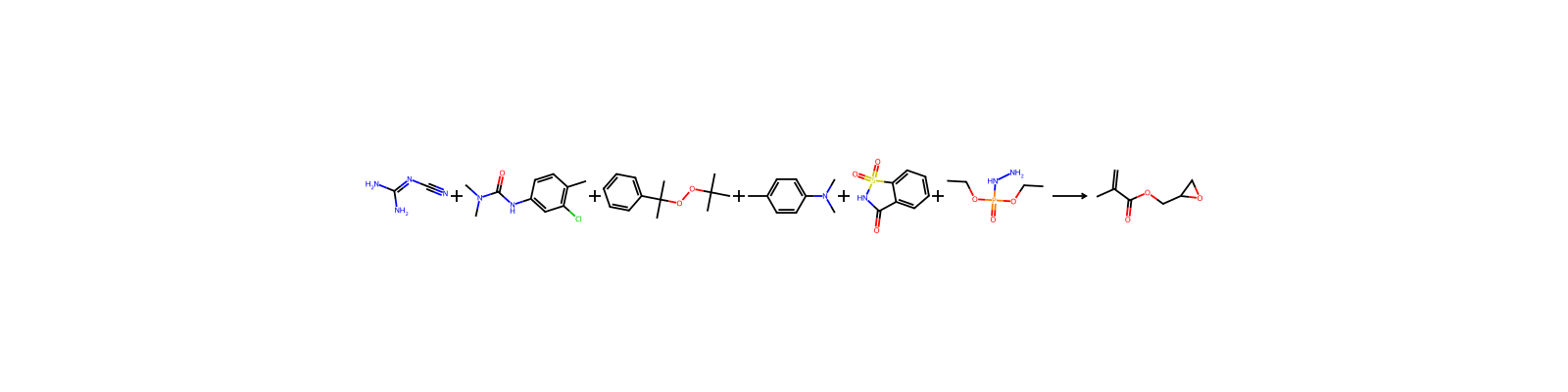
HRID 429626 반응식
HRID 429626반응물로uspto-grants-2001_11
HRID 480520 반응식
HRID 480520반응물로uspto-grants-2003_11
HRID 487839 반응식
HRID 487839생성물로uspto-grants-1994_03
HRID 638021 반응식
HRID 638021반응물로uspto-grants-1985_12
HRID 638022 반응식
HRID 638022반응물로uspto-grants-1985_12
HRID 638023 반응식
HRID 638023반응물로uspto-grants-1985_12
HRID 845111 반응식
HRID 845111반응물로uspto-grants-1988_07
HRID 867156 반응식
HRID 867156반응물로uspto-grants-1978_07
1 / 4 페이지

화합물 노트

불러오는 중…

이 페이지에서기본 정보개요이름 및 식별자물성안전 및 규제화학 및 산업관련 반응화합물 노트
더보기
새 노트새 반응견적 요청하기
Food Contact Substances
FCS -> FDA Inventory of Food Contact Substances Listed in 21 CFR
Heat of Combustion-1382 kJ/mol at 25 °C
Physical Description · 3건

CBI; Dry Powder; Other Solid; Liquid

White odorless solid; [HSDB] White powder; [MSDSonline]

WHITE CRYSTALLINE POWDER.

물리화학적 성질

녹는점
208 · 208-211 °C (lit.)
끓는 점
144.35 °C · 144.35°C (rough estimate)
밀도
1.4 · 1.40
증기압
0.001 Pa · 0.001Pa at 20℃
굴절률
1.626 · 1.6260 (estimate)
저장 조건
2 · 2-8°C
용해도
2 O: · H2O: 0.1 g/mL, 투명
산도 계수 (pKa)
0.73 · 0.73±0.70(Predicted)
물리적 상태
결정성 분말
색상
하얀색
생물학적 소스
rabbit
수용성
32 g/L · 32g/L(20℃)
Merck
14 · 14,3092
BRN
605637 · 605637
Henry's Law Constant
4.3 · 4.3×104 mol/(m3Pa) at 25℃, HSDB (2015)
안정성
안정적인. 강산, 강산화제, 강염기와 호환되지 않습니다.
InChI
1S/C2H4N4/c3-1-6-2(4)5/h(H4,4,5,6)
InChIKey
QGBSISYHAICWAH-UHFFFAOYSA-N
SMILES
NC(=N)NC#N
LogP
-1 at · -1 at 20℃
NIST
Dicyandiamide(461-58-5)
EPA
Dicyanodiamide (461-58-5)

화학적 성질

white powder

British Industrial Biological Research Association; Toxicity Profile of Dicyandiamide (1988). Toxicity profile presents a comprehensive but concise review of the toxicological data on /dicyandiamide/. ...

Chemical Dangers · 1건

Decomposes on heating. This produces toxic gases including ammonia (see ICSC 0414). Reacts violently with strong oxidants such as ammonium nitrate. This generates fire and explosion hazard. Reacts with acids. This produces toxic gases including hydrogen cyanide. See ICSC 0492.

Hazard Classes and CategoriesAcute Tox. 4 (16.4%)
Explosive Limits and PotentialMixtures of cyanoguanidine with ammonium nitrate, potassium chlorate, etc, were formerly proposed for use as powerful explosives.
Skin, Eye, and Respiratory IrritationsBritish Industrial Biological Research Association; Toxicity Profile of Dicyandiamide (1988). Dicyandiamide did not irritate ... when applied to skin of volunteers. ...

안전 및 보호

Fire FightingIn case of fire in the surroundings, use appropriate extinguishing media.
First Aid Measures · 4건

Fresh air, rest.

Rinse skin with plenty of water or shower.

First rinse with plenty of water for several minutes (remove contact lenses if easily possible), then refer for medical attention.

Rinse mouth. Give one or two glasses of water to drink.

Safe StorageSeparated from strong oxidants and strong acids.
Disposal Methods · 1건

SRP: At the time of review, criteria for land treatment or burial (sanitary landfill) disposal practices are subject to significant revision. Prior to implementing land disposal of waste residue (including waste sludge), consult with environmental regulatory agencies for guidance on acceptable disposal practices.

Spillage DisposalSweep spilled substance into sealable containers. If appropriate, moisten first to prevent dusting. Then store and dispose of according to local regulations.
Eye PreventionWear safety spectacles.
Skin PreventionProtective gloves.
Exposure PreventionPREVENT DISPERSION OF DUST!
Inhalation PreventionUse local exhaust.
Protective Action Criteria (PAC) · 3건

120 [mg/m3]

1300 [mg/m3]

7900 [mg/m3]

독성 정보

Environmental Fate · 3건

TERRESTRIAL FATE: Based on a recommended classification scheme(1), an estimated Koc value of 6(SRC), determined from an experimental log Kow of -1.15(2) and a recommended regression-derived equation(3), indicates that cyanoguanidine may have very high mobility in soil(SRC). However, when leaching of cyanoguanidine was measured under simulated groundwater conditions (silty loam, pH 6.5) in lysimeters; only 0.6-0.9% of the applied cyanoguanidine was leached over a 5 year period(4); loss was most likely due to biodegradation(SRC). Biodegradation of this compound may be an important fate process in soil under both aerobic and anaerobic conditions(SRC). Mineralization under aerobic conditions was correlated with soil pH but not with organic matter content or total nitrogen(5). In near-neutral soil (pH = 6.8), 10.2 and 41.6% of the added cyanoguanidine-N was mineralized after 12 and 60 days, respectively(5). In other more acidic soils (pH = 4.0-4.3), mineralization after 60 days was only 10-25% that of the near neutral soil(5). Volatilization of cyanoguanidine is not expected to be important from moist soil surfaces(SRC) given an estimated Henry's Law constant of 2.3X10⁻¹⁰ atm-cu m/mole(SRC), using a fragment constant estimation method(6).

AQUATIC FATE: Based on a recommended classification scheme(1), an estimated Koc value of 6(SRC), determined from a measured log Kow of -1.15(2) and a recommended regression-derived equation(1), indicates that cyanoguanidine should not adsorb to suspended solids and sediment in water(SRC). Cyanoguanidine is not expected to volatilize from water surfaces(1,SRC) based on an estimated Henry's Law constant of 2.3X10⁻¹⁰ atm-cu m/mole(SRC), developed using a fragment constant estimation method(3). According to a classification scheme(4), BCF values of <0.3 and <3.1(5), measured in carp, suggest that bioconcentration in aquatic organisms is low(SRC). Biodegradation of this compound may occur in water under both aerobic and anaerobic conditions(SRC). Cyanoguanidine, added to flooded sediments, was completely degraded under aerobic conditions within 34-44 weeks, while under anaerobic conditions two-thirds of the initial concentration was degraded within 60 weeks(6).

ATMOSPHERIC FATE: According to a model of gas/particle partitioning of semivolatile organic compounds in the atmosphere(1), cyanoguanidine, which has an estimated vapor pressure of 1.7X10⁻³ mm Hg at 25 °C(2,SRC), will exist solely as a vapor in the ambient atmosphere. Vapor-phase cyanoguanidine is degraded in the atmosphere by reaction with photochemically-produced hydroxyl radicals(SRC); the half-life for this reaction in air is estimated to be about 9 hours(3,SRC).

Adverse EffectsMethemoglobinemia - The presence of increased methemoglobin in the blood; the compound is classified as secondary toxic effect
Exposure RoutesThe substance can be absorbed into the body by inhalation and by ingestion.
Soil Adsorption/Mobility · 1건

The Koc of cyanoguanidine is estimated as approximately 6(SRC), using a measured log Kow of -1.15(1) and a regression-derived equation(2,SRC). According to a recommended classification scheme(3), this estimated Koc value suggests that cyanoguanidine has very high mobility in soil(SRC). However, when leaching of cyanoguanidine following mineral fertilization, slurry manuring and decomposition under simulated ground water conditions (silty loam, pH 6.5) was measured in lysimeters(4). After mineral feeding, only 0.6-0.9% of the cyanoguanidine applied in 5 years was leached with the highest leaching rate occurring in October (with 5.6% leached of the added amount)(4).

Human Toxicity Excerpts · 2건

British Industrial Biological Research Association; Toxicity Profile of Dicyandiamide (1988). Dicyandiamide did not ... induce sensitization when applied to skin of volunteers. ...

After 4 yr employment in a factory manufacturing flame retardants, a 29 yr old man developed eczematous reactions on both hands. Patch tests performed with different agents handled by the patient solely at his place of work were positive for the flame retardant and dicyanodiamide, even in high dilutions. Upon changing /positions/, the lesions healed completely. ...

Artificial Pollution Sources · 1건

Cyanoguanidine's production and use in the manufacture of fertilizers, pharmaceuticals, plastics, dye-stuffs, explosives, as a catalyst for epoxy resins, a fire-proofing compound, a stabilizer in detergent compositions, an inhibitor of rancidity in fats and oils, a thinner for oil-well drilling muds(1) and as a paint ingredient(2) may result in its release to the environment through various waste streams(SRC). Cyanoguanidine may be formed during the sewage treatment of nitroguanidine due to abiotic processes(3).

Environmental Biodegradation · 1건

Cyanoguanidine, at 30 mg/l, reached only 2.2% of the theoretical BOD in two weeks using a sludge inoculum(1). Biodegradation of cyanoguanidine was measured in six soils, five collected from Sri Lankan tea plantations and one grassland soil from Highfield, UK; in the near-neutral Highfield soil (pH = 6.8), 10.2 and 41.6% of the cyanoguanidine-N was mineralized after 12 and 60 days, respectively(2). In the other, more acidic soils (pH = 4.0-4.3), only a small percentage of the added cyanoguanidine-N was mineralized to ammonia and nitrate nitrogen; mineralization after 60 days was only 10-25% that of the Highland soil(2). Mineralization was correlated with soil pH but not with organic matter content or total nitrogen(2). Cyanoguanidine, at 20 mg/l was added to flooded sediments; complete degradation was reported within 34-44 weeks for aerobic conditions, while under anaerobic conditions two-thirds of the initial concentration was degraded within 60 weeks(3).

Environmental BioconcentrationBCF values of <0.3 and <3.1 were measured for cyanoguanidine at 2 and 0.2 mg/l, respectively, in carp(1). According to a classification scheme(2), these BCF values suggest that bioconcentration in aquatic organisms is low(SRC).
Volatilization from Water/Soil · 1건

The Henry's Law constant for cyanoguanidine is estimated as 2.3X10⁻¹⁰ atm-cu m/mole(SRC) using a fragment constant estimation method(1). This value indicates that cyanoguanidine will be essentially nonvolatile from water surfaces(2,SRC). Cyanoguanidine's Henry's Law constant(1,SRC) indicates that volatilization from moist soil surfaces should not occur(SRC).

Non-Human Toxicity Excerpts · 4건

RELATIVE TOXICITY OF DICYANDIAMIDE TO SOYBEAN SEEDLINGS. TOXICITY APPEARED AS CHLOROSIS OF OLDER LEAVES & NECROTIC PATCHES ON LEAF MARGINS. RESTRICTION IN ROOT GROWTH & SUPPRESSION OF FRESH & DRY WT WAS MOST CHARACTERISTIC OF DICYANDIAMIDE TOXICITIES.

... The oral LD50 in mice /was found/ to be greater than 4 g/kg when given with alcohol, and greater than 3 g/kg in rabbits.

A 13-week subchronic oral toxicity study of cyanoguanidine was performed in male and female F344 rats by feeding of CRFl powder diets containing 0, 1.25, 2.5, 5 and 10% cyanoguanidine to determine appropriate dose levels for a subsequent 2 year carcinogenicity study. The rats were randomly allocated to 5 groups, each consisting of 10 males and 10 females. No animals died during the administration period. Inhibition of body weight gain was more marked in both sexes of the 10% group and in females of the 5% group as compared with the control group. Mean food intake in males of the groups treated with 5% or 10% and in females of the 10% group was significantly higher than that in the control group. Serum biochemical investigation revealed a higher level of serum BUN in both sexes of the 10% group. On histopathological examination, toxic changes characterized by the occurrence of intranuclear eosinophilic inclusion bodies in the proximal tubular epithelium of the kidney were observed in both sexes of the 10% group. Similar inclusion bodies were also seen in 2 out of 10 females of the 5% group. From these results, it was concluded that a level of 10% of cyanoguanidine in the diet is unequivocally toxic. A dose level, 5% cyanoguanidine, in the diet might be appropriate as a high dose for a carcinogenicity study.

The mutagenic activity of ... /cyanoguanidine/ was tested in reversion mutagenicity assays with a set of histidine auxotrophic strains of Salmonella typhimurium by means of the preincubation method. A possible metabolic activation of the substances by cell free fractions from maize seedlings (S-14 fraction) and for comparison from mouse liver (S-9 mix) was examined. ... Cyanoguanine ... became mutagenic for Salmonella strain TA98 after metabolic activation by the S-14 plant mixture. /Cyanoguanine/ ... was not mutagenic in the presence of S-9 mix made from mouse liver. ...

Environmental Abiotic Degradation · 1건

The rate constant for the vapor-phase reaction of cyanoguanidine with photochemically-produced hydroxyl radicals has been estimated as 4.2X10⁻¹¹ cu cm/molecule-sec at 25 °C(SRC) using a structure estimation method(1,SRC). This corresponds to an atmospheric half-life of about 9 hours at an atmospheric concentration of 5X10+5 hydroxyl radicals per cu cm(1,SRC).

Probable Routes of Human Exposure · 1건

NIOSH (NOES Survey 1981-1983) has statistically estimated that 28,806 workers (5810 of these are female) are potentially exposed to cyanoguanidine in the US(1). Occupational exposure may be through inhalation and dermal contact with this compound at workplaces where cyanoguanidine is produced or used. The general population may be exposed to cyanoguanidine via dermal contact with products containing cyanoguanidine(SRC).

안전 데이터

wgk
1
tsca
TSCA listed
rtecs
ME9950000
ridadr
UN 2811 6.1 / PGIII
독성
LD50 orally in Rabbit: > 5000 mg/kg LD50 dermal Rabbit > 2000 mg/kg
HS 번호
29262000
risk_code
20/21/22-43-36/38-25
hazard_code
Xn,T
safety_code
22-24/25-45-36-3
기존화학 물질
KE-09066
스토리지 클래스
11 - Combustible Solids
유해 물질 데이터
461-58-5(Hazardous Substances Data)
Formulations/Preparations · 2건

GRADES: 99% PURE; TECHNICAL.

Commercial cyanoguanidine: cyanoguanidine = 99.3%; water = 0.01%; melamine = 0.7%; thiourea = 200 ppm; heavy metals = 10 ppm.

Household ProductsInformation on 1 consumer products that contain Dicyandiamide in the following categories is provided:
Use ClassificationEnvironmental transformation -> Pesticide transformation products (metabolite, successor)
General Manufacturing Information · 3건

Wholesale and Retail Trade

Guanidine, N-cyano-: ACTIVE

In 1990, the total worldwide production of cyanoguanidine was about 30,000 tons.

응용 분야

용도Dicyandiamide is a guanidine derivative used in the synthesis of barbiturates,it is also used in the plastics industry (manufacture of melamine).

일반 설명Dicyandiamide is commonly used for the curing of epoxy resins. It is a nitrification inhibitor that is said to be capable of reducing nitrate (NO3-) leaching and nitrous oxide (N2O) emissions from grazed pasture soils.

제조 방법 · 1건

생산 방법Dicyanodiamide is manufactured by dimerization of cyanamide in aqueous solution. The 25% cyanamide solution produced is adjusted to pH 8–9 and held at approximately 80C for 2 h to give complete conversion. The hot liquor is filtered and transferred to a vacuum crystallizer, where it is cooled. The crystals or dicyanodiamide are separated in continuous centrifuges and passed to rotary driers. In 1990, the total worldwide production of dicyanodiamide was about 30,000 tons.

상·하류 제품 정보

상류 원료

석회질소석회석시안아미드활성화 챠콜수산화칼슘

하류 제품

Finishing agent FS설파민구아니딘벤조쿠아나민resin tanning agent RS아미디노티오요소Phenformin hydrochloride설포메튜론-메틸Dye-fixing agent MDicyanide diamino formaldehyde,condensation compoundDye-fixing agent GMoroxydineTribenuron methyl2-Amino-4-methoxy-6-methyl-1,3,5-triazinesynthetic tanning agent MR-102염산 메트포르민멜라민PhenforminChlorsulfuronIrsogladine4-Methoxy-N,6-dimethyl-1,3,5-triazin-2-amine1,3,5-Triazine, 2-phenyl- (9CI)구아니딘 나이트레이트Metsulfuron methylcolor fixing agent Y