홈MCP워크벤치Skills
홈워크벤치알림마이페이지
llms.txt · MCP 가이드개인정보처리방침 · 이용약관 · 지원v1.8.0
  1. 홈
  2. /화합물

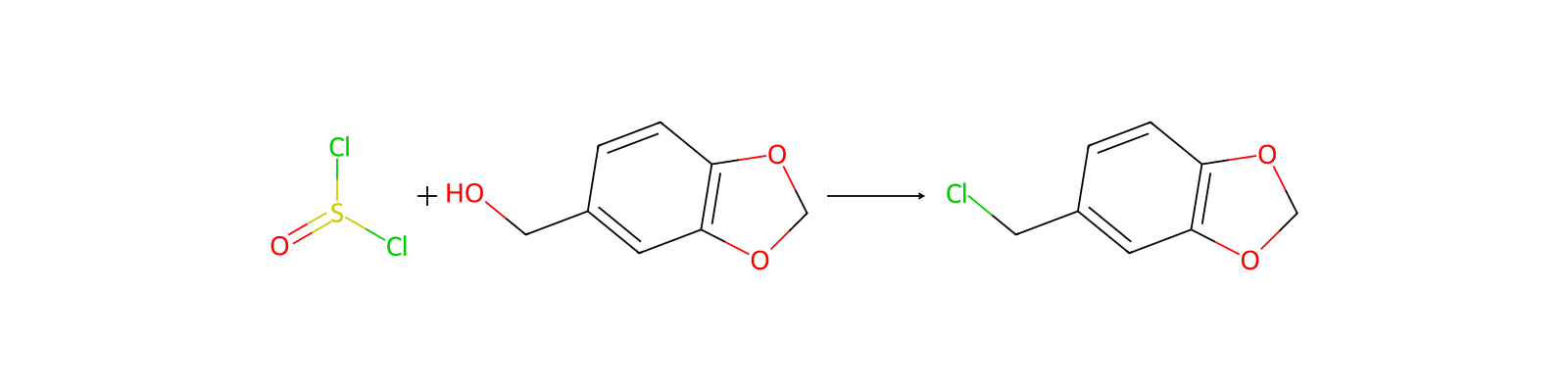
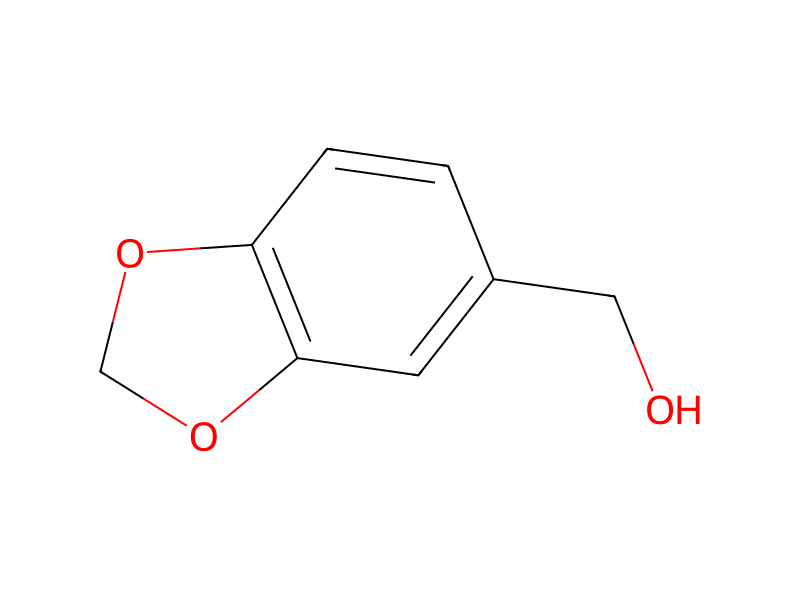
Piperonyl alcohol

HCID 10322
새 노트새 반응견적 요청하기
인쇄 미리보기
기본 정보개요이름 및 식별자물성안전 및 규제화학 및 산업관련 반응화합물 노트
부분 구조 검색유사 구조 찾기

기본 정보

CAS
495-76-1
표준 SMILES
OCc1ccc2c(c1)OCO2
InChIKey
BHUIUXNAPJIDOG-UHFFFAOYSA-N
분자식
C8H8O3
평균 분자량
152.15 g/mol
단동위원소 질량
152.04734412

개요

Piperonol is a member of benzodioxoles.

이름 및 식별자

우선 이름
Piperonyl alcohol
IUPAC
1,3-benzodioxol-5-ylmethanol
영어명
Piperonyl alcohol
분자식
C8H8O3
분자량
152.15

이름 및 동의어

Piperonyl alcohol495-76-1Piperonol1,3-BENZODIOXOLE-5-METHANOL3,4-Methylenedioxybenzyl alcohol5-Hydroxymethyl-1,3-benzodioxoleHeliotropyl alcohol1-Hydroxymethyl-3,4-methylenedioxybenzeneBenzyl alcohol, 3,4-(methylenedioxy)-DTXSID3060089NSC-262654163K563GS
이름 더 보기
Piperonyl alcohol 1g [495-76-1]HELIOALCOHOLAKOS MSC-0745piperonyl alcohoAKOS BBS-00007004TIMTEC-BB SBB004053
RefChem:863613DTXCID3040693207-808-41,3-Benzodioxol-5-ylmethanolBenzo[d][1,3]dioxol-5-ylmethanol5-(Hydroxymethyl)-1,3-benzodioxoleMFCD000058363,4-(Methylenedioxy)benzyl alcohol

데이터베이스 식별자

CAS
495-76-1
PubChem CID
10322
DTXSID
DTXSID3060089
ChEBI
CHEBI:167431
UNII
4163K563GS
EC Number
207-808-4
Nikkaji
J25.458D

물성

구조 계산 물성

XLogP
1.1
극성 표면적
38.7 Ų
수소 결합 공여자 수
1
수소 결합 수용자 수
3
회전 가능 결합 수
1
무거운 원자 수
11
형식 전하
0
복잡도
137

실험 및 물리화학적 성질

PolymersOther Classes -> Alcohols and Polyols, Other
LogP · 2건

log Kow = 1.05

1.05

Flavoring AgentsEU Flavoring substances
Color/Form · 2건

Needles from petroleum ether

White to yellow powder, crystals or chunks

Solubility · 2건

Slightly soluble in water

Soluble in ethanol, ethyl ether, benzene, chloroform, methanol; insoluble in ligroin

Boiling PointBP: 157 °C at 16 mm Hg
Melting Point58 °C
Vapor Pressure0.000254 [mmHg]
Physical DescriptionYellow powder; [Alfa Aesar MSDS]
Stability/Shelf LifeStable under recommended storage conditions.

물리화학적 성질

안전 및 규제

안전 정보는 참고용이며, 공급업체의 물질안전보건자료(SDS), 관련 법규 및 전문가 평가를 대체하지 않습니다.

GHS 분류

GHS Classification · 3건

This chemical does not meet GHS hazard criteria for 97.8% (91 of 93) of all reports.

Not Classified

Aggregated GHS information provided per 93 reports by companies from 3 notifications to the ECHA C&L Inventory.

유해성 정보

Regulatory Information · 3건

Chemical: 1,3-Benzodioxole-5-methanol

Commission Regulation (EC) No 1565/2000 (Repealed by Com. Implementing Reg. (EU) No 872/2012)

1,3-Benzodioxole-5-methanol: Does not have an individual approval but may be used under an appropriate group standard

Hazards SummaryMay cause irritation; [Alfa Aesar MSDS]
Toxic Combustion ProductsCarbon oxides
Hazard Classes and CategoriesNot Classified
Hazardous Reactivities and IncompatibilitiesIncompatible materials: Strong oxidizing agents

안전 및 보호

Fire Fighting ProceduresSuitable extinguishing media: Use water spray, alcohol-resistant foam, dry chemical or carbon dioxide. Advice for firefighters: Wear self-contained breathing apparatus for firefighting if necessary.
Storage ConditionsKeep container tightly closed in a dry and well-ventilated place.
Cleanup Methods · 1건

ACCIDENTAL RELEASE MEASURES: Personal precautions, protective equipment and emergency procedures: Avoid dust formation. Avoid breathing vapors, mist or gas. For personal protection see section Environmental precautions: Do not let product enter drains. Methods and materials for containment and cleaning up: Sweep up and shovel. Keep in suitable, closed containers for disposal.

화학 및 산업

약리 정보

Metabolism/Metabolites · 3건

The metabolism of methylenedioxyphenyl (MDP) compounds was studied in mammals. The purpose of the study was to investigate the mechanism and significance of demethylation of MDP and similar compounds in relation to the metabolism and mode of action of commercial synergist chemicals such as piperonyl-butoxide and tropital. Male Swiss-Webster-mice, Sprague-Dawley-rats, or hamsters were administered 13 carbon-14 labeled MDP compounds such as tropital, piperonal, piperonyl-alcohol, piperonylic-acid, safrole, dihydrosafrole, or piperonyl-butoxide. Urine, feces, and expired air were collected for 48 hours for carbon-14 assay. Carbon-14 activity in the intestine, liver, and carcass was determined. Urine samples were analyzed for metabolites. Compounds such as dihydrosafrole, safrole, myristicin, and piperonyl-butoxide were largely metabolized by oxidation of the methylene group of the MDP moiety to yield radiolabeled carbon-dioxide. The radiolabel ultimately appearing as carbon-dioxide was first liberated as radioactive formate. Carbon-dioxide was not an important route of elimination in the metabolism of piperonyl-alcohol, piperonal, piperonylic-acid, and tropital. Their metabolites were excreted primarily in the urine. No marked species difference was noted in carbon-14 tissue distribution after dosing with tropital and piperonyl-butoxide. Oxidation or conjugation of the side chain was the major metabolic pathway for tropital, piperonal, piperonyl-alcohol, and piperonylic-acid. Urinary metabolites of piperonyl-butoxide included many compounds lacking the MDP moiety and small amounts of 6-propyl-piperonylic-acid and its glycine conjugate. Urinary metabolites of tropital included glycine and glucuronic-acid conjugates of piperonylic-acid. In an in-vitro experiment, radiolabeled piperonyl-butoxide, tropital, safrole, and other MDP compounds were incubated with mouse liver microsomes and were assayed for metabolites. Metabolites such as formate and catechols were detected. The authors conclude that demethylation of the MDP moiety is the major metabolic pathway in mammals given piperonyl-butoxide, safrole, dihydrosafrole and myristicin.

After oral administration of piperine (170 mg/kg) to rats, the metabolites in bile and urine were examined by thin-layer chromatography, high-performance liquid chromatography and combined gas chromatography-mass spectrometry. Four metabolites of piperine, viz. piperonylic acid, piperonyl alcohol, piperonal and vanillic acid were identified in the free form in 0-96 hr urine whereas only piperic acid was detected in 0-6 hr bile. ...

The neolignan, burchellin, a natural compound that reduces urine excretion in larvae of the bloodsucking bug, Rhodnius prolixus, a vector of Chagas' disease, is rapidly degraded in the hemolymph of the insect. The main product that accumulates in this tissue has been shown to be piperonyl alcohol. Other catabolites have been identified by GC-MS analysis.

관련 반응

106건

반응 기록 만들기
HRID 17879 반응식
HRID 17879반응물로uspto-grants-2010_06
HRID 26814 반응식
HRID 26814반응물로uspto-grants-1979_04
HRID 28183 반응식
HRID 28183반응물로uspto-grants-1980_09
HRID 65699 반응식
HRID 65699반응물로uspto-grants-1978_12
HRID 96234 반응식
HRID 96234반응물로Training data from https://doi.org/10.1039/C8SC04228D (2/10)
HRID 97244 반응식
HRID 97244반응물로Training data from https://doi.org/10.1039/C8SC04228D (2/10)
HRID 101463 반응식
HRID 101463반응물로Training data from https://doi.org/10.1039/C8SC04228D (2/10)
HRID 112050 반응식
HRID 112050반응물로Training data from https://doi.org/10.1039/C8SC04228D (2/10)
1 / 14 페이지

화합물 노트

불러오는 중…

이 페이지에서기본 정보개요이름 및 식별자물성안전 및 규제화학 및 산업관련 반응화합물 노트
더보기
새 노트새 반응견적 요청하기
녹는점
50 · 50-54 °C (lit.)
끓는 점
112 °C · 112 °C
밀도
1.2143 · 1.2143 (rough estimate)
굴절률
1.4945 · 1.4945 (estimate)
인화점
230 °F · >230 °F
저장 조건
Inert atmosphere,Room Temperature
용해도
100 mg/mL · DMSO : 100 mg/mL (657.25 mM; Need ultrasonic)
산도 계수 (pKa)
14.36 · 14.36±0.10(Predicted)
물리적 상태
결정 또는 결정성 분말
색상
하얀색
냄새
100 %에서 · 100.00%에서. 달콤한 파우더리 바닐라
냄새 유형
바닐라
수용성
녹는
BRN
136113 · 136113
InChI
1S/C8H8O3/c9-4-6-1-2-7-8(3-6)11-5-10-7/h1-3,9H,4-5H2
InChIKey
BHUIUXNAPJIDOG-UHFFFAOYSA-N
SMILES
OCc1ccc2OCOc2c1
LogP
1.05 · 1.050
NIST
1 · 1,3-Benzodioxole-5-methanol(495-76-1)
EPA
1 · 1,3-Benzodioxole-5-methanol (495-76-1)

화학적 성질

WHITE CRYSTALS OR CRYSTALLINE POWDER

Disposal Methods · 2건

SRP: Recycle any unused portion of the material for its approved use or return it to the manufacturer or supplier. Ultimate disposal of the chemical must consider: the material's impact on air quality; potential migration in air, soil or water; effects on animal, aquatic and plant life; and conformance with environmental and public health regulations. If it is possible or reasonable use an alternative chemical product with less inherent propensity for occupational harm/injury/toxicity or environmental contamination.

Product: Offer surplus and non-recyclable solutions to a licensed disposal company. Contaminated packaging: Dispose of as unused product.

Preventive Measures · 4건

Gloves must be inspected prior to use. Use proper glove removal technique (without touching glove's outer surface) to avoid skin contact with this product. Dispose of contaminated gloves after use in accordance with applicable laws and good laboratory practices. Wash and dry hands.

Provide appropriate exhaust ventilation at places where dust is formed. Normal measures for preventive fire protection.

ACCIDENTAL RELEASE MEASURES: Personal precautions, protective equipment and emergency procedures: Avoid dust formation. Avoid breathing vapors, mist or gas. For personal protection see section Environmental precautions: Do not let product enter drains.

General industrial hygiene practice.

Personal Protective Equipment (PPE) · 4건

Eye/face protection: Use equipment for eye protection tested and approved under appropriate government standards such as NIOSH (US) or EN 166 (EU).

Skin protection: Handle with gloves.

Body Protection: Choose body protection in relation to its type, to the concentration and amount of dangerous substances, and to the specific work-place.

Respiratory protection: Respiratory protection is not required. Where protection from nuisance levels of dusts are desired, use type N95 (US) or type P1 (EN 143) dust masks. Use respirators and components tested and approved under appropriate government standards such as NIOSH (US) or CEN (EU).

독성 정보

Environmental Fate · 3건

TERRESTRIAL FATE: Based on a classification scheme(1), an estimated Koc value of 16(SRC), determined from a log Kow of 1.05(2) and a regression-derived equation(3), indicates that piperonyl alcohol is expected to have very high mobility in soil(SRC). Volatilization of piperonyl alcohol from moist soil surfaces is not expected to be an important fate process(SRC) given an estimated Henry's Law constant of 6.1X10⁻⁷ atm-cu m/mole(SRC), developed using a fragment constant estimation method(3). Piperonyl alcohol is not expected to volatilize from dry soil surfaces(SRC) based upon an estimated vapor pressure of 2.9X10⁻⁴ mm Hg at 25 °C(SRC), determined from a fragment constant method(3). Biodegradation data in soil were not available(SRC, 2018).

AQUATIC FATE: Based on a classification scheme(1), an estimated Koc value of 16(SRC), determined from a log Kow of 1.05(2) and a regression-derived equation(3), indicates that piperonyl alcohol is not expected to adsorb to suspended solids and sediment(SRC). Volatilization from water surfaces is not expected(4) based upon an estimated Henry's Law constant of 6.1X10⁻⁷ atm-cu m/mole(SRC), developed using a fragment constant estimation method(5). According to a classification scheme(5), an estimated BCF of 1.3(SRC), from its log Kow(2) and a regression-derived equation(3), suggests the potential for bioconcentration in aquatic organisms is low(SRC). Biodegradation data in water were not available(SRC, 2018).

ATMOSPHERIC FATE: According to a model of gas/particle partitioning of semivolatile organic compounds in the atmosphere(1), piperonyl alcohol, which has an estimated vapor pressure of 2.9X10⁻⁴ mm Hg at 25 °C(SRC), determined from a fragment constant method(2), will exist in both the vapor and particulate phases. Vapor-phase piperonyl alcohol is degraded in the atmosphere by reaction with photochemically-produced hydroxyl radicals(SRC); the half-life for this reaction in air is estimated to be 7 hrs(SRC), calculated from its rate constant of 5.2X10⁻¹¹ cu cm/molecule-sec at 25 °C(SRC) that was derived using a structure estimation method(2). Particulate-phase piperonyl alcohol may be removed from the air by wet and dry deposition(SRC). Piperonyl alcohol does not contain chromophores that absorb at wavelengths >290 nm(3) and, therefore, is not expected to be susceptible to direct photolysis by sunlight(SRC).

Toxicity Summary · 1건

IDENTIFICATION AND USE: Piperonyl alcohol is a benzodioxole derivative. It is biocompatible and can be used in chemical synthesis as an initiator. HUMAN STUDIES: There are no data available. ANIMAL STUDIES: Oxidation or conjugation of the side chain was the major metabolic pathway for piperonyl alcohol in mice, rats, or hamsters.

Soil Adsorption/Mobility · 1건

The Koc of piperonyl alcohol is estimated as 16(SRC), using a log Kow of 1.05(1) and a regression-derived equation(2). According to a classification scheme(3), this estimated Koc value suggests that piperonyl alcohol is expected to have very high mobility in soil(SRC).

Artificial Pollution SourcesPiperonyl alcohol's production and use as a chemical intermediate(1) may result in its release to the environment through various waste streams(SRC).
Environmental Bioconcentration · 1건

An estimated BCF of 1.2 was calculated in fish for piperonyl alcohol(SRC), using a log Kow of 1.05(1) and a regression-derived equation(2). According to a classification scheme(3), this BCF suggests the potential for bioconcentration in aquatic organisms is low(SRC).

Volatilization from Water/Soil · 1건

The Henry's Law constant for piperonyl alcohol is estimated as 6.1X10⁻⁷ atm-cu m/mole(SRC) developed using a fragment constant estimation method(1). This Henry's Law constant indicates that piperonyl alcohol is expected to be essentially nonvolatile from water and moist soil surfaces(2). Piperonyl alcohol is not expected to volatilize from dry soil surfaces(SRC) based upon an estimated vapor pressure of 2.9X10⁻⁴ mm Hg(SRC), determined from a fragment constant method(1).

Environmental Abiotic Degradation · 1건

The rate constant for the vapor-phase reaction of piperonyl alcohol with photochemically-produced hydroxyl radicals has been estimated as 5.2X10⁻¹¹ cu cm/molecule-sec at 25 °C(SRC) using a structure estimation method(1). This corresponds to an atmospheric half-life of about 7 hours at an atmospheric concentration of 5X10+5 hydroxyl radicals per cu cm(1). Piperonyl alcohol is not expected to undergo hydrolysis in the environment due to the lack of functional groups that hydrolyze under environmental conditions(2). Piperonyl alcohol does not contain chromophores that absorb at wavelengths >290 nm(2) and, therefore, is not expected to be susceptible to direct photolysis by sunlight(SRC).

Probable Routes of Human Exposure · 1건

Occupational exposure to piperonyl alcohol may occur through inhalation and dermal contact with this compound at workplaces where piperonyl alcohol is produced or used. The general public is not likely to be exposed to piperonyl alcohol. (SRC)

Environmental Fate/Exposure Summary · 1건

Piperonyl alcohol's production and use as a chemical intermediate may result in its release to the environment through various waste streams. If released to air, an estimated vapor pressure of 2.9X10⁻⁴ mm Hg at 25 °C indicates piperonyl alcohol will exist in both the vapor and particulate phases in the atmosphere. Vapor-phase piperonyl alcohol will be degraded in the atmosphere by reaction with photochemically-produced hydroxyl radicals; the half-life for this reaction in air is estimated to be 7 hrs. Particulate-phase piperonyl alcohol will be removed from the atmosphere by wet and dry deposition. Piperonyl alcohol does not contains chromophores that absorb at wavelengths >290 nm and, therefore, is not expected to be susceptible to direct photolysis by sunlight. If released to soil, piperonyl alcohol is expected to have very high mobility based upon an estimated Koc of 16. Volatilization from moist soil surfaces is not expected to be an important fate process based upon an estimated Henry's Law constant of 6.1X10⁻⁷ atm-cu m/mole. Piperonyl alcohol is not expected to volatilize from dry soil surfaces based upon its vapor pressure. Biodegradation data in soil or water were not available. If released into water, piperonyl alcohol is not expected to adsorb to suspended solids and sediment based upon the estimated Koc. Volatilization from water surfaces is not expected to be an important fate process based upon this compound's estimated Henry's Law constant. An estimated BCF of 1.3 suggests the potential for bioconcentration in aquatic organisms is low. Hydrolysis is not expected to be an important environmental fate process since this compound lacks functional groups that hydrolyze under environmental conditions (pH 5 to 9). Occupational exposure to piperonyl alcohol may occur through inhalation and dermal contact with this compound at workplaces where piperonyl alcohol is produced or used. Use data suggest that the general population is not likely to be exposed to piperonyl alcohol. (SRC)

Antidote and Emergency Treatment · 3건

/SRP:/ Immediate first aid: Ensure that adequate decontamination has been carried out. If patient is not breathing, start artificial respiration, preferably with a demand valve resuscitator, bag-valve-mask device, or pocket mask, as trained. Perform CPR if necessary. Immediately flush contaminated eyes with gently flowing water. Do not induce vomiting. If vomiting occurs, lean patient forward or place on left side (head-down position, if possible) to maintain an open airway and prevent aspiration. Keep patient quiet and maintain normal body temperature. Obtain medical attention. /Poisons A and B/

/SRP:/ Basic treatment: Establish a patent airway (oropharyngeal or nasopharyngeal airway, if needed). Suction if necessary. Watch for signs of respiratory insufficiency and assist ventilations if needed. Administer oxygen by nonrebreather mask at 10 to 15 L/min. Monitor for pulmonary edema and treat if necessary ... . Monitor for shock and treat if necessary ... . Anticipate seizures and treat if necessary ... . For eye contamination, flush eyes immediately with water. Irrigate each eye continuously with 0.9% saline (NS) during transport ... . Do not use emetics. For ingestion, rinse mouth and administer 5 mL/kg up to 200 mL of water for dilution if the patient can swallow, has a strong gag reflex, and does not drool ... . Cover skin burns with dry sterile dressings after decontamination ... . /Poisons A and B/

/SRP:/ Advanced treatment: Consider orotracheal or nasotracheal intubation for airway control in the patient who is unconscious, has severe pulmonary edema, or is in severe respiratory distress. Positive-pressure ventilation techniques with a bag valve mask device may be beneficial. Consider drug therapy for pulmonary edema ... . Consider administering a beta agonist such as albuterol for severe bronchospasm ... . Monitor cardiac rhythm and treat arrhythmias as necessary ... . Start IV administration of D5W TKO /SRP: "To keep open", minimal flow rate/. Use 0.9% saline (NS) or lactated Ringer's (LR) if signs of hypovolemia are present. For hypotension with signs of hypovolemia, administer fluid cautiously. Watch for signs of fluid overload ... . Treat seizures with diazepam (Valium) or lorazepam (Ativan) ... . Use proparacaine hydrochloride to assist eye irrigation ... . /Poisons A and B/

안전 데이터

wgk
3
tsca
TSCA listed
HS 번호
29329970
hazard_code
Xi
safety_code
24/25
기존화학 물질
KE-02691
위험 참고 사항
Irritant
스토리지 클래스
11 - Combustible Solids
유해 물질 데이터
495-76-1(Hazardous Substances Data)
Absorption, Distribution and Excretion · 1건

... Male Swiss-Webster-mice, Sprague-Dawley-rats, or hamsters were administered 13 carbon-14 labeled MDP compounds such as tropital, piperonal, piperonyl-alcohol, piperonylic-acid, safrole, dihydrosafrole, or piperonyl-butoxide. Urine, feces, and expired air were collected for 48 hours for carbon-14 assay. Carbon-14 activity in the intestine, liver, and carcass was determined. ... Carbon-dioxide was not an important route of elimination in the metabolism of piperonyl-alcohol, piperonal, piperonylic-acid, and tropital. Their metabolites were excreted primarily in the urine. ...

용도 및 제조

Uses · 1건

The results indicate that two benzodioxole derivatives, piperonyl alcohol (PAL) and benzodioxole (BDO), are viable alternatives to conventional amines as coinitiator. The biocompatibility of benzodioxole derivatives makes them more promising than amine in dental resin formulations.

General Manufacturing Information1,3-Benzodioxole-5-methanol: ACTIVE

상·하류 제품 정보

하류 제품

6-Nitropiperonyl alcohol피페로날독심6-브로모-3,4-메틸렌디옥시벤조산PIPERONYL ACETATE피페로닐아세톤paulownin2-[4-(1,3-Benzodioxol-5-ylmethyl)piperazin-1-yl]pyrimidine(2E)-3-(2H-1,3-Benzodioxol-5-yl)-1-(4-methylphenyl)prop-2-en-1-one3,4-메틸렌디옥시벤질메르캅탄5-브로모-6-(클로로메틸)-1,3-벤조디옥솔