홈MCP워크벤치Skills
홈워크벤치알림마이페이지
llms.txt · MCP 가이드개인정보처리방침 · 이용약관 · 지원v1.8.0
  1. 홈
  2. /화합물

4-Nitroanthranilic acid

HCID 12076
새 노트새 반응견적 요청하기
인쇄 미리보기
기본 정보개요이름 및 식별자물성안전 및 규제화학 및 산업관련 반응화합물 노트
부분 구조 검색유사 구조 찾기

기본 정보

CAS
619-17-0
표준 SMILES
Nc1cc([N+](=O)[O-])ccc1C(=O)O
InChIKey
UEALKTCRMBVTFN-UHFFFAOYSA-N
분자식
C7H6N2O4
평균 분자량
182.13 g/mol
단동위원소 질량
182.03275667

개요

4-nitroanthranilic acid appears as orange prisms or orange powder. Sweet taste. (NTP, 1992)

이름 및 식별자

우선 이름
4-Nitroanthranilic acid
IUPAC
2-amino-4-nitrobenzoic acid
영어명
2-Amino-4-nitrobenzoic acid
분자식
C7H6N2O4
분자량
182.13

이름 및 동의어

2-Amino-4-nitrobenzoic acid619-17-04-NITROANTHRANILIC ACIDBenzoic acid, 2-amino-4-nitro-Anthranilic acid, 4-nitro-NCI-C019454-nitro-2-aminobenzoic acidHSDB 4114CCRIS 441DTXSID8020963NSC 7789EINECS 210-583-5
이름 더 보기
4-NitroAnthranillicAcid4-Nitroanthranilic acid, >=99%4-Nitroanthranilic acid, 2-Carboxy-5-nitroanilineNCI C-019454-nitro-anthranilicaci4-Nitroanthralinic acidP-NITROANTHRANILIC ACID
BRN 0785071NSC-7789D7402082SS4-14-00-01087 (Beilstein Handbook Reference)4-NITROANTHRANILIC ACID [HSDB]DTXCID00963CHEBI:753352-CARBOXY-5-NITROANILINE

데이터베이스 식별자

CAS
619-17-0
PubChem CID
12076
DTXSID
DTXSID8020963
ChEMBL
CHEMBL1603870
ChEBI
CHEBI:75335
UNII
D7402082SS
EC Number
210-583-5
Nikkaji
J1.669A

물성

구조 계산 물성

XLogP
1.9
극성 표면적
109 Ų
수소 결합 공여자 수
2
수소 결합 수용자 수
5
회전 가능 결합 수
1
무거운 원자 수
13
형식 전하
0
복잡도
225

실험 및 물리화학적 성질

Chemical ClassesNitrogen Compounds -> Nitrobenzoic Acids
LogP1.91
Color/FormORANGE PRISMS (DIL ALCOHOL)
Solubility · 2건

less than 0.1 mg/mL at 72 °F (NTP, 1992)

INSOL IN WATER; SLIGHTLY SOL IN HOT WATER; VERY SOL IN ALCOHOL, ETHER & ACETONE; SOL IN XYLENE

Melting Point · 2건

514 to 518 °F (decomposes) (NTP, 1992)

269 °C

Vapor Pressure0.00000293 [mmHg]
Physical Description · 2건

4-nitroanthranilic acid appears as orange prisms or orange powder. Sweet taste. (NTP, 1992)

Orange solid; [HSDB]

Collision Cross Section133.5 Ų [M-H]- [CCS Type: DT; Buffer gas: N2; Ionization: ESI-; Dataset: TOXCAST; Source Identifier: DTXSID8020963]
Other Experimental PropertiesUV: 10976 (Sadtler Research Laboratories Spectral Collection) /5-Nitroanthranilic acid/

안전 및 규제

안전 정보는 참고용이며, 공급업체의 물질안전보건자료(SDS), 관련 법규 및 전문가 평가를 대체하지 않습니다.

GHS 분류

GHS Classification · 4건

Warning

H315 (97.9%): Causes skin irritation [Warning Skin corrosion/irritation]

P261, P264, P264+P265, P271, P280, P302+P352, P304+P340, P305+P351+P338, P319, P321, P332+P317, P337+P317, P362+P364, P403+P233, P405, and P501 (click each P-code to see the statement)

Aggregated GHS information provided per 47 reports by companies from 9 notifications to the ECHA C&L Inventory. Each notification may be associated with multiple companies.

유해성 정보

Fire HazardsFlash point data for this chemical are not available; however, it is probably combustible. (NTP, 1992)
Health HazardsSYMPTOMS: Symptoms of exposure to this compound include irritation.
Hazards SummaryNo significant increase in tumors in animal feeding studies; [NTP] An irritant; [MSDSonline]
Reactive GroupAcids, Carboxylic
Special ReportsBioassay of 4-Nitroanthranilic Acid for Possible Carcinogenicity (1978) Technical Rpt Series No. 109 DHEW Pub No. (NIH) 78-1364, U.S. Department of Health Education and Welfare, National Cancer Institute, Bethesda, MD 20014
Reactivity Profile4-NITROANTHRANILIC ACID is incompatible with acids, acid chlorides, acid anhydrides, chloroformates and strong oxidizing agents. (NTP, 1992)
Air and Water ReactionsInsoluble in water.
Hazard Classes and CategoriesSkin Irrit. 2 (97.9%)

화학 및 산업

용도 및 제조

Uses · 2건

Used as a research chemical; Not commercially produced in the US; [HSDB] Formerly used as a dye intermediate; [NTP]

RESEARCH CHEMICAL

U.S. Exports · 2건

(1977) No Data

(1979) No Data

U.S. Imports · 2건

(1977) No Data

(1979) No Data

U.S. Production · 2건

(1977) NOT PRODUCED COMMERCIALLY IN US

(1979) NOT PRODUCED COMMERCIALLY IN US

General Manufacturing InformationBenzoic acid, 2-amino-4-nitro-: ACTIVE

응용 분야

일반 설명Orange prisms or orange powder. Sweet taste.

상·하류 제품 정보

상류 원료

Propanedioic acid, 2-[(2,4-dinitrophenyl)methylene]-, 1,3-diethyl esterN-(2-메틸-5-니트로페닐)아세트아미드2,4-디니트로벤즈알데히드2,4-Diaminobenzoic acid2-아세트아미도-4-니트로벤조산2,4-디니트로벤조익산

관련 반응

69건
반응 기록 만들기
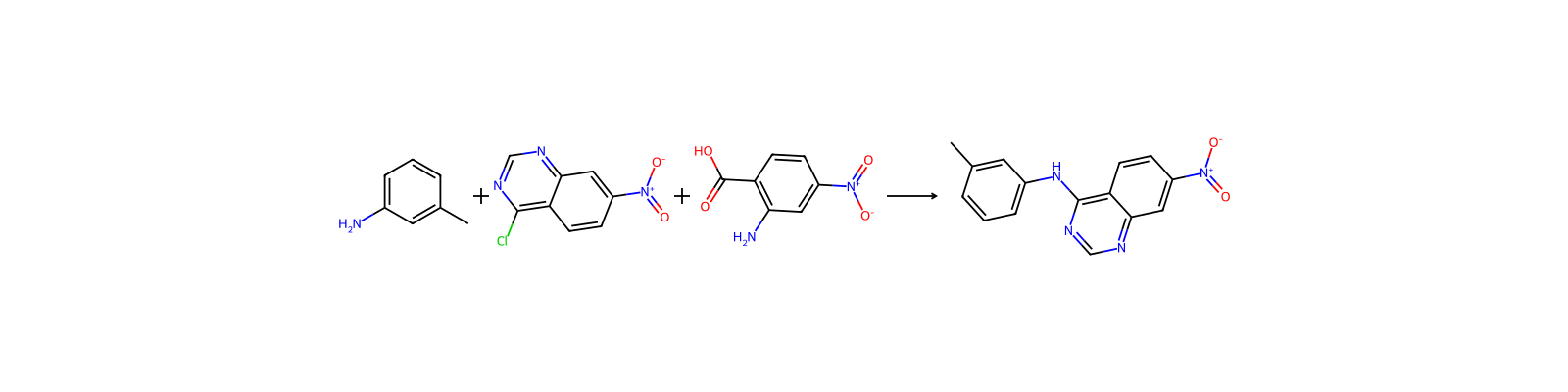
HRID 29659 반응식
HRID 29659반응물로uspto-grants-2008_09
HRID 52033 반응식
HRID 52033반응물로uspto-grants-1997_04
HRID 68672 반응식
HRID 68672반응물로uspto-grants-2014_09
HRID 115445 반응식
HRID 115445반응물로Training data from https://doi.org/10.1039/C8SC04228D (2/10)
HRID 146143 반응식
HRID 146143반응물로Training data from https://doi.org/10.1039/C8SC04228D (9/10)
HRID 175138 반응식
HRID 175138반응물로Training data from https://doi.org/10.1039/C8SC04228D (6/10)
HRID 225493 반응식
HRID 225493반응물로uspto-grants-2009_07
HRID 237315 반응식
HRID 237315반응물로uspto-grants-2014_02
1 / 9 페이지

화합물 노트

불러오는 중…

이 페이지에서기본 정보개요이름 및 식별자물성안전 및 규제화학 및 산업관련 반응화합물 노트
더보기
새 노트새 반응견적 요청하기

물리화학적 성질

녹는점
257 °C · 257 °C (dec.)(lit.)
끓는 점
315.51 °C · 315.51°C (rough estimate)
밀도
1.5181 · 1.5181 (rough estimate)
굴절률
1.588 · 1.5880 (estimate)
저장 조건
Sealed in dry,Room Temperature
물리적 상태
결정성 분말
산도 계수 (pKa)
3.92 · 3.92±0.13(Predicted)
색상
오렌지 레드
수용성
22 · 22&C에서 <0.01g/100mL
주요 응용
펩타이드 합성
InChI
InChI=1S/C7H6N2O4/c8-6-3-4(9(12)13)1-2-5(6)7(10)11/h1-3H,8H2,(H,10,11)
InChIKey
UEALKTCRMBVTFN-UHFFFAOYSA-N
SMILES
C(O)(=O)C1=CC=C([N+]([O-])=O)C=C1N
EPA
4 · 4-Nitroanthranilic acid (619-17-0)

화학적 성질

Orange crystalline powder

안전 및 보호

Fire FightingFires involving this compound can be controlled with a dry chemical, carbon dioxide or Halon extinguisher. (NTP, 1992)
First Aid · 1건

EYES: First check the victim for contact lenses and remove if present. Flush victim's eyes with water or normal saline solution for 20 to 30 minutes while simultaneously calling a hospital or poison control center. Do not put any ointments, oils, or medication in the victim's eyes without specific instructions from a physician. IMMEDIATELY transport the victim after flushing eyes to a hospital even if no symptoms (such as redness or irritation) develop.

Nonfire Spill Response · 1건

SMALL SPILLS AND LEAKAGE: Should a spill occur while you are handling this chemical, FIRST REMOVE ALL SOURCES OF IGNITION, then you should dampen the solid spill material with 60-70% ethanol and transfer the dampened material to a suitable container. Use absorbent paper dampened with 60-70% ethanol to pick up any remaining material. Seal the absorbent paper, and any of your clothes, which may be contaminated, in a vapor-tight plastic bag for eventual disposal. Solvent wash all contaminated surfaces with 60-70% ethanol followed by washing with a soap and water solution. Do not reenter the contaminated area until the Safety Officer (or other responsible person) has verified that the area has been properly cleaned.

Personal Protective Equipment (PPE) · 1건

RECOMMENDED RESPIRATOR: Where the neat test chemical is weighed and diluted, wear a NIOSH-approved half face respirator equipped with an organic vapor/acid gas cartridge (specific for organic vapors, HCl, acid gas and SO2) with a dust/mist filter. (NTP, 1992)

독성 정보

Ongoing Test Status · 1건

The following link will take the user to the National Toxicology Program (NTP) Test Agent Search Results page, which tabulates all of the "Standard Toxicology & Carcinogenesis Studies", "Developmental Studies", and "Genetic Toxicity Studies" performed with this chemical. Clicking on the "Testing Status" link will take the user to the status (i.e., in review, in progress, in preparation, on test, completed, etc.) and results of all the studies that the NTP has done on this chemical. [http://ntp-apps.niehs.nih.gov/ntp_tox/index.cfm?fuseaction=ntpsearch.searchresults&searchterm=619-17-0]

Carcinogen Classification · 6건

4-Nitroanthranilic acid

TR-109: Bioassay of 4-Nitroanthranilic Acid for Possible Carcinogenicity (CASRN 619-17-0) (1978 )

06/29/78

No Evidence

No Evidence

No Evidence

Non-Human Toxicity Excerpts · 3건

4-NITROANTHRANILIC ACID ADMIN IN DIET OF FISCHER 344 RATS (1.5 & 0.46, TIME-WEIGHTED AVG CONCN) & B6C3F1 MICE (1.0 & 0.46) FOR 78 WK. NO STATISTICALLY SIGNIFICANT INCR IN TUMOR INCIDENCE OBSERVED.

4-Nitroanthranilic acid was evaluated mutagenicity in the Salmonella/microsome preincubation assay using the standard protocol approved by the National Toxicology Program. 4-Nitroanthranilic acid was tested at doses of 0.0033, 0.010, 0.033, 0.10, 0.333, 1.0, 2.2, 3.3, and 3.333 mg/plate in as many as 5 Salmonella typhimurium strains (TA1535, TA1537, TA97, TA98, and TA100) in the presence and absence of rat or hamster liver S-9. 4-Nitroanthranilic was positive with and without activation in strains TA1535 and TA100. The lowest positive dose tested was 0.010 mg/plate in strain TA1535.

4-Nitroanthranilic acid (4NAA) was evaluated for the induction of sex-linked recessive lethal mutations in Drosophila melanogaster by the National Toxicology Program. Canton-S wild-type males were treated with concentrations of the test chemical that result in approximately 30% mortality. Following treatment, males were mated individually to 3 harems of Basc virgin females to produce 3 broods for analysis. The concentrations of 4NAA tested by injection (150 ppm) or feeding (2000 ppm) were negative in this assay.

National Toxicology Program Studies · 1건

A bioassay of 4-nitroanthranilic acid for possible carcinogenicity was conducted using Fischer 344 rats and B6C3F1 mice. /The cmpd/ was administered in the feed, at either of two concentrations, to groups of 50 male and 50 female animals of each species. The high and low time weighted avg concentrations used were, respectively, 1.5 and 0.46% for rats and 1.0 and 0.46 for mice. After a 78 wk period of chemical administration, the rats were observed for an additional period of up to 32 wk and the mice for an additional period of up to 17 wk. For rats 50 animals of each sex were placed on test as low dose controls and 25 animals of each sex were placed on test as high dose controls. For mice 50 animals of each sex were placed on test as controls for each dosed group. ... Under the conditions of this bioassay evidence was not provided for the carcinogenicity of 4-nitroanthranilic acid in Fischer 344 rats or B6C3F1 mice. Levels of Evidence of Carcinogenicity: Male Rats: Negative; Female Rats: Negative; Male Mice: Negative; Female Mice: Negative.

안전 데이터

wgk
3
tsca
TSCA listed
rtecs
CB3675000
HS 번호
29224999
risk_code
36/37/38
hazard_code
Xi
safety_code
26-37/39
위험 등급
IRRITANT
Hazard Classifications
Eye Irrit. 2Skin Irrit. 2STOT SE 3
스토리지 클래스
11 - Combustible Solids
유해 물질 데이터
619-17-0(Hazardous Substances Data)
5-나이트로-o-톨루딘
4-Nitrophthalic anhydride
4-Nitrophthalimide
2-클로로-4-니트로벤조산
4-나이트로프탈산
무수프탈산

하류 제품

2-Amino-5-nitrobenzoic acidMFCD129724922-메틸-7-니트로퀴나졸린-4-OL4(3H)-Quinazolinone, 7-amino-2-methyl-3-phenyl-
추가 설명 · 1건

정의ChEBI: 4-nitroanthranilic acid is an aminobenzoic acid that is anthranilic acid with a nitro substituent at position 4. It has a role as a mutagen. It is an aminobenzoic acid and a nitrobenzoic acid. It is functionally related to an anthranilic acid.