

기본 정보
- 표준 SMILES
CO[SiH](OC)OC- InChIKey
YUYCVXFAYWRXLS-UHFFFAOYSA-N- 분자식
- C3H10O3Si
- 평균 분자량
- 122.19 g/mol
- 단동위원소 질량
- 122.03992071
개요
Trimethoxysilane appears as a colorless liquid. Slightly soluble in water and denser than water. Hence floats on water. Very toxic by ingestion, inhalation or skin absorption. May also be corrosive to skin and eyes.
이름 및 식별자
- 우선 이름
- Trimethoxysilane
- IUPAC
- trimethoxysilane
- 현지명
- 트리메톡시실란
- 영어명
- Trimethoxysilane
- 분자식
- C3H10O3Si
- 분자량
- 122.2
이름 및 동의어
RefChem:899733DTXCID707482219-637-22487-90-3DTXSID0027482LS 330Silane, trimethoxy-Trimethoxy silaneTrimethoxysilaneV1J39XPF91trimethoxy-silaneTrimethoxysilane (>85%)
이름 더 보기
트리메톡시실란트라이메톡시 실레인HSi(OCH3)3TriMethoxysilyltrimethoxylsiloxaneDK696AR95.0%DKSI099DKFELEX0085DKFELEX0179trimethoxy-silan
LMD 930; LS 330; SY 2012;(MeO)3SiHSCHEMBL37612NS00046824Q27291417
데이터베이스 식별자
- CAS
2487-90-3- PubChem CID
- 17215
- DTXSID
DTXSID0027482- EC Number
- 219-637-2
물성
구조 계산 물성
- 극성 표면적
- 27.7 Ų
- 수소 결합 공여자 수
- 0
- 수소 결합 수용자 수
- 3
- 회전 가능 결합 수
- 3
- 무거운 원자 수
- 7
- 형식 전하
- 0
- 복잡도
- 31.7
실험 및 물리화학적 성질
Chemical Classes
Metals -> Metalloid Compounds (Silicon)
Flammable agents - 3rd degree
SpringerMaterials PropertiesBoiling point
Density
0.860 g/cu cm at 20 °C
0.860 @ 20°C
Color/FormLiquid
SolubilityHydrolyzes rapidly in water
Boiling Point84 °C
Decomposition
When heated to decomp, it emits acrid smoke and irritating fumes.
The silanes decomp at elevated temp to liberate hydrogen and deposit a high purity silicon, which leads to some of the principal uses of silanes. /Silanes/
Melting Point
-115 °C
-115 °C
PolymerizationHazardous polymerization may occur when exposed to heat or other catalysts.
Vapor Pressure
76.0 [mmHg]
76 mm Hg at 25 °C (ext)
76 [mm Hg] @25 °C
Refractive IndexIndex of refraction: 1.3687 at 20 °C
Heat of Combustion-2.46X10⁻⁹ J/kmol
물리화학적 성질
- 녹는점
- 115 °C · −115 °C(lit.)
- 끓는 점
- 81 °C · 81 °C(lit.)
- 밀도
- 0.96 g/mL · 0.96 g/mL at 25 °C(lit.)
- 증기 밀도
- 1 · >1 (vs air)
- 증기압
- 7.2 mm · <7.2 mm Hg ( 20 °C)
- 굴절률
- 20 · n20/D 1.358(lit.)
- 인화점
- 24 °F · 24 °F
- 저장 조건
- Flammables area
- 용해도
- 클로로포름(소량으로 용해), 메탄올(소량으로 용해)
- 물리적 상태
- 액체
- Specific Gravity
- 0.86 · 0.860
- BRN
- 1697990 · 1697990
- 안정성
- 공기나 물에 노출되면 분해될 수 있습니다. 강산화제, 강염기, 강산과 호환되지 않습니다.
- InChIKey
- YUYCVXFAYWRXLS-UHFFFAOYSA-N
- EPA
- Trimethoxysilane (2487-90-3)
화학적 성질
Colorless clear liquid
안전 및 규제
GHS 분류
GHS Classification
Danger
H225 (100%): Highly Flammable liquid and vapor [Danger Flammable liquids]
P210, P231+P232, P233, P240, P241, P242, P243, P260, P261, P264, P264+P265, P270, P271, P280, P284, P301+P317, P301+P330+P331, P302+P361+P354, P303+P361+P353, P304+P340, P305+P351+P338, P305+P354+P338, P316, P317, P319, P320, P321, P330, P337+P317, P363, P370+P378, P402+P404, P403+P233, P403+P235, P405, and P501 (click each P-code to see the statement)
Aggregated GHS information provided per 120 reports by companies from 7 notifications to the ECHA C&L Inventory. Each notification may be associated with multiple companies.
유해성 정보
Hazards IdentificationToxic/poison by inhalation (TIH/PIH)
Regulatory Information
Chemical: Silane, trimethoxy-
Silane, trimethoxy- is listed on the EPA's Chemical Data Reporting (CDR) system. Manufacturers and importers of Silane, trimethoxy- are required to report information about their production and use of this chemical to the EPA under the Toxic Substances Control Act (TSCA). (40 eCFR Part 711)
Status: Active Update: 28-06-2021 https://echa.europa.eu/registration-dossier/-/registered-dossier/16258
The New Jersey Worker and Community Right to Know Act requires public and private employers to provide information about hazardous substances at their workplaces. (N.J.S.A. 34:5A-1 et. seq.)
Other Safety InformationEvaluation - Chemicals that are unlikely to require further regulation to manage risks to environment
DOT LabelPoison Inhalation Hazard Flammable Liquid
Fire Hazards
Excerpt from ERG Guide 132 [Flammable Liquids - Corrosive]:
· Flammable/combustible material.
Fire PotentialFlammable liquid. Vapors are heavier than air and may travel to a source of ignition and flash back. Combustion may produce irritants and toxic gases. Closed containers may rupture violently when heated.
Health Hazards
Excerpt from ERG Guide 132 [Flammable Liquids - Corrosive]:
· May cause toxic effects if inhaled or ingested.
Hazards Summary
Vapor can cause blindness; [HSDB] Eye instillation in animal experiments caused iritis and corneal injury with complete healing in 7-10 days; All rats that died after inhalation exposure showed severe lung congestion and hemorrhage; Workers complain of lacrimation and disturbance of vision; [AIHA] Highly toxic by ingestion, inhalation, and skin absorption; May cause severe burns; [CAMEO] May decompose on exposure to moisture; A corrosive substance that can cause injury to the skin, eyes, and respiratory tract; Can cause blindness; Inhalation may cause chemical pneumonitis and pulmonary edema; [MSDSonline] See Methyl silicate.
DOT ID and Guide9269 132
Reactive GroupMetal Hydrides, Metal Alkyls, Metal Aryls, and Silanes
Special Reports
OECD; SIDS Initial Assessment Report (SIAR) for SIAM 24. Trimethoxysilane CAS 2487-90-3. April 2007. This OECD Initial Assessment of HPV Chemicals is part of a series of OECD SIDS documents published by UNEP Chemicals to facilitate the access to information needed for health and environmental risk assessments of chemicals.[Available from, as of Sept 16, 2009: http://www.oecd.org/document/63/0,3343,en_2649_34379_1897983_1_1_1_1,00.html]
Reactivity AlertsHighly Flammable
안전 및 보호
Fire FightingExcerpt from ERG Guide 132 [Flammable Liquids - Corrosive]:
Accidental Release Measures
· CALL 911. Then call emergency response telephone number on shipping paper. If shipping paper not available or no answer, refer to appropriate telephone number listed on the inside back cover.
· ELIMINATE all ignition sources (no smoking, flares, sparks or flames) from immediate area.
First Aid
Excerpt from ERG Guide 132 [Flammable Liquids - Corrosive]:
General First Aid:
Exposure Control and Personal Protection
· Wear positive pressure self-contained breathing apparatus (SCBA).
TIH (Toxic Inhalation Hazard) - Term used to describe gases and volatile liquids that are toxic when inhaled. Some are TIH materials themselves, e.g., chlorine, and some release TIH gases when spilled in water, e.g., chlorosilanes. [ERG 2016].
Fire Fighting Procedures
Use dry chemical, aqueous foam, or carbon dioxide. Use water spray to keep fire-exposed containers cool. Fight fire from protected location or maximum possible distance. Approach fire from upwind to avoid hazardous vapors and toxic decomposition products.
If material on fire or involved in fire: Use water in flooding quantities as fog ... Keep run-off water out of sewers and water sources. Cool all affected containers with flooding quantities of water. Apply water from as far a distance as possible.
Wear special protective clothing and positive pressure self-contained breathing apparatus.
Suitable extinguishing media: For small (incipient) fires, use media such as "alcohol" foam, dry chemical, or carbon dioxide. For large fires, apply water from as far as possible. Use very large quantities (flooding) of water applied as a mist or spray; solid streams of water may be ineffective. Cool all affected containers with flooding quantities of water. ... Use water spray to cool unopened containers.
Special protective equipment for fire-fighters: Wear self contained breathing apparatus for fire fighting if necessary.
Storage Conditions
Store in cool place. Keep container tightly closed in a dry and well-ventilated place. Containers which are opened must be carefully resealed and kept upright to prevent leakage. Moisture sensitive.
Store in a cool, dry, well-ventilated location. Separate from acids, oxidizing materials, and water. Outside or detached storage is preferred.
Cleanup Methods
SRP: Wastewater from contaminant suppression, cleaning of protective clothing/equipment, or contaminated sites should be contained and evaluated for subject chemical or decomposition product concentrations. Concentrations shall be lower than applicable environmental discharge or disposal criteria. Alternatively, pretreatment and/or discharge to a permitted wastewater treatment facility is acceptable only after review by the governing authority and assurance that "pass through" violations will not occur. Due consideration shall be given to remediation worker exposure (inhalation, dermal and ingestion) as well as fate during treatment, transfer and disposal. If it is not practicable to manage the chemical in this fashion, it must be evaluated in accordance with EPA 40 CFR Part 261, specifically Subpart B, in order to determine the appropriate local, state and federal requirements for disposal.
Releases may require isolation or evacuation. Eliminate all ignition sources. Use water spray to cool and disperse vapors and protect personnel. Control runoff and isolate discharged material for proper disposal.
Personal precautions: Wear respiratory protection. Avoid breathing vapors, mist or gas. Ensure adequate ventilation. Remove all sources of ignition. Evacuate personnel to safe areas. Beware of vapors accumulating to form explosive concentrations. Vapors can accumulate in low areas. Methods for cleaning up: Contain spillage, and then collect with non-combustible absorbent material, (e.g. sand, earth, diatomaceous earth, vermiculite) and place in container for disposal according to local / national regulations.
Environmental precautions: Prevent further leakage or spillage if safe to do so. Do not let product enter drains.
Nonfire Spill ResponseExcerpt from ERG Guide 132 [Flammable Liquids - Corrosive]:
Disposal Methods
Burn in a chemical incinerator equipped with an afterburner and scrubber but exert extra care in igniting as this material is highly flammable. Observe all federal, state, and local environmental regulations. Contact a licensed professional waste disposal service to dispose of this material.
SRP: The most favorable course of action is to use an alternative chemical product with less inherent propensity for occupational harm/injury/toxicity or environmental contamination. Recycle any unused portion of the material for its approved use or return it to the manufacturer or supplier. Ultimate disposal of the chemical must consider: the material's impact on air quality; potential migration in soil or water; effects on animal and plant life; and conformance with environmental and public health regulations.
Preventive Measures
Caution: silanes are toxic. Avoid contact with skin and eyes. Use effective fume removal device. /Silanes/
If fire becomes uncontrollable or container is exposed to direct flame, consider evacuation of one-third (1/3) mile radius. If material leaking (not on fire), consider evacuation from downwind area based on amount of material spilled, location, and weather conditions.
If material not on fire and not involved in fire: Keep sparks, flames, and other sources of ignition away. Keep material out of water sources and sewers. Build dikes to contain flow as necessary. Attempt to stop leak if without undue personnel hazard.
Personnel protection: Keep upwind. Avoid breathing vapors ... Avoid bodily contact with the material.
For more Preventive Measures (Complete) data for Trimethoxy silane (10 total), please visit the HSDB record page.
Isolation and Evacuation
Excerpt from ERG Guide 132 [Flammable Liquids - Corrosive]:
Immediate precautionary measure
Small spill:
Small spill:
Protective Action Criteria (PAC)
0.50 [ppm]
0.83 [ppm]
2.5 [ppm]
독성 정보
Environmental Fate
TERRESTRIAL FATE: The hydrolytic half-life of trimethoxysilane is 0.3 minutes at 2 degrees C, pH 7.0 and is estimated to be 3 min in air(1). This tendency to rapidly hydrolyze indicates that other processes effecting the fate of trimethoxysilane in moist or dry soil will not be important(SRC).
AQUATIC FATE: The hydrolytic half-life of trimethoxysilane in water is 0.3 minutes at 2 degrees C, pH 7.0 and 0.2 min at pH 9.0 and pH 4.0(1). This tendency to rapidly hydrolyze indicates that other processes effecting aquatic fate will not be important(SRC).
ATMOSPHERIC FATE: According to a model of gas/particle partitioning of semivolatile organic compounds in the atmosphere(1), trimethoxysilane, which has a vapor pressure of 76 mm Hg at 25 °C(2), is expected to exist solely as a gas in the ambient atmosphere. If not immediately hydrolyzed, vapor-phase trimethoxysilane is degraded in the atmosphere by reaction with photochemically-produced hydroxyl radicals(SRC); the half-life for this reaction in air is estimated to be 6.4 days(SRC), calculated from its rate constant of 2.5X10⁻¹² cu cm/molecule-sec at 25 °C(SRC), that was derived using a structure estimation method(3). It is estimated that the hydrolysis half life of trimethoxysilane in air is 3 min(4), so hydrolysis will occur faster than any other fate process in air(SRC). Trimethoxysilane does not contain chromophores that absorb at wavelengths >290 nm(5) and therefore is not expected to be susceptible to direct photolysis by sunlight(SRC).
Adverse EffectsDermatotoxin - Skin burns.
Soil Adsorption/Mobility
Using a structure estimation method based on molecular connectivity indices(1), the Koc of trimethoxysilane can be estimated to be 220(SRC). According to a classification scheme(2), this estimated Koc value suggests that trimethoxysilane is expected to have moderate mobility in soil; however it is unlikely that it will persist in the environment due to the potential for hydrolysis in the presence of moisture or air. The hydrolytic half-life of trimethoxysilane in water is 0.3 minutes at 2 degrees C, pH 7.0 and therefore, leaching and adsorption to sediment in water will not be an important environmental fate process(SRC).
Human Toxicity Excerpts
/SIGNS AND SYMPTOMS/ May be fatal if inhaled. May cause respiratory tract irritation. May be harmful if absorbed through skin. May cause skin irritation. Causes eye irritation.
/SIGNS AND SYMPTOMS/ Severe health hazard. May be fatal if absorbed through skin or inhaled. Corrosive to tissues when wet. Irritating to skin, eyes, and respiratory system.
/SIGNS AND SYMPTOMS/ Vapors ... may be absorbed into corneal tissues causing blindness.
/SIGNS AND SYMPTOMS/ Moderately toxic by inhalation. Mildly toxic by ingestion and skin contact.
For more Human Toxicity Excerpts (Complete) data for Trimethoxy silane (6 total), please visit the HSDB record page.
Artificial Pollution Sources
Trimethoxysilane's production and use as an organic coupling agent(1), adhesive and binding agent, surface activating agent(2), and as an intermediate in the industrial production of organosilanes such as trimethoxysilylpropyl methacrylate(3) may result in its release to the environment through various waste streams(SRC).
Environmental BiodegradationThe hydrolytic half-life of trimethoxysilane in water is 0.3 minutes at 2 degrees C, pH 7.0(1); therefore, biodegradation will not be an important environmental fate process(SRC).
Environmental BioconcentrationThe hydrolytic half-life of trimethoxysilane in water is 0.3 minutes at 2 degrees C, pH 7.0(1); therefore, bioconcentration will not be an important environmental fate process(SRC).
Volatilization from Water/Soil
The hydrolytic half-life of trimethoxysilane in water is 0.3 minutes at 2 degrees C, pH 7.0(1); therefore, volatilization from water will not be an important environmental fate process(SRC). Trimethoxysilane is expected to volatilize from dry soil surfaces(SRC) based upon a vapor pressure of 76 mm Hg(2); however, the rate of hydrolysis in air is estimated to be 0.05 hr (3 min) at 25 °C, pH 7(1).
Non-Human Toxicity Excerpts/LABORATORY ANIMALS: Acute Exposure/ Tests on rabbit eyes showed that trimethoxysilane applied as a solution or spray caused damage of the cornea and conjunctiva similar to that in the patients ...
Environmental Abiotic Degradation
The rate constant for the gas-phase reaction of trimethoxysilane with photochemically-produced hydroxyl radicals has been estimated as 2.5X10⁻¹² cu cm/molecule-sec at 25 °C(SRC) using a structure estimation method(1). This corresponds to an atmospheric half-life of about 6.4 days at an atmospheric concentration of 5X10+5 hydroxyl radicals per cu cm(1). The hydrolytic half-life of trimethoxysilane in water is 0.3 minutes at 2 °C and pH 7.0, and 0.2 minutes at pH 9.0 and pH 4.0. The rate of hydrolysis in air from water vapor is estimated to be 10 times more rapid than in water; 0.05 hr (3 min) at 25 °C, pH 7(2). Trimethoxysilane does not contain chromophores that absorb at wavelengths >290 nm(3) and therefore is not expected to be susceptible to direct photolysis by sunlight(SRC).
Hydrolysis of trimethoxysilane produces 3 moles of methanol and 1 mole of silanetriol. The silane triol produced from hydrolysis can undergo condensation to siloxane oligmers depending on pH and concentration. At high concentrations the condensation can produce highly cross-linked, high molecular weight polymers, but if released slowly the condensation will not occur and will exist predominately as monomer. The polymers are an artifact of hydrolysis and not produced when used as a chemical intermediate in a closed system(1).
Probable Routes of Human Exposure
Occupational exposure to trimethoxysilane may occur through dermal contact or inhalation of this compound at workplaces where trimethoxysilane is produced or used. Due to the reactive nature of this compound, it is produced and used as site-limited intermediate in closed systems limiting the potential for exposure. Exposure to trimethoxysilane among the general population is not expected due to the rapid hydrolysis when exposed to water in the environment, but limited exposure may be present during the use of commercial products containing this compound(SRC). Final products generally contain less than 0.001 percent trimethoxysilane but may contain up to 0.2 percent(1).
Environmental Fate/Exposure Summary
Trimethoxysilane's production and use as an organic coupling agent, adhesive and binding agent, surface activating agent, and as an intermediate in the industrial production of organosilanes such as trimethoxysilylpropyl methacrylate may result in its release to the environment through various waste streams. If released to air, a vapor pressure of 76 mm Hg at 25 °C indicates trimethoxysilane will exist solely in the vapor phase in the atmosphere. Vapor-phase trimethoxysilane will be degraded in the atmosphere by reaction with photochemically-produced hydroxyl radicals; the half-life for this reaction in air is estimated to be 6.4 days, however, hydrolysis in air is estimated to occur faster with a half life of 0.05 hours (3 min). Trimethoxysilane does not contain chromophores that absorb at wavelengths >290 nm and, therefore, is not expected to be susceptible to direct photolysis by sunlight. If released to soil, trimethoxysilane is expected to have moderate mobility based upon an estimated Koc of 220; however, it is unlikely to persist in the environment due to the potential for hydrolysis in the presence of moisture in air. Biodegradation, bioconcentration and volatilization are not important fate processes since hydrolysis occurs rapidly. If released into water, trimethoxysilane will hydrolyze rapidly and therefore is not expected to adsorb to suspended solids and sediments. The hydrolytic half-life of trimethoxysilane in water is 0.3 minutes at 2 degrees C, pH 7.0, and 0.2 min at pH 9.0 and pH 4.0. Occupational exposure to trimethoxysilane may occur through dermal contact or inhalation of this compound at workplaces where trimethoxysilane is produced or used. Due to the reactive nature of this compound, it is produced and used as a site-limited intermediate in closed systems, limiting the potential for exposure. Exposure to trimethoxysilane among the general population is not expected due to the rapid hydrolysis when exposed to moisture in the environment; limited exposure may occur during the use of commercial products containing this compound. Final products generally contain less than 0.001 percent trimethoxysilane but may contain up to 0.2 percent. (SRC)
안전 데이터
- wgk
- 3
- tsca
- TSCA listed
- rtecs
- VV6750000
- ridadr
- UN 3384 6.1/PG 1
- HS 번호
- 29319090
- risk_code
- 11-26-36
- hazard_code
- F,T+
- safety_code
- 16-36/37/39-45
- 포장분류
- I
- 위험 등급
- 6.1(a)
- 기존화학 물질
- KE-34376
- F 고인화성물질
- 10
- 유해 물질 데이터
- 2487-90-3(Hazardous Substances Data)
화학 및 산업
용도 및 제조
Uses
Used to make organic coupling agents (adhesion promoters) in the plastics industry; [HSDB]
Used to prepare a number of organic coupling agents utilized by the plastics industry as adhesion promotors.
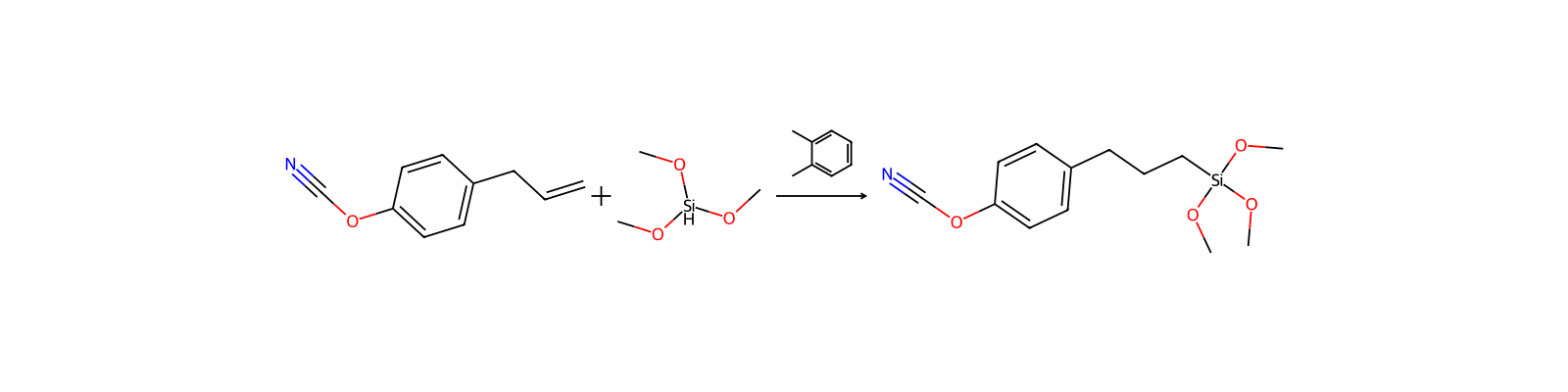
Used in the industrial production of trimethoxysilylpropyl methacrylate [2530-85-0] by direct addition of trimethoxy silane in the presence of radical scavengers.
Used as an adhesive and bindings agent (92%), as an intermediate (7%) and as a surface active agent (1%).
U.S. ImportsTrimethoxysilane is not imported into the United States
U.S. Production
2023: 1,000,000 - <8,500,000 lb
Silane, trimethoxy- is listed as a High Production Volume (HPV) chemical (65FR81686). Chemicals listed as HPV were produced in or imported into the U.S. in >1 million pounds in 1990 and/or 1994. The HPV list is based on the 1990 Inventory Update Rule. (IUR) (40 CFR part 710 subpart B; 51FR21438).
Production volumes for non-confidential chemicals reported under the Inventory Update Rule. [Table#5871]
Production volume for non-confidential chemicals reported under the 2006 Inventory Update Rule. Chemical: Silane, trimethoxy-. Aggreated National Production Volume: 1 to < 10 million lbs.
1702 tonnes in 2001
Industry UsesAdhesion/cohesion promoter
Methods of Manufacturing
Reaction of silicon with ethanol or methanol containing less than 2000 ppm water produces trimethoxy silane with cuprous chloride as the catalyst.
Silane reacts with methanol at room temperature to produce ... trimethoxysilane.
General Manufacturing Information
All Other Basic Inorganic Chemical Manufacturing
Silane, trimethoxy-: ACTIVE
Trimethoxysilane is not sold in industrial or other consumer markets and is not shipped from the original point of manufacture. Trimethoxysilane is produced and used in closed systems (hard piped) and is a site-limited intermediate.
Trimethoxysilane is used in all cases (including those characterized as non-dispersive), as an intermediate in the production of organofunctional silanes. Similarly, in all cases (including those characterized as non-dispersive), the use concerns trimethoxysilane itself, not any hydrolysis or polymerization products. Note that the polymerization products are an artefact of testing in an aqueous or moisture containing environment; these are not produced during the use of trimethoxysilane.
응용 분야
용도Trimethoxysilane is used as a catalyst in the hydrogenation of furfural to furfuryl alcohol.
일반 설명A colorless liquid. Slightly soluble in water and denser than water. Hence floats on water. Very toxic by ingestion, inhalation or skin absorption. May also be corrosive to skin and eyes.
상·하류 제품 정보
하류 제품
공급사50 곳
梯希爱(上海)化成工业发展有限公司021-67121386 · [email protected]
上海阿拉丁生化科技股份有限公司400-6206333 13167063860 · [email protected]
温州共赢化学有限公司+86-0086-577-64498589 +86-15355981851 · [email protected]
T&W GROUP021-61551611 13296011611 · [email protected]
Baoji Guokang Healthchem co.,ltd+8615604608665 15604608665 · [email protected]
Dayang Chem (Hangzhou) Co.,Ltd.+86-0571-88938639 17705817739 · [email protected]
南京兰亚化工贸易有限公司+86-25-8331-5620 · [email protected]
上海迈瑞尔生化科技有限公司4006356688 18621169109 · [email protected]
安耐吉化学&3A(安徽泽升科技股份有限公司)400-0056266 · [email protected]
上海瀚鸿科技股份有限公司021-54306202 13764082696 · [email protected]
嘉兴市艾森化工有限公司0573-85285100 18627885956 · [email protected]
武汉丰泰威远科技有限公司+86-27-8746-5837 +86-18627785180 · [email protected]
上海比阳实业有限公司+86-15021878111 · [email protected]
恒桥产业股份有限公司025-84712192 · [email protected]
山东西亚化学有限公司13355009207 13355009207 · [email protected]
玛雅试剂+86 (573) 82222445 (0)18006601000 452520369 · [email protected]
四川库利南科技有限公司400-1166-196 18981987031 · [email protected]
天津希恩思生化科技有限公司400 638 7771 · [email protected]
湖南汇百侍生物科技有限公司0731-85526065 13308475853 · [email protected]
艾科试剂4008-755-333 18080918076 · [email protected]
上海思域化工科技有限公司86-21-34053660 · [email protected]
赛默飞世尔科技(中国)有限公司800-810-5118 · [email protected]
上海遐瑞医药科技有限公司+86 21 61551611
江苏艾康生物医药研发有限公司025-66113011 13913916777 · [email protected]
TOKYO CHEMICAL INDUSTRY CO., LTD.03-36680489 · [email protected]
上海将来实业股份有限公司400-0066400 13621662912 · [email protected]
上海将来实业股份有限公司021-61552785 · [email protected]
安徽科迪达化工有限公司0554-2106669 · [email protected]
HBCChem, Inc.+1-510-219-6317 · [email protected]
上海探圭新材料科技有限公司18516111942 · [email protected]
美岚实业(上海)有限公司021-58958189 · [email protected]
上海石洋化工有限公司021-56795766 · [email protected]
上海爱蝶实业有限公司021-58957966 18930537195 · [email protected]
成都零六生物科技有限公司400-1166-196 13458535857 · [email protected]
广拓化学(上海)有限公司021-60899189-8001 18918189673 · [email protected]
上海麦克林生化科技股份有限公司15221275939 15221275939 · [email protected]
杭州杰恒化工有限公司0571-87396432 · [email protected]
上海嵩爰化工科技有限公司010-1234567 18521000990 · [email protected]
上海有朋化工有限公司021-69005955 13701776567 · [email protected]
北京欣赛维化学科技有限公司010-56218822 13717722232 · [email protected]
上海凯赛化工有限公司021-33516722 13701817765 · [email protected]
上海彤源化工有限公司021-021-69182866 13701855675 · [email protected]
上海兴鲁化工科技有限公司02120970332 · [email protected]
北京华扬致成科技有限公司13716033033 · [email protected]
上海容立化学科技有限公司021-69992220 13701886816 · [email protected]
上海康拓化工有限公司021-69185552 13701777608 · [email protected]
湖北巨胜科技有限公司027-59599241 18871490274 · [email protected]
池州凯隆进出口贸易有限公司[email protected]
桦特昇生物科技(武汉)有限公司027-59207879 1972026995 18140587686 · [email protected]
石家庄通洋进出口有限公司[email protected]
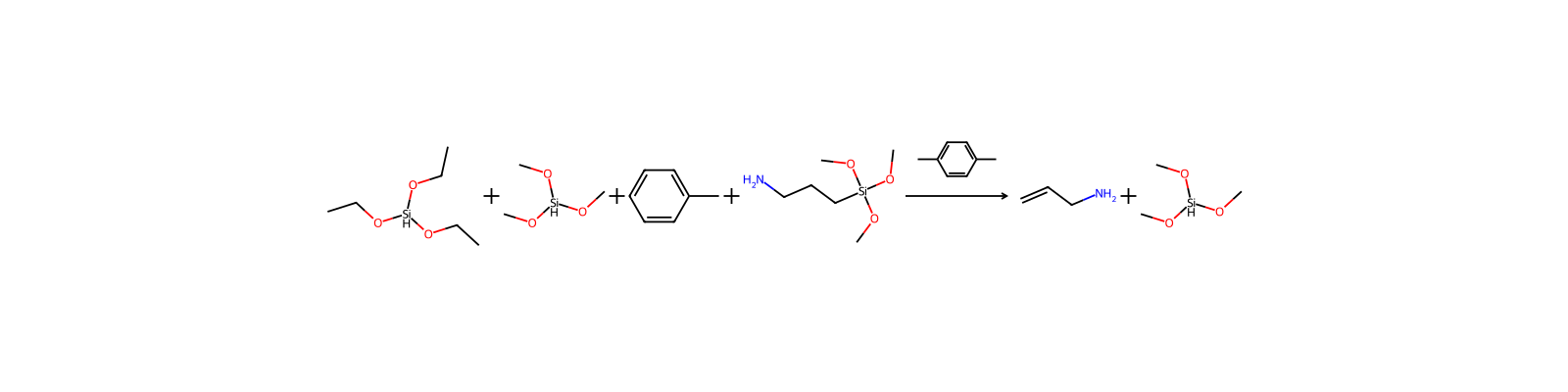
관련 반응
71건


연결된 노트
불러오는 중…