
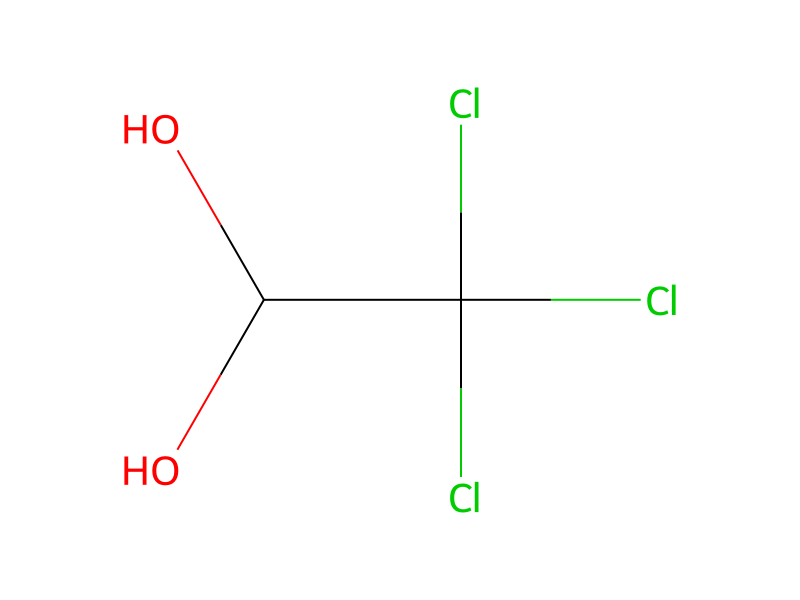
기본 정보
- 표준 SMILES
OC(O)C(Cl)(Cl)Cl- InChIKey
RNFNDJAIBTYOQL-UHFFFAOYSA-N- 분자식
- C2H3Cl3O2
- 평균 분자량
- 165.4 g/mol
- 단동위원소 질량
- 163.91986238
개요
Chloral Hydrate can cause cancer according to California Labor Code.
이름 및 식별자
- 우선 이름
- Chloral Hydrate
- IUPAC
- 2,2,2-trichloroethane-1,1-diol
- 현지명
- 포수클로랄
- 영어명
- Chloral hydrate
- 분자식
- C2H3Cl3O2
- 분자량
- 165.4
이름 및 동의어
chloral hydrate302-17-02,2,2-Trichloroethane-1,1-diolTrichloroacetaldehyde hydrateNoctecTosylChloral monohydrateChloralduratChloralhydratePhaldroneNycotonEscre
이름 더 보기
클로랄수화물포수클로랄클로랄수화물2,2,2-트라이클로로에탄-1,1-다이올TCAHSoraLTrichloroCHLORAL HYDRATE SOLUTIONTRICHLOROACETALDEHYDE MONOHYDRATEHydral
ChloradormCohidrateFelsulesKessodrateOradrateRectulesTrawotoxDormal
데이터베이스 식별자
- CAS
302-17-0- PubChem CID
- 2707
- DTXSID
DTXSID7020261- ChEMBL
CHEMBL455917- ChEBI
CHEBI:28142- UNII
- 418M5916WG
- EC Number
- 206-117-5
- Nikkaji
- J1.517B
물성
구조 계산 물성
- XLogP
- 1
- 극성 표면적
- 40.5 Ų
- 수소 결합 공여자 수
- 2
- 수소 결합 수용자 수
- 2
- 회전 가능 결합 수
- 0
- 무거운 원자 수
- 7
- 형식 전하
- 0
- 복잡도
- 56.4
실험 및 물리화학적 성질
Chemical Classes
Other Classes -> Halogenated Alcohols
Carcinogens
Drugs
DEA NFLIS-Drug Category -> Depressants and Tranquilizers
DEA Schedule IV Controlled Substance -> Depressants
Pharmaceuticals -> Antiepileptics
Pharmaceuticals
Pharmaceuticals -> Listed in ZINC15
Pharmaceuticals -> Used in Switzerland
pH3.5-4.4 (10% soln in water)
SpringerMaterials PropertiesMoessbauer quadrupole effect
PesticidesPesticide -> EPA IRIS
LogP
log Kow = 0.99
0.99
Odor
Aromatic, penetrating and slightly acrid odor
Characteristic: sweet
TasteSlightly bitter, caustic taste
Density
1.9081 at 68 °F (NTP, 1992) - Denser than water; will sink
1.9081 g/cu cm at 20 °C/4 °C
1.9 g/cm³
1.9081 @ 20°C
Color/Form
COLORLESS OR WHITE CRYSTALS
Transparent, colorless crystals
Large, monoclinic plates
Solubility
greater than or equal to 10 mg/mL at 68.9 °F (NTP, 1992)
Freely soluble in acetone, methyl ethyl ketone. Moderately or sparingly soluble in turpentine, petroleum ether, carbon tetrachloride, benzene, toluene.
Very soluble in benzene, ethyl ether, and ethanol.
In water, 7.93X10+5 mg/L at 25 °C
Solubility in water: very good
Corrosivity... Corrosive to the skin and mucous membrane unless well diluted
물리화학적 성질
- 녹는점
- 57 °C · 57 °C(lit.)
- 끓는 점
- 97 °C · 97 °C
- 밀도
- 1.43 g/mL · 1.43 g/mL at 20 °C
- 증기압
- 19.998 hPa · 19.998hPa at 25℃
- 굴절률
- 1.4603 · 1.4603 (estimate)
- 인화점
- 16 °C · 16 °C
- 저장 조건
- 0 · 0-6°C
- 용해도
- 물에 매우 잘 녹고 에탄올에 잘 녹습니다(96%).
- 산도 계수 (pKa)
- 10 · 10(at 25℃)
- 물리적 상태
- 결정성 고체
- Specific Gravity
- 1.91 · 1.91
- 수소이온지수(pH)
- 3.5 · 3.5-5.5 (20℃, 10%)
- 수용성
- 660 g/100mL · 660g/100mL
- Merck
- 13 · 13,2080
- BRN
- 1698497 · 1698497
- Henry's Law Constant
- 2.4 · 2.4×103 mol/(m3Pa) at 25℃, HSDB (2015)
- Dielectric constant
- 5.5 · 5.5(15℃)
- 안정성
- 안정적이지만 공기나 빛에 민감할 수 있습니다. 알코올, 시안화물, 요오드, 강염기, 탄산염과 호환되지 않습니다.
- 주요 응용
- 환경
- InChI
- 1S/C2H3Cl3O2/c3-2(4,5)1(6)7/h1,6-7H
- InChIKey
- RNFNDJAIBTYOQL-UHFFFAOYSA-N
- SMILES
- OC(O)C(Cl)(Cl)Cl
- LogP
- 1.092 at · 1.092 at 25℃
- NIST
- Chloral hydrate(302-17-0)
- EPA
- Chloral hydrate (302-17-0)
안전 및 규제
GHS 분류
GHS Classification
Danger
H301: Toxic if swallowed [Danger Acute toxicity, oral]
P264, P264+P265, P270, P280, P301+P316, P302+P352, P305+P351+P338, P321, P330, P332+P317, P337+P317, P362+P364, P405, and P501 (click each P-code to see the statement)
Danger
H301 (99%): Toxic if swallowed [Danger Acute toxicity, oral]
P264, P264+P265, P270, P280, P301+P316, P302+P352, P305+P351+P338, P321, P330, P332+P317, P337+P317, P362+P364, P405, and P501 (click each P-code to see the statement)
유해성 정보
Regulatory Information
Chemical: 1,1-Ethanediol, 2,2,2-trichloro-
Hazard Traits - Carcinogenicity; Neurotoxicity
DEA schedule IV controlled substance
Status: Active Update: 01-03-2023 https://echa.europa.eu/registration-dossier/-/registered-dossier/17704
Chloral hydrate: Does not have an individual approval but may be used under an appropriate group standard
The New Jersey Worker and Community Right to Know Act requires public and private employers to provide information about hazardous substances at their workplaces. (N.J.S.A. 34:5A-1 et. seq.)
DOT LabelPoison
Fire Hazards
Flash point data for this chemical are not available; however, it is probably combustible. (NTP, 1992)
Not combustible. Gives off irritating or toxic fumes (or gases) in a fire.
Fire PotentialCombustible when exposed to heat or flame.
Health Hazards
SYMPTOMS: Symptoms of exposure to this compound include general anesthesia, cardiac arrythmias and blood pressure depression. Other symptoms include hemorrhagic gastritis, enteritis, central nervous system depression, coma, severe respiratory depression, ventricular tachycardia and cardiac arrest. Dermatitis, swelling of the lids, hyperemia, edema of the conjuctiva and a sensation of irritation and tearing may also occur. Exposure may result in gastric irritation, rapid circulatory collapse, kidney and liver damage, heart damage, psychosis and leukopenia. Flatulence, abdominal distension, nausea, headache, giddiness, rashes and blood dyscrasias can occur.
Hazards Summary
A skin, eye, and respiratory tract irritant; A CNS depressant; [ICSC] A skin and mucous membrane irritant; May cause eye injury; [HSDB] A skin and eye irritant; [eChemPortal: ERMA; ESIS] An irritant; [MSDSonline] Liver injury reported after lethal doses, but not after therapeutic doses; [INCHEM: CICADS]
FDA Requirements
Drug products containing certain active ingredients offered over-the-counter (OTC) for certain uses. A number of active ingredients have been present in OTC drug products for various uses, as described below. However, based on evidence currently available, there are inadequate data to establish general recognition of the safety and effectiveness of these ingredients for the specified uses: chloral hydrate is included in external analgesic drug products - analgesic and anesthetic drug products.
Drug products containing certain active ingredients offered over-the-counter (OTC) for certain uses. A number of active ingredients have been present in OTC drug products for various uses, as described below. However, based on evidence currently available, there are inadequate data to establish general recognition of the safety and effectiveness of these ingredients for the specified uses: chloral hydrate is included in external analgesic drug products - counter irritant drug products.
Drug products containing certain active ingredients offered over-the-counter (OTC) for certain uses. A number of active ingredients have been present in OTC drug products for various uses, as described below. However, based on evidence currently available, there are inadequate data to establish general recognition of the safety and effectiveness of these ingredients for the specified uses: chloral hydrate is included in external analgesic drug products - fever blister and cold sore treatment drug products.
Drug products containing certain active ingredients offered over-the-counter (OTC) for certain uses. A number of active ingredients have been present in OTC drug products for various uses, as described below. However, based on evidence currently available, there are inadequate data to establish general recognition of the safety and effectiveness of these ingredients for the specified uses: chloral hydrate is included in external analgesic drug products - poison ivy, poison oak, and poison sumac drug products.
For more FDA Requirements (Complete) data for CHLORAL HYDRATE (8 total), please visit the HSDB record page.
Reactive GroupAlcohols and Polyols
EC ClassificationSymbol: T; R: 25-36/38; S: (1/2)-25-45
UN ClassificationUN Hazard Class: 6.1
Special Reports
DHHS/NIDA; Research Monograph Series 52: Testing Drugs for Physical Dependence Potential and Abuse Liability (1984) DHHS Pub No. (ADM)87-1332
DHHS/NIDA; Research Monograph Series 54: Mechanisms of Tolerance and Dependence (1984) DHHS Pub No. (ADM)88-1330
DHHS/NIDA; Research Monograph Series 56: Etiology of Drug Abuse: Implications for Prevention (1987) DHHS Pub No. (ADM)87-1335
DHHS/NIDA; Research Monograph Series 59: Current Research on the Consequences of Maternal Drug Abuse (1985) DHHS Pub No. (ADM)85-1400
For more Special Reports (Complete) data for CHLORAL HYDRATE (9 total), please visit the HSDB record page.
Reactivity Profile
CHLORAL HYDRATE is incompatible with alkalis, alkaline earth metals, alkali carbonates and soluble barbiturates. It is decomposed by sodium hydroxide. It reduces ammoniacal silver nitrate. It liquefies when triturated with an equal quantity of menthol, camphor or thymol. (NTP, 1992). Reaction of chloral hydrate with hydroxylamine produces toxic hydrogen cyanide gas, Org. Synth., 1941, Vol. 1, 377.
안전 및 보호
Fire Fighting
Fires involving this material can be controlled with a dry chemical, carbon dioxide or Halon extinguisher. (NTP, 1992)
In case of fire in the surroundings, use appropriate extinguishing media. In case of fire: keep drums, etc., cool by spraying with water.
First Aid Measures
Fresh air, rest. Artificial respiration may be needed. Refer immediately for medical attention.
Rinse skin with plenty of water or shower.
First rinse with plenty of water for several minutes (remove contact lenses if easily possible), then refer for medical attention.
Rinse mouth. Do NOT induce vomiting. Refer immediately for medical attention.
First Aid
EYES: First check the victim for contact lenses and remove if present. Flush victim's eyes with water or normal saline solution for 20 to 30 minutes while simultaneously calling a hospital or poison control center. Do not put any ointments, oils, or medication in the victim's eyes without specific instructions from a physician. IMMEDIATELY transport the victim after flushing eyes to a hospital even if no symptoms (such as redness or irritation) develop.
Safe StorageSeparated from strong bases and food and feedstuffs.
Storage ConditionsChloral hydrate oral solution should be stored in tight, light-resistant containers. Chloral hydrate capsules should be stored at 15-30 °C.
Nonfire Spill Response
SMALL SPILLS AND LEAKAGE: If you spill this chemical, you should dampen the solid spill material with water, then transfer the dampened material to a suitable container. Use absorbent paper dampened with water to pick up any remaining material. Seal your contaminated clothing and the absorbent paper in a vapor-tight plastic bag for eventual disposal. Wash all contaminated surfaces with a soap and water solution. Do not reenter the contaminated area until the Safety Officer (or other responsible person) has verified that the area has been properly cleaned.
Disposal Methods
SRP: At the time of review, criteria for land treatment or burial (sanitary landfill) disposal practices are subject to significant revision. Prior to implementing land disposal of waste residue (including waste sludge), consult with environmental regulatory agencies for guidance on acceptable disposal practices.
Chloral hydrate is a waste chemical stream constituent which may be subjected to ultimate disposal by controlled incineration. Preferably after mixing with another combustible fuel, care must be exercised to assure complete combustion to prevent the formation of phosgene; an acid scrubber is necessary to remove the halo acids produced.
The following wastewater treatment technology has been investigated for chloral hydrate: Concentration process: Solvent extraction.
Spillage Disposal
Personal protection: particulate filter respirator adapted to the airborne concentration of the substance. Sweep spilled substance into covered containers. If appropriate, moisten first to prevent dusting. Carefully collect remainder. Then store and dispose of according to local regulations.
Preventive Measures
SRP: The scientific literature for the use of contact lenses in industry is conflicting. The benefit or detrimental effects of wearing contact lenses depend not only upon the substance, but also on factors including the form of the substance, characteristics and duration of the exposure, the uses of other eye protection equipment, and the hygiene of the lenses. However, there may be individual substances whose irritating or corrosive properties are such that the wearing of contact lenses would be harmful to the eye. In those specific cases, contact lenses should not be worn. In any event, the usual eye protection equipment should be worn even when contact lenses are in place.
Isolation and EvacuationExcerpt from ERG Guide 154 [Substances - Toxic and/or Corrosive (Non-Combustible)]:
Eye PreventionWear safety spectacles or eye protection in combination with breathing protection if powder.
Inhalation RiskA harmful contamination of the air will be reached rather slowly on evaporation of this substance at 20 °C.
독성 정보
Body Burden
Chloral hydrate has been detected in /human/ ... milk ... .
Chloral hydrate and its metabolite, trichloroethanol reached 50-100% /in breast milk/ of maternal blood levels in most of 50 women given 1.3 g rectally.
Interactions
Prolonged concurrent use /with other addictive medications especially CNS depressants with habituating potential/ may increase the risk of habituation; caution is recommended.
Concurrent use /with alcohol or other CNS depression-producing medications/ may increase the CNS depressant effect of either these medications or chloral hydrate; caution is recommended and dosage of one or both agents should be reduced.
Hypoprothrombinemic effects may be increased when these medications /coumarin- or indandione-derivative anticoagulants/ are used concurrently with chloral hydrate, particularly during the first 2 weeks of concurrent therapy, because of displacement of the anticoagulant from its plasma protein binding sites; with continued concurrent use, anticoagulant activity may return to baseline level or be decreased; frequent prothrombin-time determinations may be required, especially during initiation of chloral hydrate therapy, to determine if dosage adjustment of the anticoagulant is necessary.
Administration of chloral hydrate followed by intravenous furosemide within 24 hours may result in diaphoresis, hot flashes, and variable blood pressure, including hypertension, due to a hypermetabolic state caused by displacement of thyroxine from its bound state.
For more Interactions (Complete) data for CHLORAL HYDRATE (13 total), please visit the HSDB record page.
Target OrgansGastrointestinal
Hepatotoxicity
Chloral hydrate has been in clinical use for many decades and has not been linked to serum enzyme elevations during therapy or instances of clinically apparent liver injury. While prospective studies of the effects of chloral hydrate on liver tests have not been done, the absence of reported instances of liver injury attributable to chloral hydrate suggests that it has little or no hepatic toxicity. Chloral hydrate has been linked to hypersensitivity reactions such as rash, fever and eosinophilia. Chloral hydrate also has major drug-drug interactions with oral anticoagulants, antidepressants and alcohol. In patients with cirrhosis and hepatic decompensation, chloral hydrate can trigger or worsen hepatic encephalopathy.
Ecotoxicity Values
EC50; Species: Daphnia magna (Water flea); Conditions: freshwater; pH 8; Concentration: 630 mg/L for 24 hr; Effect: behavior, equilibrium /Conditions of bioassay not specified in source examined/
EC50; Species: Daphnia magna (Water flea); Conditions: freshwater; Concentration: 500 mg/L for 48 hr; Effect: intoxication, immobilization /Conditions of bioassay not specified in source examined/
LC50; Species: Daphnia magna (Water flea, age < or =24 hr); Conditions: freshwater; static, 20-22 °C, pH 7.6-7.7; Concentration: 510 mg/L for 24 hr
LC50; Species: Leuciscus idus melanotus (Carp); Conditions: freshwater; Concentration: 1720 mg/L for 48 hr /Conditions of bioassay not specified in source examined/
Environmental Fate
TERRESTRIAL FATE: Based on a classification scheme(1), an estimated Koc value of 82(SRC), determined from a log Kow of 0.99(2) and a regression-derived equation(3), indicates that chloral hydrate is expected to have high mobility in soil(SRC). Volatilization of chloral hydrate from moist soil surfaces is expected to be an important fate process(SRC) given an estimated Henry's Law constant of 5.7X10⁻⁹ atm-cu m/mole(SRC) derived from its vapor pressure, 15 mm Hg(4), and water solubility, 7.93X10+5 mg/L(5). Chloral hydrate is expected to volatilize from dry soil surfaces(SRC) based upon its vapor pressure(4). Biodegradation data for chloral hydrate were not available(5).
AQUATIC FATE: Based on a classification scheme(1), an estimated Koc value of 82(SRC), determined from a log Kow of 0.99(2) and a regression-derived equation(3), indicates that chloral hydrate is not expected to adsorb to suspended solids and sediment(SRC). Volatilization from water surfaces is expected(3) based upon an estimated Henry's Law constant of 4.1X10⁻⁹ atm-cu m/mole(SRC), derived from its vapor pressure, 15 mm Hg(4), and water solubility, 7.93X10+5 mg/L(5). Using this Henry's Law constant and an estimation method(3), volatilization half-lives for a model river and model lake are 12 days and 88 days, respectively(SRC). According to a classification scheme(6), an estimated BCF of 3(SRC), from its log Kow(2) and a regression-derived equation(7), suggests the potential for bioconcentration in aquatic organisms is low(SRC). Biodegradation data for chloral hydrate were not available(8).
ATMOSPHERIC FATE: According to a model of gas/particle partitioning of semivolatile organic compounds in the atmosphere(1), chloral hydrate, which has a vapor pressure of 15 mm Hg at 25 deg(2), is expected to exist solely as a vapor in the ambient atmosphere. Vapor-phase chloral hydrate is degraded in the atmosphere by reaction with photochemically-produced hydroxyl radicals(SRC); the half-life for this reaction in air is estimated to be 8 days(SRC), calculated from its rate constant of 1.9X10⁻¹² cu cm/molecule-sec at 25 °C(SRC) that was derived using a structure estimation method(3). The related aldehyde chloral is readily photolyzed in sunlight based on an atmospheric half-life of 4.5-6 hours for this compound under conditions representing the solar flux during summer months(4).
Adverse EffectsNeurotoxin - Acute solvent syndrome
Exposure RoutesThe substance can be absorbed into the body by inhalation of its vapour or dust and by ingestion.
Milk Concentrations
Chloral hydrate has been detected in /human/ ... milk ... .
Chloral hydrate and its metabolite, trichloroethanol reached 50-100% /in breast milk/ of maternal blood levels in most of 50 women given 1.3 g rectally. Drug and metabolites were detectable for up to 24 hr; the maximum dose that an infant could have received approximates a sedative dose. In another study, drowsiness was noted in 1 infant the morning after a bedtime hypnotic dose of a chloral hydrate derivative in the mother.
Following therapeutic doses of chloral hydrate, only small, clinically insignificant amt of the active metabolite are distributed into milk.
Toxicity Summary
IDENTIFICATION: Chloral hydrate is used in human and veterinary medicine as a sedative and hypnotic drug. HUMAN EXPOSURE: The major route of exposure of the general public is from drinking water, as chloral hydrate is formed when drinking water is disinfected with chlorine. Since chloral hydrate is a metabolite of trichloroethylene and tetrachloroethylene, people will be exposed to chloral hydrate if they are exposed to these chemicals. The public will be exposed to the metabolites of chloral hydrate, trichloroacetic acid and dichloroacetic acid, as these chemicals are also formed when drinking water is disinfected with chlorine. In its use as a sedative for people, the metabolite trichloroethanol is responsible for the pharmacologic effect. No quantitative information is available from occupational exposure. Chloral hydrate is irritating to the skin and mucous membranes and often causes gastric distress, nausea and vomiting at the recommended clinical dose. An overdose of this drug produces (in order of progression) ataxia, lethargy, deep coma, respiratory depression, hypotension and cardiac arrhythmia. There is some evidence of hepatic injury in people surviving near lethal acute overdoses. Despite its long use in human medicine there is no published information on toxicity in controlled studies in humans following extended exposure. Chloral hydrate is completely absorbed and rapidly metabolized following oral admin. In humans the half-life of trichloroethanol and its glucuronide is about 8 hr; the half-life of trichloroacetic acid is about 4 days. Some data suggest that half-life of trichloroethanol is incr several fold in pre-term and full term infants compared with toddlers and adults. The major routes of excretion of the metabolites of chloral hydrate is elimination in the urine.Chloral hydrate and its metabolites have been found in milk from women treated with this drug. There no carcinogenicity data from humans. ANIMAL STUDIES: Acute administration of chloral hydrate to mice causes loss of coordination (ataxia). A 90 day study in mice shows no evidence of behavioral changes or other neurotoxicity. Chronic studies in rats and mice show no evidence of behavioral changes and no evidence of histopathological changes in the nervous tissue. A slight detriment in humoral immunity was observed following exposure of mice for 90 days. This drug has been tested for developmental effects in rats and mice. No structural abnormalities were observed. In a neurodevelopmental study in mice, there was a slight effect in passive avoidance learning. Two bioassays in rats show no incr in tumors at any site. Three separate bioassays in male mice showed an incr incidence of liver tumors. The most definitive of these studies shows an incr incidence and multiplicity of liver tumors at each of three exposures. These data show suggestive evidence of carcinogenicity in male mice but are not considered appropriate for conducting a human health risk assessment with a linear response at low exposure. A variety of results show that chloral hydrate is a weak gene mutagen and clastogen. Chloral hydrate induces aneuploidy in a wide variety of cell types.
Signs and Symptoms
Cough. Confusion. Drowsiness. Nausea. Unconsciousness.
Redness.
Redness.
Abdominal pain. Vomiting. Further see Inhalation.
Ongoing Test Status
The following link will take the user to the National Toxicology Program (NTP) Test Agent Search Results page, which tabulates all of the "Standard Toxicology & Carcinogenesis Studies", "Developmental Studies", and "Genetic Toxicity Studies" performed with this chemical. Clicking on the "Testing Status" link will take the user to the status (i.e., in review, in progress, in preparation, on test, completed, etc.) and results of all the studies that the NTP has done on this chemical. [http://ntp-apps.niehs.nih.gov/ntp_tox/index.cfm?fuseaction=ntpsearch.searchresults&searchterm=302-17-0]
규제 정보
FDA Requirements
Drug products containing certain active ingredients offered over-the-counter (OTC) for certain uses. A number of active ingredients have been present in OTC drug products for various uses, as described below. However, based on evidence currently available, there are inadequate data to establish general recognition of the safety and effectiveness of these ingredients for the specified uses: chloral hydrate is included in external analgesic drug products - analgesic and anesthetic drug products.
Drug products containing certain active ingredients offered over-the-counter (OTC) for certain uses. A number of active ingredients have been present in OTC drug products for various uses, as described below. However, based on evidence currently available, there are inadequate data to establish general recognition of the safety and effectiveness of these ingredients for the specified uses: chloral hydrate is included in external analgesic drug products - counter irritant drug products.
Drug products containing certain active ingredients offered over-the-counter (OTC) for certain uses. A number of active ingredients have been present in OTC drug products for various uses, as described below. However, based on evidence currently available, there are inadequate data to establish general recognition of the safety and effectiveness of these ingredients for the specified uses: chloral hydrate is included in external analgesic drug products - fever blister and cold sore treatment drug products.
Drug products containing certain active ingredients offered over-the-counter (OTC) for certain uses. A number of active ingredients have been present in OTC drug products for various uses, as described below. However, based on evidence currently available, there are inadequate data to establish general recognition of the safety and effectiveness of these ingredients for the specified uses: chloral hydrate is included in external analgesic drug products - poison ivy, poison oak, and poison sumac drug products.
For more FDA Requirements (Complete) data for CHLORAL HYDRATE (8 total), please visit the HSDB record page.
State Drinking Water Guidelines(ME) MAINE 70 ug/l
Federal Drinking Water GuidelinesEPA 60 ug/l
안전 데이터
- wgk
- 2
- tsca
- TSCA listed
- rtecs
- FM8750000
- ridadr
- UN 3286 3/PG 2
- 독성
- LD50 oral in rat: 479mg/kg
- HS 번호
- 29055900
- risk_code
- 25-36/38-39/23/24/25-23/24/25-11-36/37/38-36-20/21/22
- hazard_code
- T,F,Xn
- safety_code
- 26-45-25-23-36/37-16-27
- 포장분류
- III
- 위험 등급
- 6.1(b)
- 기존화학 물질
- KE-34070
- Hazard Classifications
- Acute Tox. 4 DermalAcute Tox. 4 InhalationAcute Tox. 4 OralEye Irrit. 2
- 스토리지 클래스
- 3 - Flammable liquids
- 유해 물질 데이터
- 302-17-0(Hazardous Substances Data)
화학 및 산업
약리 정보
ATC Code
N - Nervous system
QN - Nervous system
Mechanism of Action
Chloral hydrate has CNS depressant effects similar to those of paraldehyde and the barbiturates. The mechanism of action of the drug is not completely known. The CNS depressant effect of chloral hydrate is believed to result mainly from its metabolite, trichloroethanol, although some animal studies have indicated that the rapid onset of sedation and hypnosis that chloral hydrate produces may be due to chloral hydrate itself and that the prolonged duration of action may be due to trichloroethanol.
Biological Half-Life
The plasma half-life of trichloroethanol, the active metabolite, is about 7 to 10 hours.
The average half-life of trichloroethanol glucuronide was 6.7 hr. The average plasma half-life for chloral hydrate metabolites was 8.2 hr; the half-life of the third chloral hydrate metabolite, trichloroacetic acid, was about four days, as it binds extensively to plasma proteins.
The plasma half-life for therapeutic doses of chloral hydrate is 4 to 5 min, whereas for trichloroethanol /a metabolite/ is 8 to 12 hr and for trichloroacetic acid /a metabolite/, 67 hr.
This study was designed to characterize the kinetics of chloral hydrate (CH) metabolism, and the formation and elimination of trichloroacetate (TCA), dichloroacetate (DCA), trichloroethanol (TCOH), and trichloroethanol glucuronide (TCOG) in male B6C3F1 mice. Mice were dosed with 67.8, 678, and 2034 umol/kg of CH through the tail vein. ... After intravenous administration, CH rapidly disappeared from blood with a terminal half-life ranging from 5 to 24 min. ... The terminal half-lives of TCOH and TCOG were similar, ranging from 0.2 to 0.7 hr. ...
Metabolism/Metabolites
Metabolized by the liver and erythrocytes to form trichloroethanol, an active metabolite. This reaction is catalyzed by alcohol dehydrogenase and other enzymes. Oxidation of chloral hydrate and trichloroethanol to trichloroacetic acid in the liver and kidneys also occurs to a lesser extent. Trichloroethanol also undergoes glucuronidation to produce an inactive metabolism.
/Chloral hydrate/ biotransformation to trichloroethanol must be rapid, since no parent compound could be detected in even the first samples taken 10 min after administration of 15 mg/kg bw to volunteers.
Chloral hydrate is metabolized by the liver and erythrocytes to form trichloroethanol (an active metabolite). The reduction of chloral hydrate to trichloroethanol (the major metabolite) is catalyzed by alcohol dehydrogenase and other enzymes. ... A small but variable amount of chloral hydrate and a larger portion of trichloroethanol are oxidized to trichloroacetic acid (an inactive metabolite), mainly in the liver and kidneys. Trichloroethanol may also be conjugated with glucuronic acid to form trichloroethanol glucuronide (urochloralic acid), an inactive metabolite. ... The quantities of metabolites excreted in the urine appear to be quite variable not only between different individuals but may even vary in the same individual on different days.
In mammalian species, chloral hydrate is rapidly reduced to trichloroethanol, the metabolite that appears to be responsible for the hypnotic properties of the drug. ... In rodents, a slightly different metabolic pattern is seen, as chloral hydrate is oxidized directly to trichloroacetic acid, and the oxidative pathway from trichloroethanol to trichloroacetate that is observed in humans seems to be absent.
As < 50% of an administered dose of chloral hydrate was recovered as metabolites in urine, yet unknown biotransformation reactions may exist for chloral hydrate in humans.
For more Metabolism/Metabolites (Complete) data for CHLORAL HYDRATE (10 total), please visit the HSDB record page.
MeSH Pharmacological ClassificationDrugs used to induce drowsiness or sleep or to reduce psychological excitement or anxiety.
Absorption, Distribution and Excretion
Rapidly absorbed in the GI tract following oral or rectal administration. Chloral hydrate and its active metabolite, trichloroethanol, have been detected in CSF, umbilical cord blood, fetal blood, and amniotic fluid.
Trichloroethanol, trichloroethanol glucuronide, and trichloroacetic acid are excreted in the urine. Some trichloroethanol glucuronide may be secreted into bile and excreted in the feces.
Following therapeutic doses of chloral hydrate, only small, clinically insignificant amounts of the active metabolite are distributed into milk.
Chloral hydrate is rapidly absorbed from the GI tract following oral or rectal administration. Plasma concentrations of chloral hydrate (or the major metabolite, trichloroethanol) required for sedative or hypnotic effects are unknown. Following administration of a single chloral hydrate dose of 15 mg/kg, peak plasma concentrations of trichloroethanol ranged from 7-10 ug/mL in one study.
After oral administration, chloral hydrate is rapidly absorbed from the gastrointestinal tract. Peak levels of trichloroethanol and trichloroethanol glucuronide were reached within 20- 60 min after oral administration of aqueous solutions.
The volume of distribution of chloral hydrate is 0.6 L/kg.
용도 및 제조
Uses
Used as a drug (sedative and hypnotic), a rubefacient and liniment, a glue peptizing agent, and a chemical intermediate; [HSDB] Formed as by-product of drinking water chlorination; [IPCS]
Working with Glues and Adhesives [Category: Other]
As glue peptizing agent
Manufacture of DDT
Medicine (sedative), manufacture of DDT, linaments.
Hypnotic ... possesses anticonvulsant and muscle relaxant activities.
U.S. Imports
(1972) 2.83X10+7 G
(1975) 4.8X10+7 G
(1984) 5.41X10+6 g
(1986) 1.03X10+5 lb
U.S. Production
(1972) 1.14X10+10 G (ANHYDROUS CHLORAL)
Production volumes for non-confidential chemicals reported under the Inventory Update Rule. [Table#846]
Methods of Manufacturing
Made by adding required amt of water to trichloroacetaldehyde.
Insoluble chloral hydrate forms from the reaction of chloral with water.
Chloral hydrate is formed by adding one molecule of water to the carbonyl group of chloral (2,2,2-trichloroacetaldehyde).
Formulations/Preparations
Dosage Forms-Capsules: 250 and 500 mg, and 1 g; Elixir: 500 mg/5 mL; Suppositories: 325, 500, and 650 mg. Syrup: 250 and 500 mg/5 mL.
Noctec capsules contain 500 mg chloral hydrate per capsule, Noctec syrup contains 500 mg chloral hydrate per 5 mL
Grade: Technical, USP
Chloropent injection; Intravenous anesthetic; Each mL contains: chloral hydrate 42.5 mg; magnesium sulfate 21.2 mg; pentobarbital 8.86 mg; ethyl alcohol 14.25%; propylene glycol 33.8%; purified water, qs (for cattle & horses)
For more Formulations/Preparations (Complete) data for CHLORAL HYDRATE (7 total), please visit the HSDB record page.
Use ClassificationAnimal Drugs -> FDA Approved Animal Drug Products (Green Book) -> Active Ingredients
General Manufacturing Information
1,1-Ethanediol, 2,2,2-trichloro-: ACTIVE
Street names for chloral hydrate principally reflect its mixture with alcohol, which enhances its action, so we have such well known terms as "knock-out drops" and "Mickey Finn."
This is a controlled substance (depressant): 21 CFR, 1308.14
Disinfection by-product
In industrial exposures ... The small quantities which can be tolerated by inhalation are usually metabolized so rapidly that no anesthetic symptons occur.
응용 분야
개요Barbiturates와는 달리 효소 유도 효과를 지니지 않으며 REM 수면에 영향을 미치지 않는다. 또한 상용량에서는 호흡, 혈압, 반사 등에 거의 영향을 미치지 않으며, 숙취효과도 barbiturates보다 적다.
용도수면진정제 및 신경안정제.
개요Chloral hydrate is one of the oldest sedatives used for dental sedation. It was first synthesized in 1832 by Justus von Liebig and was the first synthetic central nervous system (CNS) depressant. It was used to treat delirium tremens, insomnia, and anxiety, although it is considered an unapproved drug by the US Food and Drug Administration. Initially considered to be a safer alternative to opium, it was noted to produce rapid unconsciousness when combined with ethanol. Physical dependence can occur with chronic use.Chloral hydrate is classified as a sedative-hypnotic and is known to induce sleep in children. It has been very popular in pediatric dentistry since the mid-1950s. Chloral hydrate is rapidly absorbed following oral administration and is converted through its first pass in the liver to trichloroethanol,its active form. Trichloroethanol is conjugated in the liver and excreted in the urine. Like other agents that are metabolized in the liver, chloral hydrate may interact with other drugs, herbs, or foods resulting in clinically significant alterations of the agents (e.g.,warfarin).
용도Trichloroacetaldehyde Hydrate is a useful chemical reagent used as a sedative/hypnotic agent for the short-term treatment of insomnia. First developed in 1832, chloral hydrate is the oldest sleep medication still in use today. This medication is also used to calm you just before surgery or other procedures. It works by affecting certain parts of the brain to cause calmness. Studies have shown that when used in pediatric sedation side effects such as hallucination, excessive sleep and seizures were observed. Drowsiness and trouble waking up in the morning, nausea, vomiting, stomach pain, diarrhea, and headache may occur. Stomach problems can be reduced by taking chloral hydrate with a full glass of water. It is sometimes administered to patients being treated with cyclophosphamide and it is known to inhibit some aldehyde dehydrogenases. Besides, Chloral hydrate is a starting point for the synthesis of other organic compounds. It is the starting material for the production of chloral, which is produced by the distillation of a mixture of chloral hydrate and sulfuric acid, which serves as the desiccant.
일반 설명Chloral hydrate, trichloroacetaldehydemonohydrate, CCl3CH(OH)2 (Noctec), is analdehyde hydrate stable enough to be isolated. The relativestability of this gem-diol is largely a result of an unfavorabledipole–dipole repulsion between the trichloromethyl carbonand the carbonyl carbon present in the parent carbonylcompound.Chloral hydrate is unstable in alkaline solutions, undergoingthe last step of the haloform reaction to yield chloroformand formate ion. In hydroalcoholic solutions, it formsthe hemiacetal with ethanol. Whether or not this compoundis the basis for the notorious and potentially lethal effect of the combination of ethanol and chloral hydrate (the “MickeyFinn”) is controversial. Synergism between two differentCNS depressants also could be involved. Additionally,ethanol, by increasing the concentration of nicotinamideadenine dinucleotide (NADH), enhances the reduction ofchloral to the more active metabolite trichloroethanol, andchloral can inhibit the metabolism of alcohol because it inhibitsalcohol dehydrogenase. Chloral hydrate is a weak acidbecause its CCl3 group is very strong electron withdrawing.A 10% aqueous solution of chloral hydrate has pH 3.5 to4.4, which makes it irritating to mucous membranes in thestomach. As a result, GI upset commonly occurs for thedrug if undiluted or taken on an empty stomach. Chloral hydrateas a capsule, syrup, or suppository is currently available.
상·하류 제품 정보
상류 원료
하류 제품
공급사50 곳
国药集团化学试剂有限公司86-21-63210123 · [email protected]
梯希爱(上海)化成工业发展有限公司021-67121386 · [email protected]
衢州润东化工有限公司0570-8789886 18892685668 · [email protected]
爱斯特(成都)生物制药股份有限公司+86-28-85122536 85324413 · [email protected]
武汉博莱特化工有限公司+86-027-85583407 +86-13554014698 · [email protected]
Syntechem Co.,Ltd[email protected]
上海迈瑞尔生化科技有限公司4006356688 18621169109 · [email protected]
Wuhan EnTai Technology Development Co,.Ltd86-27-82330560 · [email protected]
大连美仑生物技术有限公司0411-62910999 13889544652 · [email protected]
上海德默医药科技有限公司400-021-7337 2355568890 · [email protected]
安耐吉化学&3A(安徽泽升科技股份有限公司)400-0056266 · [email protected]
湖北和昌新材料科技股份有限公司13296505482
上海瀚鸿科技股份有限公司021-54306202 13764082696 · [email protected]
上海相辉医药科技有限公司13761987713 · [email protected]
上海景颜化工科技有限公司13817811078 · [email protected]
嘉兴市艾森化工有限公司0573-85285100 18627885956 · [email protected]
武汉赛沃尔化工有限公司027-85613400 18707177243 · [email protected]
孝感深远化工有限公司15527621225; 15527621225 · [email protected]
唐山默内德贸易有限公司0315-8309571 15633399667 · [email protected]
玛雅试剂+86 (573) 82222445 (0)18006601000 452520369 · [email protected]
四川库利南科技有限公司400-1166-196 18981987031 · [email protected]
天津希恩思生化科技有限公司400 638 7771 · [email protected]
武汉科美沃化工有限公司027-85736489 · [email protected]
斯百全化学(上海)有限公司021-021-021-67601398-809-809-809 15221380277 · [email protected]
艾科试剂4008-755-333 18080918076 · [email protected]
上海思域化工科技有限公司86-21-34053660 · [email protected]
赛默飞世尔科技(中国)有限公司800-810-5118 · [email protected]
北京伊诺凯科技有限公司400-810-7969 010-59572699 · [email protected]
上海遐瑞医药科技有限公司+86 21 61551611
上海健超生物科技有限公司150-2103-5486 18017383231 · [email protected]
TOKYO CHEMICAL INDUSTRY CO., LTD.03-36680489 · [email protected]
TCI Europe320-37350700 · [email protected]
深圳振强药物研发有限公司0755-66853366 13670046396 · [email protected]
越林试剂021-62960152 · [email protected]
南京杜莱生物技术有限公司025-84699383-8003;025-846993838003-8003 18013301590 · [email protected]
南京生利德生物科技有限公司025-57798810 18652991625 · [email protected]
北京环宇世纪化学科技有限公司hysj_bj.com
上海湄水化工科技有限公司021-60549325 18616193163
上海将来实业股份有限公司021-61552785 · [email protected]
日照力德士化工有限公司010-51268198 · [email protected]
美岚实业(上海)有限公司021-58958189 · [email protected]
上海爱蝶实业有限公司021-58957966 18930537195 · [email protected]
成都零六生物科技有限公司400-1166-196 13458535857 · [email protected]
湖北瑞今化学有限公司027 83642615 13995607107 · [email protected]
广拓化学(上海)有限公司021-60899189-8001 18918189673 · [email protected]
雷丁试剂0510-85629785 18013409632 · [email protected]
上海御略医药科技有限公司021-60345187 13671753212 · [email protected]
上海麦克林生化科技股份有限公司15221275939 15221275939 · [email protected]
上海嵩爰化工科技有限公司010-1234567 18521000990 · [email protected]
上海孚一生物科技有限公司+86 (21) 61124340
추가 설명
정의ChEBI: Chloral hydrate is an organochlorine compound that is the hydrate of trichloroacetaldehyde. It has a role as a sedative, a general anaesthetic, a mouse metabolite and a xenobiotic. It is an organochlorine compound, an aldehyde hydrate and an ethanediol.
관련 반응
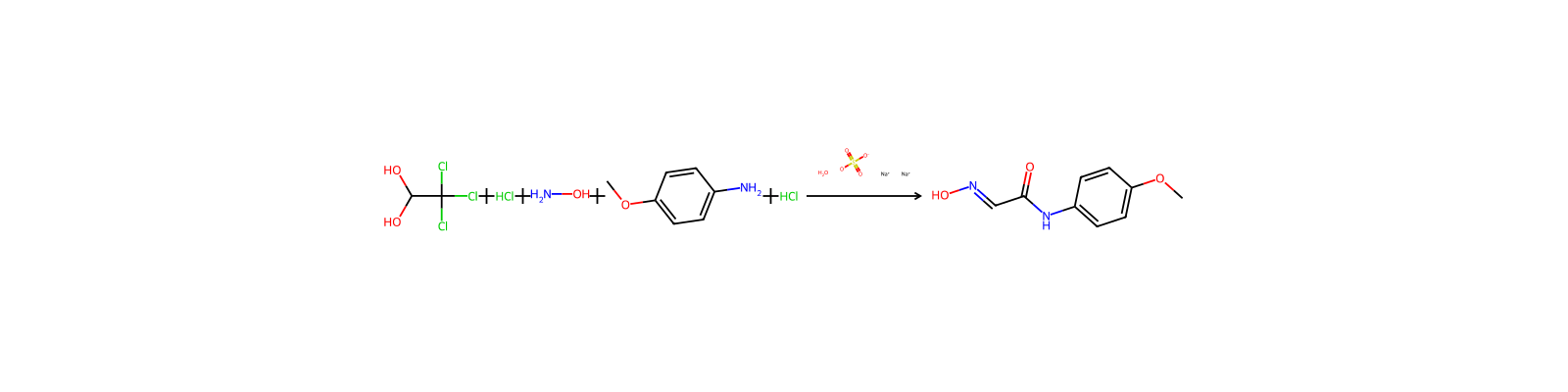
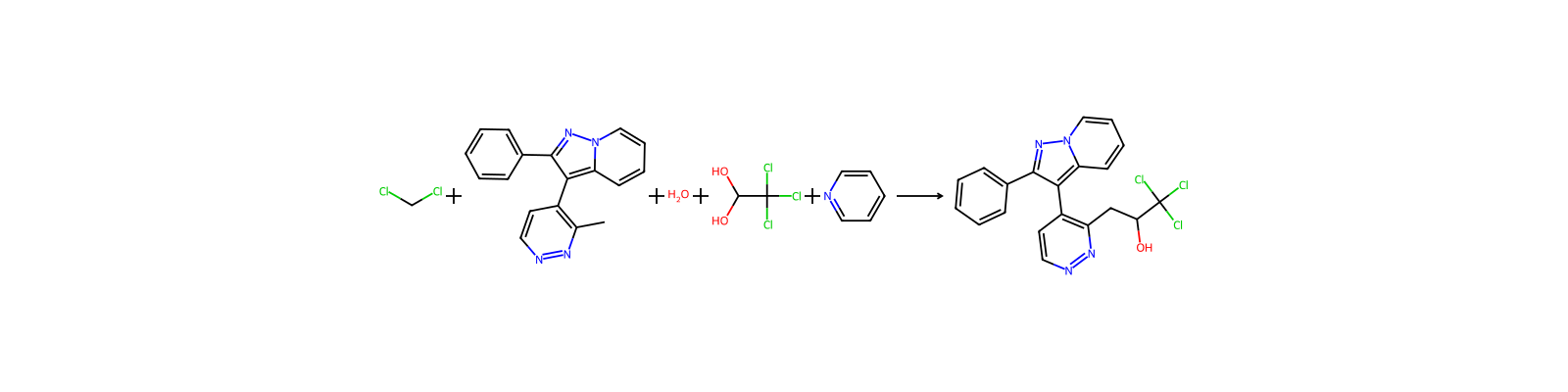
212건





연결된 노트
불러오는 중…