

기본 정보
- 표준 SMILES
CC1=C(C(=O)O)N2C(=O)[C@@H](NC(=O)[C@H](N)c3ccccc3)[C@H]2SC1- InChIKey
ZAIPMKNFIOOWCQ-UEKVPHQBSA-N- 분자식
- C16H17N3O4S
- 평균 분자량
- 347.4 g/mol
- 단동위원소 질량
- 347.09397721
이름 및 식별자
- 우선 이름
- Cephalexin
- IUPAC
- (6R,7R)-7-[[(2R)-2-amino-2-phenylacetyl]amino]-3-methyl-8-oxo-5-thia-1-azabicyclo[4.2.0]oct-2-ene-2-carboxylic acid
- 현지명
- 세파렉신
- 영어명
- Cephalexin
- 분자식
- C16H17N3O4S
- 분자량
- 347.39
이름 및 동의어
cephalexinCefalexin15686-71-2KeflexCephacillinCeporexinMamalexinCeporexCarnosporinCefaleksinCephalexineCephalexinum
이름 더 보기
세파렉신세파렉신(CEPHALEXIN)CEFALEXIN SODIUMoroxincexs6437syncloracefkeforal
CeporexineSinthecillinUphalexinAlsporinCepexinDurantelFelexinPyassan
데이터베이스 식별자
- CAS
15686-71-2、23325-78-2- PubChem CID
- 27447
- DTXSID
DTXSID9022780- ChEMBL
CHEMBL1200544、CHEMBL1727- ChEBI
CHEBI:3534- UNII
- 5SFF1W6677
- EC Number
- 239-773-6
- Nikkaji
- J3.133J
물성
구조 계산 물성
- XLogP
- 0.6
- 극성 표면적
- 138 Ų
- 수소 결합 공여자 수
- 3
- 수소 결합 수용자 수
- 6
- 회전 가능 결합 수
- 4
- 무거운 원자 수
- 24
- 형식 전하
- 0
- 복잡도
- 600
실험 및 물리화학적 성질
LogP
0.65
logP = 0.65
Color/Form
CRYSTALS
WHITE TO OFF-WHITE, CRYSTALLINE POWDER
Solubility
10mg/mL
SLIGHTLY SOL IN WATER; PRACTICALLY INSOL IN ALC, CHLOROFORM, ETHER
2.97e-01 g/L
Boiling Point727.4
Melting Point
326.8
326.8 °C
Physical DescriptionSolid
Stability/Shelf LifeACID-STABLE
Dissociation Constants
2.53
7.14
PKA: 5.2, 7.3
Collision Cross Section
178.5 Ų [M+H]+ [CCS Type: TW; Method: calibrated with polyalanine and drug standards]
178.02 Ų [M+H]+ [CCS Type: TW; Method: calibrated with polyalanine and drug standards];182.19 Ų [M+K]+ [CCS Type: TW; Method: calibrated with polyalanine and drug standards];163.36 Ų [M+H-H2O]+ [CCS Type: TW; Method: calibrated with polyalanine and drug standards];182.91 Ų [M+Na]+ [CCS Type: TW; Method: calibrated with polyalanine and drug standards]
183.1 Ų [M+Na]+ [CCS Type: TW; Method: calibrated with Waters Major Mix];186.9 Ų [M+H]+ [CCS Type: TW; Method: calibrated with Waters Major Mix]
179.56 Ų [M-H]-
물리화학적 성질
- 녹는점
- 196 · 196-198°C
- 끓는 점
- 727.4 · 727.4±60.0 °C(Predicted)
- 밀도
- 1.304 · 1.3040 (rough estimate)
- 굴절률
- 1.632 · 1.6320 (estimate)
- 저장 조건
- 2 · Keep in dark place,Inert atmosphere,2-8°C
- 용해도
- 4 OH · NH4OH 1 M: 50 mg/mL, 투명, 노란색
- 산도 계수 (pKa)
- 5.2 · 5.2, 7.3(at 25℃)
- 물리적 상태
- Solid
- 색상
- White to light yellow
- 수소이온지수(pH)
- 5 g/l, · pH (5g/l, 25℃) 3.5~5.5
- 수용성
- 12.5 g/L · 12.5g/L(25℃)
- Merck
- 13 · 13,1986
- BCS Class
- 4 · 4
- 주요 응용
- 법의학 및 독성학의약품(소분자)
- InChI
- 1S/C16H17N3O4S/c1-8-7-24-15-11(14(21)19(15)12(8)16(22)23)18-13(20)10(17)9-5-3-2-4-6-9/h2-6,10-11,15H,7,17H2,1H3,(H,18,20)(H,22,23)/t10-,11-,15-/m1/s1
- InChIKey
- AVGYWQBCYZHHPN-CYJZLJNKSA-N
- SMILES
- N[C@@H](C(N[C@@H]1C(N2[C@]1([H])SCC(C)=C2C(O)=O)=O)=O)C3=CC=CC=C3
- EPA
- 5 · 5-Thia-1-azabicyclo[4.2.0]oct-2-ene-2-carboxylic acid, 7-[[(2R)-2-amino-2-phenylacetyl]amino]-3-methyl-8-oxo-, (6R,7R)- (15686-71-2)
화학적 성질
White cryst. powder
안전 및 규제
GHS 분류
GHS Classification
Danger
H317 (100%): May cause an allergic skin reaction [Warning Sensitization, Skin];H334 (100%): May cause allergy or asthma symptoms or breathing difficulties if inhaled [Danger Sensitization, respiratory]
P233, P260, P261, P271, P272, P280, P284, P302+P352, P304+P340, P321, P333+P317, P342+P316, P362+P364, P403, and P501 (click each P-code to see the statement)
Aggregated GHS information provided per 75 reports by companies from 5 notifications to the ECHA C&L Inventory. Each notification may be associated with multiple companies.;Information may vary between notifications depending on impurities, additives, and other factors. The percentage value in parenthesis indicates the notified classification ratio from companies that provide hazard codes. Only hazard codes with percentage values above 10% are shown. For more detailed information, please visit ECHA C&L website.
유해성 정보
Regulatory Information
5-Thia-1-azabicyclo4.2.0oct-2-ene-2-carboxylic acid, 7-(2R)-aminophenylacetylamino-3-methyl-8-oxo-, (6R,7R)-: Does not have an individual approval but may be used as a component in a product covered by a group standard. It is not approved for use as a chemical in its own right.
Cephalexin: Does not have an individual approval but may be used under an appropriate group standard
Other Safety Information
IMAP assessments - 5-Thia-1-azabicyclo[4.2.0]oct-2-ene-2-carboxylic acid, 7-[(aminophenylacetyl)amino]-3-methyl-8-oxo-, [6R-[6.alpha.,7.beta.(R*)]]-: Human health tier I assessment;IMAP assessments - 5-Thia-1-azabicyclo[4.2.0]oct-2-ene-2-carboxylic acid, 7-[(aminophenylacetyl)amino]-3-methyl-8-oxo-, [6R-[6.alpha.,7.beta.(R*)]]-: Environment tier I assessment
FDA Requirements
Manufacturers, packers, and distributors of drug and drug products for human use are responsible for complying with the labeling, certification, and usage requirements as prescribed by the Federal Food, Drug, and Cosmetic Act, as amended (secs 201-902, 52 Stat. 1040 et seq., as amended; 21 U.S.C. 321-392).
Hazard Classes and CategoriesSkin Sens. 1 (100%);Resp. Sens. 1 (100%)
안전 및 보호
Storage Conditions
Cephalexin capsules, tablets, and powder for oral suspension should be stored in tight containers at a temperature less than 40 °C, preferably between 15-30 °C. After reconstitution, cephalexin oral suspensions should be stored at 2-8 °C and discarded if not used within 2 wk.
Disposal Methods
SRP: At the time of review, criteria for land treatment or burial (sanitary landfill) disposal practices are subject to significant revision. Prior to implementing land disposal of waste residue (including waste sludge), consult with environmental regulatory agencies for guidance on acceptable disposal practices.
독성 정보
Interactions
PROBENECID IS EFFECTIVE IN SLOWING URINARY CLEARANCE & ENHANCING DURATION OF SYSTEMIC ANTIMICROBIAL ACTIVITY /OF CEPHALEXIN/.
...CEPHALOSPORINS...MAY BE AFFECTED BY CONCURRENT USE OF...SULFINPYRAZONE. DIMINISHED TUBULAR SECRETION...RESULT IN HIGHER & MORE SUSTAINED SERUM LEVELS & HENCE, INTENSIFICATION OF DRUG ACTIVITY. /CEPHALOSPORINS/
FUROSEMIDE MAY ENHANCE NEPHROTOXICITY OF CEPHALOSPORINS. /CEPHALOSPORINS/
Hypoprothrombinemia induced by large doses of salicylates and/or cephalosporins, and the gastrointestinal ulcerative or hemorrhagic potential of nonsteroidal anti-inflammatory drugs (NSAIDs), salicylates, or sulfinpyrazone may increase the risk of hemorrhage. /Cephalosporins/
For more Interactions (Complete) data for CEPHALEXIN (6 total), please visit the HSDB record page.
Adverse Effects
The adverse effects reported by drug manufacturers associated with cephalexin include abdominal pain, diarrhea, dyspepsia, gastritis, nausea, vomiting, erythema multiforme, genital pruritus, vaginitis, vaginal discharge, candidiasis, thrombocytopenia, neutropenia, eosinophilia, arthralgia, arthropathy, and arthritis.;Clinical trials have reported increased serum alanine aminotransferase, increased serum aspartate aminotransferase, cholestatic jaundice, and interstitial nephritis in patients using cephalexin.;Another aspect of cephalexin administration is the potential for allergic reactions to the drug. Patients who have been administered penicillin earlier may develop an allergy to cephalexin. These reactions occur when a patient's immune system generates IgG or IgM antibodies in response to penicillin, which can potentially bind to cephalexin when taken orally. The literature does not support the claim that about 10% of penicillin-allergic patients have cross-reactions to cephalosporin antibiotics. Retrospective studies suggest that the incidence of allergic or immunologic reactions to cephalosporins after the administration of penicillin is only around 1% to 3%.;Patients taking cephalexin have reported cases of Clostridioides difficile–associated diarrhea (CDAD) and colitis. Diarrhea can occur at the beginning of cephalexin administration and up to 3 months after treatment. Older individuals and those with compromised immune systems are at an increased risk of developing CDAD following long-term antibiotic treatments.;Immunogenic hemolytic anemia, although rare, has been reported, particularly in patients with hypersensitivity reactions to other cephalosporins. Other hypersensitivity reactions that have been reported include skin rash, Stevens-Johnson syndrome, toxic epidermal necrolysis, and drug rash with eosinophilia and systemic symptoms. Although cephalexin generally has few adverse effects, rare occurrences of toxic tendinopathy have been reported. Moreover, a clinical case study has documented other rare adverse effects of cephalexin, such as drug-induced acute generalized exanthematous pustulosis.;Drug Interactions;Like many other medications, cephalexin can interact with other drugs, potentially affecting their efficacy or safety. Therefore, it is essential to be aware of potential drug interactions when prescribing or administering cephalexin to ensure optimal patient outcomes.;* Metformin: Coadministration of cephalexin with metformin may result in increased plasma concentration and decreased renal clearance of metformin. Close monitoring of patients is advised, and adjustments to the metformin dose may be necessary when cephalexin and metformin are administered together.;* Probenecid: Coadministration of cephalexin with probenecid is not recommended as it may inhibit the renal excretion of cephalexin. Studies have shown that probenecid can extend and flatten the plasma concentration–time curve of cephalexin, thereby increasing the likelihood of achieving optimal pharmacokinetic and pharmacodynamic targets. However, the simultaneous use of cephalexin and probenecid may benefit specific patient populations.
Toxicity Summary
Cephalexin is associated with a relatively low incidence of adverse effects in patients when the drug is administered correctly and safely. However, in cases of toxicity or overdose, adverse effects may include soreness of the oral cavity, pruritus of pregnancy, and gastrointestinal symptoms such as nausea, vomiting, epigastric distress, diarrhea, and hematuria. Furthermore, there have been only a few sporadic documented cases of cephalexin leading to fatal episodes of Stevens-Johnson syndrome and toxic epidermal necrolysis.;In the event of an overdose, it is advisable to implement general supportive measures. However, the effectiveness of interventions such as charcoal hemoperfusion, forced diuresis, peritoneal dialysis, and hemodialysis in treating cephalexin overdose has not been established yet. To obtain the most up-to-date protocol for managing cephalexin overdose, it is recommended to contact the local drug poison center.
Human Toxicity Excerpts
NEUROTOXICITY, SUCH AS HEADACHE, TINNITUS, ATAXIA, & DIPLOPIA, SOMETIMES DEVELOP; THESE EFFECTS ARE REVERSIBLE. CHANGES IN INTESTINAL & VAGINAL FLORA MAY OCCUR; MONILIASIS IS OCCASIONAL, & OVER GROWTH BY PS AERUGINOSA HAS BEEN REPORTED.
ABOUT 5% OF PATIENTS RECEIVING...SEMISYNTHETIC CEPHALOSPORINS DEVELOP HYPERSENSITIVITY REACTIONS, INCL FEVER, EOSINOPHILIA, SERUM SICKNESS, URTICARIAL OR MORBILLIFORM RASHES, OR ANAPHYLAXIS. TRANSIENT NEUTROPENIA HAS BEEN OBSERVED... /CEPHALOSPORINS/
...CEPHALEXIN, ORALLY ADMIN CEPHALOSPORINS, OCCASIONALLY PRODUCE NAUSEA, VOMITING, & DIARRHEA.
DIRECT POSITIVE COOMBS REACTION IS FREQUENTLY (40%) NOTED WHEN LARGE DOSES OF...CEPHALOSPORINS ARE ADMIN OR WHEN CONVENTIONAL DOSES ARE GIVEN IN PRESENCE OF RENAL DYSFUNCTION. /CEPHALOSPORINS/
For more Human Toxicity Excerpts (Complete) data for CEPHALEXIN (35 total), please visit the HSDB record page.
Drug Induced Liver Injury
Drug Induced Liver Injury Rank (DILIrank 2.0)
Cephalexin
vLess-DILI-concern
4
Adverse reactions
DOI:10.1016/j.drudis.2016.02.015
Antidote and Emergency TreatmentCEPHALEXIN IS EFFICIENTLY REMOVED FROM CIRCULATION BY HEMODIALYSIS OR PERITONEAL DIALYSIS.
Effects During Pregnancy and Lactation
◉ Summary of Use during Lactation;Limited information indicates that maternal cephalexin produces low levels in milk that are usually not expected to cause adverse effects in breastfed infants. Cephalexin is an alternative for the treatment of mastitis. Occasionally disruption of the infant's gastrointestinal flora, resulting in diarrhea or thrush have been reported with cephalosporins, but these effects have not been adequately evaluated. A rare case of a severe allergic reaction occurred in an infant previously exposed to intravenous cefazolin whose mother began taking cephalexin while breastfeeding. Cephalexin is acceptable in nursing mothers.;◉ Effects in Breastfed Infants;In a prospective follow-up study, 7 nursing mothers reported taking cephalexin (dosage not specified). Two mothers reported diarrhea in their infants. No rashes or candidiasis were reported among the exposed infants.;A prospective, controlled study asked mothers who called an information service about adverse reactions experience by their breastfed infants. One of 11 cephalexin-exposed infants reportedly developed diarrhea during maternal cephalexin therapy.;A woman received intravenous cephalothin 1 g every 6 hours for 3 days. Her breastfed infant had a green liquid stool, severe diarrhea, discomfort and crying. The mother's drug regimen was then changed to oral cephalexin 500 mg plus oral probenecid 500 mg 4 times daily for another 16 days. The infant continued to have diarrhea during this time. The authors rated the diarrhea as probably related to cephalexin in milk.;A 4-month-old infant was treated with intravenous cefazolin for a urinary tract infection. Nine days after being discharged and cefazolin discontinuation, the infant developed a blistering rash over most of the body that was diagnosed as toxic epidermal necrolysis (TEN). The infant was being breastfed (extent unspecified) by his mother who had begun cephalexin 2 days prior to the onset of symptoms. A lymphocyte transformation test performed 4 weeks after treatment for TEN was completed found sensitization to both cefazolin and cephalexin. The infant's reaction was probably caused by cephalexin in breastmilk after initial sensitization and subsequent cross-reaction to cefazolin.;◉ Effects on Lactation and Breastmilk;Relevant published information was not found as of the revision date.
◈ What is cephalexin?;Cephalexin is an antibiotic medication that has been used to treat infections such as Staphylococcus aureus (Staph) and Escherichia coli (E. coli). Some brand names for cephalexin are Keflex® and Keftab®.Sometimes when people find out they are pregnant, they think about changing how they take their medication, or stopping their medication altogether. However, it is important to talk with your healthcare providers before making any changes to how you take your medication. Your healthcare providers can talk with you about the benefits of treating your condition and the risks of untreated illness during pregnancy.Having certain infections (such as a Staph or E. coli infection )during pregnancy can increase the chance for pregnancy-related problems or infections in a newborn baby. MotherToBaby has fact sheets on Staph and E. coli infections here: https://mothertobaby.org/fact-sheets/staphylococcus-aureus-pregnancy/ and https://mothertobaby.org/fact-sheets/e-coli-pregnancy/.;◈ I take cephalexin. Can it make it harder for me to get pregnant?;Studies have not been done in humans to see if cephalexin can make it harder to get pregnant. In animal studies, cephalexin did not affect fertility (ability to get pregnant).;◈ Does taking cephalexin increase the chance of miscarriage?;Miscarriage is common and can occur in any pregnancy for many different reasons. In a study of 262 people who took cephalexin during pregnancy, there was no increase in miscarriages compared to a similar group of people who did not take cephalexin.;◈ Does taking cephalexin increase the chance of birth defects?;Every pregnancy starts out with a 3-5% chance of having a birth defect. This is called the background risk. Information on the use of cephalexin in pregnancy is limited. In a study of 262 people who took cephalexin during pregnancy, there was no increased chance for birth defects above the background risk.;◈ Does taking cephalexin in pregnancy increase the chance of other pregnancy-related problems?;Studies have not been done to see if cephalexin increases the chance for pregnancy-related problems such as preterm delivery (birth before week 37) or low birth weight (weighing less than 5 pounds, 8 ounces [2500 grams] at birth).;◈ Does taking cephalexin in pregnancy affect future behavior or learning for the child?;Studies have not been done to see if cephalexin can cause behavior or learning issues for the child.;◈ Breastfeeding while taking cephalexin:;Cephalexin gets into breast milk in small amounts. In reports of 20 babies exposed to cephalexin through breast milk, 4 had diarrhea. There is one report of a baby getting a rash after being breastfed, due to a sensitivity to cephalexin. If you suspect the baby has any symptoms (such as diarrhea or rash), contact the child’s healthcare provider. Be sure to talk to your healthcare provider about all your breastfeeding questions.;◈ If a male takes cephalexin, could it affect fertility or increase the chance of birth defects?;Studies have not been done to see if cephalexin could affect male fertility (ability to get partner pregnant) or increase the chance of birth defects above the background risk. Some infections, such as Staph or E.coli, might affect male fertility. In general, exposures that fathers or sperm donors have are unlikely to increase risks to a pregnancy. For more information, please see the MotherToBaby fact sheet Paternal Exposures at https://mothertobaby.org/fact-sheets/paternal-exposures-pregnancy/.
Non-Human Toxicity Values
LD50 MOUSE ORAL 1.6-4.5 G/KG /MONOHYDRATE/
LD50 MOUSE INTRAPERITONEAL 0.4-1.3 G/KG /MONOHYDRATE/
LD50 RAT ORAL GREATER THAN 5.0 G/KG /MONOHYDRATE/
LD50 RAT INTRAPERITONEAL GREATER THAN 3.7 G/KG /MONOHYDRATE/
규제 정보
Regulatory Information
5-Thia-1-azabicyclo4.2.0oct-2-ene-2-carboxylic acid, 7-(2R)-aminophenylacetylamino-3-methyl-8-oxo-, (6R,7R)-: Does not have an individual approval but may be used as a component in a product covered by a group standard. It is not approved for use as a chemical in its own right.
Cephalexin: Does not have an individual approval but may be used under an appropriate group standard
FDA Requirements
Manufacturers, packers, and distributors of drug and drug products for human use are responsible for complying with the labeling, certification, and usage requirements as prescribed by the Federal Food, Drug, and Cosmetic Act, as amended (secs 201-902, 52 Stat. 1040 et seq., as amended; 21 U.S.C. 321-392).
안전 데이터
- wgk
- 3
- rtecs
- XI0350000
- 독성
- TDLo orl-hmn: 14 mg/kg/D:GIT AACHAX -,361,68
- HS 번호
- 29419000
- risk_code
- 42/43
- hazard_code
- Xn
- safety_code
- 22-36/37-45
- 기존화학 물질
- KE-01541
- Hazard Classifications
- Resp. Sens. 1Skin Sens. 1
- 스토리지 클래스
- 11 - Combustible Solids
- 유해 물질 데이터
- 15686-71-2(Hazardous Substances Data)
화학 및 산업
약리 정보
ATC Code
J01DB01
J - Antiinfectives for systemic use;J01 - Antibacterials for systemic use;J01D - Other beta-lactam antibacterials;J01DB - First-generation cephalosporins;J01DB01 - Cefalexin
QJ - Antiinfectives for systemic use;QJ51 - Antibacterials for intramammary use;QJ51D - Other beta-lactam antibacterials for intramammary use;QJ51DB - First-generation cephalosporins;QJ51DB01 - Cefalexin
QJ - Antiinfectives for systemic use;QJ01 - Antibacterials for systemic use;QJ01D - Other beta-lactam antibacterials;QJ01DB - First-generation cephalosporins;QJ01DB01 - Cefalexin
J01DB01
Protein BindingCephalexin is 10-15% bound to serum proteins including serum albumin.
Pharmacodynamics
Cephalexin (also called Cefalexin) is a first generation cephalosporin antibiotic. It is one of the most widely prescribed antibiotics, often used for the treatment of superficial infections that result as complications of minor wounds or lacerations. It is effective against most gram-positive bacteria through its inihibition of the cross linking reaction between N-acetyl muramicacid and N-acetylglucosamine in the cell wall, leading to cell lysis.
Mechanism of Action
Cephalexin is a first generation cephalosporin antibiotic. Cephalosporins contain a beta lactam and dihydrothiazide. Unlike penicillins, cephalosprins are more resistant to the action of beta lactamase. Cephalexin inhibits bacterial cell wall synthesis, leading breakdown and eventualy cell death.
CEPHALOTHIN & ITS CONGENERS INHIBIT BACTERIAL CELL-WALL SYNTHESIS IN MANNER SIMILAR TO THAT OF PENICILLIN. /CEPHALOSPORINS/
The penicillins and their metabolites are potent immunogens because of their ability to combine with proteins and act as haptens for acute antibody-mediated reactions. The most frequent (about 95 percent) or "major" determinant of penicillin allergy is the penicilloyl determinant produced by opening the beta-lactam ring of the penicillin. This allows linkage of the penicillin to protein at the amide group. "Minor" determinants (less frequent) are the other metabolites formed, including native penicillin and penicilloic acids. /Penicillins/
Bactericidal; action depends on ability to reach and bind penicillin-binding proteins located in bacterial cytoplasmic membranes; cephalosporins inhibit bacterial septum and cell wall synthesis, probably by acylation of membrane-bound transpeptidase enzymes. This prevents cross-linkage of peptidoglycan chains, which is necessary for bacterial cell wall strength and rigidity. Also, cell division and growth are inhibited, and lysis and elongation of susceptible bacteria frequently occur. Rapidly dividing bacteria are those most susceptible to the action of cephalosporins. /Cephalosporins/
CEPHALOSPORIN C IS VERY RESISTANT TO ACTION OF PENICILLINASE, FOR WHICH IT IS BOTH COMPETITIVE & NONCOMPETITIVE INHIBITOR, DEPENDING ON SUBSTRATE TESTED... /CEPHALOSPORINS/
Biological Half-Life
The half life of cephalexin is 49.5 minutes in a fasted state and 76.5 minutes with food though these times were not significantly different in the study.
LESS THAN 10 TO 15%...IS BOUND TO PLASMA PROTEIN, & PLASMA DRUG CONCN FALL RAPIDLY, T/2 OF CEPHALEXIN NORMALLY BEING ABOUT 40 MIN.
/IN RATS/ RATIOS OF BONE TO SERUM CONCN AVG...1:9 FOR CEPHALEXIN DURING 0.25-4 HR AFTER /ORAL/ DOSING. DESPITE DIFFERENCES IN CONCN; T/2 IN BONE & SERUM WERE SIMILAR.
PEAK TIME, T/2 OF ELIMINATION, T/2 OF ABSORPTION, & VOL OF DISTRIBUTION WERE ALL SIMILAR FOLOWING ADMIN OF EITHER 1 OR 2 G OF CEPHALEXIN.
The serum half-life of cephalexin is 0.5-1.2 hr in adults with normal renal function. The serum half-life of the drug is reported to be about 5 hr in neonates and 2.5 hr in children 3-12 mo of age. In one study, the serum half-life was 7.7 hr in adults with creatinine clearances of 9.2 ml/min and 13.9 hr in adults with creatinine clearances of 4 ml/min.
Metabolism/MetabolitesCephalexin is not metabolized in the body.
FDA Pharmacological Classification
5SFF1W6677
CEPHALEXIN ANHYDROUS
Established Pharmacologic Class [EPC] - Cephalosporin Antibacterial
Chemical Structure [CS] - Cephalosporins
Cephalexin anhydrous is a Cephalosporin Antibacterial.
CEPHALEXIN
MeSH Pharmacological ClassificationSubstances that inhibit the growth or reproduction of BACTERIA.
Absorption, Distribution and Excretion
Well absorbed from the upper gastrointestinal tract with nearly 100% oral bioavailability. Cephalexin is not absorbed in the stomach but is absorbed in the upper intestine. Patients taking 250mg of cephalexin reach a maximum plasma concentration of 7.7mcg/mL and patients taking 500mg reach 12.3mcg/mL.
Cephalexin is over 90% excreted in the urine after 6 hours by glomerular filtration and tubular secretion with a mean urinary recovery of 99.3%. Cephalexin is unchanged in the urine.
5.2-5.8L.
Clearance from one subject was 376mL/min.
LESS THAN 10 TO 15%...IS BOUND TO PLASMA PROTEIN, & PLASMA DRUG CONCN FALL RAPIDLY... MORE THAN 90%...IS EXCRETED UNALTERED IN URINE WITHIN 6 HR, PRIMARILY BY RENAL TUBULAR SECRETION. ...THERAPEUTICALLY EFFECTIVE CONCN ARE STILL ACHIEVED IN URINE OF PT WITH DECR RENAL FUNCTION.
CEPHALEXIN...IS WELL ABSORBED FROM GI TRACT. PEAK PLASMA CONCN, REACHED @ ABOUT 1 HR AFTER INGESTION OF DRUG, ARE APPROX 9 & 18 UG/ML AFTER ORAL DOSES OF 250 & 500 MG, RESPECTIVELY. INGESTION OF FOOD MAY DELAY ABSORPTION.
Cellular LocationsExtracellular;Membrane
용도 및 제조
Uses
ANTIBIOTIC FOR INFECTIONS OF THE RESPIRATORY & GENITOURINARY TRACTS & OF THE SKIN, EYE, & BONE; ANTIBIOTIC FOR VETERINARY USE
MEDICATION
MEDICATION (VET):
Use (kg; approx.) in Germany (2009): >1000;Use (kg; exact) in Germany (2009): 2020;Use (kg) in USA (2002): 148000;Consumption (g per capita; approx.) in Germany (2009): 0.0122;Consumption (g per capita; exact) in Germany (2009): 0.0247;Consumption (g per capita) in the USA (2002): 0.525;Excretion rate: 0.8;Calculated removal (%): 22
U.S. Imports(1979) 2.04X10+7 GRAMS (PRINCPL CUSTMS DISTS)
U.S. Production
(1977) PROBABLY GREATER THAN 4.54X10+5 GRAMS
(1979) PROBABLY GREATER THAN 4.54X10+5 GRAMS
Consumption PatternsESSENTIALLY 100% AS AN ANTIBIOTIC
Methods of Manufacturing
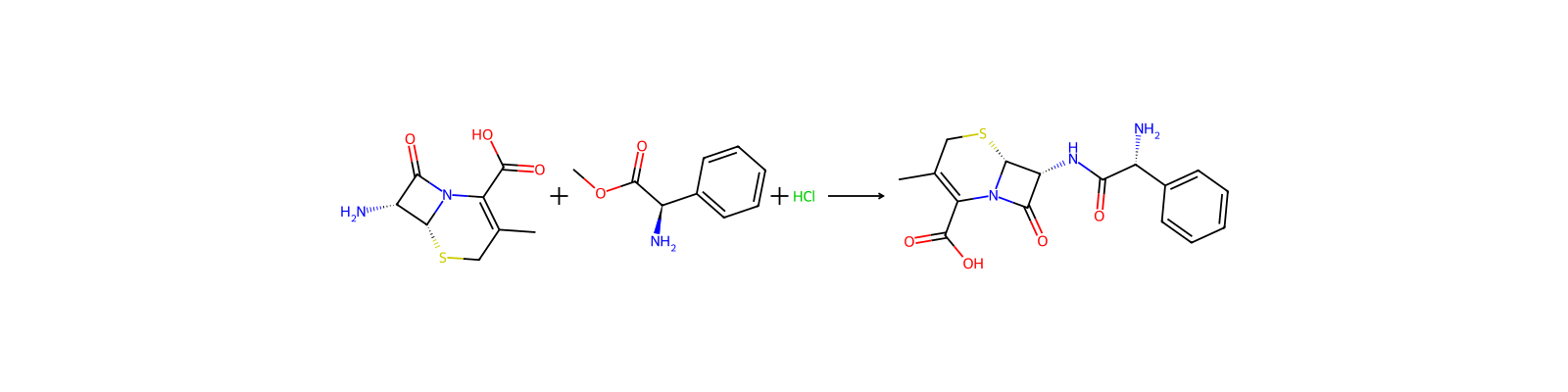
ACYLATION OF 7-AMINO-3-METHYL-8-OXO-5-THIA-1-AZABICYCLO[4.2.0]OCT-2-ENE-2-CARBOXYLIC ACID (PREPARED FROM CEPHALOSPORIN C) WITH 2-PHENYLGLYCINE IN AN APPROPRIATE DEHYDRATING ENVIRONMENT
7-AMINO-3-METHYL-8-OXO-5-THIA-1-AZABICYCLO[4.2.0]OCT-2-ENE-2-CARBOXYLIC ACID, WHICH MAY BE PREPD FROM NATURAL ANTIBIOTIC CEPHALOSPORIN C, IS ACYLATED WITH 2-PHENYLGLYCINE IN APPROPRIATE DEHYDRATING ENVIRONMENT.
Formulations/PreparationsCEPHALEXIN, USP (KEFLEX), IS MARKETED AS MONOHYDRATE IN SEVERAL FORMS, INCL CAPSULES OF 250 & 500 MG, ORAL SUSPENSIONS PROVIDING, AFTER RECONSTITUTION, 125 MG/5 ML OR 250 MG/5 ML, & PEDIATRIC DROPS, 100 MG/ML.
Use Classification
Animal Drugs -> FDA Approved Animal Drug Products (Green Book) -> Active Ingredients
Pharmaceuticals -> Animal Drugs -> Approved in Taiwan
General Manufacturing Information
RYAN, ET AL, J MED CHEM 12, 310 (1969); MORIN, JACKSON, US PATENT 3,275,626 (1966 TO LILLY)
.../CEPHALEXIN/ SEMISYNTHETIC DERIVATIVE OF CEPHALOSPORIN C.
응용 분야
개요Use of the ampicillin-type side chain conveys oral activity to cephalexin. Whereas it no longer has an activating side chain at C-3 and, as a consequence, is somewhat less potent, it does not undergo metabolic deactivation and, thus, maintains potency. It is rapidly and completely absorbed from the GI tract and has become quite popular. Somewhat puzzling is the fact that the use of the ampicillin side chain in the cephalosporins does not result in a comparable shift in antimicrobial spectrum. Cephalexin, like the other first-generation cephalosporins is active against many Gram-positive aerobic cocci but is limited against Gram-negative bacteria. It is a widely used drug, particularly against Gram-negative bacteria causing urinary tract infections, Gram-positive infections (Staphyl ococcus aureus, Streptococcus pneumoni ae and Streptococcus pyogenes) of soft tissues, pharyngitis, and minor wounds.
용도Antibacterial.
상·하류 제품 정보
상류 원료
공급사50 곳
国药集团化学试剂有限公司86-21-63210123 · [email protected]
北京华美互利生物化工010-56205725 · [email protected]
上海如吉生物科技发展有限公司+86-21-65211385-8001 36031160 · [email protected]
LGM Pharma1-(800)-881-8210 · [email protected]
湖北辰心化工有限公司18696113233 · [email protected]
上海将来实业股份有限公司400-0066400 13621662912 · [email protected]
Syntechem Co.,Ltd[email protected]
上海瀚鸿科技股份有限公司021-54306202 13764082696 · [email protected]
上海柯维化学技术有限公司021-64609169 18901607656 · [email protected]
上海泰坦科技股份有限公司400-6009262 15618770481 · [email protected]
凯试(上海)科技有限公司021-50135380 · [email protected]
MedChemexpress LLC021-58955995 · [email protected]
Zhejiang J&C Biological Technology Co.,Limited+1-2135480471 · [email protected]
合肥天健化工有限公司551-65418679 15856988503;15837135945 · [email protected]
南京美博生物科技有限公司025-58619198 · [email protected]
四川库利南科技有限公司400-1166-196 18981987031 · [email protected]
湖南汇百侍生物科技有限公司0731-85526065 13308475853 · [email protected]
斯百全化学(上海)有限公司021-021-021-67601398-809-809-809 15221380277 · [email protected]
上海源叶生物科技有限公司13636370518 · [email protected]
艾科试剂4008-755-333 18080918076 · [email protected]
上海遐瑞医药科技有限公司+86 21 61551611
深圳振强药物研发有限公司0755-66853366 13670046396 · [email protected]
南京杜莱生物技术有限公司025-84699383-8003;025-846993838003-8003 18013301590 · [email protected]
广州爱纯医药科技有限公司020-39119399 18927568969 · [email protected]
南京生利德生物科技有限公司025-57798810 18652991625 · [email protected]
上海倍卓生物科技有限公司021-61119791,13386096464 · [email protected]
上海昶衍化工科技有限公司021-20242659 18930833303 · [email protected]
上海将来实业股份有限公司400-0066400 13621662912 · [email protected]
上海将来实业股份有限公司021-61552785 · [email protected]
成都零六生物科技有限公司400-1166-196 13458535857 · [email protected]
上海创赛科技有限公司400-6087598 15021221957 · [email protected]
上海麦克林生化科技股份有限公司15221275939 15221275939 · [email protected]
杭州杰恒化工有限公司0571-87396432 · [email protected]
上海永叶生物科技有限公司86-021-61559134 15921386130 · [email protected]
上海孚一生物科技有限公司+86 (21) 61124340
湖北巨胜科技有限公司027-59599241 18871490274 · [email protected]
池州凯隆进出口贸易有限公司[email protected]
桦特昇生物科技(武汉)有限公司027-59207879 1972026995 18140587686 · [email protected]
天津阿尔塔科技有限公司022-6537-8550 15522853686 · [email protected]
TargetMol中国(陶术生物)021-021-33632979 15002134094 · [email protected]
Alfa Chemistry1-516-6625404 · [email protected]
上海陶术生物科技股份有限公司+1-781-999-5354; +1-00000000000 · [email protected]
北京诺其雅盛生物科技有限公司4000-819-385 010-62329685 13718666987
上海波以尔化工有限公司021-50182298 021-50180596 · [email protected]
西安美川生物科技有限公司029-89275612 +8618991951683 · [email protected]
BOC Sciences16314854226 · [email protected]
南京艾比克斯生化科技有限公司025-87193546 18652950785 · [email protected]
北京华威锐科化工科技有限公司89508211 18501085097 · [email protected]
广州市齐云生物技术有限公司020-61288194 61288195 · [email protected]
哈药集团制药总厂0451-86671777
추가 설명
정의ChEBI: A semisynthetic first-generation cephalosporin antibiotic having methyl and beta-(2R)-2-amino-2-phenylacetamido groups at the 3- and 7- of the cephem skeleton, respectively. It is effective against both Gram-negative and G am-positive organisms, and is used for treatment of infections of the skin, respiratory tract and urinary tract.
관련 반응
12건




연결된 노트
불러오는 중…