

기본 정보
- 표준 SMILES
COc1ccc(CC(C)N)cc1- InChIKey
NEGYEDYHPHMHGK-UHFFFAOYSA-N- 분자식
- C10H15NO
- 평균 분자량
- 165.23 g/mol
- 단동위원소 질량
- 165.1153641
개요
4-methoxyamphetamine is a DEA Schedule I controlled substance. Substances in the DEA Schedule I have no currently accepted medical use in the United States, a lack of accepted safety for use under medical supervision, and a high potential for abuse. It is a Hallucinogenic substances substance.
이름 및 식별자
- 우선 이름
- (+-)-p-Methoxyamphetamine
- IUPAC
- 1-(4-methoxyphenyl)propan-2-amine
- 현지명
- 1-(4-메톡시벤질)에틸아민
- 영어명
- 1-(4-methoxybenzyl)ethylamine
- 분자식
- C10H15NO
- 분자량
- 165.24
이름 및 동의어
4-Methoxyamphetamine64-13-1paramethoxyamphetamine1-p-Methoxyphenyl-2-aminopropane2-Amino-1-(4'-methoxyphenyl)propaneP-methoxyamfetamine4-methoxyamfetamine(+-)-p-Methoxyamphetaminep-Methoxy-alpha-methylphenethylamine(+-)-4-MethoxyamphetamineOVB8F8P39QDL-p-Methoxy-alpha-methylphenethylamine
이름 더 보기
1-(4-메톡시벤질)에틸아민1-(4-methoxyphenyl)propan-2-amineFormoterol Impurity 1Para-methoxyamphetamineFormoterol EP Impurity G1-(4-methoxybenzyl)ethylaminePara-methoxyamphetamine 13CD31-p-Methoxyphenyl-2-propylamineα-Methyl-4-methoxyphenethylamine1-(4-Methoxyphenyl)-2-propanaMine
DTXSID7040578(+-)-1-(p-Methoxyphenyl)-2-aminopropanealpha-Methyl-beta-(p-methoxyphenyl)ethylamineNSC-32757(2RS)-1-(4-methoxyphenyl)propan-2-amineJ213.549C(+-)-p-Methoxy-alpha-methylphenylethylamineJ434.573H
데이터베이스 식별자
- CAS
64-13-1- PubChem CID
- 31721
- DTXSID
DTXSID7040578- ChEMBL
CHEMBL278663- UNII
- OVB8F8P39Q
- EC Number
- 200-577-0
- Nikkaji
- J213.549C
물성
구조 계산 물성
- XLogP
- 1.8
- 극성 표면적
- 35.3 Ų
- 수소 결합 공여자 수
- 1
- 수소 결합 수용자 수
- 2
- 회전 가능 결합 수
- 3
- 무거운 원자 수
- 12
- 형식 전하
- 0
- 복잡도
- 119
실험 및 물리화학적 성질
Drugs
DEA NFLIS-Drug Category -> Phenethylamines (Amphetamines) (H)
DEA Schedule I Controlled Substance -> Hallucinogenic substances
Pharmaceuticals -> Synthetic Cannabinoids or Psychoactive Compounds
LogPlog Kow = 1.77
Dissociation ConstantspKa = 9.53
물리화학적 성질
- 끓는 점
- 145 · 145-148 °C
- 밀도
- 1 g/cm3 · 1.000 g/cm3
- 산도 계수 (pKa)
- 10 · 10.00±0.10(Predicted)
안전 및 규제
유해성 정보
Regulatory InformationDEA schedule I controlled substance
FDA Requirements
/DEA/ Schedule I shall consist of the drugs and other substances, by whatever official name, common or usual name, chemical name, or brand name designated, listed in this section. Each drug or substance has been assigned the DEA Controlled Substances Code Number set forth opposite it. Unless specifically excepted or unless listed in another schedule, any material, compound, mixture, or preparation, which contains any quantity of the following hallucinogenic substances, or which contains any of its salts, isomers, and salts of isomers whenever the existence of such salts, isomers, and salts of isomers is possible within the specific chemical designation (for purposes of this paragraph only, the term "isomer" includes the optical, position and geometric isomers). 4-Methoxyamphetamine (DEA Code Number: 7411) is included on this list.
안전 및 보호
Disposal Methods
SRP: At the time of review, criteria for land treatment or burial (sanitary landfill) disposal practices are subject to significant revision. Prior to implementing land disposal of waste residue (including waste sludge), consult with environmental regulatory agencies for guidance on acceptable disposal practices.
독성 정보
Interactions
... In the present study, using microdialysis, /investigators/ examined the effects of co-administration of MDMA or para-methoxyamphetamine (PMA) with moclobemide on striatal 5-HT outflow at the elevated ambient temperatures of 30 degrees C. Samples were collected every 30 min for 4 hr and analyzed by high-performance liquid chromatography assay with electrochemical detection (HPLC-ED). 5-HT-mediated effects on body temperature and behavior were also recorded. Rats were treated with either saline or 20 mg/kg (ip) moclobemide, followed by 10 mg/kg (ip) MDMA, 10 mg/kg (ip) PMA or saline 60 min later. Both MDMA and PMA produced significant increases in 5-HT outflow (370% peak and 309% peak, respectively, P<0.05). MDMA and PMA significantly increased body temperature (+2.0 degrees C and +2.1 degrees C, respectively, P<0.01) and drug-related behaviors (P<0.05). When MDMA or PMA was co-administered with moclobemide, additional significant increases were seen in 5-HT outflow (850% peak, P<0.01 and 1450% peak, P<0.001, respectively) and only MDMA showed additional significant increase in body temperature (+5.0 degrees C, P<0.001). No additional increases were seen in behavioral activity. When moclobemide was co-administered with MDMA, sustained increases in body temperature were recorded that were significantly higher than with MDMA alone and such increases were not observed in our previous study at normal room temperature. /The authors/ results suggest greater risk of MDMA-induced adverse effects on body temperature regulation, compared with PMA, when used in combination with moclobemide at elevated ambient temperatures.
The interaction of fifteen amphetamine analogs with the genetically polymorphic enzyme CYP2D6 was examined. All ... phenylisopropylamines tested were competitive inhibitors of CYP2D6 in human liver microsomes. ... O-Demethylation of p-methoxyamphetamine (PMA) by CYP2D6 was characterized (Km = 59.2 +/- 22.4 microM, and Vmax = 29.3 +/- 16.6 nmol/mg/hr, N = 6 livers). This reaction was negligible in CYP2D6-deficient liver microsomes, was inhibited stereoselectively by the quinidine/quinine enantiomer pair, and was cosegregated with dextromethorphan O-demethylation (r = 0.975). The inhibitory effect of methylenedioxymethamphetamine (MDMA) was enhanced by preincubation with microsomes, suggesting that MDMA may produce a metabolite complex with CYP2D6. These findings suggest that phenylisopropylamines as a class interact with CYP2D6 as substrates and/or inhibitors. Their use may cause metabolic interactions with other drugs that are CYP2D6 substrates, and the potential for polymorphic oxidation via CYP2D6 may be a source of interindividual variation in their abuse liability and toxicity.
Environmental Fate
TERRESTRIAL FATE: Based on a classification scheme(1), an estimated Koc value of 220(SRC), determined from a measured log Kow of 1.77(2) and a regression-derived equation(3), indicates that 4-methoxyamphetamine is expected to have moderate mobility in soil(SRC). However, 4-methoxyamphetamine has a pKa of 9.53(4) and should exist primarily as a cation under environmental conditions (pH 5-9)(SRC). As a result, 4-methoxyamphetamine may have greater adsorption and less mobility than its estimated Koc value indicates since cations generally adsorb more strongly to soils containing organic carbon and clay than neutral species(5). Volatilization of 4-methoxyamphetamine from moist soil surfaces will not be an important fate process because cationic methoxyamphetamine does not volatilize. 4-Methoxyamphetamine is not expected to volatilize from dry soil surfaces based upon an estimated vapor pressure of 0.018 mm Hg(SRC), determined from a fragment constant method(6). Biodegradation data were not available(SRC, 2007).
AQUATIC FATE: Based on a classification scheme(1), an estimated Koc value of 220(SRC), determined from a measured log Kow of 1.77(2) and a regression-derived equation(3), indicates that 4-methoxyamphetamine is not expected to adsorb to suspended solids and sediment(SRC). However, 4-methoxyamphetamine has a pKa of 9.53(4) and should exist primarily as a cation under environmental conditions (pH 5-9)(SRC). As a result, 4-methoxyamphetamine may have greater adsorption to suspended solids and sediment than its estimated Koc value indicates(SRC). Volatilization of 4-methoxyamphetamine from water surfaces will not be an important fate process, since cations do not volatilize(SRC). According to a classification scheme(5), an estimated BCF of 5(SRC), from its log Kow(2) and a regression-derived equation(6), suggests the potential for bioconcentration in aquatic organisms is low(SRC). Biodegradation data were not available(SRC, 2007).
ATMOSPHERIC FATE: According to a model of gas/particle partitioning of semivolatile organic compounds in the atmosphere(1), 4-methoxyamphetamine , which has an estimated vapor pressure of 0.018 mm Hg 25 °C(SRC), determined from a fragment constant method(2), is expected to exist solely as a vapor in the ambient atmosphere. Vapor-phase 4-methoxyamphetamine is degraded in the atmosphere by reaction with photochemically-produced hydroxyl radicals(SRC); the half-life for this reaction in air is estimated to be 5 hrs(SRC), calculated from its estimated rate constant of 7.2X10⁻¹¹ cu cm/molecule-sec at 25 °C(3). 4-Methoxyamphetamine does not contain chromophores that absorb at wavelengths >290 nm and therefore is not expected to undergo direct photolysis by sunlight(4).
Soil Adsorption/Mobility
The Koc of 4-methoxyamphetamine is estimated as 220(SRC), using a log Kow of 1.77(1) and a regression-derived equation(2). According to a classification scheme(3), this estimated Koc value suggests that 4-methoxyamphetamine is expected to have moderate mobility in soil(SRC). The pKa of 4-methoxyamphetamine is 9.53(4) and should exist primarily as a cation under environmental conditions (pH 5-9)(SRC). As a result, 4-methoxyamphetamine may have greater adsorption and less mobility than its estimated Koc value indicates since cations generally adsorb more strongly to soils containing organic carbon and clay than neutral species(5).
Human Toxicity Excerpts
/SIGNS AND SYMPTOMS/ Central nervous system effects may be secondary to both sympathetic stimulation and altered perception. Therapeutic or recreational doses may induce feelings of warmth and are purported to promote communication and empathy. Higher doses may induce hallucinations, agitation, delirium, hyperreflexia, or rigidity. Seizures may occur and can reflect either direct CNS stimulation or hypertension induced cerebrovascular hemorrhage. Sympathetic stimulation may induce a state of hyperthermia and agitated delirium. Direct sympathetic stimulation and increased metabolic heat production may be the primary pathophysiologic event; however, in many cases, increased muscular activity may be contributory as well. /Phenylethylamines/
/CASE REPORTS/ ... A 16-year-old male was admitted to a local hospital in a coma with seizures and hyperthermia after he had been found undressed and barefooted in a local forest (temperature 2 degrees C). He was intubated and given supportive care. Blood chemistry revealed hypoglycemia, hypocalcemia and hyperkalemia. Shortly after transfer to the central hospital he developed bradycardia with continuous seizures and asystole. Adverse effects of methylenedioxymethamphetamine (MDMA) are well described and include serotonergic and sympathomimetic symptoms with hyperthermia, coagulopathy, rhabdomyolysis and acute kidney and liver failure. Case reports of PMA deaths collectively suggest p-methoxyamphetamine (PMA) to be more toxic than MDMA. A delayed effect after intake of PMA compared with MDMA can lead to increased intake. Hypoglycemia and hyperkalemia may be specific to PMA poisoning. Increased thermo genesis will result in a search for cooling, which explains the attempt to undress and a desire to submerge in water. In a cool climate this behavior itself can be lethal. ...
/CASE REPORTS/ ... Three fatal cases involving p-methoxyamphetamine (PMA) and p-methoxymethamphetamine (PMMA) in Denmark in year 2000 are investigated including history, pathological, and toxicological findings. The methods used for extraction, identification, and quantitation of PMA and PMMA are described. In two of the cases, lethal postmortem blood concentrations of PMA and PMMA were determined at 3.4 and 3.3 mg/kg (case 1) and 0.78 and 0.68 mg/kg (case 3), respectively. In addition, other drugs such as MDMA, tetrahydrocannabinol, cocaine, and alcohol were involved in these cases. In the third case, death occurred four days after the ingestion of tablets containing PMA and PMMA, and therefore only low postmortem concentrations of PMA and amphetamine were detected. However, in a serum sample taken at admission to the hospital, PMA and PMMA were found, but not quantitated. It is believed that the cause of death in case 2, multiple-organ failure, was caused by overdoses of PMA and PMMA.
/CASE REPORTS/ ... Three recent fatalities that occurred in the midwestern United States in which each of the decedents believed that they were ingesting methylenedioxymethamphetamine (MDMA) /were reported/. Symptoms observed included agitation and bruxism, progressing to severe hyperthermia, convulsions, and hemorrhage. Blood was screened for drugs of abuse by enzyme immunoassay with the presence of amphetamines indicated in each case. Confirmation and quantitation for amphetamines was performed by gas chromatography-mass spectrometry. The deceased, two males ages 19 and 24 and a female age 18, had postmortem blood pmethoxyamphetamine (PMA) concentrations of 1.07, 0.60, and 1.90 mg/L, respectively. PMA is not a contaminant of MDMA, and no MDMA was found in any of these cases. The primary metabolite of PMA is produced by O-demethylation to 4-hydroxyamphetamine, a reaction catalyzed by cytochrome P450 2D6. This enzyme is noted to be genetically polymorphic. Those with the "slow metabolizer" phenotype may be likely to have higher peak blood concentrations of PMA. Whether any of the decedents described herein were of the slow metabolizer phenotype is not known. ...
For more Human Toxicity Excerpts (Complete) data for 4-METHOXYAMPHETAMINE (8 total), please visit the HSDB record page.
Artificial Pollution Sources4-Methoxyamphetamine's production and use as an illicit hallucinogenic drug(1), may result in its release to the environment through various waste streams(SRC).
Environmental Bioconcentration
An estimated BCF of 5 was calculated for 4-methoxyamphetamine (SRC), using a log Kow of 1.77(1) and a regression-derived equation(2). According to a classification scheme(3), this BCF suggests the potential for bioconcentration in aquatic organisms is low(SRC).
Volatilization from Water/Soil
The pKa of 4-methoxyamphetamine is 9.53(1). This value indicates that 4-methoxyamphetamine will exist primarily as a cation at environmental pH (pH 5-9). Volatilization from moist soil and water surfaces is not an important environmental fate process since cations do not volatilize(SRC). 4-Methoxyamphetamine is not expected to volatilize from dry soil surfaces based upon an estimated vapor pressure of 0.018 mm Hg(SRC), determined from a fragment constant method(2).
Non-Human Toxicity Excerpts
/LABORATORY ANIMALS: Acute Exposure/ ... The aim of this study was to determine the effect of repeated PMA administration on two indices of 5-HT axonal degeneration, cortical brain 5-HT transporter (SERT) density and 5-HT/5-hydroxyindolacetic acid (5-HIAA) content. Treatment of male rats once daily for 4 days (10 or 20 mg/kg) with PMA or MDMA resulted in significant reductions (20 mg/kg: 53% and 23% of vehicle treatment respectively) in [(3)H]-paroxetine binding (SERT density) one week after final drug administration. When rats were housed at a higher ambient temperature (28 degrees C vs. 22 degrees C) for 6 hr after dosing, no additive effect was seen for either drug. A more intensive dosing regimen (10 or 20 mg/kg twice daily for 4 days) was used to examine PMA/MDMA effects on cortical 5-HT content. Two weeks after MDMA treatment, significant reductions in cortical 5-HT content (20 mg/kg: 39% of vehicle treatment) were seen. However, PMA did not alter cortical 5-HT content, yet reduced cortical 5-HIAA content (20 mg/kg: 72% of vehicle treatment). These data suggest PMA has severe long-term implications clinically for alteration of 5-HT neurotransmission that may differ from MDMA, but may not necessarily be interpreted as a degeneration of 5-HT fibres.
/LABORATORY ANIMALS: Acute Exposure/ ... The aim of this study was to determine the effect of repeated PMA administration on in vitro measures of neurodegeneration: serotonin (5-HT) uptake, 5-HT transporter (SERT) density and 5-HT content in the hippocampus, and compare with effects on in vivo 5-HT clearance. Male rats received PMA, MDMA (4 or 15 mg/kg sc, twice daily) or vehicle for 4 days and 2 weeks later indices of SERT function were measured. [(3)H]5-HT uptake into synaptosomes and [(3)H]cyanoimipramine binding to the SERT were significantly reduced by both PMA and MDMA treatments. 5-HT content was reduced in MDMA-, but not PMA-treatment. In contrast, clearance of locally applied 5-HT measured in vivo by chronoamperometry was only reduced in rats treated with 15 mg/kg PMA. The finding that 5-HT clearance in vivo was unaltered by MDMA treatment suggests that in vitro measures of 5-HT axonal degeneration do not necessarily predict potential compensatory mechanisms that maintain SERT function under basal conditions.
/LABORATORY ANIMALS: Developmental or Reproductive Toxicity/ ... The effects of 4-substituted amphetamines: 4-hydroxyamphetamine (4-HA), 4-methoxyamphetamine (4-MEA), 4-ethoxyamphetamine (4-ETA), 4-propoxyamphetamine (4-PPA), and 4-benzyloxyamphetamine (4-BEA) on intrauterine development, pregnancy outcome, postnatal growth, and survival were compared in Swiss-Webster mice. Single daily doses (0, 50, or 100 mg/kg) of an aqueous solution of different amphetamines were administered on pregnancy days 6 through 18. The 50 mg/kg doses of all amphetamines were well tolerated by the mothers and did not produce any overt signs of maternal toxicity or death. However, a few mothers died on different days of gestation after receiving 100 mg/kg of 4-HA, 4-MEA, 4-ETA, and 4-BEA. The mothers that failed to deliver naturally (3 d after the due date) were killed and their uteri were examined for live/dead fetuses and resorption sites. In comparison with respective controls, the incidence of resorptions was markedly higher in the 4-MEA- and 4-ETA-dosed groups. ...
/ALTERNATIVE and IN VITRO TESTS/ ... Individual "ecstasy" compounds have been tested for their ability to interact with P-glycoprotein (Pgp) using a fluorometric calcein assay as a model for Pgp inhibition in porcine kidney epithelial cells with overexpression of human Pgp (L-MDR1). All three compounds /(methylenedioxymethamphetamine, methylenedioxyethylamphetamine and paramethoxyamphetamine)/ increased calcein retention in L-MDR1 cells in a concentration-dependent manner, with MDE being the most potent and MDMA the weakest Pgp inhibitor. The effective concentrations were 1 - 3 orders of magnitude higher than plasma concentrations observed in vivo, suggesting that these compounds are only weak inhibitors of Pgp, which is unlikely to influence the access of other compounds to the brain. ...
Populations at Special Risk
... Phenylisopropylamines as a class interact with CYP2D6 as substrates and/or inhibitors. Their use may cause metabolic interactions with other drugs that are CYP2D6 substrates, and the potential for polymorphic oxidation via CYP2D6 may be a source of interindividual variation in their abuse liability and toxicity.
Environmental Abiotic Degradation
The rate constant for the vapor-phase reaction of 4-methoxyamphetamine with photochemically-produced hydroxyl radicals is 7.2X10⁻¹¹ cu cm/molecule-sec at 25 °C(1). This corresponds to an atmospheric half-life of approximately 5 hrs at an atmospheric concentration of 5X10+5 hydroxyl radicals per cu cm(1). 4-Methoxyamphetamine is not expected to undergo hydrolysis in the environment due to the lack of hydrolyzable functional groups(2). 4-Methoxyamphetamine does not contain chromophores that absorb at wavelengths >290 nm and therefore is not expected to undergo direct photolysis by sunlight(2).
Probable Routes of Human ExposureOccupational exposure and exposure to the general population to 4-methoxyamphatamine should be low or non existent since this compound is solely used as an illicit hallucinogenic drug. (SRC)
Environmental Water Concentrations
While data specific to 4-methoxyamphetamine were not located(SRC, 2007), the literature suggests that some pharmaceutically active compounds originating from human and veterinary therapy are not eliminated completely in municipal sewage treatment plants and are therefore discharged into receiving waters(1). Wastewater treatment processes often were not designed to remove them from the effluent(2). Selected organic waste compounds may be degrading to new and more persistent compounds that may be released instead of or in addition to the parent compound(2). Studies have indicated that several polar pharmaceutically active compounds can leach through soil(1).
규제 정보
FDA Requirements
/DEA/ Schedule I shall consist of the drugs and other substances, by whatever official name, common or usual name, chemical name, or brand name designated, listed in this section. Each drug or substance has been assigned the DEA Controlled Substances Code Number set forth opposite it. Unless specifically excepted or unless listed in another schedule, any material, compound, mixture, or preparation, which contains any quantity of the following hallucinogenic substances, or which contains any of its salts, isomers, and salts of isomers whenever the existence of such salts, isomers, and salts of isomers is possible within the specific chemical designation (for purposes of this paragraph only, the term "isomer" includes the optical, position and geometric isomers). 4-Methoxyamphetamine (DEA Code Number: 7411) is included on this list.
안전 데이터
- 유해 물질 데이터
- 64-13-1(Hazardous Substances Data)
- DEA Controlled Substances
- CSCN: 7411CSA SCH: Schedule INARC: No
화학 및 산업
약리 정보
Mechanism of Action
4-Methoxyamphetamine is a seratogenic drug of the amphetamine class. The drug acts as a potent and selective serotonin releasing agent. It binds to alpha receptors to mediate these effects.
Phenylethylamines act on the peripheral and central nervous system by alpha- and beta-adrenergic stimulation. These compounds may also have varying degrees of serotonergic and dopaminergic activity, depending on structural similarity to mescaline. /Phenylethylamines/
It is well established that the commonly used recreational drugs 3,4-methylenedioxymethamphetamine (MDMA, 'ecstasy') and para-methoxyamphetamine (PMA) facilitate the release and prevent the reuptake of 5-hydroxytryptamine (5-HT, serotonin). Although these drugs have similar potencies for their abilities to increase the release and inhibit the re-uptake of 5-HT, PMA has greater potency as an inhibitor of monoamine oxidase (MAO)-A /found in peripheral tissue/. The present study compared the abilities of PMA and MDMA to increase extracellular 5-HT concentrations in animals with functional MAO-A and when MAO-A activity was inhibited by clorgyline. Samples of extracellular fluid from rat substantia nigra were collected using microdialysis and then analysed for 5-HT and 5-hydroxyindol acetic acid (5-HIAA) by high-performance liquid chromatography coupled with electrochemical detection. The 5-HT-mediated effects on body temperature and behavior were also recorded. Rats were pretreated with saline or 10 mg/kg, ip, clorgyline and, 24 hr later, injected with 10 mg/kg MDMA, PMA or saline. Both MDMA and PMA produced significant increases in extracellular 5-HT concentrations (482 +/- 83 and 726 +/- 287%, respectively; P < 0.05). Rats treated with PMA and MDMA displayed significantly increased 5-HT-related behaviors (P < 0.05). Furthermore, only MDMA was capable of producing additional significant increases in 5-HT concentrations (1033 +/- 131%; P < 0.01) when coadministered with clorgyline. The results of the present study suggest that PMA and MDMA are similar in their abilities to increase extracellular 5-HT levels in animals with functional MAO-A activity. However, coadministration of these substituted amphetamines with an MAO-A inhibitor causes significant potentiation in the ability to increase extracellular levels of 5-HT for MDMA, but not PMA.
This study was prompted by recent deaths that have occurred after recreational administration of the substituted amphetamine para-methoxyamphetamine (PMA). Because relatively little is known regarding its mechanism(s) of action, its effects on physiological, behavioral and neurochemical parameters were compared with the well known effects of 3,4-methylenedioxymethamphetamine (MDMA). Equivalent doses of PMA (5-20 mg/kg) produced greater hypothermia than MDMA at an ambient temperature of 20 degrees C. At 30 degrees C, PMA continued to evoke hypothermia except the highest dose where hyperthermia ensued. MDMA altered body temperature only at the highest dose where hyperthermia also resulted. At both 20 and 30 degrees C, MDMA stimulated locomotor activity whereas PMA had modest effects and then, only at high doses. In vivo chronoamperometry was used to measure the effect of MDMA and PMA on release, and inhibition of uptake, of serotonin (5-HT) and dopamine (DA) in the dorsal striatum of anaesthetised rats. As expected, MDMA evoked release of DA and inhibited uptake of both DA and 5-HT. By contrast, PMA was a relatively weak releasing agent and did not inhibit DA uptake. However, PMA potently inhibited uptake of 5-HT. Taken together these data suggest that the acute adverse effects of PMA are more likely to be associated with alterations in serotonergic rather than dopaminergic neurotransmission.
p-Methoxyamphetamine is over 20 times as potent as (+)-amphetamine as an inhibitor of 5-HT oxidation by monoamine oxidase in mouse brain in vitro, with a Ki value of 0.22 microM. It is highly selective towards A-type monoamine oxidase and possesses only weak activity against the B-type enzyme (Ki value about 500 microM with benzylamine as substrate and solubilized rat liver mitochondria as enzyme source). It is 10 times more active than (+)-amphetamine in protecting mouse brain monoamine oxidase from inhibition by phenelzine in vivo. o-Methoxy- and m-methoxyamphetamines inhibit monoamine oxidase both in vitro and in vivo with potencies comparable with, or less than that of (+)-amphetamine.
For more Mechanism of Action (Complete) data for 4-METHOXYAMPHETAMINE (8 total), please visit the HSDB record page.
Metabolism/Metabolites
Amphetamine (AM) and five amphetamine derivatives, N-ethylamphetamine (NEA), N-butylamphetamine (NBA), 4-methoxyamphetamine (M-AM), 4-methoxy-N-ethylamphetamine (M-NEA) and 4-methoxy-N-butylamphetamine (M-NBA) were incubated with microsomal preparations from cells expressing human CYP2D6 to determine whether the enzyme was capable of catalyzing the direct ring oxidation of all substrates; the N-dealkylation of NEA, NBA, M-NEA and M-NBA; and the O-demethylation of M-AM, M-NEA and M-NBA. None of the six compounds examined was N-dealkylated to any extent. The only metabolites produced from AM, NEA and NBA were the corresponding ring 4-hydroxylated compounds, and the rates of formation were low. All ring 4-methoxylated substrates were efficiently O-demethylated by CYP2D6 to their corresponding phenols. The size of the N-alkyl group influenced the rates of formation of these phenolamines. In contrast to reported findings with 2- and 3-methoxyamphetamines, none of the 4-methoxyamphetamines was ring-oxidized in the CYP2D6 enzyme system to 2- or 3-hydroxy-4-methoxyamphetamines or to dihydroxyamphetamines.
Metabolites of p-methoxyamphetamine in the urine of dogs and monkeys were separated by gas-liquid chromatography as their trifluoroacetyl derivatives, and identified by comparison of the chromatographic and mass spectrometric behavior of these derivatives with those of authentic synthetic compounds. The three new metabolites identified in both dogs and monkeys were 3-O-methyl-alpha-methyldopamine, 4-hydroxy-3-methoxybenzyl methyl ketone, and 4-hydroxybenzyl methyl ketone. A fourth new metabolite was tentatively identified in the absence of the appropriate reference standard.
The qualitative and quantitative aspects of the urinary elimination of orally administered 4-methoxy[14C]amphetamine have been examined in the rat and guinea-pig and in three volunteer human subjects, to determine interspecies and interindividual variations in disposition of the drug. ... In the guinea-pig, the drug was metabolized by O-demethylation to give 4-hydroxyamphetamine, which was excreted free (4% dose) and conjugated (73%). No other metabolite was detected. The rat metabolizes the drug both by O-dealkylation and by side-chain oxidation, the products being 4-hydroxyamphetamine (5% of dose free and 60% conjugated) and 1-(4'-methoxyphenyl)propan-2-one oxime (5% dose, free and conjugated). In man the drug (dose 5 mg) is metabolized by O-demethylation and by side-chain oxidation. Marked intersubject variations were observed both in the array and quantitative aspects of metabolite excretion. Two subjects excreted mainly 4-hydroxyamphetamine (free and conjugated) together with smaller amounts of 1-(4'-methoxyphenyl)propan-2-one oxime and 4-hydroxynorephedrine. The third subject, however, who was previously known to exhibit a genetically determined defect in drug oxidation, was defective in O-dealkylation of 4-methoxyamphetamine, and the main excretion products were the unchanged drug together with products of side-chain oxidation, namely, 1-(4'-methoxyphenyl)propan-2-one oxime, 1-(4'-methoxyphenyl)propan-2-one and 4-methoxybenzoic acid. ...
... Three recent fatalities that occurred in the midwestern United States in which each of the decedents believed that they were ingesting methylenedioxymethamphetamine (MDMA) /were reported/. ... The deceased, two males ages 19 and 24 and a female age 18, had postmortem blood paramethoxyamphetamine (PMA) concentrations of 1.07, 0.60, and 1.90 mg/L, respectively. PMA is not a contaminant of MDMA, and no MDMA was found in any of these cases. The primary metabolite of PMA is produced by O-demethylation to 4-hydroxyamphetamine, a reaction catalyzed by cytochrome P450 2D6. This enzyme is noted to be genetically polymorphic. Those with the "slow metabolizer" phenotype may be likely to have higher peak blood concentrations of PMA.
MeSH Pharmacological Classification
Drugs capable of inducing illusions, hallucinations, delusions, paranoid ideations, and other alterations of mood and thinking. Despite the name, the feature that distinguishes these agents from other classes of drugs is their capacity to induce states of altered perception, thought, and feeling that are not experienced otherwise.
Absorption, Distribution and Excretion
The qualitative and quantitative aspects of the urinary elimination of orally administered 4-methoxy(14C)amphetamine have been examined in the rat and guinea-pig and in three volunteer human subjects, to determine interspecies and interindividual variations in disposition of the drug. Both rat and guinea-pig excreted 70-80% of the administered dose (6 mg/kg) in the urine within 24 hr mainly as metabolites. In the guinea pig, the drug was metabolized by O-demethylation to give 4-hydroxyamphetamine, which was excreted free (4% dose) and conjugated (73%). No other metabolite was detected. The rat metabolizes the drug both by O-dealkylation and by side-chain oxidation, the products being 4-hydroxyamphetamine (5% of dose free and 60% conjugated) and 1-(4'-methoxyphenyl)propan-2-one oxime (5% dose, free and conjugated). In man the drug (dose 5 mg) is metabolized by O-demethylation and by side-chain oxidation. Marked intersubject variations were observed both in the array and quantitative aspects of metabolite excretion. Two subjects excreted mainly 4-hydroxyamphetamine (free and conjugated) together with smaller amounts of 1-(4'-methoxyphenyl)propan-2-one oxime and 4-hydroxynorephedrine. The third subject, however, who was previously known to exhibit a genetically determined defect in drug oxidation, was defective in O-dealkylation of 4-methoxyamphetamine, and the main excretion products were the unchanged drug together with products of side-chain oxidation, namely, 1-(4'-methoxyphenyl)propan-2-one oxime, 1-(4'-methoxyphenyl)propan-2-one and 4-methoxybenzoic acid.
용도 및 제조
Uses
This is a /DEA/ Schedule I controlled substance.
Illicit hallucinogenic drug
Methods of ManufacturingChemically synthesized from 4-methoxyphenylacetone and (+)- or (-)alpha-methylbenzylamine
상·하류 제품 정보
하류 제품
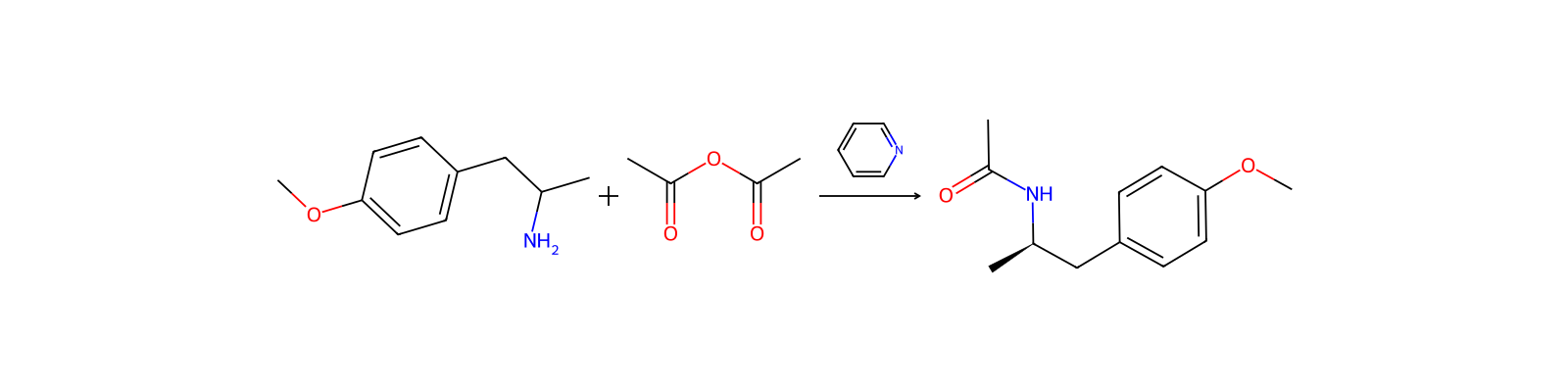
관련 반응
13건




연결된 노트
불러오는 중…