
Pamidronic Acid
데이터를 보충하는 중입니다. 잠시 후 페이지를 새로 고치면 최신 내용을 볼 수 있습니다
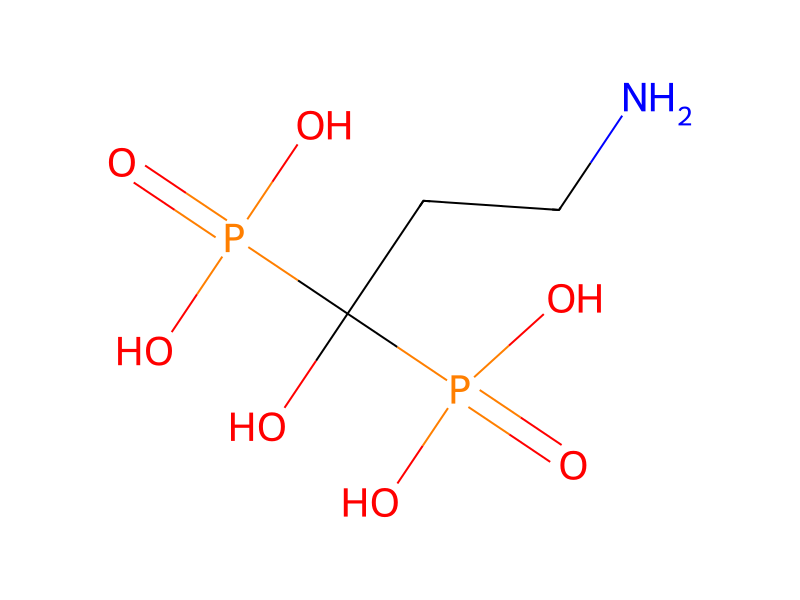
기본 정보
- CAS
40391-99-9- 표준 SMILES
NCCC(O)(P(=O)(O)O)P(=O)(O)O- InChIKey
WRUUGTRCQOWXEG-UHFFFAOYSA-N- 분자식
- C3H11NO7P2
- 평균 분자량
- 235.07 g/mol
- 단동위원소 질량
- 235.00107495
개요
Pamidronate is a phosphonoacetic acid.
이름 및 식별자
- 우선 이름
- Pamidronic Acid
- IUPAC
- (3-amino-1-hydroxy-1-phosphonopropyl)phosphonic acid
- 영어명
- Pamidronic acid
- 분자식
- C3H11NO7P2
- 분자량
- 235.07
이름 및 동의어
PAMIDRONIC ACIDpamidronate40391-99-9AmidronateAcide pamidronique(3-amino-1-hydroxy-1-phosphonopropyl)phosphonic acidAcido pamidronicoAcidum pamidronicumRibodroat(3-Amino-1-hydroxypropylidene)bisphosphonic acidDTXSID4023414AHPrBP
이름 더 보기
(3-Amino-1-hydroxypropane-1,1-diyl)bis(phosphonic acid)DLVPanolinRescriptorPamidronicaciIflab-bb F1977-0047Delavirdine mesylate
OYY3447OMC(3-Amino-1-hydroxypropylidene)diphosphonic acidDTXCID003414(3-amino-1-hydroxypropylidene)-1,1-biphosphonateaminopropanehydroxydiphosphonateamino-1-hydroxypropane-1,1-diphosphonateRefChem:57113M05BA03
데이터베이스 식별자
- CAS
40391-99-9- PubChem CID
- 4674
- DTXSID
DTXSID4023414- ChEMBL
CHEMBL834- ChEBI
CHEBI:7903- UNII
- OYY3447OMC
- EC Number
- 254-905-2
- Nikkaji
- J221.669H
물성
구조 계산 물성보충 중
- XLogP
- -6.9
- 극성 표면적
- 161 Ų
- 수소 결합 공여자 수
- 6
- 수소 결합 수용자 수
- 8
- 회전 가능 결합 수
- 4
- 무거운 원자 수
- 13
- 형식 전하
- 0
- 복잡도
- 243
실험 및 물리화학적 성질
Drugs
Pharmaceuticals
Pharmaceuticals -> Listed in ZINC15
LogP-4.7
Solubility1.58e+01 g/L
Human DrugsBreast Feeding; Lactation; Milk, Human; Bisphosphonates; Bone Density Conservation Agents; Diphosphonates
Melting Point254-262
Physical DescriptionSolid
물리화학적 성질
- 녹는점
- 226 · 226-228°C
- 끓는 점
- 658.7 · 658.7±65.0 °C(Predicted)
- 밀도
- 1.998 · 1.998±0.06 g/cm3(Predicted)
- 저장 조건
- 2 · under inert gas (nitrogen or Argon) at 2–8 °C
- 용해도
- 메탄올(약간 용해됨, 가열, 초음파 처리), 물(약간 용해됨, 가열, 초음파 처리)
- 산도 계수 (pKa)
- 1.44 · 1.44±0.10(Predicted)
- 물리적 상태
- 고체
- 색상
- 라이트 브라운부터 베이지까지
안전 및 규제
안전 정보는 참고용이며, 공급업체의 물질안전보건자료(SDS), 관련 법규 및 전문가 평가를 대체하지 않습니다.
GHS 분류
GHS Classification
Warning
H302 (100%): Harmful if swallowed [Warning Acute toxicity, oral]
P264, P270, P301+P317, P330, and P501 (click each P-code to see the statement)
Aggregated GHS information provided per 24 reports by companies from 4 notifications to the ECHA C&L Inventory.
유해성 정보
Hazard Classes and CategoriesAcute Tox. 4 (100%)
독성 정보
TreatmentIf overdosage occurs, symptomatic hypocalcemia could also result; such patients should be treated with short-term intravenous calcium. (L1712)
Health EffectsRare cases of uveitis, iritis, scleritis, and episcleritis have been reported, including one case of scleritis, and one case of uveitis upon separate rechallenges.
Adverse EffectsPamidronate correlates with numerous adverse effects, including hypocalcemia and resulting secondary hyperparathyroidism, acute phase response, musculoskeletal pain, various ocular events, and osteonecrosis of the jaw.
Exposure RoutesParenteral (intravenous).
Plasma concentration rises rapidly upon IV administration.
Toxicity Summary
A small number of cases describe symptomatic hypocalcemia following pamidronate administration. In each case, however, patients had pre-existing derangements contributing to their symptoms, including renal insufficiency and low vitamin D levels secondary to lifestyle, previous GI surgery, and medication history. Recommendations for the management of pamidronate overdose include appropriate correction of the electrolyte disturbance and pre-treatment supplementation with calcium and Vitamin D.
화학 및 산업
약리 정보
ATC Code
M05BA03
M - Musculo-skeletal system
QM - Musculo-skeletal system
Protein BindingPamidronate is approximately 54% protein bound in serum.
Pharmacodynamics
Pamidronic acid is a second generation, nitrogen containing bisphosphonate that inhibits osteoclast mediated bone loss It has a wide therapeutic index and a long duration of action as it can be given every 3-4 weeks for certain indications. Patients should be counselled regarding the risk of elevated blood urea nitrogen, renal tubular necrosis, and nephrotoxicity.
Mechanism of Action
Bisphosphonates are taken into the bone where they bind to hydroxyapatite. Bone resorption by osteoclasts causes local acidification, releasing the bisphosphonate, which is taken into the osteoclast by fluid-phase endocytosis. Endocytic vesicles become acidified, releasing bisphosphonates into the cytosol of osteoclasts where they act. Osteoclasts mediate resorption of bone. When osteoclasts bind to bone they form podosomes, ring structures of F-actin. Disruption of the podosomes causes osteoclasts to detach from bones, preventing bone resorption. Nitrogen containing bisphosphonates such as pamidronate are known to induce apoptosis of hematopoietic tumor cells by inhibiting the components of the mevalonate pathway farnesyl diphosphate synthase, farnesyl diphosphate, and geranylgeranyl diphosphate. These components are essential for post-translational prenylation of GTP-binding proteins like Rap1. The lack of prenylation of these proteins interferes with their function, and in the case of Rap1, leads to apoptosis. pamidronate also activated caspases 3 and 9 which further contribute to apoptosis.
Biological Half-LifeThe mean elimination half life of pamidronate is 28±7 hours.
Metabolism/Metabolites
Pamidronate is not metabolized _in vivo_.
Pamidronate is not metabolized and is exclusively eliminated by renal excretion. Route of Elimination: Pamidronate is not metabolized and is exclusively eliminated by renal excretion. Half Life: The mean ± SD elimination half-life is 28 ± 7 hours
관련 반응
21건


화합물 노트
불러오는 중…