
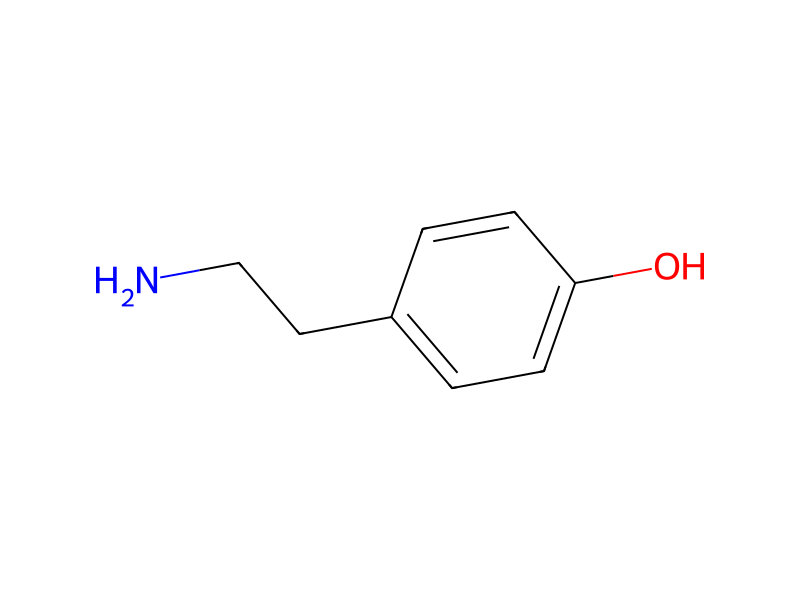
기본 정보
- 표준 SMILES
NCCc1ccc(O)cc1- InChIKey
DZGWFCGJZKJUFP-UHFFFAOYSA-N- 분자식
- C8H11NO
- 평균 분자량
- 137.18 g/mol
- 단동위원소 질량
- 137.08406397
개요
Tyramine is a primary amino compound obtained by formal decarboxylation of the amino acid tyrosine. It has a role as a neurotransmitter, an EC 3.1.1.8 (cholinesterase) inhibitor, a mouse metabolite, an Escherichia coli metabolite and a human metabolite. It is a monoamine molecular messenger, a member of tyramines and a primary amino compound. It is a conjugate base of a tyraminium.
이름 및 식별자
- 우선 이름
- Tyramine
- IUPAC
- 4-(2-aminoethyl)phenol
- 영어명
- 51-67-2
- 분자량
- 0
이름 및 동의어
tyramine51-67-24-(2-Aminoethyl)phenolUteramine2-(4-Hydroxyphenyl)ethylamineTyrosamineTocosine4-HydroxyphenethylamineSystogeneTyramin4-HydroxyphenylethylaminePhenol, 4-(2-aminoethyl)-
이름 더 보기
p-(2-Aminoethyl)phenolp-HydroxyphenethylamineTenosin-wirkstoffp-Hydroxyphenylethylamine2-(p-Hydroxyphenyl)ethylaminep-beta-AminoethylphenolBenzeneethanamine, 4-hydroxy-beta-Hydroxyphenylethylamine
데이터베이스 식별자
- CAS
51-67-2- PubChem CID
- 5610
- DTXSID
DTXSID2043874- ChEMBL
CHEMBL11608- ChEBI
CHEBI:15760- UNII
- X8ZC7V0OX3
- EC Number
- 200-115-8
- Nikkaji
- J4.123H
물성
구조 계산 물성
- XLogP
- 1.1
- 극성 표면적
- 46.3 Ų
- 수소 결합 공여자 수
- 2
- 수소 결합 수용자 수
- 2
- 회전 가능 결합 수
- 2
- 무거운 원자 수
- 10
- 형식 전하
- 0
- 복잡도
- 87.3
실험 및 물리화학적 성질
DrugsPharmaceuticals -> Listed in ZINC15
LogP
Log Kow = 0.72
-0.24
Food AdditivesFLAVORING AGENT OR ADJUVANT -> FDA Substance added to food
Flavoring AgentsEU Flavoring substances
Color/Form
CRYSTALS FROM BENZENE OR ALCOHOL
PLATES OR NEEDLES FROM BENZENE, NEEDLES FROM WATER
Solubility
SOL IN WATER /TYRAMINE HYDROCHLORIDE/
1 G DISSOLVES IN 10 ML BOILING ALCOHOL
SPARINGLY SOL IN BENZENE, XYLENE
Slightly soluble in water, benzene; soluble in ethanol, xylene
Water solubility = 10.4E+3 mg/L @ 15 °C
10.4 mg/mL at 15 °C
Boiling Point166 °C @ 2 MM HG
Melting Point
164-165 °C
MP: 269 °C /TYRAMINE HYDROCHLORIDE/
164 - 165 °C
Physical Description
Solid
Colourless to yellow solid; Sweet meaty aroma
Collision Cross Section
123.43 Ų [M+H]+ [CCS Type: DT; Method: stepped-field]
129.74 Ų [M-H]- [CCS Type: DT; Method: single field calibrated with Agilent tune mix (Agilent)]
138.4 Ų [M+Na]+
Other Experimental PropertiesCRYSTALS FROM ALCOHOL + ETHER /TYRAMINE HYDROCHLORIDE/
물리화학적 성질
- 녹는점
- 164 · 164-165 °C
- 끓는 점
- 166 °C · 166 °C(Press: 2 Torr)
- 밀도
- 1.103 · 1.103±0.06 g/cm3(Predicted)
- 산도 계수 (pKa)
- 9.51 · 9.51±0.26(Predicted)
안전 및 규제
GHS 분류
GHS Classification
This chemical does not meet GHS hazard criteria for 65.9% (91 of 138) of all reports.
Warning
H315 (32.6%): Causes skin irritation [Warning Skin corrosion/irritation]
P261, P264, P264+P265, P271, P280, P302+P352, P304+P340, P305+P351+P338, P319, P321, P332+P317, P337+P317, P362+P364, P403+P233, P405, and P501 (click each P-code to see the statement)
Aggregated GHS information provided per 138 reports by companies from 7 notifications to the ECHA C&L Inventory. Each notification may be associated with multiple companies.
유해성 정보
Regulatory Information
Chemical: Phenol, 4-(2-aminoethyl)-
Commission Regulation (EC) No 1565/2000 (Repealed by Com. Implementing Reg. (EU) No 872/2012)
Status: Active Update: 05-01-2016 https://echa.europa.eu/registration-dossier/-/registered-dossier/16729
Phenol, 4-(2-aminoethyl)-: Does not have an individual approval but may be used under an appropriate group standard
Special ReportsThe monoamine oxidase inhibitor tyramine reaction.[Brown C et al; J Clin Pharmacol 29 (6): 529-32 (1989)]
Hazard Classes and CategoriesSkin Irrit. 2 (32.6%)
안전 및 보호
Disposal Methods
SRP: At the time of review, criteria for land treatment or burial (sanitary landfill) disposal practices are subject to significant revision. Prior to implementing land disposal of waste residue (including waste sludge), consult with environmental regulatory agencies for guidance on acceptable disposal practices.
독성 정보
Treatment
If the compound has been ingested, rapid gastric lavage should be performed using 5% sodium bicarbonate. For skin contact, the skin should be washed with soap and water. If the compound has entered the eyes, they should be washed with large quantities of isotonic saline or water. In serious cases, atropine and/or pralidoxime should be administered. Anti-cholinergic drugs work to counteract the effects of excess acetylcholine and reactivate AChE. Atropine can be used as an antidote in conjunction with pralidoxime or other pyridinium oximes (such as trimedoxime or obidoxime), though the use of '-oximes' has been found to be of no benefit, or possibly harmful, in at least two meta-analyses. Atropine is a muscarinic antagonist, and thus blocks the action of acetylcholine peripherally.
Interactions
ANTIBACTERIAL ACTION OF FURAZOLIDONE IS ACCOMPANIED BY PROGRESSIVE & GENERALIZED INHIBITION OF MONOAMINE OXIDASE... TYRAMINE HAS...BEEN REPORTED TO INTERACT WITH FURAZOLIDONE...
PHENYLPROPANOLAMINE & OTHER INDIRECT-ACTING SYMPATHOMIMETIC AMINES (EG, TYRAMINE) PRODUCE HYPERTENSIVE CRISIS & RELATED SYMPTOMS IN SOME INDIVIDUALS CURRENTLY RECEIVING OR PREVIOUSLY BEING TREATED WITH TRANYLCYPROMINE OR OTHER MONOAMINE OXIDASE INHIBITORS /SUCH AS ISOCARBOXAZID, PARGYLINE & PHENELZINE/. ...MAY BE FATAL.
ALTHOUGH SELECTIVE MONOAMINE OXIDASE INHIBITOR (-)-DEPRENYL SUBSTANTIALLY INHIBITS TYRAMINE (I)-OXIDIZING ABILITY IN PIG, IV TYRAMINE CHALLENGE AFTER PRETREATMENT WITH THIS DRUG FAILED TO PRODUCE PRESSOR RESPONSE ("CHEESE EFFECT") ASSOC WITH OTHER IRREVERSIBLE MAO INHIBITORS.
PRETREATMENT OF THYROIDECTOMIZED RATS WITH T3 & RESERPINE ABOLISHED TYRAMINE INDUCED HYPOTENSIVE ACTION. PRETREATMENT WITH PHENOXYBENZAMINE INHIBITED ACTION IN INTACT RAT AS WELL, WHEREAS CYPROHEPTADINE INCR ACTION IN THYROIDECTOMIZED RAT BUT NOT IN INTACT RATS
For more Interactions (Complete) data for TYRAMINE (11 total), please visit the HSDB record page.
Health Effects
Acute exposure to cholinesterase inhibitors can cause a cholinergic crisis characterized by severe nausea/vomiting, salivation, sweating, bradycardia, hypotension, collapse, and convulsions. Increasing muscle weakness is a possibility and may result in death if respiratory muscles are involved. Accumulation of ACh at motor nerves causes overstimulation of nicotinic expression at the neuromuscular junction. When this occurs symptoms such as muscle weakness, fatigue, muscle cramps, fasciculation, and paralysis can be seen. When there is an accumulation of ACh at autonomic ganglia this causes overstimulation of nicotinic expression in the sympathetic system. Symptoms associated with this are hypertension, and hypoglycemia. Overstimulation of nicotinic acetylcholine receptors in the central nervous system, due to accumulation of ACh, results in anxiety, headache, convulsions, ataxia, depression of respiration and circulation, tremor, general weakness, and potentially coma. When there is expression of muscarinic overstimulation due to excess acetylcholine at muscarinic acetylcholine receptors symptoms of visual disturbances, tightness in chest, wheezing due to bronchoconstriction, increased bronchial secretions, increased salivation, lacrimation, sweating, peristalsis, and urination can occur. Certain reproductive effects in fertility, growth, and development for males and females have been linked specifically to organophosphate pesticide exposure. Most of the research on reproductive effects has been conducted on farmers working with pesticides and insecticdes in rural areas. In females menstrual cycle disturbances, longer pregnancies, spontaneous abortions, stillbirths, and some developmental effects in offspring have been linked to organophosphate pesticide exposure. Prenatal exposure has been linked to impaired fetal growth and development. Neurotoxic effects have also been linked to poisoning with OP pesticides causing four neurotoxic effects in humans: cholinergic syndrome, intermediate syndrome, organophosphate-induced delayed polyneuropathy (OPIDP), and chronic organophosphate-induced neuropsychiatric disorder (COPIND). These syndromes result after acute and chronic exposure to OP pesticides.
Toxicity Summary
Tyramine is a cholinesterase or acetylcholinesterase (AChE) inhibitor. A cholinesterase inhibitor (or 'anticholinesterase') suppresses the action of acetylcholinesterase. Because of its essential function, chemicals that interfere with the action of acetylcholinesterase are potent neurotoxins, causing excessive salivation and eye-watering in low doses, followed by muscle spasms and ultimately death. Nerve gases and many substances used in insecticides have been shown to act by binding a serine in the active site of acetylcholine esterase, inhibiting the enzyme completely. Acetylcholine esterase breaks down the neurotransmitter acetylcholine, which is released at nerve and muscle junctions, in order to allow the muscle or organ to relax. The result of acetylcholine esterase inhibition is that acetylcholine builds up and continues to act so that any nerve impulses are continually transmitted and muscle contractions do not stop. Among the most common acetylcholinesterase inhibitors are phosphorus-based compounds, which are designed to bind to the active site of the enzyme. The structural requirements are a phosphorus atom bearing two lipophilic groups, a leaving group (such as a halide or thiocyanate), and a terminal oxygen.
Signs and Symptoms
Symptoms of low dose exposure include excessive salivation and eye-watering. Acute dose symptoms include severe nausea/vomiting, salivation, sweating, bradycardia, hypotension, collapse, and convulsions. Increasing muscle weakness is a possibility and may result in death if respiratory muscles are involved. Hypertension, hypoglycemia, anxiety, headache, tremor and ataxia may also result.
Natural Pollution Sources
...TYRAMINE.../ARISES/ FROM MICROBIOLOGICAL DECARBOXYLATION OF CHOLINE, TRYPTOPHAN, TYROSINE, AND OTHER AMINO ACIDS PRESENT IN FOODSTUFF RESIDUES IN INTESTINAL TRACT. ...ALSO FOUND IN PUTREFYING FOODSTUFFS, SUCH AS CHEESE, HIGH GAME & SPOILED FISH, & ETHYLAMINE...
...THE SCLEROTIA /OF ERGOT/ CONTAIN A LARGE NUMBER OF AMINES AND OTHER NITROGENOUS COMPOUNDS, SOME, SUCH AS...TYRAMINE...HAVING PHYSIOLOGICAL ACTIVITY.
...FOODS CONTAINING TYRAMINE.../INCLUDE/ PICKLED HERRING, BEER, WINE (ESP RED WINE), & CHICKEN LIVERS...
BASE FOUND IN MISTLETOE...
Human Toxicity Excerpts
Tyramine is a sympathomimetic amine that is without effect when ingested in food because of its rapid biotransformation by monoamine oxidase in the gut and liver. This ... does not occur when monoxidase oxidase is inhibited.
... The role of food additives, tyramine and acetylsalicylic acid, was investigated by double blind placebo controlled challenges in 25 children with severe atopic dermatitis. All children challenged with foods (n = 24), except 1, showed one or more positive reactions to the double blind placebo controlled challenges with foods. Positive reactions presented different combinations of flares of skin symptoms, intestinal symptoms and respiratory systems. Seventeen children (78%) showed a positive challenge to egg, 12% to wheat (50%), eight to milk (33.3%) and eight to soya. Six children underwent double blind placebo controlled challenges with food additives, tyramine and acetylsalicylic acid. All were found to demonstrate positive skin and/or intestinal reactions to at least one of the food additives. Two children reacted to tartrazine, three to sodium benzoate, two to sodium glutamate, two to sodium metabisulfite, four to acetylsalicylic acid and one to tyramine. ... Foods, food additives, tyramine and acetylsalicylic acid can cause positive double blind placebo controlled challenges in children with severe atopic dermatitis.
Carcinogen ClassificationNo indication of carcinogenicity to humans (not listed by IARC).
Drug Induced Liver Injury
Drug Induced Liver Injury Rank (DILIrank 2.0)
Tyramine
vNo-DILI-concern
0
No match
DOI:10.1016/j.drudis.2016.02.015
Populations at Special Risk... Hypertensive crisis /may result in/ patients receiving monoamine oxidase inhibitors.
안전 데이터
- 신호 어
- Warning
- 유해·위험 문구
- 암호 유해·위험 문구 위험 등급 범주 신호 어 그림 문자 P- 코드 H315
화학 및 산업
약리 정보
Mechanism of Action... Findings indicate that tyramine acts presynaptically to cause a release of endogenous norepinephrine from the nerve, which in turn acts on postjunctional receptors.
Metabolism/Metabolites
THERE HAVE BEEN SEVERAL...METABOLIC STUDIES OF TYRAMINE IN MAMMALS, & TRACERS HAVE BEEN USED. ...SMALL AMT OF P-HYDROXYMANDELIC ACID, VANILMANDELIC ACID, & HOMOVANILLIC ACID /HAVE BEEN INDENTIFIED/.
WHEN TYRAMINE...WAS INJECTED INTO RATS, MAJOR URINARY METABOLITE WAS FREE P-HYDROXYPHENYLACETIC ACID...
...TYRAMINE...PRESENT IN CHEESE AND IN YEAST EXTRACT...IS NORMALLY DETOXICATED BY MONOAMINE OXIDASE, PRESENT IN INTESTINE AND LIVER, TO YIELD PARA-HYDROXYPHENYLETHANOL, PARA-HYDROXYPHENYLACETIC ACID AND ITS GLYCINE CONJUGATE, PARA-HYDROXYPHENACETURIC ACID, AND...N-ACETYLTYRAMINE.
WHEN HUMAN/S/...TREATED WITH (14)C-TYRAMINE.../URINARY METABOLITE/ P-HYDROXYPHENYLACETALDEHYDE...CONTRIBUTED LESS THAN 0.5%.
For more Metabolism/Metabolites (Complete) data for TYRAMINE (6 total), please visit the HSDB record page.
Tyramine has known human metabolites that include Dopamine and Tyramine glucuronide.
MeSH Pharmacological Classification
Drugs that mimic the effects of stimulating postganglionic adrenergic sympathetic nerves. Included here are drugs that directly stimulate adrenergic receptors and drugs that act indirectly by provoking the release of adrenergic transmitters.
Drugs that block the transport of adrenergic transmitters into axon terminals or into storage vesicles within terminals. The tricyclic antidepressants (ANTIDEPRESSIVE AGENTS, TRICYCLIC) and amphetamines are among the therapeutically important drugs that may act via inhibition of adrenergic transport. Many of these drugs also block transport of serotonin.
Absorption, Distribution and Excretion
96% OF (14)C WAS EXCRETED IN 24-HR URINE OF RATS GIVEN IP DOSE OF...(14)C TYRAMINE. 67% WAS EXCRETED IN 3 HR, BUT THIS AMT WAS MARKEDLY REDUCED IF RATS WERE PRETREATED WITH MONOAMINE OXIDASE INHIBITOR. /HUMANS/...EXCRETED 58% OF (14)C IN 24-HR URINE FOLLOWING IV DOSE...
WHEN TYRAMINE...WAS INJECTED INTO RATS, MAJOR URINARY METABOLITE WAS FREE P-HYDROXYPHENYLACETIC ACID...(77% OF THAT PROPORTION OF DOSE EXCRETED IN URINE)...
.../TYRAMINE IS/ POORLY ABSORBED FROM BOWEL, BUT.../IS/ READILY ABSORBED FROM SC INJECTION. .../IT/ MAY BE ABSORBED TO A GREATER OR LESS EXTENT FROM NASAL MUCOSA.
(14)C-LABELED TYRAMINE BOUND TO PLASMA PROTEINS OF RABBITS IN DOSE- & TIME OF INCUBATION-RELATED MANNER. MAX BINDING CAPACITY EST AS 70.2 UG/G. AFFINITY FOR PLASMA PROTEINS MUCH LOWER THAN THAT OF NORADRENALINE.
Tissue LocationsAdipose Tissue
Cellular LocationsCytoplasm
Metabolite PathwaysAlkaptonuria
용도 및 제조
Uses
MEDICATION
Phenethylamines are important precursors of isoquinoline alkaloids and important neuroamines /dopamine and tyramine/.
Methods of ManufacturingDecarboxylation of tyrosine
Use Classification
Flavouring Agent -> FLAVOURING_AGENT -> JECFA Functional Classes
Flavoring Agents -> JECFA Flavorings Index
공급사50 곳
国药集团化学试剂有限公司86-21-63210123 · [email protected]
梯希爱(上海)化成工业发展有限公司021-67121386 · [email protected]
爱斯特(成都)生物制药股份有限公司+86-28-85122536 85324413 · [email protected]
科瑞迪化学400-821-5857 021-64326257 · [email protected]
Syntechem Co.,Ltd[email protected]
上海迈瑞尔生化科技有限公司4006356688 18621169109 · [email protected]
太原市瑞和丰科贸有限公司+86 351 7031519 · [email protected]
安耐吉化学&3A(安徽泽升科技股份有限公司)400-0056266 · [email protected]
上海瀚鸿科技股份有限公司021-54306202 13764082696 · [email protected]
上海相辉医药科技有限公司13761987713 · [email protected]
上海隆盛化工有限公司58099637 13585536065 · [email protected]
武汉丰泰威远科技有限公司027-87465837 19945049750 · [email protected]
孝感深远化工有限公司15527621225; 15527621225 · [email protected]
云南西力生物技术股份有限公司0871-65217109 · [email protected]
山东西亚化学有限公司13355009207 13355009207 · [email protected]
玛雅试剂+86 (573) 82222445 (0)18006601000 452520369 · [email protected]
四川库利南科技有限公司400-1166-196 18981987031 · [email protected]
天津希恩思生化科技有限公司400 638 7771 · [email protected]
南京维奥化工有限公司Please Send Email 18652950785 · [email protected]
Syntor Fine Chemicals Ltd.+44 (0) 1928 579865 · [email protected]
Syntor Fine Chemicals Ltd.+44 (0) 1928 579865 · [email protected]
斯百全化学(上海)有限公司021-021-021-67601398-809-809-809 15221380277 · [email protected]
北京泰亚杰科技有限公司021-33690831-8001 13552411790;18616022633 · [email protected]
上海源叶生物科技有限公司13636370518 · [email protected]
艾科试剂4008-755-333 18080918076 · [email protected]
上海思域化工科技有限公司86-21-34053660 · [email protected]
赛默飞世尔科技(中国)有限公司800-810-5118 · [email protected]
北京伊诺凯科技有限公司400-810-7969 010-59572699 · [email protected]
上海遐瑞医药科技有限公司+86 21 61551611
TCI AMERICA800-4238616 · [email protected]
TOKYO CHEMICAL INDUSTRY CO., LTD.03-36680489 · [email protected]
TCI Europe320-37350700 · [email protected]
上海贤鼎生物科技有限公司4009209199 · [email protected]
深圳振强药物研发有限公司0755-66853366 13670046396 · [email protected]
深圳康特腾科技有限公司86-0755-86635001 · [email protected]
越林试剂021-62960152 · [email protected]
泰州天鸿生化科技有限公司0523-86132544 15366717810 · [email protected]
南京生利德生物科技有限公司025-57798810 18652991625 · [email protected]
上海陶素生化科技有限公司021-33632979 · [email protected]
苏州爱玛特生物科技有限公司0512-56316828 4008675858 · [email protected]
北京环宇世纪化学科技有限公司hysj_bj.com
湖北鑫源顺医药化工有限公司13971561712, 13995564702, 027-50664929 · [email protected]
上海将来实业股份有限公司400-0066400 13621662912 · [email protected]
上海将来实业股份有限公司021-61552785 · [email protected]
安徽科迪达化工有限公司0554-2106669 · [email protected]
HBCChem, Inc.+1-510-219-6317 · [email protected]
上海笛柏生物科技有限公司400-008-9730,021-54359730 400-008-9730 · [email protected]
日照力德士化工有限公司010-51268198 · [email protected]
美岚实业(上海)有限公司021-58958189 · [email protected]
上海爱蝶实业有限公司021-58957966 18930537195 · [email protected]
관련 반응
339건


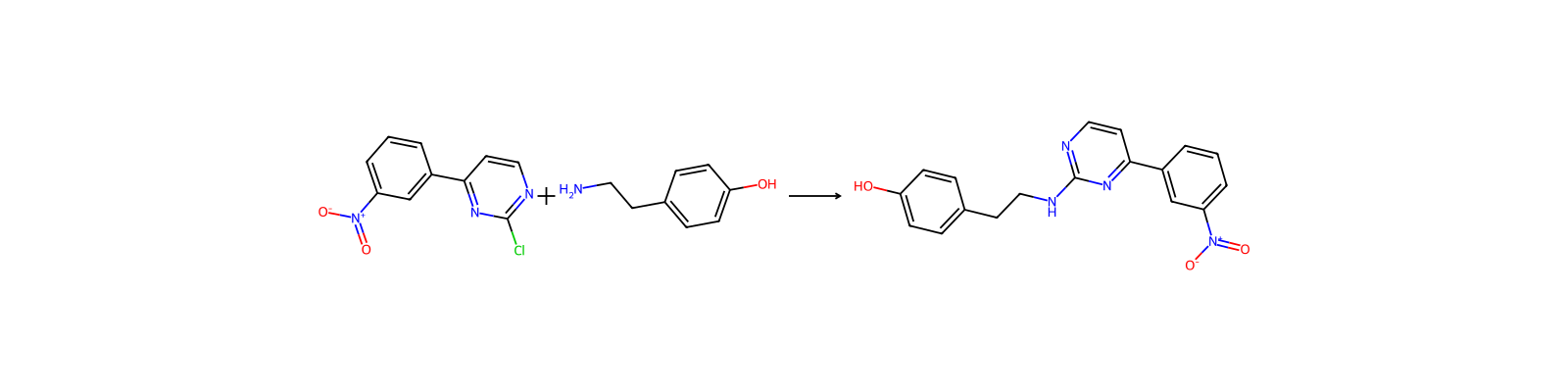
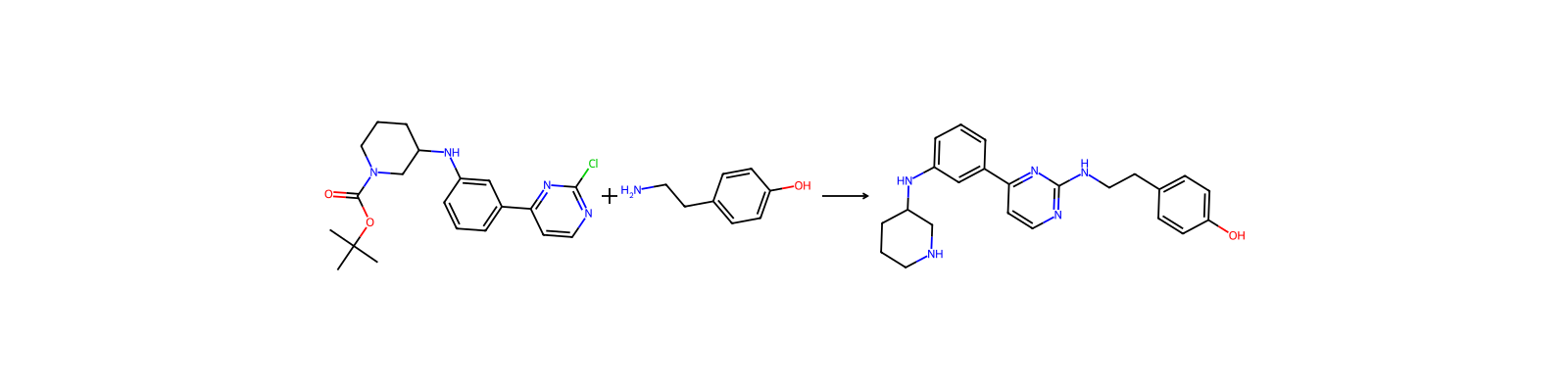
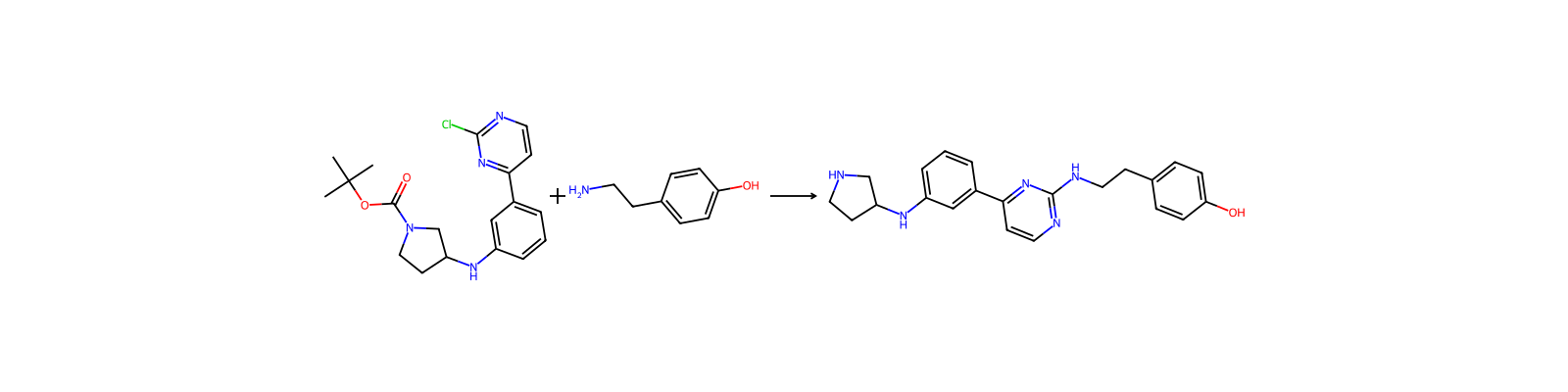
연결된 노트
불러오는 중…