홈MCP워크벤치Skills
홈워크벤치알림마이페이지
llms.txt · MCP 가이드개인정보처리방침 · 이용약관 · 지원v1.8.0
  1. 홈
  2. /화합물

카프론알데히드

Hexanal

HCID 6184
새 노트새 반응견적 요청하기
인쇄 미리보기

데이터를 보충하는 중입니다. 잠시 후 페이지를 새로 고치면 최신 내용을 볼 수 있습니다

기본 정보개요이름 및 식별자물성안전 및 규제화학 및 산업관련 반응화합물 노트
부분 구조 검색유사 구조 찾기

기본 정보

CAS
66-25-1
표준 SMILES
CCCCCC=O
InChIKey
JARKCYVAAOWBJS-UHFFFAOYSA-N
분자식
C6H12O
평균 분자량
100.16 g/mol
단동위원소 질량
100.088815

개요

Hexaldehyde appears as a clear colorless liquid with a pungent odor. Flash point 90 °F. Less dense than water and insoluble in water. Vapors heavier than air.

이름 및 식별자

우선 이름
Hexanal
IUPAC
hexanal
현지명
카프론알데히드
영어명
Hexanal
분자식
C6H12O
분자량
100.16

이름 및 동의어

HEXANALCaproaldehyde66-25-1HexaldehydeCaproic aldehyden-HexanalCapronaldehyde1-Hexanaln-CaproaldehydeHexanaldehydeHexylaldehydeAldehyde C-6
이름 더 보기
카프론알데히드헥스알데하이드헥산알FEMA 2557Natural hexanalbutacetin
n-CapronaldehydeHexoic aldehyden-Caproylaldehyden-Hexylaldehyden-HexaldehydeC6 aldehyden-Caproic aldehydeKapronaldehyd

데이터베이스 식별자

CAS
66-25-1
PubChem CID
6184
DTXSID
DTXSID2021604
ChEMBL
CHEMBL280331
ChEBI
CHEBI:88528
UNII
9DC2K31JJQ
EC Number
200-624-5
Nikkaji
J1.409E

물성

구조 계산 물성보충 중

XLogP
1.8
극성 표면적
17.1 Ų
수소 결합 공여자 수
0
수소 결합 수용자 수
1
회전 가능 결합 수
4
무거운 원자 수
7
형식 전하
0
복잡도
41.4

실험 및 물리화학적 성질

Chemical Classes · 2건

Other Classes -> Aldehydes

Flammable agents - 3rd degree

LipidsFatty Acyls [FA] -> Fatty aldehydes [FA06]
pHAcid value (max): 10.0
SpringerMaterials PropertiesBoiling point
FragrancesFragrance Ingredient (Hexanal) -> IFRA transparency List
LogP · 2건

log kow = 1.78

1.78

Odor · 3건

Characteristic fruity odor (on dilution)

Strong, green grass odor

Sharp, aldehyde odor

Taste · 2건

Characeteristic fruity taste (on dilution)

Green, woody, vegetative, apple, grassy, citrus and orange with a fresh lingering aftertaste

Food AdditivesFLAVORING AGENT OR ADJUVANT -> FDA Substance added to food
Density · 5건

0.83 at 68 °F (USCG, 1999) - Less dense than water; will float

안전 및 규제

안전 정보는 참고용이며, 공급업체의 물질안전보건자료(SDS), 관련 법규 및 전문가 평가를 대체하지 않습니다.

GHS 분류

GHS Classification · 6건

Warning

H226 (100%): Flammable liquid and vapor [Warning Flammable liquids]

P210, P233, P240, P241, P242, P243, P264, P264+P265, P280, P302+P352, P303+P361+P353, P305+P351+P338, P321, P332+P317, P337+P317, P362+P364, P370+P378, P403+P235, and P501 (click each P-code to see the statement)

Aggregated GHS information provided per 1956 reports by companies from 8 notifications to the ECHA C&L Inventory. Each notification may be associated with multiple companies.

Warning

H226: Flammable liquid and vapor [Warning Flammable liquids]

유해성 정보

Regulatory Information · 5건

Chemical: Hexanal

Hexanal is listed on the EPA's Chemical Data Reporting (CDR) system. Manufacturers and importers of Hexanal are required to report information about their production and use of this chemical to the EPA under the Toxic Substances Control Act (TSCA). (40 eCFR Part 711)

Status: Active Update: 16-02-2022 https://echa.europa.eu/registration-dossier/-/registered-dossier/27720

Hexanal: Does not have an individual approval but may be used under an appropriate group standard

The New Jersey Worker and Community Right to Know Act requires public and private employers to provide information about hazardous substances at their workplaces. (N.J.S.A. 34:5A-1 et. seq.)

DOT LabelFlammable Liquid
Fire Hazards · 2건

Behavior in Fire: Vapor is heavier than air and may travel to a source of ignition and flash back. (USCG, 1999)

· HIGHLY FLAMMABLE: Will be easily ignited by heat, sparks or flames.

Fire PotentialDangerous fire hazard when exposed to heat or flame.
Health Hazards · 2건

Ingestion causes irritation of mouth and stomach. Contact with vapor or liquid irritates eyes. Liquid irritates skin. (USCG, 1999)

화학 및 산업

약리 정보

Mechanism of Action · 1건

Inhibition of intercellular communication is an important feature in the tumor promotion phase of a multistage carcinogenesis model. In atherosclerosis inhibition of cell-cell communication by atherogenic compounds, e.g., low density lipoproteins (LDL), also seems to be important. For testing atherogenic compounds we used an atherosclerosis relevant cell type, namely human smooth muscle cells. In order to investigate which part of the LDL particle would be involved in inhibition of metabolic co-operation between human smooth muscle cells in culture ... several fatty acids and their breakdown products /were tested/, namely aldehydes. Unsaturated C-18 fatty acids markedly influenced gap-junctional intercellular communication (GJIC), whereas saturated (C18:0, C16:0) and unsaturated fatty acids with > 20 carbon atoms did not inhibit GJIC. In the case of oleic and elaidic acid, orientation seemed important; however, after exposure to palmitoleic and palmitelaidic acid no differences were found. The most potent inhibitor of GJIC was linoleic acid, which inhibited GJIC by 75%. No correlation was found between degrees of unsaturation and ability to inhibit GJIC. Of the tested aldehydes, hexanal, propanal, butanal and 4-hydroxynonenal did significantly inhibit GJIC, while pentanal had no effect. Since modification of LDL was shown to be important in order for LDL to inhibit GJIC, these results show that fatty acids and their oxidative breakdown products may be of importance for the inhibition of GJIC by LDL.

Metabolism/Metabolites · 6건

Aldehyde dehydrogenase specific activity was measured in crude homogenates, post-mitochondrial supernatants, cytosolic and microsomal fractions of trout live, using a number of endogenous and xenobiotic aldehydes and both NAD+ and NADP+ as co-factors. All the activity found in the crude homogenate could be accounted for by the sum of the cytosolic and microsomal activities. Highest activities were found with the medium chain length substrates hexanal and nonanal in all fractions. Apparent affinity for hexanal and nonanal in the cytosolic fraction were comparable to that found in rats, but the theoretical maximal velocity for these substrates, and the specific activities for the other substrates, were much lower than found in mammals. In another study with carcinogen fed fish, aldehyde dehydrogenase distribution was evaluated histochemically in cryostat sections. In control trout, aldehyde dehydrogenase was uniformly distributed without an apparent zonal pattern. However, in hepatic tumors, aldehyde dehydrogenase was apparently induced with hexanal, nonanal, and propionaldehyde giving the strongest reaction products.

관련 반응

156건
반응 기록 만들기
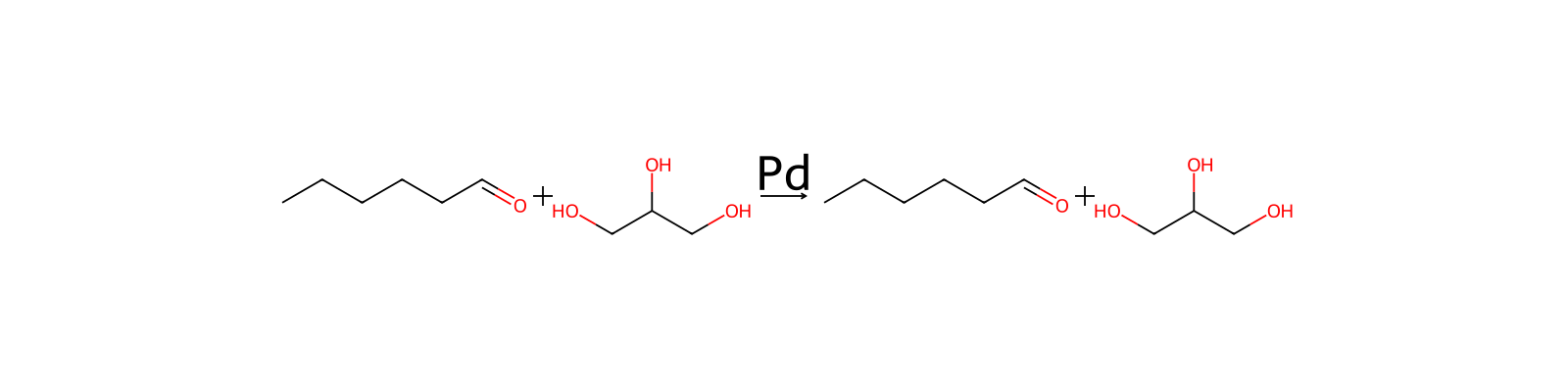
HRID 14211 반응식
HRID 14211반응물로uspto-grants-2010_06
HRID 14236 반응식
HRID 14236반응물로uspto-grants-2010_06
HRID 28201 반응식
HRID 28201반응물로uspto-grants-1980_09
HRID 34430 반응식
HRID 34430반응물로uspto-grants-1988_08
HRID 43546 반응식
HRID 43546반응물로uspto-grants-2013_09
HRID 74131 반응식
HRID 74131반응물로uspto-grants-2014_09
HRID 76244 반응식
HRID 76244반응물로uspto-grants-2014_09
HRID 76274 반응식
HRID 76274반응물로uspto-grants-2014_09
1 / 20 페이지

화합물 노트

불러오는 중…

이 페이지에서기본 정보개요이름 및 식별자물성안전 및 규제화학 및 산업관련 반응화합물 노트
더보기
새 노트새 반응견적 요청하기

0.8335 g/cu cm at 20 °C

Bulk density = 6.9 wt/gal at 20 °C

0.808-0.817

0.8335 @ 20°C

Flavoring AgentsEU Flavoring substances
Color/FormColorless liquid

물리화학적 성질

녹는점
-56 °C · -56 °C
끓는 점
130 · 130-131 °C(lit.)
밀도
0.816 g/mL · 0.816 g/mL at 20 °C
증기 밀도
1 · >1 (vs air)
증기압
10 mm · 10 mm Hg ( 20 °C)
굴절률
20 · n20/D 1.4035(lit.)
FEMA
2557 · 2557 | HEXANAL
인화점
90 °F · 90 °F
저장 조건
2 · 2-8°C
용해도
6 g/L · 6g/L
물리적 상태
액체
색상
무색투명~미황색
수소이온지수(pH)
4 · 4-5 (4.8g/l, H2O, 20℃)
냄새
매운맛
Odor Threshold
0.00028 ppm · 0.00028ppm
냄새 유형
녹색
생물학적 소스
synthetic
수용성
4.8 g/L · 4.8g/L(20℃)
비열
2.1 J/ · Cp(liquid): 2.1 J/(g·K), at 25℃
JECFA Number
92 · 92
Merck
14 · 14,1760
BRN
506198 · 506198
Henry's Law Constant
4.5 · 4.5×10-2 mol/(m3Pa) at 25℃, Brockbank (2013)
안정성
안정적인. 가연성. 산화제, 강염기, 강환원제와 호환되지 않습니다.
주요 응용
향료 및 향
화장품 원료 기능
향기
InChI
1S/C6H12O/c1-2-3-4-5-6-7/h6H,2-5H2,1H3
InChIKey
JARKCYVAAOWBJS-UHFFFAOYSA-N
SMILES
CCCCCC=O
LogP
1.97 · 1.97
NIST
Hexanal(66-25-1)
EPA
Hexaldehyde (66-25-1)
화학적 성질 · 1건

Hexanal occurs in apple and strawberry aromas as well as in orange and lemon oil. It is a colorless liquid with a fatty, green odor and, in low concentration, is reminiscent of unripe fruit. Hexanal is used in fruit flavors and, when highly diluted, in perfumery for obtaining fruity notes.

· May cause toxic effects if inhaled or absorbed through skin.

Hazards Summary · 1건

Category of C7-C9 aliphatic aldehydes and carboxylic acids: Members and supporting chemicals demonstrate low acute toxicity by oral, dermal, and inhalation exposures; toxicity in repeated-dose studies only at relatively high levels; no evidence of reproductive toxicity, developmental toxicity, or mutagenicity; [EPA ChAMP: Hazard Characterization] Auto-oxidizes and polymerizes (especially in presence of acid); [Merck Index] A skin, eye, nose, and throat irritant; [HSDB] Highly flammable and polymerizable; A skin and eye irritant; [CAMEO] A skin and eye irritant; [eChemPortal: ERMA] An irritant; Effects in high-dose animal studies include lacrimation; [MSDSonline]

DOT ID and Guide1207 130
FDA Requirements · 1건

Hexanal is a food additive permitted for direct addition to food for human consumption as a synthetic flavoring substance and adjuvant in accordance with the following conditions: a) they are used in the minimum quantity required to produce their intended effect, and otherwise in accordance with all the principles of good manufacturing practice, and b) they consist of one or more of the following, used alone or in combination with flavoring substances and adjuvants generally recognized as safe in food, prior-sanctioned for such use, or regulated by an appropriate section in this part.

Reactive GroupAldehydes
Reactivity AlertsHighly Flammable
Reactivity Profile · 1건

HEXALDEHYDE is an aldehyde. Aldehydes are frequently involved in self-condensation or polymerization reactions. These reactions are exothermic; they are often catalyzed by acid. Aldehydes are readily oxidized to give carboxylic acids. Flammable and/or toxic gases are generated by the combination of aldehydes with azo, diazo compounds, dithiocarbamates, nitrides, and strong reducing agents. Aldehydes can react with air to give first peroxo acids, and ultimately carboxylic acids. These autoxidation reactions are activated by light, catalyzed by salts of transition metals, and are autocatalytic (catalyzed by the products of the reaction). The addition of stabilizers (antioxidants) to shipments of aldehydes retards autoxidation. May attack some forms of plastics (USCG, 1999).

Flammable LimitsUpper explosion limit: 7.5 %(V). Lower explosion limit: 1 %(V).

안전 및 보호

Fire FightingExcerpt from ERG Guide 130 [Flammable Liquids (Water-Immiscible / Noxious)]:
Accidental Release Measures · 2건

· CALL 911. Then call emergency response telephone number on shipping paper. If shipping paper not available or no answer, refer to appropriate telephone number listed on the inside back cover.

· ELIMINATE all ignition sources (no smoking, flares, sparks or flames) from immediate area.

First Aid · 2건

INGESTION: give large amount of water and induce vomiting.

General First Aid:

Firefighting HazardsVapor is heavier than air & may travel to a source of ignition & flash back.
Exposure Control and Personal Protection· Wear positive pressure self-contained breathing apparatus (SCBA).
Fire Fighting Procedures · 3건

If material on fire or involved in fire: Do not extinguish fire unless flow can be stopped or safely confined. Use water in flooding quantities as fog. Solid streams of water may spread fire. Cool all affected containers with flooding quantities of water. Apply water from as far a distance as possible. Use foam, dry chemical, or carbon dioxide.

Suitable extinguishing media: Use water spray, alcohol-resistant foam, dry chemical or carbon dioxide.

Advice for firefighters: Wear self-contained breathing apparatus for firefighting if necessary.

Storage Conditions · 1건

Conditions for safe storage, including any incompatibilities: Keep container tightly closed in a dry and well-ventilated place. Containers which are opened must be carefully resealed and kept upright to prevent leakage. Recommended storage temperature 2-8 °C Storage class (TRGS 510): Flammable liquids.

Cleanup Methods · 1건

Accidental Release Measures. Personal precautions, protective equipment and emergency procedures: Use personal protective equipment. Avoid breathing vapors, mist or gas. Ensure adequate ventilation. Remove all sources of ignition. Beware of vapors accumulating to form explosive concentrations. Vapors can accumulate in low areas. Environmental precautions: Prevent further leakage or spillage if safe to do so. Do not let product enter drains. Methods and materials for containment and cleaning up: Contain spillage, and then collect with an electrically protected vacuum cleaner or by wet-brushing and place in container for disposal according to local regulations.

Nonfire Spill ResponseExcerpt from ERG Guide 130 [Flammable Liquids (Water-Immiscible / Noxious)]:
Disposal Methods · 2건

SRP: Recycle any unused portion of the material for its approved use or return it to the manufacturer or supplier. Ultimate disposal of the chemical must consider: the material's impact on air quality; potential migration in air, soil or water; effects on animal, aquatic and plant life; and conformance with environmental and public health regulations. If it is possible or reasonable use an alternative chemical product with less inherent propensity for occupational harm/injury/toxicity or environmental contamination.

Product: Burn in a chemical incinerator equipped with an afterburner and scrubber but exert extra care in igniting as this material is highly flammable. Offer surplus and non-recyclable solutions to a licensed disposal company. Contact a licensed professional waste disposal service to dispose of this material. Contaminated packaging: Dispose of as unused product.

Preventive Measures · 5건

If material not on fire and not involved in fire: Keep sparks, flames, and other sources of ignition away. Keep material out of water sources and sewers. Build dikes to contain flow as necessary. Attempt to stop leak if without undue personnel hazard. Use water spray to knock-down vapors.

Personnel protection: Avoid breathing vapors. Keep upwind. ... Do not handle broken packages unless wearing appropriate personal protective equipment. Wash away any material which may have contacted the body with copious amounts of water or soap and water.

Appropriate engineering controls: Handle in accordance with good industrial hygiene and safety practice. Wash hands before breaks and at the end of workday.

Gloves must be inspected prior to use. Use proper glove removal technique (without touching glove's outer surface) to avoid skin contact with this product. Dispose of contaminated gloves after use in accordance with applicable laws and good laboratory practices. Wash and dry hands.

SRP: The scientific literature for the use of contact lenses by industrial workers is inconsistent. The benefits or detrimental effects of wearing contact lenses depend not only upon the substance, but also on factors including the form of the substance, characteristics and duration of the exposure, the uses of other eye protection equipment, and the hygiene of the lenses. However, there may be individual substances whose irritating or corrosive properties are such that the wearing of contact lenses would be harmful to the eye. In those specific cases, contact lenses should not be worn. In any event, the usual eye protection equipment should be worn even when contact lenses are in place.

Isolation and Evacuation · 2건

Excerpt from ERG Guide 130 [Flammable Liquids (Water-Immiscible / Noxious)]:

Immediate precautionary measure

독성 정보

Body Burden · 1건

Hexaldehyde has been detected in human adipose tissue from the following age groups: in all 12 samples for 0-14, in all 17 samples for 15-44, and in 16 out of 17 samples for 45 and over years of age; and the following regions: 12 times in the North Central, 9 times in the Northeast, 18 times in the South, and 6 times in the West regions(1). Hexaldehyde was detected not quantified in human milk samples from Bayonne, NJ, Jersey City, NJ, and Pittsburgh, PA(2). Hexaldehyde was detected in the exhaled breath of 3 subjects at 9-13 ppb(3). Hexaldehyde was found in 15 of 15 personal air samples at a mean concentration of 2.2 ppb from samples taken in Helsinki, Finland, tested May to September 1997(4).

TreatmentKidney dialysis is usually needed to relieve the symptoms of uremic syndrome until normal kidney function can be restored.
Health EffectsChronic exposure to uremic toxins can lead to a number of conditions including renal damage, chronic kidney disease and cardiovascular disease.
Ecotoxicity Values · 5건

LC50; Species: Americamysis bahia (Opossum Shrimp) juvenile age 2-8 days; Conditions: saltwater, flow through, 24 °C, pH 8.0, dissolved oxygen 7.5-7.6 mg/L; Concentration: >4300 ug/L for 24 hr /99% purity/

LC50; Species: Americamysis bahia (Opossum Shrimp) juvenile age 2-8 days; Conditions: saltwater, flow through, 24 °C, pH 8.0, dissolved oxygen 7.6 mg/L; Concentration: >4300 ug/L for 48 hr /99% purity/

LC50; Species: Americamysis bahia (Opossum Shrimp) juvenile age 2-8 days; Conditions: saltwater, flow through, 25 °C, pH 7.9, dissolved oxygen 7.5 mg/L; Concentration: 4300 ug/L for 72 hr /99% purity/

LC50; Species: Americamysis bahia (Opossum Shrimp) juvenile age 2-8 days; Conditions: saltwater, flow through, 25 °C, pH 7.9-8.0, dissolved oxygen 7.4-7.7 mg/L; Concentration: 2800 ug/L for 96 hr (95% confidence interval: 1900-4300 ug/L) /99% purity/

For more Ecotoxicity Values (Complete) data for HEXALDEHYDE (18 total), please visit the HSDB record page.

Environmental Fate · 3건

TERRESTRIAL FATE: Based on a classification scheme(1), an estimated Koc value of 48(SRC), determined from a log Kow of 1.78(2) and a regression-derived equation(3), indicates that hexaldehyde is expected to have high mobility in soil(SRC). Volatilization of hexaldehyde from moist soil surfaces is expected to be an important fate process(SRC) given a Henry's Law constant of 2.13X10⁻⁴ atm-cu m/mole(4). Hexaldehyde is expected to volatilize from dry soil surfaces(SRC) based upon a vapor pressure of 11.3 mm Hg(5). According to a fungal growth experiment, hexaldehyde was oxidized but did not support growth(6) which suggests that it may not biodegrade in soil(SRC). However, the straight chain aldehyde structure of hexaldehyde would suggest rapid biodegradation(7). A 50% of theoretical BOD using activated sludge in the Japanese MITI test(8) suggests that biodegradation is an important environmental fate process in soil(SRC).

AQUATIC FATE: Based on a classification scheme(1), an estimated Koc value of 50(SRC), determined from a log Kow of 1.78(2) and a regression-derived equation(3), indicates that hexaldehyde is not expected to adsorb to suspended solids and sediment(SRC). Volatilization from water surfaces is expected(3) based upon a Henry's Law constant of 2.13X10⁻⁴ atm-cu m/mole(4). Using this Henry's Law constant and an estimation method(3), volatilization half-lives for a model river and model lake are 4 hrs and 5 days, respectively(SRC). According to a classification scheme(5), an estimated BCF of 7(SRC), from its log Kow(2) and a regression-derived equation(3), suggests the potential for bioconcentration in aquatic organisms is low(SRC). Hexaldehyde is not expected to undergo hydrolysis in the environment due to the lack of functional groups that hydrolyze under environmental conditions(3). According to a fungal growth experiment, hexaldehyde was oxidized but did not support growth(6) which suggests that it may not biodegrade in water(SRC). However, the straight chain aldehyde structure of hexaldehyde would suggest rapid biodegradation(7). A 50% of theoretical BOD using activated sludge in the Japanese MITI test(8) suggests that biodegradation is an important environmental fate process in water(SRC).

ATMOSPHERIC FATE: According to a model of gas/particle partitioning of semivolatile organic compounds in the atmosphere(1), hexaldehyde, which has a vapor pressure of 11.3 mm Hg at 25 °C(2), is expected to exist solely as a vapor in the ambient atmosphere. Vapor-phase hexaldehyde is degraded in the atmosphere by reaction with photochemically-produced hydroxyl radicals(SRC); the half-life for this reaction in air is estimated to be 12 and 14 hrs(SRC), calculated from rate constants of 3.17X10⁻¹¹ cu cm/molecule-sec at 23 °C(3) and 2.79X10⁻¹¹ cu cm/molecule-sec at 25 °C, respectively(4). The rate constant for the vapor-phase reaction of hexaldehyde with nitrate radical has been experimentally determined to be 1.64X10⁻¹⁴ cu cm/sec(4) and 1.28X10⁻¹⁴ cu cm/sec(5). These correspond to atmospheric half-lives of about 49 and 63 hrs, respectively, at a concentration of 2.4X10+8 nitrate radicals per cu cm(6). Hexaldehyde does not contain chromophores that absorb at wavelengths >290 nm(7) and, therefore, is not susceptible to direct photolysis by sunlight(SRC).

Food Survey Values · 2건

Hexaldehyde occurs as a volatile component of edible Korean Chamchwi(1), peanut oil(2), baked potatoes(3), Beaufort cheese(4), pine sprout and pine needle tea(5), clove essential oil(6), roasted filberts(7), and roasted earth almonds (Cyperus esculentus L.)(8). Hexaldehyde was quantified in sweet corn (cream can corn, 14 ppb; frozen kernel corn, 5 ppb(9), and was identified in paprika oleoresin <0.1 mg/kg(10). Hexaldehyde was found in popcorn using wet extraction method at 80 ug/kg and dry extraction method at 140 ug/kg(11). Commercial rice cakes were found to contain 800-960 ppb of hexaldehyde(12). Fermented soybean (Glycine max) curds were found to contain 499.8-1319.1 ug/kg of hexaldehyde(13). Hexaldehyde was not detected in roasted peanuts at concns of 0.109-0.257 ug/g(14). Hexaldehyde was identified as a volatile component of boiled Chinese chestnuts (Castanea molissima) but not found in roasted chestnuts(15). Hexaldehyde was detected in the emissions from heated rapeseed oil(16).

Hexaldehyde has been found as a volatile component of raw beef(1), chicken breast muscle and caecum(2), fried bacon(3), short-necked clam, clam, and corbicula(4), scrambled eggs (supermarket eggs packed in polystyrene, 39 ng/g; fresh eggs not stored, 32 ng/g; and fresh eggs stored in polystyrene for 2 weeks, 59 ng/g); cooking oil, 3720 and 3039 ng/g; and polystyrene egg cartons(5), mutton, chicken, beef, and pork(6), fried chicken(7), duck meat (19.86 ppb), duck fat (79.81 ppb), Cantonese style roasted duck (67.72 ppb), Cantonese style roasted duck gravy (736.66 ppb)(8), full fat and reduced fat frankfurters(9), and Italian-type dry-cured ham(10). Hexaldehyde was measured at 951 ng/g, 5740 ng/g, and 1080 ng/g in anchovy paste, big eyed herring paste, and hair tail viscera paste, respectively and was not detected in shrimp paste(11). Hexaldehyde was detected as an odorant in cooked mussels (Mytilus edulis)(12). Hexaldehyde was released from char broiling meat at 203,000 ug/kg of cooked meat(13).

Adverse EffectsLacrimator (Lachrymator) - A substance that irritates the eyes and induces the flow of tears.
Exposure RoutesEndogenous, Ingestion, Dermal (contact)
Milk ConcentrationsENVIRONMENTAL: Hexaldehyde was detected not quantified in human milk samples from Bayonne, NJ, Jersey City, NJ, and Pittsburgh, PA(1). Hexaldehyde has been identified as a volatile compound in fish oil enriched milk(2).
Toxicity Summary · 2건

IDENTIFICATION AND USE: Hexaldehyde is a colorless liquid. It is not registered for current use in the U.S., but approved pesticide uses may change periodically and so federal, state and local authorities must be consulted for currently approved uses. Hexanal is used in fruit flavors and, when highly diluted, in perfumery for obtaining fruity notes. It is also used in organic synthesis of plasticizers, rubber chemicals, dyes, synthetic resins, insecticides. HUMAN EXPOSURE AND TOXICITY: Twelve healthy volunteers were exposed to 0, 2, and 10 ppm n-hexanal for 2 hours at rest in a balanced order. Ratings of discomfort in the eyes and nose, solvent smell, and headache increased significantly with the level of exposure. Frequency of blinking was significantly increased at 10 ppm. No effects on pulmonary function and nasal swelling were detected, except a not-significant tendency to increased nasal obstruction at 10 ppm. No clear effects on plasma inflammatory markers (C-reactive protein and interleukin-6) were observed. /It was concluded that/ two hours of exposure to n-hexanal results in mild irritation at 10 ppm, with no apparent adversity at 2 ppm. n-Hexanal at 0.1% depressed motility of human spermatozoa but never rendered the sperm completely immotile. The increased concentrations of lower molecular weight aldehydes, including hexanal, may interfere with cholesterol transport and gap junctional intercellular communication. ANIMAL STUDIES: Acute exposures to the concentrated vapor for 1 hour or to 2000 ppm for 4 hours result in mortality to rats and is cytotoxic to rat hepatocytes. Rats receiving diets containing hexyl aldehyde for 3 wk showed decrease in serum cholesterol and triglyceride. Hexanal stimulates dopamine release but does not inhibit dopamine uptake in the brain striatum of rats. Hexanal influenced the length of time virgin female mice engage in the maternal crouching behavior. Hexanal was mutagenic in mammalian cells. Hexanal produced DNA single-strand breaks, or lesions which were converted to breaks in alkali.

Uremic toxins such as hexanal are actively transported into the kidneys via organic ion transporters (especially OAT3). Increased levels of uremic toxins can stimulate the production of reactive oxygen species. This seems to be mediated by the direct binding or inhibition by uremic toxins of the enzyme NADPH oxidase (especially NOX4 which is abundant in the kidneys and heart) (A7868). Reactive oxygen species can induce several different DNA methyltransferases (DNMTs) which are involved in the silencing of a protein known as KLOTHO. KLOTHO has been identified as having important roles in anti-aging, mineral metabolism, and vitamin D metabolism. A number of studies have indicated that KLOTHO mRNA and protein levels are reduced during acute or chronic kidney diseases in response to high local levels of reactive oxygen species (A7869).

Average Daily IntakeThe average dose of hexaldehyde taken in by the Dutch population through inhalation is 16.5 ug/day (6.0 mg/yr)(1).
Plant Concentrations · 3건

Hexaldehyde has been detected as an emission from agricultural and natural plants (most dominant plant types) found in California's Central Valley(1). Hexaldehyde was detected in the emissions from northern red oak, dawn redwood, bass wood and tulip poplar trees(2). Hexaldehyde was detected in the emissions of Quercus ilex (oak) from the Mediterranean(3). Hexaldehyde was emitted from rape (Brassica napus) during the blooming period at a rate of 0.09 and 0.25 ppbv during May 8 and 9, 1998(4). Hexaldehyde was detected in as a volatile component from the leaves of Callicarpa japonica, an indigenous plant of Korea, Japan, China, and Taiwan(5).

Hexaldehyde occurs as a volatile component of ripening kiwi fruit(1), pineapple, guava(2), fresh grapefruit juice(3), Welsh onions and scallions(4), edible Korean Chamchwi(5), cassava, gari, and farine(7), delicious apples(8), chickpea seed(9, raw earth almonds (Cyperus esculentus L.)(10) and kogyoku apples(11). Hexaldehyde was quantified in sweet corn (kernel corn, 24 ppb; fresh kernel corn, 4 ppb)(12); mature (13183.4 ug/kg) and ripe (8398.0 ug/kg) guava fruit(13); nectarine cultivars (Sunfre, 580 ug/kg; P89-56, 740 ug/kg; P62-27, 600 ug/kg; Flavortop, 1950 ug/kg)(14);, beans (103 ppb), split peas (110 ppb), and lentils (59 ppb)(15); apricots (9, 5, and 8 ug/kg) and plums (19 and 6 ug/kg)(16). Hexaldehyde was not detected in raw peanuts (detection limit 0.02 ug/g)(17). Hexaldehyde was detected in the emissions from heated rapeseed oil(18). Hexaldehyde was detected in whole and ground musty sorghum with direct helium-purge method and with supercritical fluid extraction method(19).

Hexaldehyde detections in various plants(1).[Table#1644]

규제 정보

FDA Requirements · 1건

Hexanal is a food additive permitted for direct addition to food for human consumption as a synthetic flavoring substance and adjuvant in accordance with the following conditions: a) they are used in the minimum quantity required to produce their intended effect, and otherwise in accordance with all the principles of good manufacturing practice, and b) they consist of one or more of the following, used alone or in combination with flavoring substances and adjuvants generally recognized as safe in food, prior-sanctioned for such use, or regulated by an appropriate section in this part.

안전 데이터

wgk
1
tsca
TSCA listed
rtecs
MN7175000
ridadr
UN 1207
독성
LD50 orally in rats: 4.89 g/kg (Smyth)
HS 번호
2912 19 00
risk_code
10-36-36/37/38
hazard_code
Xi
safety_code
37/39-26-16-9
포장분류
III
위험 등급
3
기존화학 물질
KE-18623
F 고인화성물질
13
위험 참고 사항
Irritant
자연 발화 온도
220 °C
Hazard Classifications
Eye Irrit. 2Flam. Liq. 3Skin Irrit. 2
스토리지 클래스
3 - Flammable liquids
유해 물질 데이터
66-25-1(Hazardous Substances Data)

the substrate preference of an aldehyde dehydrogenase induced in rat liver cytosol by 3-methylcholanthrene was examined. This enzyme, T-ALDH, is identical to the aldehyde dehydrogenase inducible in rat liver by 2,3,7,8-tetrachloro-dibenzo-p-dioxin and the tumor associated aldehyde dehydrogenase found in rat hepatocellular neoplasms. With either NAD or NADP as coenzyme, the preferred substrates were the aliphatic aldehydes n-hexanal, n-nonanal, and isobutyraldehyde and the aromatic aldehydes 2,5-dihydroxybenzaldehyde, benzaldehyde, and 3-hydroxybenzaldehyde. T-ALDH may play a role in oxidizing a variety of aldehydes produced in physiological lipid metabolism. On the contrary, this isozyme does not seem to participate in the oxidation of small aliphatic aldehydes generated during lipid peroxidation.

Alcohol dehydrogenase classes exhibit differences in both substrate specificity and tissue distribution which suggest distinct physiological functions. The kinetic constants of the rat alcohol dehydrogenase classes, purified from liver (classes I and III) and from stomach (class IV), with three groups of relevant physiological compounds: cytotoxic aldehydes generated in lipid peroxidation, omega-hydroxy fatty acids, and retinoids /have been studied/. Classes I and IV actively reduce 4-hydroxynonenal, 2-hexenal, and hexanal, which are toxic compounds known to be produced in significant amounts during lipid peroxidation. Class III shows poor activity with these aldehydes. Class IV exhibits the best kcat/Km values (2150 mM-1 X min-1 for 4-hydroxynonenal), which suggest a role for this enzyme in the elimination of the cytotoxic aldehydes in tissues that are susceptible to lipid peroxidation, such as skin, cornea, and mucosa of the respiratory and digestive tracts, where class IV is localized.

Similar to saturated aldehydes, hexanal is oxidized to the corresponding caboxylic acid by aldehyde dehydrogenase mainly in the liver, but also in other tissues and cells. The acid can serve as a substrate for the Krebs cycle or is excreted as a salt. Alternatively, it can conjugate with glutathione or the sulfhydryl group of other proteins.

Free radical induced lipid peroxidation may play a role in neurodegeneration and peroxidation leads to the formation of hexanal from omega-6 fatty acids. We have previously demonstrated in vitro that pyruvate dehydrogenase (PDH) catalyzes the condensation of saturated aldehydes with pyruvate to form acyloins. We have further shown in perfused rat heart that hexanal, presumably via PDH, is converted to 3-hydroxyoctan-2-one and that it in turn can be reduced to 2,3-octanediol. We now extend this work using intra-striatal microdialysis to show that this reaction also occurs in rat brain. The reduction of hexanal to hexanol was also evaluated. Microdialysis probes were implanted bilaterally in the striatum and were infused with hexanal with and in the absence of added pyruvate. Analysis of microdialysis samples showed a release of 3-hydroxyoctan-2-one (9.5-10.5 pmol/min), 2,3-octanediol (2.2-2.7 pmol/min) and hexanol (64-74 pmol/min). Pyruvate addition did not increase 3-hydroxyoctan-2-one or 2,3-octanediol production. In a second series of experiments where no exogenous hexanal was infused, endogenous production of 3-hydroxyoctan-2-one (1.0-1.3 pmol/min) and 2,3-octanediol (1.0-1.2 pmol/min) was still observed, although no hexanol was detected. We also investigated the possibility that oxidative stress induced by 1-methyl-4-phenylpyridinium (MPP+) would increase lipid peroxidation resulting in increased production of 3-hydroxyoctan-2-one. Analysis of samples collected following MPP+ infusion indicated no additional increase suggesting that brief exposure to MPP+ does not increase hexanal formation over baseline levels during the experimental period.

Uremic toxins tend to accumulate in the blood either through dietary excess or through poor filtration by the kidneys. Most uremic toxins are metabolic waste products and are normally excreted in the urine or feces.

MeSH Pharmacological Classification · 2건

Substances that destroy fungi by suppressing their ability to grow or reproduce. They differ from FUNGICIDES, INDUSTRIAL because they defend against fungi present in human or animal tissues.

Pesticides designed to control insects that are harmful to man. The insects may be directly harmful, as those acting as disease vectors, or indirectly harmful, as destroyers of crops, food products, or textile fabrics.

용도 및 제조

Uses · 6건

Used as flavoring agent; to make plasticizers, rubber chemicals, dyes, synthetic resins, and insecticides; in perfumery (at low concentrations); [HSDB] Used in fruity flavors and perfumes; [Ullmann]

For hexanal (USEPA/OPP Pesticide Code: 128950) there are 0 labels match. /SRP: Not registered for current use in the U.S., but approved pesticide uses may change periodically and so federal, state and local authorities must be consulted for currently approved uses./

Reported uses (ppm):

Organic synthesis of plasticizers, rubber chemicals, dyes, synthetic resins, insecticides.

Hexanal is used in fruit flavors and, when highly diluted, in perfumery for obtaining fruity notes.

Naturally produced by the body (endogenous).

U.S. Production · 4건

2023: 100,000 - <250,000 lb

Production volumes for non-confidential chemicals reported under the Inventory Update Rule.[Table#1645]

Production volume for non-confidential chemicals reported under the 2006 Inventory Update Rule. Chemical: Hexanal. Aggregated National Production Volume: < 500,000 pounds.

Non-confidential 2012 Chemical Data Reporting (CDR) information on the production and use of chemicals manufactured or imported into the United States. Chemical: Hexanal. National Production Volume: Withheld.

Consumer UsesFragrance
Industry UsesFragrance
Methods of Manufacturing · 2건

... prepared by the hydroformylation of 1-pentene.

Prepared from calcium salt of caproic acid and formic acid.

Formulations/PreparationsTechnical
Household ProductsInformation on 3 consumer products that contain Hexanal in the following categories is provided:
Use Classification · 5건

Fragrance Ingredients

Flavouring Agent -> FLAVOURING_AGENT -> JECFA Functional Classes

Flavoring Agents -> JECFA Flavorings Index

Flavouring Agent -> FLAVOURING_AGENT -> JECFA Functional Classes

Flavouring Agent -> FLAVOURING_AGENT -> JECFA Functional Classes

General Manufacturing Information · 3건

All Other Basic Organic Chemical Manufacturing

Hexanal: ACTIVE

Natural volatile hexanal was studied as an antifungal agent on the major postharvest fungal pathogens Botrytis cinerea, Monilinia fructicola, Sclerotinia sclerotiorum, Alternaria alternata, and Colletotrichum gloeosporioides. ... The antifungal effect of hexanal vapor was further tested on raspberry fruit naturally infected with B. cinerea and on peach fruit inoculated with spores of M. fructicola. Decay was markedly reduced in raspberry and almost completely controlled in peach ... .

응용 분야 · 4건

개요Hexanal has a fatty, green, grassy, powerful, penetrating characteristic fruity odor and taste (on dilution). It is prepared from the calcium salt of caproic acid and formic acid.

출처Reported found that hexanal occurs naturally in in some natural aromas of apple, strawberry, camphor oil, tea extracts, tobacco leaves, Eucalyptus globulus, dwarf pine, bitter orange and coffee. Also reported found in nearly 300 natural sources including apple, apricot, banana, sweet and sour cherry, citrus peel oils and juices, berries, guava, melon, raisins, peach, pear, papaya, pineapple, asparagus, cabbage, celery, carrot, lettuce, shallots, onion, leek, ginger, parsley, bread, cheeses, butter, milk, fish, meats, cocoa, coffee, tea, nuts, popcorn, potato chips, oat products, honey, soybean, plum, cauliflower, beetroot, celery root, figs, cardamom, coriander seed and leaf, brussel sprouts, rice, quince, radish, lovage, corn oil, laurel and malt

용도Hexanal occurs naturally inmany foods, such as in ripening fruits, or because of addition as a flavorant; it has an apple taste. It can also be produced in foods because of lipid peroxidation during cooking. It is mainly used as a food flavorant, in fragrances, and in the manufacture of dyes, plasticizers, synthetic resins, and pesticides. It is released to air and water during production or use for the manufacture of other products or during the use of these products themselves. It undergoes oxidation and polymerization readily. Feron et al. identified hexanal in about 80 different types of food.

일반 설명A clear colorless liquid with a pungent odor. Flash point 90°F. Less dense than water and insoluble in water. Vapors heavier than air.

제조 방법

Prepared from the calcium salt of caproic acid and formic acid

상·하류 제품 정보

상류 원료

Diethanol핵산산오소포름산에틸헥사놀(1-)

하류 제품

헥센-1-일-알데히드5-Butylpyridine-2-carbonitrileOlivetol핵산산푸사릭산디메틸3,3-디메틸-2-옥소헵틸포스포네이트디메틸3,3-디메틸-2-옥소헵틸포스포네이트시스-9-테트라데센-1-OL2,4-Decadienoic acid methyl ester옥텐(트란스-2-)-1-올헥실헥산오에이트UndecanolactoneN-헥실아세트아미드2-butyloctane-1,3-diol6-도데카논dodecane-6,7-dione(R)-2-decen-5-olide

추가 설명

정의ChEBI: A fatty aldehyde that is hexane in which one of the terminal methyl group has been mono-oxygenated to form the corresponding aldehyde.