홈MCP워크벤치Skills
홈워크벤치알림마이페이지
llms.txt · MCP 가이드개인정보처리방침 · 이용약관 · 지원v1.8.0
  1. 홈
  2. /화합물

2-프로판티올

2-Propanethiol

HCID 6364
새 노트새 반응견적 요청하기
인쇄 미리보기
기본 정보개요이름 및 식별자물성안전 및 규제화학 및 산업관련 반응화합물 노트
부분 구조 검색유사 구조 찾기

기본 정보

CAS
75-33-2
표준 SMILES
CC(C)S
InChIKey
KJRCEJOSASVSRA-UHFFFAOYSA-N
분자식
C3H8S
평균 분자량
76.16 g/mol
단동위원소 질량
76.03467143

개요

Isopropyl mercaptan is a white liquid with a strong skunk-like odor. (USCG, 1999)

이름 및 식별자

우선 이름
2-Propanethiol
IUPAC
propane-2-thiol
현지명
2-프로판티올
영어명
2-Propanethiol
분자식
C3H8S
분자량
76.16

이름 및 동의어

2-PropanethiolPropane-2-thiolISOPROPYL MERCAPTAN2-PropylthiolPropanethiol-(2)2mercaptopropaneiso-C3H7SHHSDB 625i-propylthiolDTXSID10254812PropylmercaptanUNII-E52LR62ETC
이름 더 보기
2-프로판티올아이소프로필메르캅탄아이소프로필머캅탄아이소프로필메르캅탄아이소프로필 머캅탄FEMA 38972-MercaptopropaneIsopropanethiol2-PROPYLMERCAPTANIPM(TM)PROPANTHIOL-2Isopropylthiol
1MethylethanethiolEINECS 200-861-4E52LR62ETCFEMA NO. 3897AI3-22988NSC-87537CHEBI:8474DTXCID105481

데이터베이스 식별자

CAS
75-33-2
PubChem CID
6364
DTXSID
DTXSID1025481
ChEMBL
CHEMBL1897156
ChEBI
CHEBI:8474
UNII
E52LR62ETC
EC Number
200-861-4
Nikkaji
J2.390F

물성

구조 계산 물성

XLogP
1.3
극성 표면적
1 Ų
수소 결합 공여자 수
1
수소 결합 수용자 수
1
회전 가능 결합 수
0
무거운 원자 수
4
형식 전하
0
복잡도
10.8

실험 및 물리화학적 성질

Chemical Classes · 2건

Other Classes -> Thiols

Flammable agents - 3rd degree

SpringerMaterials PropertiesSchoenflies notation
Odor · 2건

Extremely unpleasant odor

Strong skunk odor

Food AdditivesFLAVORING AGENT OR ADJUVANT -> FDA Substance added to food
Density · 3건

0.814 at 68 °F (USCG, 1999) - Less dense than water; will float

0.8143 at 20 °C/4 °C

0.814-0.819

Flavoring AgentsEU Flavoring substances
Color/FormColorless liquid
Solubility · 3건

Miscible in ethanol, ether; very soluble in acetone; soluble in chloroform

soluble in oil and alcohol

(in ethanol)

Flash Point · 2건

-30 °F (USCG, 1999)

-30 °F (Open cup)

Boiling Point · 4건

126.6 °F at 760 mmHg (USCG, 1999)

안전 및 규제

안전 정보는 참고용이며, 공급업체의 물질안전보건자료(SDS), 관련 법규 및 전문가 평가를 대체하지 않습니다.

GHS 분류

GHS Classification · 4건

Danger

H225 (98.4%): Highly Flammable liquid and vapor [Danger Flammable liquids]

P210, P233, P240, P241, P242, P243, P261, P264, P264+P265, P270, P271, P280, P301+P317, P302+P352, P303+P361+P353, P304+P340, P305+P351+P338, P316, P321, P330, P332+P317, P337+P317, P362+P364, P370+P378, P403+P233, P403+P235, P405, and P501 (click each P-code to see the statement)

Aggregated GHS information provided per 1479 reports by companies from 16 notifications to the ECHA C&L Inventory. Each notification may be associated with multiple companies.

유해성 정보

Regulatory Information · 6건

Chemical: 2-Propanethiol

Regulation (EC) No 1831/2003 (amended)

2-Propanethiol is listed on the EPA's Chemical Data Reporting (CDR) system. Manufacturers and importers of 2-Propanethiol are required to report information about their production and use of this chemical to the EPA under the Toxic Substances Control Act (TSCA). (40 eCFR Part 711)

REACH registered substance: Propane-2-thiol (EC: 200-861-4)

2-Propanethiol: HSNO Approval: HSR001214 Approved with controls

The New Jersey Worker and Community Right to Know Act requires public and private employers to provide information about hazardous substances at their workplaces. (N.J.S.A. 34:5A-1 et. seq.)

DOT LabelFlammable Liquid
Fire HazardsSpecial Hazards of Combustion Products: Irritating sulfur dioxide gas is formed in fire.
Fire PotentialHighly flammable, dangerous fire hazard.
Health HazardsInhalation causes loss of sense of smell, muscular weakness, convulsions, respiratory paralysis. Ingestion causes nausea and vomiting. Contact with eyes or skin causes irritation. (USCG, 1999)
Hazards Summary

화학 및 산업

약리 정보

Metabolism/Metabolites · 2건

Simple aliphatic and aromatic thiols undergo S-methylation in mammals to produce the corresponding methyl thioether or sulfide. Methylation is catalysed by thiopurine methyltransferase in the cytoplasm and thiol methyltransferase in microsomes, and both reactions require S-adenosyl-l-methionine as a methyl group donor. Thiopurine methyltransferase is present in human liver, kidney, and erythrocytes; preferential substrates for this enzyme include aromatic and heterocyclic thiols. S-Methylation of aliphatic thiols is catalysed by microsomal thiol methyltransferase, and the resulting methyl thioether (sulfide) metabolite would undergo S-oxidation to give the methyl sulfoxide and methyl sulfone analogues as urinary products. Thiols may react with glutathione and other endogenous thiol substances to form mixed disulfides. Both microsomal and cytoplasmic thioltransferasess have been reported to catalyse the formation of mixed disulfides. The resulting mixed disulfides can undergo reduction back to thiols, oxidative desulfuration, or oxidation to a sulfonic acid via the intermediate thiosulfinate and sulfinic acids. The principal form in the circulation would probably be a mixed disulfide formed with albumin. /Simple thiols/

Conversion of endogenous toxic mercaptans into nontoxic thioether products via methylation, ie, alkane thiol s-methyltransferase located in endoplasmic reticulum and extracted through detergent solubilization. /Mercaptans/

Cellular LocationsCytoplasm

용도 및 제조

Uses · 4건

Used as standard for petroleum analysis; as intermediate; as natural gas odorant; [HSDB]

Standard for petroleum analysis; intermediate

Lower molecular weight thiols are used as odorants in natural and liquified petroleum gas. /Thiols/

Natural gas odorant

U.S. Production · 2건

2023: 1,000,000 - <8,500,000 lb

(1991) Exceeded 5000 lb or US $5000 in value

Consumer UsesIntermediate

관련 반응

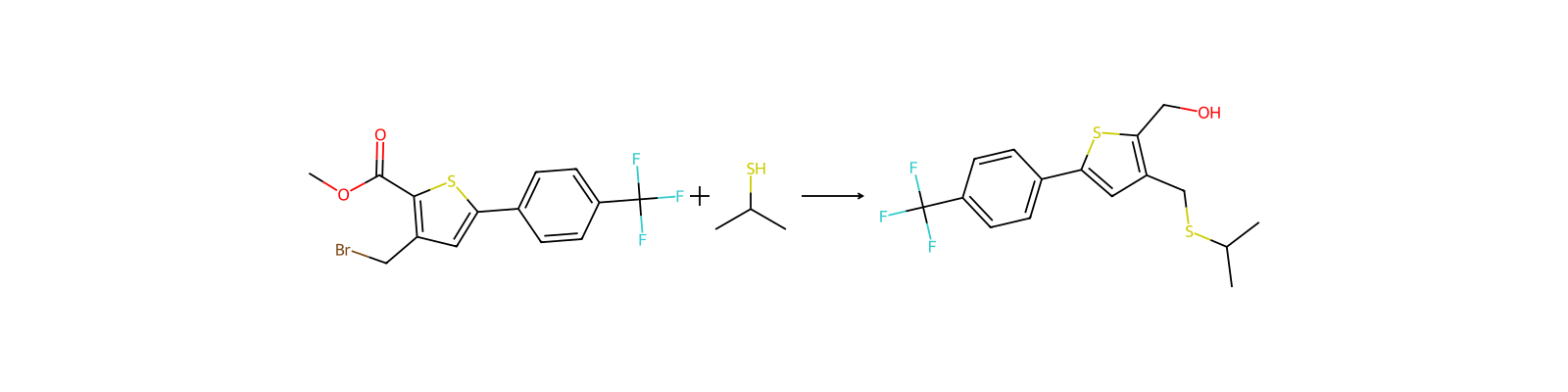
205건
반응 기록 만들기
HRID 7842 반응식
HRID 7842반응물로uspto-grants-2006_08
HRID 9647 반응식
HRID 9647반응물로uspto-grants-2006_08
HRID 9683 반응식
HRID 9683반응물로uspto-grants-2006_08
HRID 25287 반응식
HRID 25287반응물로uspto-grants-2005_02
HRID 47821 반응식
HRID 47821반응물로uspto-grants-2004_03
HRID 62848 반응식
HRID 62848반응물로uspto-grants-2016_09
HRID 62858 반응식
HRID 62858반응물로uspto-grants-2016_09
HRID 62868 반응식
HRID 62868반응물로uspto-grants-2016_09
1 / 26 페이지

화합물 노트

불러오는 중…

이 페이지에서기본 정보개요이름 및 식별자물성안전 및 규제화학 및 산업관련 반응화합물 노트
더보기
새 노트새 반응견적 요청하기

52.5 °C

57.00 to 60.00 °C. @ 760.00 mm Hg

57-60 °C

DecompositionWhen heated to decomposition it emits highly toxic fumes of /sulfur oxides/.
Melting Point · 3건

-202.8 °F (USCG, 1999)

-130.7 °C

-130.7 °C

물리화학적 성질

녹는점
131 °C · −131 °C(lit.)
끓는 점
57 · 57-60 °C(lit.)
밀도
0.82 g/mL · 0.82 g/mL at 25 °C(lit.)
증기 밀도
2.6 · 2.6 (vs air)
증기압
455 mm · 455 mm Hg ( 37.8 °C)
굴절률
20 · n20/D 1.426(lit.)
FEMA
3897 · 3897 | 2-PROPANETHIOL
인화점
30 °F · <−30 °F
저장 조건
30 °C · Store below +30°C.
물리적 상태
액체
산도 계수 (pKa)
1 · pK1:10.86 (25°C,μ=0.1)
색상
무색의
냄새
스컹크 냄새가 심해요
Odor Threshold
0.000006 ppm · 0.000006ppm
냄새 유형
마늘 냄새
생물학적 소스
synthetic
수용성
물에 약간 용해됨
비열
1.91 J/ · Cp(liquid): 1.91 J/(g·K), at 25℃
JECFA Number
510 · 510
BRN
605260 · 605260
Henry's Law Constant
1.3 · 1.3×10-3 mol/(m3Pa) at 25℃, Brockbank (2013)
안정성
안정적인. 인화성이 높으며 인화점이 낮습니다. 공기와 폭발성 혼합물을 형성할 수 있음.
InChI
1S/C3H8S/c1-3(2)4/h3-4H,1-2H3
InChIKey
KJRCEJOSASVSRA-UHFFFAOYSA-N
SMILES
CC(C)S
LogP
1.6 · 1.60
NIST
2 · 2-Propanethiol(75-33-2)
EPA
Isopropyl mercaptan (75-33-2)

화학적 성질

liquid with an exceedingly unpleasant smell

· 1건

Highly flammable liquid that poses a dangerous fire risk; [Hawley] A skin, eye, nose, and throat irritant; [HSDB] A skin and eye irritant; Inhalation causes loss of sense of smell, muscular weakness, convulsions, respiratory paralysis. [CAMEO] A skin and eye irritant; [eChemPortal: ERMA] An irritant; [MSDSonline] See THIOLS.

Reactive GroupSulfides, Organic
Reactivity AlertsHighly Flammable
Reactivity Profile · 1건

ISOPROPYL MERCAPTAN is incompatible with acids, diazo and azo compounds, halocarbons, isocyanates, aldehydes, alkali metals, nitrides, hydrides, and other strong reducing agents. Reactions with these materials generate heat and in many cases hydrogen gas. May liberate hydrogen sulfide when mixed with an acid.

DOT Emergency Guidelines · 5건

/GUIDE 130: FLAMMABLE LIQUIDS (NON-POLAR/WATER-IMMISCIBLE/NOXIOUS)/ Fire or Explosion: HIGHLY FLAMMABLE: Will be easily ignited by heat, sparks or flames. Vapors may form explosive mixtures with air. Vapors may travel to source of ignition and flash back. Most vapors are heavier than air. They will spread along ground and collect in low or confined areas (sewers, basements, tanks). Vapor explosion hazard indoors, outdoors or in sewers. Those substances designated with a "P" may polymerize explosively when heated or involved in a fire. Runoff to sewer may create fire or explosion hazard. Containers may explode when heated. Many liquids are lighter than water. /Propanethiols/

/GUIDE 130: FLAMMABLE LIQUIDS (NON-POLAR/WATER-IMMISCIBLE/NOXIOUS)/ Health: May cause toxic effects if inhaled or absorbed through skin. Inhalation or contact with material may irritate or burn skin and eyes. Fire will produce irritating, corrosive and/or toxic gases. Vapors may cause dizziness or suffocation. Runoff from fire control or dilution water may cause pollution. /Propanethiols/

/GUIDE 130: FLAMMABLE LIQUIDS (NON-POLAR/WATER-IMMISCIBLE/NOXIOUS)/ Public Safety: CALL Emergency Response Telephone Number ... . As an immediate precautionary measure, isolate spill or leak area for at least 50 meters (150 feet) in all directions. Keep unauthorized personnel away. Stay upwind. Keep out of low areas. Ventilate closed spaces before entering. /Propanethiols/

/GUIDE 130: FLAMMABLE LIQUIDS (NON-POLAR/WATER-IMMISCIBLE/NOXIOUS)/ Protective Clothing: Wear positive pressure self-contained breathing apparatus (SCBA). Structural firefighters' protective clothing will only provide limited protection. /Propanethiols/

For more DOT Emergency Guidelines (Complete) data for ISOPROPYL MERCAPTAN (8 total), please visit the HSDB record page.

Air and Water ReactionsHighly flammable. Soluble in water.
Hazard Classes and Categories · 2건

Flam. Liq. 2 (98.4%)

Flammable agents - 3rd degree

안전 및 보호

Fire FightingFire Extinguishing Agents Not to Be Used: Water may be ineffective.
First AidINHALATION: remove victim to fresh air; start artificial respiration and give oxygen if required; observe for signs of pulmonary edema; get medical attention.
Firefighting HazardsVapor is heavier than air and may travel to a source of ignition and flash back.
Fire Fighting Procedures · 3건

Extinguish with dry chemicals, alcohol foam, or carbon dioxide. Water may be ineffective on fire. Cool exposed containers with water.

If material /is/ on fire or involved in /a/ fire: Do not extinguish fire unless flow can be stopped. Use water in flooding quantities as fog. Solid streams of water may spread fire. Cool all affected containers with flooding quantities of water. Apply water from as far a distance as possible. Use "alcohol" foam, dry chemical or carbon dioxide. /Butyl mercaptan/

Evacuation: If fire becomes uncontrollable or container is exposed to direct flame-consider evacuation of one-third (1/3) mile radius. If material leaking (not on fire) consider evacuation from downwind area based on amount of material spilled, location and weather conditions.

Storage Conditions · 1건

... Materials which are toxic as stored /such as isopropyl mercaptan/ or which can decompose into toxic components ... should be stored in a cool, well ventilated place, out of the direct rays of the sun, away from areas of high fire hazard, and should be periodically inspected.

Nonfire Spill ResponseExcerpt from ERG Guide 130 [Flammable Liquids (Water-Immiscible / Noxious)]:
Disposal Methods · 3건

SRP: The most favorable course of action is to use an alternative chemical product with less inherent propensity for occupational exposure or environmental contamination. Recycle any unused portion of the material for its approved use or return it to the manufacturer or supplier. Ultimate disposal of the chemical must consider: the material's impact on air quality; potential migration in soil or water; effects on animal, aquatic, and plant life; and conformance with environmental and public health regulations.

Ethyl mercaptan is a waste chemical stream constituent which may be subjected to ultimate disposal by controlled incineration (2,000 °F) followed by scrubbing with a caustic solution.

Incineration ... : Incinerate scrap material under controlled conditions using afterburner and a scrubber to neutralize sulfur dioxide ... .

Preventive Measures · 5건

SRP: The scientific literature for the use of contact lenses in industry is conflicting. The benefit or detrimental effects of wearing contact lenses depend not only upon the substance, but also on factors including the form of the substance, characteristics and duration of the exposure, the uses of other eye protection equipment, and the hygiene of the lenses. However, there may be individual substances whose irritating or corrosive properties are such that the wearing of contact lenses would be harmful to the eye. In those specific cases, contact lenses should not be worn. In any event, the usual eye protection equipment should be worn even when contact lenses are in place.

Personnel protection: Avoid breathing vapors. Keep upwind. ... Do not handle broken packages unless wearing appropriate personal protective equipment. Wash away any material which may have contacted the body with copious amounts of water or soap and water. Wear positive pressure self-contained breathing apparatus when fighting fires involving this material. /Butyl Mercaptan/

If material not on fire and not involved in fire: Keep sparks, flames, and other sources of ignition away. Keep material out of water sources and sewers. Build dikes to contain flow as necessary. Attempt to stop leak if without undue personnel hazard. Use water spray to disperse vapors and dilute standing pools of liquid.

Open flames and other ignition sources should be excluded from areas where thiols, especially the more volatile ones, are used. Emergency procedures and routine work practices should emphasize proper handling, containment of spills... The primary purpose of control measures is to reduce the potential for inhalation or skin contact with thiols, with special emphasis on the eyes. Whenever feasible, control at the source of exposure should be implemented. This may involve enclosure of the operation and/or the use of local exhaust ventilation. /Thiols/

For more Preventive Measures (Complete) data for ISOPROPYL MERCAPTAN (10 total), please visit the HSDB record page.

Isolation and EvacuationExcerpt from ERG Guide 130 [Flammable Liquids (Water-Immiscible / Noxious)]:
Personal Protective Equipment (PPE) · 5건

Self-contained breathing apparatus; goggles or face shield; rubber gloves (USCG, 1999)

Self-contained breathing apparatus; goggles or face shield; rubber gloves.

Plastic gloves; goggles or face shield.

Where ... engineering controls are not sufficient to reduce airborne concentrations to acceptable levels respirators may be necessary to prevent pulmonary irritation and systemic effects. At low concentrations (less than 5 ppm) a chemical cartridge respirator with a half-mask facepiece and organic vapor cartridges can be used. At high concentrations, supplied air respirators, with a full facepiece, are necessary. /Thiols/

Chemical protective clothing should be selected after utilizing available performance data, consulting with the manufacturer, and then evaluating the clothing under actual use conditions. Workers should be provided with and required to use chemical protective clothing, gloves, face shield (8-inch minimum), and other appropriate protective clothing necessary to prevent skin contact with n-butyl mercaptan. Workers should be provided with and required to use splashproof safety goggles where ethyl mercaptan may come in contact with the eyes.

독성 정보

Interactions2-Propanethiol potentiated action of bradykinin on rat blood pressure. Potentiation apparently results from thiol complexation of zinc moiety in active center of carboxypeptidase B-type enzyme.
Environmental Fate · 3건

TERRESTRIAL FATE: Based on a classification scheme(1), an estimated Koc value of 35(SRC), determined from a structure estimation method(2), indicates that isopropyl mercaptan is expected to have very high mobility in soil(SRC). Volatilization of isopropyl mercaptan from moist soil surfaces is expected to be an important fate process(SRC) given an estimated Henry's Law constant of 4.6X10⁻³ atm-cu m/mole(SRC), using a fragment constant estimation method(3). Isopropyl mercaptan is expected to volatilize from dry soil surfaces(SRC) based upon a vapor pressure of 277 mm Hg(4). Biodegradation data were not available(SRC, 2005).

AQUATIC FATE: Based on a classification scheme(1), an estimated Koc value of 35(SRC), determined from a structure estimation method(2), indicates that isopropyl mercaptan is not expected to adsorb to suspended solids and sediment(SRC). Volatilization from water surfaces is expected(3) based upon an estimated Henry's Law constant of 4.6X10⁻³ atm-cu m/mole(SRC), developed using a fragment constant estimation method(4). Using this Henry's Law constant and an estimation method(3), volatilization half-lives for a model river and model lake are 3 hours and 3.5 days, respectively(SRC). According to a classification scheme(5), an estimated BCF of 4(SRC), from an estimated log Kow of 1.7(6) and a regression-derived equation(7), suggests the potential for bioconcentration in aquatic organisms is low(SRC). Biodegradation data were not available(SRC, 2005).

ATMOSPHERIC FATE: According to a model of gas/particle partitioning of semivolatile organic compounds in the atmosphere(1), isopropyl mercaptan, which has a vapor pressure of 277 mm Hg at 25 °C(2), is expected to exist solely as a vapor in the ambient atmosphere. Vapor-phase isopropyl mercaptan is degraded in the atmosphere by reaction with photochemically-produced hydroxyl radicals(SRC); the half-life for this reaction in air is estimated to be 8 hours(SRC), calculated from its rate constant of 4.10X-11 cu cm/molecule-sec at 25 °C(3). Isopropyl mercaptan does not absorb light at wavelengths >290 nm and therefore is not expected to be susceptible to direct photolysis by sunlight.

Adverse EffectsOther Poison - Chemical Asphyxiant
Soil Adsorption/Mobility · 1건

Using a structure estimation method based on molecular connectivity indices(1), the Koc of isopropyl mercaptan can be estimated to be 35(SRC). According to a classification scheme(2), this estimated Koc value suggests that isopropyl mercaptan is expected to have very high mobility in soil.

Natural Pollution Sources · 1건

Isopropyl mercaptan has been qualitatively detected in crude oil samples(1,2). The occurrence of small amounts of alkyl mercaptans in crude oil is believed to result from microbial action on elemental sulfur(2). Mercaptans are formed naturally in biological processes and exist in all living systems(2,3); the lower alkyl mercaptans occur in manure gas from domestic animal pens(2) and have obnoxious odors at low concns(2-4).

Human Toxicity Excerpts · 2건

/SIGNS AND SYMPTOMS/ Strong, offensive smell of mercaptans can cause headache and nausea. High concentrations of their vapors in atmosphere can produce unconsciousness with cyanosis, a sense of coldness at extremities and quickening of pulse ...pulmonary edema. /Mercaptans/

/SIGNS AND SYMPTOMS/ In the manufacture of rubber, irritant contact dermatitis may occur from a variety of acids, alkalies, detergents, and solvents used in the process. Allergic contact dermatitis occurs not infrequently and is almost always due to an organic accelerator or antioxidant. /Mercapto compounds/

Artificial Pollution SourcesIsopropyl mercaptan's production and use as a standard for petroleum analysis and chemical intermediate(1) and natural gas odorant(2) may result in its release to the environment through various waste streams(SRC).
Environmental Bioconcentration · 1건

An estimated BCF of 4 was calculated for isopropyl mercaptan(SRC), using an estimated log Kow of 1.7(1) and a regression-derived equation(2). According to a classification scheme(3), this BCF suggests the potential for bioconcentration in aquatic organisms is low(SRC).

Volatilization from Water/Soil · 1건

The Henry's Law constant for isopropyl mercaptan is estimated as 4.6X10⁻³ atm-cu m/mole(SRC) using a fragment constant estimation method(1). This Henry's Law constant indicates that isopropyl mercaptan is expected to volatilize from water surfaces(2). Based on this Henry's Law constant, the volatilization half-life from a model river (1 m deep, flowing 1 m/sec, wind velocity of 3 m/sec)(2) is estimated as 3 hours(SRC). The volatilization half-life from a model lake (1 m deep, flowing 0.05 m/sec, wind velocity of 0.5 m/sec)(2) is estimated as 3.5 days(SRC). Isopropyl mercaptan's Henry's Law constant indicates that volatilization from moist soil surfaces may occur(SRC). Isopropyl mercaptan is expected to volatilize from dry soil surfaces(SRC) based upon a vapor pressure of 277 mm Hg(3).

Non-Human Toxicity Excerpts · 5건

/LABORATORY ANIMALS: Acute Exposure/ Clinical signs /in rats given oral doses of 2000-5000 mg/kg/ included hypotonia, ataxia, loss of righting reflex, and body weight loss.

/LABORATORY ANIMALS: Acute Exposure/ Liquid isopropyl mercaptan produced slight irritation of the skin and eyes of rabbits, which recovered within 48 hr. Head-only exposure of mice to a concentration of 4362 ppm for two 1-min periods did not produce upper airway irritation as measured by individual plethysmographs.

/LABORATORY ANIMALS: Acute Exposure/ A ... 4 hour inhalation study was conducted in the rat at a concentration of 3899 ppm. Clinical signs noted during exposure included hyperactivity and ataxia, labored respiration, prostration, and squinted eyes. Reduced body weights where noted for 4 to 7 days postexposure. No deaths occured and no gross pathological changes were noted at necropsy.

/LABORATORY ANIMALS: Acute Exposure/ Four hour acute inhalation studies in the rat showed ... signs ... during exposure were typical of ocular, nasal, and pulmonary irritation. Weight gain in the exposed rats was slightly reduced 2 to 5 days.

/ALTERNATIVE IN VITRO TESTS/ L-2-Oxo-3-(2-mercaptoethyl)-5-phenylimidazolidine (OMPI) a sulfhydryl metabolite of levamisole, unlike the parent compound, is shown to interfere with the morphological and functional integrity of microtubules in cultured cells at high concentrations (1.6-10(-4) M). Lower concentrations do not affect the cell morphology, viability or growth rate in any appreciable way. Both levamisole and OMPI, at low concentrations (10(-5)-10(-6) m), markedly enhance the antimicrotubular effect of mercaptoethanol. High concentrations of OMPI (+ or - 10(-4) M) inhibit the self-assembly of microtubules in a cell free system. Low concentrations (+ or - 10(-6) M) markedly enhance the polymerization rate of tubulin. Levamisole has no effect on tubulin polymerization. The effects of OMPI on microtubules in cells and in the polymerization system can be reversed by reduced glutathione, cysteine and dithiothreitol. The data indicate that OMPI interacts in a biphasic manner with microtubule formation probably through interaction with critical SH-groups on the tubulin molecule. It seems of interest to further investigate the hypothesis that the immunomodulating properties of levamisole are at least partially due to the formation of its metabolite (OMPI) which could enhance microtubule integrity and function in leukocytes.

Environmental Abiotic Degradation · 1건

Rate constants for the vapor-phase reaction of isopropyl mercaptan with photochemically-produced hydroxyl radicals have been reported as 4.20X10⁻¹¹, 3.9X10⁻¹¹, and 4.59X10⁻¹¹ cu cm/molecule-sec at 25 °C(1-3). These values correspond to an atmospheric half-life of about 8 hours at an atmospheric concentration of 5X10+5 hydroxyl radicals per cu cm(1). The hydroxyl radical reaction proceeds primarily through OH addition to the sulfur(1); based upon chamber experiments with similar sulfur compounds(4), the reaction products may include isopropylsulfonic acid(SRC). Isopropyl mercaptan is not expected to undergo hydrolysis in the environment due to the lack of hydrolyzable functional groups(5). Isopropyl mercaptan does not absorb light at wavelengths >290 nm and therefore is not expected to be susceptible to direct photolysis by sunlight.

Probable Routes of Human Exposure · 1건

NIOSH (NOES Survey 1981-1983) has statistically estimated that 4,715 workers are potentially exposed to isopropyl mercaptan in the USA(1). Occupational exposure to isopropyl mercaptan may occur through inhalation and dermal contact with this compound at workplaces where isopropyl mercaptan is produced or used(SRC). Use data suggest that the general population may be exposed to isopropyl mercaptan via inhalation of ambient air in the vicinity of natural gas refineries and operations(SRC).

안전 데이터

wgk
3
tsca
TSCA listed
rtecs
TZ7302000
ridadr
UN 2402 3/PG 2
독성
LD50 orally in Rabbit: > 2000 mg/kg
HS 번호
2930 90 98
risk_code
11-36/37/38-36/38
hazard_code
F,Xi
safety_code
16-26-9-37/39-33
포장분류
II
위험 등급
3
기존화학 물질
KE-29295
F 고인화성물질
13
Hazard Classifications
Aquatic Acute 1Aquatic Chronic 1Flam. Liq. 2Skin Sens. 1
스토리지 클래스
3 - Flammable liquids
유해 물질 데이터
75-33-2(Hazardous Substances Data)
Industry Uses
Intermediate
Methods of Manufacturing · 2건

Propylene and hydrogen sulfide.

Thiols can be prepared by a variety of methods. The most-utilized of these synthetic methods for tertiary and secondary thiols is acid-catalyzed synthesis; for normal and secondary thiols, the most-utilized methods are free-radical-initiated, alcohol substitution, or halide substitution; for mercaptoalcohols, the most-utilized method is oxirane addition; and for mercaptoacids and mercaptonitriles, the most-utilized methods are Michael-type additions. /Thiols/

Formulations/Preparations · 2건

Liquid grade /Pennwalt Corp/

Technical grade /Phillips Chemical/

Use Classification · 3건

Flavouring Agent -> FLAVOURING_AGENT -> JECFA Functional Classes

Flavoring Agents -> JECFA Flavorings Index

Flavouring Agent -> FLAVOURING_AGENT -> JECFA Functional Classes

General Manufacturing Information · 2건

Pesticide, Fertilizer, and Other Agricultural Chemical Manufacturing

2-Propanethiol: ACTIVE

응용 분야 · 3건

출처2-Propanethiol is a volatile sulfur compound that is reported to occur in irradiated beef.

용도2-Propanethiol is used in preparation of polyol block copolymer. It is also used as standard for petroleum analysis; as intermediate; as natural gas odorant.

일반 설명Isopropyl mercaptan is a white liquid with a strong skunk-like odor. (USCG, 1999)

제조 방법

2-Propanethiol is synthesised by the reaction of sodium hydrosulfide and brominated isopropane.

상·하류 제품 정보

하류 제품

Isopropylsulfonyl chloride이소프로필메틸설파이드이소프로필티오시아네이트3-옥소티오부티르산S-이소프로필에스테르3-(이소프로필티오)프로판산벤즈알데히드,4-[(1-메틸에틸)티오]-아이소프로필 베타-D-싸이오갈락토피라노시드

추가 설명

정의ChEBI: 2-Propanethiol is an alkanethiol that is propane substituted by a sulfanyl group at position 2.