홈MCP워크벤치Skills
홈워크벤치알림마이페이지
llms.txt · MCP 가이드개인정보처리방침 · 이용약관 · 지원v1.8.0
  1. 홈
  2. /화합물

요오드포름

Iodoform

HCID 6374
새 노트새 반응견적 요청하기
인쇄 미리보기

데이터를 보충하는 중입니다. 잠시 후 페이지를 새로 고치면 최신 내용을 볼 수 있습니다
기본 정보개요이름 및 식별자물성안전 및 규제화학 및 산업관련 반응화합물 노트
부분 구조 검색유사 구조 찾기

기본 정보

CAS
75-47-8
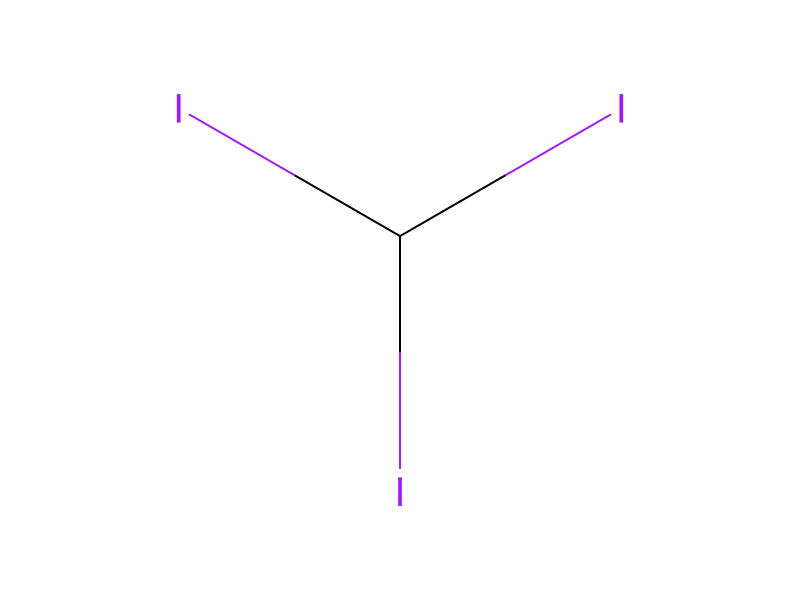
표준 SMILES
IC(I)I
InChIKey
OKJPEAGHQZHRQV-UHFFFAOYSA-N
분자식
CHI3
평균 분자량
393.732 g/mol
단동위원소 질량
393.72124403

개요

Iodoform appears as bright yellow or yellow powder or crystals. Penetrating odor. Unctuous feel. Odor threshold 0.4 ppb. (NTP, 1992)

이름 및 식별자

우선 이름
Iodoform
IUPAC
iodoform
현지명
요오드포름
영어명
Iodoform
분자식
CHI3
분자량
393.73

이름 및 동의어

IODOFORMTriiodomethane75-47-8Methane, triiodo-Carbon triiodideJodoformTrijodmethaneDezinfekt VIodoformumNCI-C04568DTXSID4020743NSC-26251
이름 더 보기
아이오도폼요오드포름CHIT1CHITCHITDioformeIodofrmodoformFLJ00314
KXI2J76489DTXCID40743CHEBI:37758tri-iodomethaneRefChem:5907200-874-5685-642-5CHI3

데이터베이스 식별자

CAS
75-47-8
PubChem CID
6374
DTXSID
DTXSID4020743
ChEMBL
CHEMBL1451116
ChEBI
CHEBI:37758
UNII
KXI2J76489
EC Number
200-874-5、685-642-5
Nikkaji
J1.456G

물성

구조 계산 물성보충 중

XLogP
2.7
극성 표면적
0 Ų
수소 결합 공여자 수
0
수소 결합 수용자 수
0
회전 가능 결합 수
0
무거운 원자 수
4
형식 전하
0
복잡도
8

실험 및 물리화학적 성질

Chemical ClassesOther Uses -> Pharmaceuticals
DrugsPharmaceuticals -> Listed in ZINC15
SpringerMaterials PropertiesGibbs energy
FragrancesFragrance Ingredient (Methane, triiodo-) -> IFRA transparency List
OdorCharacteristic, disagreeable odor
Density · 4건

4.008 at 68 °F (NTP, 1992) - Denser than water; will sink

Specific Gravity: 4.008 g/cu cm @ 25 °C

4.008

4.01

Color/Form · 2건

Yellow powder or crystals

YELLOW HEXAGONAL PRISMS OR NEEDLES FROM ACETONE

Solubility · 6건

less than 1 mg/mL at 75 °F (NTP, 1992)

Slightly soluble

SOL IN ACETIC ACID

13.6 g/100 ml ether @ 25 °C

7.8 g/100 ml ethanol @ 25 °C

One gram dissolves in 60 ml cold alcohol, 16 ml boiling alcohol, 10 ml chloroform, 7.5 ml ether, 80 ml glycerol, 3 ml carbon disulfide, 34 ml olive oil; freely sol in benzene, acetone, slightly sol in petr ether.

Boiling Point

안전 및 규제

안전 정보는 참고용이며, 공급업체의 물질안전보건자료(SDS), 관련 법규 및 전문가 평가를 대체하지 않습니다.

GHS 분류

GHS Classification · 6건

This chemical does not meet GHS hazard criteria for < 0.1% (1 of 1363) of reports.

Warning

H302 (> 99.9%): Harmful if swallowed [Warning Acute toxicity, oral]

P261, P264, P264+P265, P270, P271, P280, P301+P317, P302+P352, P304+P340, P305+P351+P338, P317, P319, P321, P330, P332+P317, P337+P317, P362+P364, P403+P233, P405, and P501 (click each P-code to see the statement)

Aggregated GHS information provided per 1363 reports by companies from 15 notifications to the ECHA C&L Inventory. Each notification may be associated with multiple companies.

Warning

유해성 정보

Regulatory Information · 2건

Chemical: Methane, triiodo-

Iodoform: Does not have an individual approval but may be used under an appropriate group standard

Fire HazardsLiterature sources indicate that this chemical is nonflammable. (NTP, 1992)
Health HazardsExcerpt from NIOSH Pocket Guide for Iodoform:
Hazards Summary · 1건

Cases of CNS depression, delirium, and hallucinations were reported when iodoform was used as a topical antiseptic and absorbed through the wound. It causes severe liver injury in animal experiments. 2021 TLV Basis: thyroid effects and fetal/neonatal damage; [ACGIH] See Iodine for the TLV of Iodides.

FDA RequirementsIodoform is an indirect food additive for use only as a component of adhesives. Limitation: for use only as polymerization-control agent.
Reactive GroupHalogenated Organic Compounds
Special Reports · 2건

USEPA; Ambient Water Quality Criteria Doc: Halomethanes (1980) EPA 440/5-80-051

화학 및 산업

약리 정보

ATC Code · 2건

D - Dermatologicals

QD - Dermatologicals

Protein BindingNo pharmacokinetic data available.
Pharmacodynamics · 1건

Iodoform exhibits antibacterial activities after topical application. In a comparative study of wound dressing agents, iodoform gauze exerted an antibacterial effect 3 hours after the start of bacterial growth of _E. coli_ and subsequently maintained the strong antibacterial effectiveness. A study demonstrated that direct and indirect exposure to high concentrations of iodoform induces a cytotoxic effect on cultures of macrophages and epithelial cells _in vitro_, while cell proliferation was enhanced at low concentrations of iodoform. This cytotoxic effect of iodoform in root canals may further lead to long-term local irritation to follicles of permanent successors and formation of cyst-like radiolucent defects.

Mechanism of Action · 1건

While the mechanism of action of iodoform remains unclear, it is proposed that iodoform releases iodine, which denatures bacterial proteins by oxidation of the free iodine. Iodoform may also play a role in chemical debridement for effective necrotic wound healing and tissue damage repair via collagen fibrinolysis; upon treatment in necrotic tissue, iodoform reduced the size of the macromolecules containing collagen I in wound surface proteins. In human gingival fibroblasts _in vitro_, high concentrations of iodoform was shown to decrease the viability of macrophages and epithelial cells and reduced the secretion of _P. gingivalis_-induced TNFα. P. gingivalis is an anaerobic bacteria present in anaerobic oral niches including periapical sites and periodontal pockets.

Biological Half-LifeNo pharmacokinetic data available.
Metabolism/Metabolites · 4건

It is expected to be oxidized to iodine.

HALOFORMS ARE METABOLIZED TO CARBON MONOXIDE BY HEPATIC MICROSOMAL MIXED FUNCTION OXIDASES & THIS REACTION IS MARKEDLY STIMULATED BY SULFHYDRYL COMPOUNDS. /HALOFORMS/

TRIHALOMETHANES (HALOFORMS) WERE METABOLIZED TO CARBON MONOXIDE BY A RAT LIVER MICROSOMAL FRACTION REQUIRING BOTH NADPH AND MOLECULAR OXYGEN FOR MAXIMAL ACTIVITY. THE METABOLISM OF HALOFORMS TO CARBON MONOXIDE FOLLOWED THE HALIDE ORDER; IODOFORM YIELDED THE GREATEST AMOUNT OF CARBON MONOXIDE, WHEREAS CHLOROFORM YIELDED THE SMALLEST AMOUNT.

관련 반응

33건
반응 기록 만들기
HRID 54252 반응식
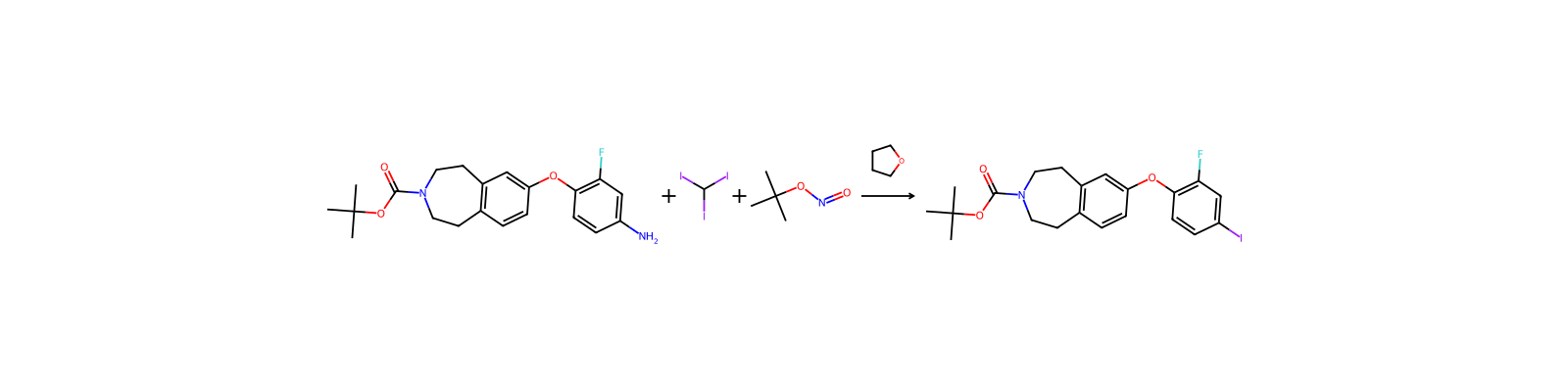
HRID 54252반응물로uspto-grants-1997_04
HRID 54254 반응식
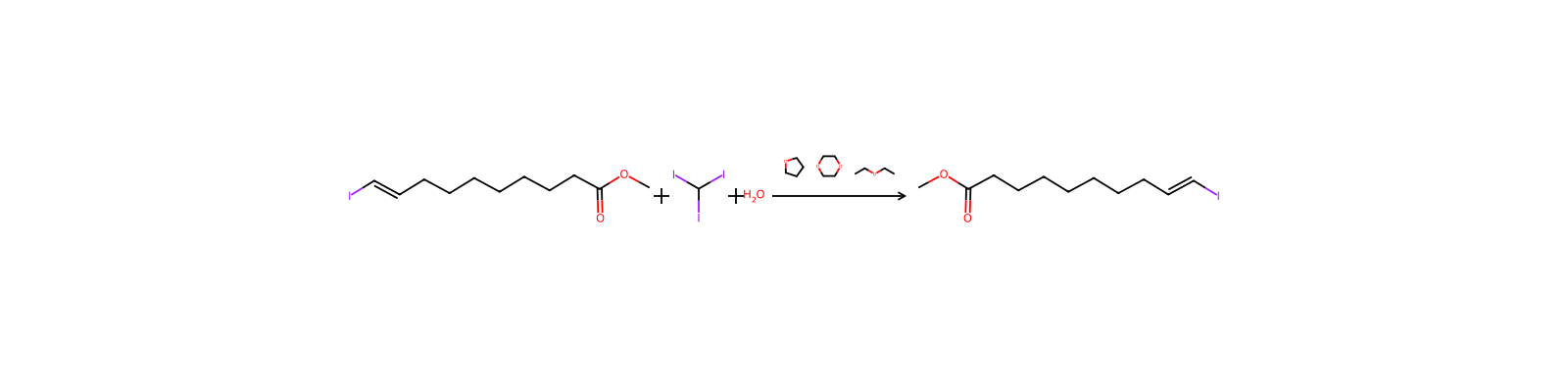
HRID 54254반응물로uspto-grants-1997_04
HRID 120057 반응식
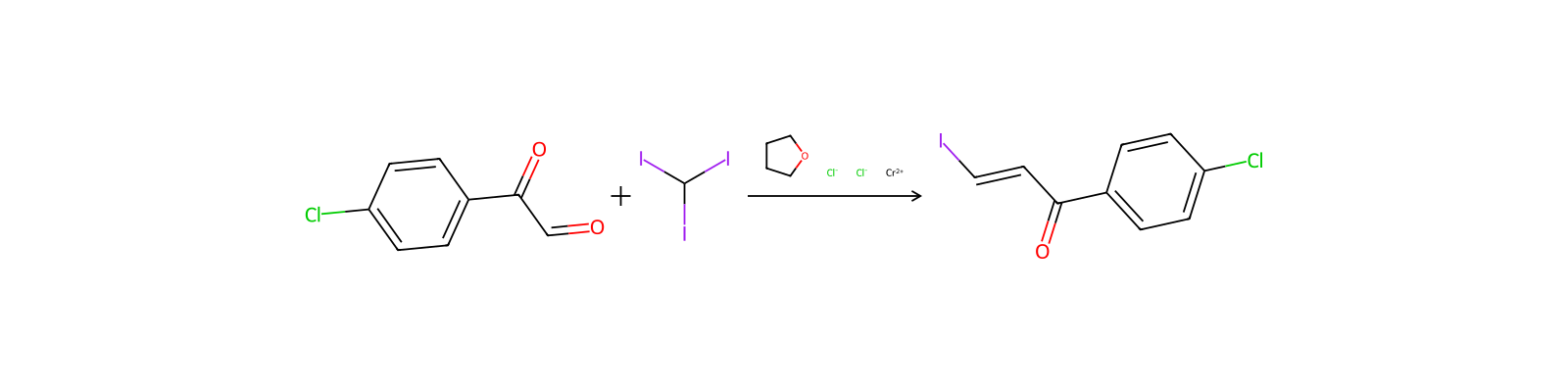
HRID 120057반응물로Training data from https://doi.org/10.1039/C8SC04228D (2/10)
HRID 178882 반응식
HRID 178882반응물로Training data from https://doi.org/10.1039/C8SC04228D (6/10)
HRID 222766 반응식
HRID 222766반응물로uspto-grants-2012_06
HRID 310333 반응식
HRID 310333반응물로Training data from https://doi.org/10.1039/C8SC04228D (8/10)
HRID 423360 반응식
HRID 423360반응물로uspto-grants-2012_01
HRID 521756 반응식
HRID 521756반응물로uspto-grants-2016_05
1 / 5 페이지

화합물 노트

불러오는 중…

이 페이지에서기본 정보개요이름 및 식별자물성안전 및 규제화학 및 산업관련 반응화합물 노트
더보기
새 노트새 반응견적 요청하기
· 4건

424 °F at 760 mmHg (Sublimes) (NTP, 1992)

218 °C

424 °F (sublimes)

410 °F (Decomposes)

Decomposition · 3건

DECOMPOSES VIOLENTLY @ 400 °F (204 °C)

DECOMPOSES @ HIGH TEMP WITH EVOLUTION OF IODINE.

WHEN HEATED TO DECOMPOSITION ... EMITS TOXIC FUMES OF /HYDROGEN IODIDE/.

Melting Point · 6건

248 °F (NTP, 1992)

119-122

119 °C

Enthalpy of melting @ mp: 3.9 kcal/mole; enthalpy of sublimation @ 298 K: 16.7 kcal/mole; specific heat @ 400 K: 19.60 cal/K.mole, @ 600 K: 21.52 cal/K.mole, @ 800 K: 22.64 cal/K.mole, @ 1000 K: 23.38 cal/K.mole

246 °F

246 °F

Vapor Density · 3건

4.1 (NTP, 1992) - Heavier than air; will sink (Relative to Air)

13.6 (Air= 1)

4.1

물리화학적 성질

녹는점
119 °C · 119 °C
끓는 점
218 °C · 218°C
밀도
4.008 g/mL · 4.008 g/mL at 25 °C(lit.)
굴절률
1.4975 · 1.4975 (estimate)
저장 조건
-20 °C · -20°C
용해도
5 % · 클로로포름: 용해성5%
물리적 상태
결정성 분말
색상
밝은 노란색에서 어두운 노란색까지
냄새
타는 냄새. 자극적인 냄새
생물학적 소스
mouse
수용성
24 · 불용성. 24&C에서 <0.1g/100mL
비열
0.19 J/ · Cp(gas): 0.19 J/(g·K), at 25℃
Merck
14 · 14,5033
BRN
1697010 · 1697010
Henry's Law Constant
6.2 · 6.2×10-3 mol/(m3Pa) at 25℃, Fogg and Sangster (2003)
안정성
안정적인. 강한 산화제, 환원제와 호환되지 않습니다. 가열하면 폭발할 수 있음.
화장품 원료 기능
항균
InChI
1S/CHI3/c2-1(3)4/h1H
InChIKey
OKJPEAGHQZHRQV-UHFFFAOYSA-N
SMILES
IC(I)I
LogP
3.51 · 3.510 (est)
NIST
Methane, triiodo-(75-47-8)
EPA
Iodoform (75-47-8)

화학적 성질

Iodoform is a yellow or greenish-yellow powder or crystalline solid that is volatile with steam and contains 96.69% iodine. It has a very characteristic pungent odor. An odor threshold of 0.005 ppm has been reported.

Bioassay of Iodoform for Possible Carcinogenicity (1978) Technical Rpt Series No. 110 DHEW Pub No. (NIH) 78-1365, U.S. Department of Health Education and Welfare, National Cancer Institute, Bethesda, MD 20014

OSHA StandardsVacated 1989 OSHA PEL TWA 0.6 ppm (10 mg/cu m) is still enforced in some states.
Reactivity Profile · 1건

IODOFORM decomposes at high temperatures. Decomposes slowly in light at room temperature. Reacts violently with lithium. Is incompatible with mercuric oxide, calomel, silver nitrate, tannin, and balsam Peru. Is also incompatible with strong bases, strong oxidizing agents and magnesium. Vigorous reactions occur with acetone in the presence of solid potassium hydroxide or calcium hydroxide, hexamethylenetetramine at 352 °F, mercury(I) fluoride and finely divided reduced silver. (NTP, 1992)

Flammable LimitsNoncombustible Solid
Air and Water ReactionsInsoluble in water.
NIOSH RecommendationsRecommended Exposure Limit: 10 Hr Time-Weighted avg: 0.6 ppm (10 mg/cu m).

안전 및 보호

Fire FightingFires associated with this material can be controlled with a dry chemical, carbon dioxide or Halon extinguisher. (NTP, 1992)
First Aid · 2건

EYES: First check the victim for contact lenses and remove if present. Flush victim's eyes with water or normal saline solution for 20 to 30 minutes while simultaneously calling a hospital or poison control center. Do not put any ointments, oils, or medication in the victim's eyes without specific instructions from a physician. IMMEDIATELY transport the victim after flushing eyes to a hospital even if no symptoms (such as redness or irritation) develop.

(General first aid procedures)

Storage ConditionsStore in a cool place in airtight containers. Protect from light.
Nonfire Spill Response · 1건

SMALL SPILLS AND LEAKAGE: Should a spill occur while you are handling this chemical, FIRST REMOVE ALL SOURCES OF IGNITION, then you should dampen the solid spill material with 60-70% ethanol and transfer the dampened material to a suitable container. Use absorbent paper dampened with 60-70% ethanol to pick up any remaining material. Seal the absorbent paper, and any of your clothes, which may be contaminated, in a vapor-tight plastic bag for eventual disposal. Solvent wash all contaminated surfaces with 60-70% ethanol followed by washing with a soap and water solution. Do not reenter the contaminated area until the Safety Officer (or other responsible person) has verified that the area has been properly cleaned.

Disposal Methods · 1건

SRP: At the time of review, criteria for land treatment or burial (sanitary landfill) disposal practices are subject to significant revision. Prior to implementing land disposal of waste residue (including waste sludge), consult with environmental regulatory agencies for guidance on acceptable disposal practices.

Preventive Measures · 4건

SRP: The scientific literature for the use of contact lenses in industry is conflicting. The benefit or detrimental effects of wearing contact lenses depend not only upon the substance, but also on factors including the form of the substance, characteristics and duration of the exposure, the uses of other eye protection equipment, and the hygiene of the lenses. However, there may be individual substances whose irritating or corrosive properties are such that the wearing of contact lenses would be harmful to the eye. In those specific cases, contact lenses should not be worn. In any event, the usual eye protection equipment should be worn even when contact lenses are in place.

The worker should immediately wash the skin when it becomes contaminated.

Work clothing that becomes wet or significantly contaminated should be removed or replaced.

Workers whose clothing may have become contaminated should change into uncontaminated clothing before leaving the work premises.

Respirator RecommendationsImportant additional information about respirator selection
Threshold Limit Values (TLV) · 4건

0.001 [ppm], as elemental iodine, inhalable fraction and vapor

8 hr Time Weighted Avg (TWA): 0.6 ppm.

Excursion Limit Recommendation: Excursions in worker exposure levels may exceed 3 times the TLV-TWA for no more than a total of 30 minutes during a work day, and under no circumstances should they exceed 5 times the TLV-TWA, provided that the TLV-TWA is not exceeded.

0.001 ppm (inhalable fraction and vapor) [2021]

Permissible Exposure Limit (PEL)none See Appendix G
Recommended Exposure Limit (REL) · 2건

0.6 ppm (10 mg/m³)

TWA 0.6 ppm (10 mg/m3)

Personal Protective Equipment (PPE) · 3건

Excerpt from NIOSH Pocket Guide for Iodoform:

Wear appropriate personal protective clothing to prevent skin contact.

Wear appropriate eye protection to prevent eye contact.

Other Standards Regulations and GuidelinesAustralia: 0.6 ppm (1990); United Kingdom: 0.6 ppm, 10-min STEL 1.0 ppm (1991).

독성 정보

Target OrgansEyes, skin, respiratory system, liver, kidneys, heart
Ecotoxicity Values · 2건

LC50 Pimephales promelas (fathead minnows) 2.92 mg/l/96 hr, flow-through bioassay @ 25.1 °C, pH 7.7, water hardness 44.2 mg/l CaCO3 /Purity 98%/

EC50 Pimephales promelas (fathead minnows) 2.01 mg/l/96 hr, flow-through bioassay @ 25.1 °C, pH 7.7, water hardness 44.2 ml/l CaCO3 /Purity 98%/. /EC50 was based upon loss of equlibrium as manifested by the fish's inability to maintain an upright position when swimming./

Environmental Fate · 3건

TERRESTRIAL FATE: Based on a classification scheme(1), an estimated Koc value of 35(SRC), determined from a structure estimation method(2), indicates that iodoform is expected to have very high mobility in soil(SRC). Volatilization of iodoform from moist soil surfaces is expected to be an important fate process(SRC) given an estimated Henry's Law constant of 3.1X10⁻⁵ atm-cu m/mole(SRC), using a fragment constant estimation method(3). Iodoform is not expected to volatilize from dry soil surfaces(SRC) based upon an estimated vapor pressure of 0.040 mm Hg(SRC), determined from a fragment constant method(4). Data on the biodegradability of iodoform in soil is not available(SRC).

AQUATIC FATE: Based on a classification scheme(1), an estimated Koc value of 35(SRC), determined from an estimation method(2), indicates that iodoform is not expected to adsorb to suspended solids and sediment(SRC). Volatilization from water surfaces is expected(3) based upon an estimated Henry's Law constant of 3.1X10⁻⁵ atm-cu m/mole(SRC), developed using a fragment constant estimation method(4). Using this Henry's Law constant and an estimation method(3), volatilization half-lives for a model river and model lake are 40 hours and 25 days, respectively(SRC). According to a classification scheme(5), an estimated BCF of 43(SRC), from an estimated log Kow of 3.03(6) and a regression-derived equation(7), suggests the potential for bioconcentration in aquatic organisms is low. Data on the biodegradability of iodoform in water is not available(SRC).

ATMOSPHERIC FATE: According to a model of gas/particle partitioning of semivolatile organic compounds in the atmosphere(1), iodoform, which has an estimated vapor pressure of 0.396 mm Hg at 25 °C(2), is expected to exist solely as a vapor in the ambient atmosphere. Vapor-phase iodoform is degraded in the atmosphere by reaction with photochemically-produced hydroxyl radicals(SRC); the half-life for this reaction in air is estimated to be 56 days(SRC), from its rate constant of 0.289X10⁻¹² cu cm/molecule-sec at 25 °C(3) determined using a structure estimation method(3). Iodoform absorbs radiation >290 nm(4) and therefore may be susceptible to direct photolysis(SRC). Photolysis rates for iodoform were not located.

Adverse EffectsOccupational hepatotoxin - Secondary hepatotoxins: the potential for toxic effect in the occupational setting is based on cases of poisoning by human ingestion or animal experimentation.
Exposure Routesinhalation, skin absorption, ingestion, skin and/or eye contact
Signs and Symptomsirritation eyes, skin; lassitude (weakness, exhaustion), dizziness, nausea, incoordination, central nervous system depression; dyspnea (breathing difficulty); liver, kidney, heart damage; visual disturbance
Ongoing Test Status · 1건

The following link will take the user to the National Toxicology Program (NTP) Test Agent Search Results page, which tabulates all of the "Standard Toxicology & Carcinogenesis Studies", "Developmental Studies", and "Genetic Toxicity Studies" performed with this chemical. Clicking on the "Testing Status" link will take the user to the status (i.e., in review, in progress, in preparation, on test, completed, etc.) and results of all the studies that the NTP has done on this chemical. [http://ntp-apps.niehs.nih.gov/ntp_tox/index.cfm?fuseaction=ntpsearch.searchresults&searchterm=75-47-8]

Soil Adsorption/Mobility · 1건

Using a structure estimation method based on molecular connectivity indices(1), the Koc for iodoform can be estimated to be 35(SRC). According to a classification scheme(2), this estimated Koc value suggests that iodoform is expected to have very high mobility in soil.

Human Toxicity Excerpts · 4건

SYSTEMIC INTOXICATION AND VISUAL DISTURBANCES RESULTED FROM ABSORPTION OF EXCESSIVE AMT /OF IODOFORM/ APPLIED TO WOUNDS OR ABSCESSES, OR FROM INGESTION OF LARGE QUANTITIES, BUT NOT FROM APPLICATION TO THE EYE. ... MOST CHARACTERISTICALLY VISION WAS IMPAIRED BY RETROBULBAR NEURITIS WITH ACCOMPANYING CENTRAL SCOTOMA. IN RARE INSTANCES TRANSITORY COMPLETE BLINDNESS OCCURRED. IN SOME CASES THE BULBAR PORTION OF THE OPTIC NERVE WAS INVOLVED, WITH NEURORETINITIS & OCCASIONAL RETINAL HEMORRHAGES. AS A RULE, RECOVERY WAS SLOW ... IN MOST CASES VISION WAS COMPLETELY OR PARTIALLY RECOVERED, BUT RESIDUAL PALLOR OF THE TEMPORAL PART OF THE OPTIC NERVEHEAD WAS COMMON. EXCEPTIONALLY THE WHOLE NERVEHEAD BECAME ATROPHIC AND WHITE AND LITTLE VISION WAS RECOVERED.

Both di- and tri-halogenated methane derivatives have been found to produce increased blood levels of methemoglobin; the greatest increase caused by iodo-, followed by bromo- and chloro- compounds. CNS functional disturbances are reported, including depression of rapid eyemovement sleep, as seen in carbon monoxide exposures. /Di- and tri-halogenated methane derivatives/

POISONING IS OFTEN DUE TO ABSORPTION THROUGH WOUND WHEN IODOFORM DRESSINGS ARE USED (NO MORE THAN 2 G IODOFORM SHOULD BE SO USED). MAY CAUSE DERMATITIS. SYSTEMIC EFFECTS INCL VOMITING & ALL DEGREES OF CEREBRAL DEPRESSION OR EXCITATION, INCL DELIRIUM, HALLUCINATIONS, COMA, & DEATH. VERY RAPID PULSE IS CHARACTERISTIC, WITH OR WITHOUT SLIGHT FEVER.

... Severe poisoning, which may be fatal, is characterized by headache, somnolence, delirium, and rapid feeble pulse.

Artificial Pollution Sources · 1건

Iodoform's production and use as an antiseptic and sensitizing agent in certain printing processes may result in its release to the environment through various waste streams(1,2). However its present use is rather limited. Iodoform may be formed in finished drinking water during the chlorination process(3). When iodinated trihalomethanes occur, a medicinal taste or musty odor is imparted to the water. While there are only a few reports of iodoform in treated drinking water in the literature, strong medicinal odors have long been known to occur in such water.

Carcinogen Classification · 6건

Iodoform

TR-110: Bioassay of Iodoform for Possible Carcinogenicity (CASRN 75-47-8) (1978 )

04/26/78

No Evidence

No Evidence

No Evidence

Environmental Bioconcentration · 1건

An estimated BCF of 43 was calculated for iodoform(SRC), using an estimated log Kow of 3.03(1,SRC) and a regression-derived equation(2). According to a classification scheme(3), this BCF suggests the potential for bioconcentration in aquatic organisms is low.

규제 정보

FDA RequirementsIodoform is an indirect food additive for use only as a component of adhesives. Limitation: for use only as polymerization-control agent.
Clean Water Act RequirementsToxic pollutant designated pursuant to section 307(a)(1) of the Federal Water Pollution Control Act and is subject to effluent limitations. /Halomethanes/

안전 데이터

OEB
B
OEL
TWA: 0.6 ppm (10 mg/m3)
wgk
3
tsca
TSCA listed
rtecs
PB7000000
ridadr
UN 1851
독성
LD50 s.c. in mice: 1.6 mmoles/kg (Kutob, Plaa)
HS 번호
29033990
risk_code
20/21/22-36/37/38
hazard_code
Xn
safety_code
26-36/37-36/37/39-22-24/25
기존화학 물질
KE-34308
F 고인화성물질
13
Hazard Classifications
Acute Tox. 3 InhalationAcute Tox. 4 DermalAcute Tox. 4 OralAquatic Chronic 2Eye Irrit. 2Skin Irrit. 2STOT SE 3
스토리지 클래스
6.1C - Combustible acute toxic Cat.3toxic compounds or compounds which causing chronic effects
유해 물질 데이터
75-47-8(Hazardous Substances Data)

ADMINISTRATION OF HALOFORMS (TRIHALOMETHANES) TO RATS LED TO SUBSTANTIAL ELEVATIONS IN BLOOD CARBON MONOXIDE LEVELS. /TRIHALOMETHANES/

Absorption, Distribution and Excretion · 4건

Iodoform is reported to be absorbed through denuded skin, wounds or mucous membranes.

No pharmacokinetic data available.

No pharmacokinetic data available.

No pharmacokinetic data available.

용도 및 제조

Uses · 6건

Used as a disinfectant and veterinary antiseptic; [Merck Index, #5033]

Using Disinfectants or Biocides [Category: Clean]

Iodoform is used as a component of adhesives and as a polymerization control agent

Wound dressing and sensitizing agent in certain printing processes.

MEDICATION

MEDICATION: VET

U.S. Production · 2건

(1977) PROBABLY GREATER THAN 3.18X10+6 G

(1979) PROBABLY GREATER THAN 3.18X10+6 G

Methods of Manufacturing · 2건

Prepn from acetone, sodium hypochlorite, potassium iodide, and sodium hydroxide: Glass, Quart. J. Pharm. Pharmacol. 8, 351 (1935); from chloroform + methyl iodide: Soroos, Hinkamp, J. Am. Chem. Soc. 67, 1642 (1945); by electrolysis: Glasstone, Ind. Chem. 7, 315 (1931)

Electrolysis of an iodide solution in dilute alcohol or acetone.

Formulations/Preparations · 5건

GRADE: TECHNICAL, NF

Purified grades

BIPP gauze: sterile ribbon gauze impregnated with a sterile paste consisting of iodoform 40%, bismuth subnitrate 20%, and liquid paraffin 40%.

Bismuth subnitrate & iodoform paste: bismuth subnitrate 1, iodoform 2, sterilized liquid paraffin 1, by wt, prepared aseptically.

For more Formulations/Preparations (Complete) data for IODOFORM (8 total), please visit the HSDB record page.

Use ClassificationFragrance Ingredients
General Manufacturing InformationMethane, triiodo-: ACTIVE
응용 분야 · 3건

개요Iodoform is a stable, pale yellow crystalline solid. It is volatile with a characteristic pungent, unpleasant and penetrating odour, but with a sweetish taste. It is incompatible with strong oxidising agents, reducing agents, lithium, and metallic salts such as mercuric oxide, silver nitrate, strong bases, calomel, and tannin. Reports indicate that earlier iodoform was in use as a disinfectant and as an antiseptic or dressing and healing of wounds and sores for pets. Iodoform is the active ingredient in many antiseptic or dressing powders used for dogs and cats to prevent infection.

용도Iodoform has limited use as a chemical intermediate and for medicinal purposes as disinfectant and antiseptic and has been used in veterinary medicine.

일반 설명Bright yellow or yellow powder or crystals. Penetrating odor. Unctuous touch. Odor threshold 0.4 ppb.

상·하류 제품 정보

상류 원료

차아염소산나트륨아세톤수산화나트륨요오드 메탄glycolate아세테이트N-부틸벤즈아미드테트라아이오딘화 탄소

하류 제품

디이오도메탄디클로로요오도메탄트랜스-2-페닐-1-사이클로프로판카복실산
추가 설명 · 1건

정의A yellow crystalline compound made by warming ethanal with an alkaline solution of an iodide:CH3CHO + 3I– + 4OH– → CHI3 + HCOO– + 3H2O The reaction also occurs with all ketones of general formula CH3COR (R is an alkyl group) and with secondary alcohols CH3CH(OH)R. Iodoform is used as a test for such reactions (the iodoform reaction).