
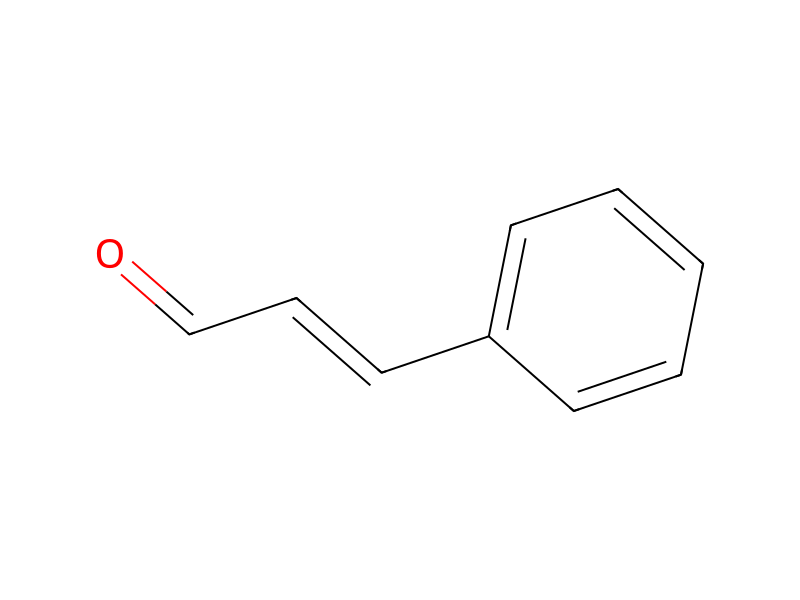
기본 정보
- 표준 SMILES
O=C/C=C/c1ccccc1- InChIKey
KJPRLNWUNMBNBZ-QPJJXVBHSA-N- 분자식
- C9H8O
- 평균 분자량
- 132.16 g/mol
- 단동위원소 질량
- 132.05751488
개요
(E)-cinnamaldehyde is the E (trans) stereoisomer of cinnamaldehyde, the parent of the class of cinnamaldehydes. It has a role as a sensitiser, a hypoglycemic agent, a flavouring agent, a vasodilator agent, an antifungal agent, an EC 4.3.1.24 (phenylalanine ammonia-lyase) inhibitor and a plant metabolite. It is a 3-phenylprop-2-enal and a member of cinnamaldehydes.
이름 및 식별자
- 우선 이름
- Cinnamaldehyde
- IUPAC
- (E)-3-phenylprop-2-enal
- 영어명
- trans-Cinnamaldehyde
- 분자식
- C9H8O
- 분자량
- 132.16
이름 및 동의어
cinnamaldehyde104-55-2ZimtaldehydeCinnamal3-Phenylacrylaldehyde2-Propenal, 3-phenyl-Phenylacrolein3-Phenylpropenal3-Phenyl-2-propenal(E)-3-phenylprop-2-enalCassia aldehydeCinnamylaldehyde
이름 더 보기
(E)-CinnamaldehydeSTYRONE(E)-3-Phenylpropenal(2E)-3-Phenylprop-2-enalFEMA 2286(e)-cinnamaldehydBenzalacetalaehydetrans-Cinnamylaldehyde
3-Phenylacrolein(E)-3-Phenyl-2-propenalCinnemaldehydeCinnamyl aldehydeAbion CABenzylideneacetaldehydebeta-Phenylcrolein3-Fenylpropenal
데이터베이스 식별자
- CAS
104-55-2、14371-10-9、57194-69-1- PubChem CID
- 637511
- DTXSID
DTXSID6024834- ChEMBL
CHEMBL2289233、CHEMBL293492- ChEBI
CHEBI:16731- UNII
- SR60A3XG0F
- EC Number
- 203-213-9、604-377-8、805-158-1、946-230-3
- Nikkaji
- J2.850I、J43.393D
물성
구조 계산 물성
- XLogP
- 1.9
- 극성 표면적
- 17.1 Ų
- 수소 결합 공여자 수
- 0
- 수소 결합 수용자 수
- 1
- 회전 가능 결합 수
- 2
- 무거운 원자 수
- 10
- 형식 전하
- 0
- 복잡도
- 121
실험 및 물리화학적 성질
Chemical Classes
Other Classes -> Aldehydes
Other Classes -> Aldehydes
Drugs
Pharmaceuticals -> Metabolite of Cinnarizine
Pharmaceuticals -> Listed in ZINC15
Cosmetics
Cosmetics ingredient -> Base; Flavor; Fragrance; Moisturizing/Humectant; Other (Specify)
Cosmetic ingredients (Cinnamal) -> CIR (Cosmetic Ingredient Review)
Denaturant
SpringerMaterials Properties13C nuclear magnetic resonance spectrum
Fragrances
Fragrance substance (Cinnamic aldehyde) -> IFRA amendment 49
Fragrance Ingredient (Cinnamaldehyde) -> IFRA transparency List
Fragrance
Pesticides
Fungicides
Active substance -> EU Pesticides database: Pending
LogP
log Kow = 1.90
1.90
1.98
Odor
PUNGENT, SPICY NOTE
Strong odor of cinnamon
Taste
BURNING TASTE
SWEET TASTE
Food AdditivesFLAVORING AGENT OR ADJUVANT -> FDA Substance added to food
Density
1.048-1.052 at 25 °C/25 °C
1.046-1.053
Flavoring AgentsEU Flavoring substances
물리화학적 성질
- 녹는점
- 9 · −9-−4 °C(lit.)
- 끓는 점
- 250 · 250-252 °C(lit.)
- 밀도
- 1.05 g/mL · 1.05 g/mL at 25 °C(lit.)
- 증기 밀도
- 4.6 · 4.6 (vs air)
- 굴절률
- 20 · n20/D 1.622(lit.)
- FEMA
- 2286 · 2286 | CINNAMALDEHYDE
- 인화점
- 160 °F · 160 °F
- 저장 조건
- 2 · 2-8°C
- 용해도
- 클로로포름(약간 용해됨), DMSO(소량으로 용해), 메탄올(약간 용해됨)
- 물리적 상태
- 액체
- 색상
- 맑은 노란색
- 냄새
- 10 % · 디프로필렌 글리콜 중 10.00%. 달콤한 향신료 사탕 계피 레드 핫 따뜻한
- 냄새 유형
- 매운
- 생물학적 소스
- synthetic
- 수용성
- 1.1 g/L · 1.1g/L(20℃)
- JECFA Number
- 656 · 656
- Merck
- 14 · 14,2297
- BRN
- 1071571 · 1071571
- Dielectric constant
- 16.9 · 16.899999999999999
- 안정성
- 흡습성
- InChI
- 1S/C9H8O/c10-8-4-7-9-5-2-1-3-6-9/h1-8H/b7-4+
- InChIKey
- KJPRLNWUNMBNBZ-QPJJXVBHSA-N
- SMILES
- [H]C(=O)\C=C\c1ccccc1
- LogP
- 1.82 · 1.820
- NIST
- Cinnamaldehyde, (E)-(14371-10-9)
- EPA
- trans-Cinnamaldehyde (14371-10-9)
화학적 성질
trans-Cinnamaldehyde is the main component of cassia oil (about 90%) and Sri Lanka cinnamon bark oil (about 75%). Smaller quantities are found in many other essential oils. In nature, the trans-isomer is predominant. trans-Cinnamaldehyde is a yellowish liquid with a characteristic spicy odor, strongly reminiscent of cinnamon. Being an ,-unsaturated aldehyde, it undergoes many reactions, of which hydrogenation to cinnamic alcohol, dihydrocinnamaldehyde, and dihydrocinnamic alcohol is important. Cinnamic acid is formed by autoxidation. On an industrial scale, cinnamaldehyde is prepared almost exclusively by alkaline condensation of benzaldehyde and acetaldehyde. Self-condensation of acetaldehyde can be avoided by using an excess of benzaldehyde and by slowly adding acetaldehyde. Cinnamaldehyde is used in many compositions for creating spicy and oriental notes (e.g., soap perfumes). It is the main component of artificial cinnamon oil. In addition, it is an important intermediate in the synthesis of cinnamic alcohol and dihydrocinnamic alcohol.
안전 및 규제
GHS 분류
GHS Classification
Warning
H317: May cause an allergic skin reaction [Warning Sensitization, Skin]
P261, P272, P280, P302+P352, P321, P333+P317, P362+P364, and P501 (click each P-code to see the statement)
Warning
H317: May cause an allergic skin reaction [Warning Sensitization, Skin]
P261, P272, P280, P302+P352, P321, P333+P317, P362+P364, and P501 (click each P-code to see the statement)
유해성 정보
Regulatory Information
Chemical: 2-Propenal, 3-phenyl-
Hazard Traits - Fragrance Allergen
Regulation (EC) No 1831/2003 (amended)
2-Propenal, 3-phenyl- is listed on the EPA's Chemical Data Reporting (CDR) system. Manufacturers and importers of 2-Propenal, 3-phenyl- are required to report information about their production and use of this chemical to the EPA under the Toxic Substances Control Act (TSCA). (40 eCFR Part 711)
2007/442
Status: Active Update: 21-07-2021 https://echa.europa.eu/registration-dossier/-/registered-dossier/14462
Other Safety InformationIMAP assessments - 2-Propenal, 3-phenyl-: Human health tier II assessment
Hazards Summary
May cause hand dermatitis in bakers; [Marks, p. 77] Contact urticaria and allergic contact dermatitis reported in workers handling flavoring agents and perfumes; it is included in the fragrance mix. [Kanerva, p. 1771] Included in list of established contact allergens in humans; [EC: Scientific Committee on Consumer Safety: Fragrance allergens in cosmetic products (2011)] Danger of skin sensitization; [MAK] A skin, eye, upper respiratory tract irritant; [CAMEO]
Vapor or mist is irritating to eyes, mucous membranes, and upper respiratory tract; No evidence of carcinogenicity in mice or rats; [NTP] A skin and strong eye irritant; May cause skin sensitization; [Sigma-Aldrich MSDS]
FDA Requirements
Synthetic flavoring substances and adjuvants /for human consumption/ that are generally recognized as safe for their intended use, within the meaning of section 409 of the Act. Cinnamaldehyde is included on this list.
Synthetic flavoring substances and adjuvants /for animal drugs, feeds, and related products/ that are generally recognized as safe for their intended use, within the meaning of section 409 of the Act. Cinnamaldehyde is included on this list.
Special Reports
EPA/Office of Pollution Prevention and Toxics; High Production Volume Information System (HPVIS) Detailed chemical results for 3-Phenyl-2-propenal (104-55-2).
WHO/FAO; Joint Expert Committee on Food Additives (JECFA) - Monographs and Evaluations; Nutrition Meetings Report Series 44a: 097. Cinnamaldehyde (August 1967). JEFCA Monographs are toxicological evaluations of food additives and contaminants and of residues of veterinary drugs in food used by the Codex Alimentarius Commission and national governments to set international food standards and safe levels for protection of the consumer.
European Chemicals Bureau; IUCLID Dataset, Cinnamaldehyde (104-55-2) (2000 CD-ROM edition) contains information on use, toxicology, and environmental effects of this chemical as supplied to the European Union by industry.[Available from, as of July 14, 2009: http://esis.jrc.ec.europa.eu/]
USEPA, Office of Pesticide Programs/ Ombudsman, Biopesticides and Pollution Prevention Division: Active Ingredient Fact Sheet for Cinnamaldehyde (040506) (December 2000).[Available from, as of July 13, 2009: http://www.epa.gov/pesticides/biopesticides/ingredients/index_p-s.htm]
EPA/Office of Pollution prevention and toxics; High production Volume Information System (HPVIS) Detailed chemical results for 3-Phenyl-2-propenal (104-55-2).[Available from, as of July 13, 2009: http://iaspub.epa.gov/oppthpv/quicksearch.chemical]
TSCA Requirements
Pursuant to section 8(d) of TSCA, EPA promulgated a model Health and Safety Data Reporting Rule. The section 8(d) model rule requires manufacturers, importers, and processors of listed chemical substances and mixtures to submit to EPA copies and lists of unpublished health and safety studies. 2-Propenal, 3- phenyl- is included on this list. Effective date 9/30/91; Sunset date: 6/30/98.
FIFRA Requirements
New Active Ingredients ... includes chemicals not previously registered as pesticides, as well as pesticide active ingredients initially registered after November 1, 1984 and that currently have active product registrations. By law, these pesticides must meet new safety standards, such as those described in the Food Quality Protection Act of 1996 and, if new safety standards are met, will be reviewed again on a 15-year cycle. Cinnamaldehyde is designated by EPA as a New Pesticide Active Ingredient. Active Ingredient Number: 040506; Type of Pesticide: insecticide (bait); Use Site: food; Year: 1994.
Residues of the biochemical pesticide plant floral volatile attractant compounds: cinnamaldehyde, cinnamyl alcohol, 4-methoxy cinnamaldehyde, 3-phenyl propanol, 4-methoxy phenethyl alcohol, indole, and 1,2,4-trimethoxybenzene are exempt from the requirement of a tolerance in or on the following raw agricultural commodities: the following field crops -- alfalfa, clover, cotton, dandelion, peanuts (including hay), rice, sorghum (milo), soybeans, sunflower, sweet potatoes, and wheat; the following vegetable crops -- asparagus, beans (including forage hay), beets, carrots, celery, cole crops (cabbage, broccoli, Brussels sprouts, cauliflower), collards (kale, mustard greens, turnip greens, kohlrabi), corn, fresh (field, sweet, pop, seed), corn fodder and forage, chinese cabbage, cowpeas, cucurbitis (cucumbers, squash, pumpkin), egg plant, endive (escarole), horseradish (radish, rutabagas, turnip roots), leafy greens (spinach, swiss chard), lettuce (head leaf), okra, parsley, parsnip, peas, peas with pods, peppers, potatoes, sugar beets, tomatoes; the following tree fruit, berry and nut crops -- almonds, apples, apricots, berries, (blackberry, boysenberry, dewberry, loganberry, raspberry), blueberry, cherry, citrus (grapefruit, kumquat, lemon, lime, orange, tangelo, and tangerine) cranberry, grapes, melons (watermelon, honeydew, crenshaw, cantaloupe, casaba, persian), nectarines, pears, pecans, peaches, and strawberry as dispersed from the end-use product Corn Rootworm Bait, a pesticidal bait, in accordance with the prescribed conditions in paragraph (a) of this section.
Cumulative yearly application cannot exceed 20 grams of each floral attractant/acre/application.
Cinnamaldehyde (3-phenyl-2-propenal) is exempted from the requirement of a tolerance in or on all food commodities, when used as a fungicide, insecticide, and algaecide in accordance with good agricultual practices.
Peroxide Forming Chemical
Cinnamaldehyde
D*: Other compounds that may form peroxides
Bretherick's
A mixture of cinnamaldehyde and sodium hydroxide over-heated and ignited upon extended exposure to air. Warrants caution. See Bretherick's.
Hazard Classes and Categories
Acute Tox. 4 (65.2%)
Acute Tox. 4 (76%)
Skin Irrit. 2 (100%)
Not Classified
Acute toxicity - category 4
Acute toxicity (Dermal) - Category 4
Skin, Eye, and Respiratory Irritations
Primary eye irritant ... Dermal irritant.
No primary dermal irritation was observed in human subjects exposed for 48 hours to a solution of a 3% active ingredient, while severe primary dermal irritation was observed in human subjects after exposure to 8% active ingredient.
Hazardous Reactivities and IncompatibilitiesRags soaked in sodium hydroxide and in /cinnamaldehyde/ overheated and ignited owing to aerobic oxidation when they came into contact in a waste bin.
안전 및 보호
Firefighting HazardsMay ignite after a delay period in contact with NaOH.
Fire Fighting ProceduresCO2, dry chemical, or appropriate foam.
Storage ConditionsDo not use, pour, spill or store near heat or open flame. /Cinnacure A3005/
Cleanup Methods
SRP: Wastewater from contaminant suppression, cleaning of protective clothing/equipment, or contaminated sites should be contained and evaluated for subject chemical or decomposition product concentrations. Concentrations shall be lower than applicable environmental discharge or disposal criteria. Alternatively, pretreatment and/or discharge to a POTW is acceptable only after review by the governing authority. Due consideration shall be given to remediation worker exposure (inhalation, dermal and ingestion) as well as fate during treatment, transfer and disposal. If it is not practicable to manage the chemical in this fashion, it must meet Hazardous Material Criteria for disposal.
Do not contaminate water by cleaning of equipment or disposal of wastes. /Cinnacure A3005/
Disposal Methods
SRP: At the time of review, criteria for land treatment or burial (sanitary landfill) disposal practices are subject to significant revision. Prior to implementing land disposal of waste residue (including waste sludge), consult with environmental regulatory agencies for guidance on acceptable disposal practices.
Do not use, pour, spill or store near heat or open flame. /Cinnacure A3005/
Preventive Measures
SRP: The scientific literature for the use of contact lenses in industry is conflicting. The benefit or detrimental effects of wearing contact lenses depend not only upon the substance, but also on factors including the form of the substance, characteristics and duration of the exposure, the uses of other eye protection equipment, and the hygiene of the lenses. However, there may be individual substances whose irritating or corrosive properties are such that the wearing of contact lenses would be harmful to the eye. In those specific cases, contact lenses should not be worn. In any event, the usual eye protection equipment should be worn even when contact lenses are in place.
User should: Wash hands before eating, drinking, chewing gum, using tobacco or using the toilet. Remove clothing immediately if pesticide gets inside. Then wash thoroughly and put on clean clothing. /Cinnacure A3005/
Agricultural use requirements. Use this product only in accordance with its labeling and with Worker Protection Standard, 40 CFR part 170. ... Do not enter or allow worker entry into treated areas during the restricted entry interval (REI) of 4 hours. /Cinnacure A3005/
Do not apply directly to water, or to areas where surface water is present or to intertidal areas below the nean high water mark. /Cinnacure A3005/
Allowable Tolerances
Residues of the biochemical pesticide plant floral volatile attractant compounds: cinnamaldehyde, cinnamyl alcohol, 4-methoxy cinnamaldehyde, 3-phenyl propanol, 4-methoxy phenethyl alcohol, indole, and 1,2,4-trimethoxybenzene are exempt from the requirement of a tolerance in or on the following raw agricultural commodities: the following field crops -- alfalfa, clover, cotton, dandelion, peanuts (including hay), rice, sorghum (milo), soybeans, sunflower, sweet potatoes, and wheat; the following vegetable crops -- asparagus, beans (including forage hay), beets, carrots, celery, cole crops (cabbage, broccoli, Brussels sprouts, cauliflower), collards (kale, mustard greens, turnip greens, kohlrabi), corn, fresh (field, sweet, pop, seed), corn fodder and forage, chinese cabbage, cowpeas, cucurbitis (cucumbers, squash, pumpkin), egg plant, endive (escarole), horseradish (radish, rutabagas, turnip roots), leafy greens (spinach, swiss chard), lettuce (head leaf), okra, parsley, parsnip, peas, peas with pods, peppers, potatoes, sugar beets, tomatoes; the following tree fruit, berry and nut crops -- almonds, apples, apricots, berries, (blackberry, boysenberry, dewberry, loganberry, raspberry), blueberry, cherry, citrus (grapefruit, kumquat, lemon, lime, orange, tangelo, and tangerine) cranberry, grapes, melons (watermelon, honeydew, crenshaw, cantaloupe, casaba, persian), nectarines, pears, pecans, peaches, and strawberry as dispersed from the end-use product Corn Rootworm Bait, a pesticidal bait, in accordance with the prescribed conditions in paragraph (a) of this section.
Cumulative yearly application cannot exceed 20 grams of each floral/attractant/acre/application.
Cinnamaldehyde (3-phenyl-2-propenal) is exempted from the requirement of a tolerance in or on all food commodities, when used as a fungicide, insecticide, and algaecide in accordance with good agricultual practices.
Personal Protective Equipment (PPE)
Agricultural use requirements. PPE required for early entry to treated areas that is permitted under the Worker Protection Standard and that involves contact with anything that has been treated, such as plants, soil, water, is: Coveralls, waterproof gloves, shoes plus socks./Cinnacure A3005/
Long-sleeved shirt and long pants, protective eyewear, shoes plus socks, waterproof gloves.
독성 정보
Interactions
The Japanese medaka (Oryzias latipes) was used in the medaka embryo-larval assay (MELA) to determine possible adverse developmental effects of ethanol and the spice component, cinnamaldehyde (CAD) ... Medaka were exposed to ethanol at 100 mM, CAD at 10, 1.0, 0.67 or 0.50 mM, to ethanol and CAD combined, or were non-treated controls. Ethanol at 100 mM was without effect. CAD alone at 10 mM and 1.0 mM was lethal by 1 dpf. Embryos exposed to 100 mM ethanol and 0.67 mM CAD exhibited cardiovascular and pigmentation defects and delayed hatching. Embryos exposed to 0.50 mM CAD alone had less severe cardiovascular problems as compared to the combined ethanol and CAD treatment. Taken together the results indicate that the combined effects of ethanol and CAD are greater than the individual effects and indicate the need to monitor effluents in fish nursery areas to protect natural fish populations.
Health EffectsAllergic reaction.
Ecotoxicity Values
EC50; Species: Daphnia magna (Water flea, 2-24 hours old); Conditions: static bioassay, 16 hr light 8 hr dark cycle (light intensity of 200 lx), oxygen concentration of 8.4-8.6, temperature 20.2-20.5 °C, pH 7.75-8.19; Concentration: 11.5 mg/L for 48 hours; Effect: immobilization. (65-75% cinnamaldehyde).
LC50; Species: Daphnia magna (Water fleas, less than 24 hours old); Conditions: semi-static bioassay, 16 hours light and 8 hours dark cycle, conductivity 590-600 umhos/cm, pH 6.8-7.1, dissolved oxygen 8.2-9.1 mg/L, temperature 19.5-20.7 °C; Concentrations: 4.22 mg/L for 48 hours (100% cinnamaldehyde).
EC50; Species: Selenastrun capricornutum (Green algae); Conditions: pH 7.5, 24 hours light (intensity 400-410 foot candle), temperature 23.2-24 °C; Concentration: 4.07-6.87 for 72 hours; Effect: growth inhibition, and decreased reproduction (100% Cinnamaldehyde)
Environmental Fate
TERRESTRIAL FATE: Based on a classification scheme(1), an estimated Koc value of 37(SRC), determined from a log Kow of 1.9(2) and a regression-derived equation(3), indicates that cinnamaldehyde is expected to have very high mobility in soil(SRC). Volatilization of cinnamaldehyde from moist soil surfaces may be an important fate process(SRC) given an estimated Henry's Law constant of 3.5X10⁻⁶ atm-cu m/mole(SRC), derived from its vapor pressure, 2.89X10⁻² mm Hg(4), and water solubility, 1,420 mg/L(5). Cinnamaldehyde is not expected to volatilize from dry soil surfaces(SRC) based upon its vapor pressure(4). Biodegradation data were not available(SRC, 2009).
AQUATIC FATE: Based on a classification scheme(1), an estimated Koc value of 37(SRC), determined from a log Kow of 1.9(2) and a regression-derived equation(3), indicates that cinnamaldehyde is not expected to adsorb to suspended solids and sediment(SRC). Volatilization from water surfaces is expected(3) based upon an estimated Henry's Law constant of 3.5X10⁻⁶ atm-cu m/mole(SRC), derived from its vapor pressure, 2.89X10⁻² mm Hg(4), and water solubility, 1,420 mg/L(5). Using this Henry's Law constant and an estimation method(3), volatilization half-lives for a model river and model lake are 290 hours and 91 days, respectively(SRC). According to a classification scheme(6), an estimated BCF of 8(SRC), from its log Kow (2) and a regression-derived equation(7), suggests the potential for bioconcentration in aquatic organisms is low(SRC). Biodegradation data were not available(SRC, 2009).
ATMOSPHERIC FATE: According to a model of gas/particle partitioning of semivolatile organic compounds in the atmosphere(1), cinnamaldehyde, which has a vapor pressure of 2.89X10⁻² mm Hg at 25 °C(2), is expected to exist solely as a vapor in the ambient atmosphere. Vapor-phase cinnamaldehyde is degraded in the atmosphere by reaction with photochemically-produced hydroxyl radicals(SRC); the half-life for this reaction in air is estimated to be 10 hours and 9.5 hours for the cis- and trans-isomers, respectively(SRC), calculated from its rate constant of 3.8X10⁻¹¹ and 4.0X10⁻¹¹ cu cm/molecule-sec at 25 °C for cis- and trans-isomers, respectively(SRC). Cinnamaldehyde does not contain chromophores that absorb at wavelengths >290 nm(4) and therefore is not expected to be susceptible to direct photolysis by sunlight(SRC).
Adverse Effects
Skin Sensitizer - An agent that can induce an allergic reaction in the skin.
Skin Sensitizer - An agent that can induce an allergic reaction in the skin.
Exposure RoutesInhalation; dermal; ingestion
Toxicity SummaryCinnamaldehyde is an allergen. The physiologic effect of cinnamaldehyde is by means of increased histamine release and cell-mediated immunity.
Signs and SymptomsThe specific symptoms that can result from cinnamic aldehyde allergy can vary considerably amongst patients from a severe anaphylactic reaction to asthma, abdominal symptoms, eczema or headaches. (L2140)
Ongoing Test Status
The following link will take the user to the National Toxicology Program (NTP) Test Agent Search Results page, which tabulates all of the "Standard Toxicology & Carcinogenesis Studies", "Developmental Studies", and "Genetic Toxicity Studies" performed with this chemical. Clicking on the "Testing Status" link will take the user to the status (i.e., in review, in progress, in preparation, on test, completed, etc.) and results of all the studies that the NTP has done on this chemical.[Available from, as of July 14, 2009: http://ntp-apps.niehs.nih.gov/ntp_tox/index.cfm?fuseaction=ntpsearch.searchresults&searchterm=104-55-2]
The following link will take the user to the National Toxicology Program (NTP) Test Agent Search Results page, which tabulates all of the "Standard Toxicology & Carcinogenesis Studies", "Developmental Studies", and "Genetic Toxicity Studies" performed with this chemical. Clicking on the "Testing Status" link will take the user to the status (i.e., in review, in progress, in preparation, on test, completed, etc.) and results of all the studies that the NTP has done on this chemical. /trans-Cinnamaldehyde/[Available from: http://ntp-apps.niehs.nih.gov/ntp_tox/index.cfm?fuseaction=ntpsearch.searchresults&searchterm=14371-10-9]
Soil Adsorption/Mobility
The Koc of cinnamaldehyde is estimated as 37(SRC), using a log Kow of 1.9(1) and a regression-derived equation(2). According to a classification scheme(3), this estimated Koc value suggests that cinnamaldehyde is expected to have very high mobility in soil.
Natural Pollution Sources
The main component of Sri Lanka cinnamon bark oil (75%).
It has been identified in essential oils of: Ceylon and Madagascar cinnamon leaves, Ceylon, Seychelles, and Japanese (cinnamon laureirii) cinnamon bark, and in other cinnamon species in varying amt (0.1-76%) ... Also in essential oils of: hyacinth, myrrh, Bulgarian rose, patchouli, and others.
... Reported found in grapefruit, celery seed, clove bud and lemon balm (Melissa officinalis L).
Human Toxicity Excerpts
/HUMAN EXPOSURE STUDIES/ The objective of this study was to determine the frequency of reactivity to a series of commonly used fragrances in dermatological patients. A total of 48 fragrances (FF) were chosen ... In a pilot study on a total of 1069 patients in 11 centers, the appropriate test concentration and vehicle were examined. For most fragrances, 1% and 5% were chosen, and petrolatum proved to be the best vehicle ... In the main study, a set of 5 to 10 fragrances at 2 concentrations was patch tested in each center on a minimum of 100 consecutive patients seen in the patch test clinic. These patients were also patch tested to a standard series with the 8% fragrance mix (FM) and its 8 constituents. In patients with a positive reaction to any of the 48 FF, a careful history with regard to past or present reactions to perfumed products was taken. A total of 1323 patients were tested in 11 centers. The 8% FM was positive in 89 patients (8.3% of 1072 patients). Allergic reactions to the constituents were most frequent to oak moss (24), isoeugenol (20), eugenol (13), cinnamic aldehyde (10) and geraniol (8) ...
/HUMAN EXPOSURE STUDIES/ ... The skin response to serial dilution patch tests and 6-week graded use tests with 0.02, 0.1 and 0.8% cinnamic aldehyde in ethanol was studied in a group of cinnamic-aldehyde-sensitive eczema patients. The minimum effect level demonstrated was 0.02% cinnamic aldehyde on patch testing and 0.1% cinnamic aldehyde on use testing, which are allowed usage concentrations in different kind of cosmetics. 72% (13/18) developed eczema in the use test performed with an alcoholic solution of cinnamic aldehyde on healthy upper arm skin. 6 of the 13 use-test-positive subjects (46%) reacted later than day 7, indicating that the standard exposure period of 7 days in use testing may not be sufficient, if low concentrations or volatile substances are used. A significant correlation between patch test sensitivity and the outcome of use testing was found (1, < 0.001), which should be considered in designing future use test studies and advising patients. Detailed exposure information is needed to evaluate more fully the consequences of cinnamic aldehyde sensitivity.
/HUMAN EXPOSURE STUDIES/ The authors followed the frequency of fragrance contact sensitization in Hungary in a multicentre study in the years 1998 and 1999. A total of 3,604 patients were tested with fragrance mix (FM), and positive reactions were observed in 294 (8.2%). In 160 FM hypersensitive patients, the study was continued with patch testing of the mix constituents (cinnamic alcohol, cinnamic aldehyde, eugenol, amyl cinnamic aldehyde, hydroxycitronellal, geraniol, isoeugenol, oak moss absolute). Of the patients tested, 70.6% produced positive reactions to the constituents. FM contact sensitization was mainly observed in female patients (74.4%). The incidence of contact urticaria in FM hypersensitive patients was 6.1%. Simultaneous patch test trials of other environmental contact allergens, in both early and late evaluations, mainly confirmed hypersensitivity reactions to balsams. Female dominance of hypersensitivity reactions observed during testing the individual components of the mix was striking (82.4%). In positive skin reactions, cinnamic alcohol, isoeugenol and oak moss provoked skin symptoms most frequently ...
/HUMAN EXPOSURE STUDIES/ ... The records of patients patch tested to the European standard series/were analyzed retrospectively/ during the 15-yr period 1984-98 for positive reactions to Fragrance Mix I (FM I). In a subset of patients tested to the constituents of FM I, positive reactions to cinnamal, cinnamic alcohol, isoeugenol and eugenol were sought. Data were analysed using 2x2 contingency tables (Fisher's exact test). During this period, 23,660 patients were tested to the European standard series, of whom 1811 (7.7%) had positive reactions to FM I. Of the 1112 patients tested to the constituents of FM I, 934 had positive reactions to at least one constituent (total 1324 positive reactions to constituents). Of these 934, 826 also had positive reactions to FM I itself; 108 were negative to FM I but reacted to one or more of its constituents. One hundred and seventy-eight patients did not react to any of the breakdown constituents of FM I; 34 of these had positive reactions to FM I itself. Of 139 patients allergic to cinnamic alcohol, 87 were also allergic to cinnamal (63%), compared with 108 (11.1%) of 973 cinnamic alcohol-negative patients (P < 0.00001) ...
For more Human Toxicity Excerpts (Complete) data for CINNAMALDEHYDE (18 total), please visit the HSDB record page.
규제 정보
FDA Requirements
Synthetic flavoring substances and adjuvants /for human consumption/ that are generally recognized as safe for their intended use, within the meaning of section 409 of the Act. Cinnamaldehyde is included on this list.
Synthetic flavoring substances and adjuvants /for animal drugs, feeds, and related products/ that are generally recognized as safe for their intended use, within the meaning of section 409 of the Act. Cinnamaldehyde is included on this list.
TSCA Requirements
Pursuant to section 8(d) of TSCA, EPA promulgated a model Health and Safety Data Reporting Rule. The section 8(d) model rule requires manufacturers, importers, and processors of listed chemical substances and mixtures to submit to EPA copies and lists of unpublished health and safety studies. 2-Propenal, 3- phenyl- is included on this list. Effective date 9/30/91; Sunset date: 6/30/98.
FIFRA Requirements
New Active Ingredients ... includes chemicals not previously registered as pesticides, as well as pesticide active ingredients initially registered after November 1, 1984 and that currently have active product registrations. By law, these pesticides must meet new safety standards, such as those described in the Food Quality Protection Act of 1996 and, if new safety standards are met, will be reviewed again on a 15-year cycle. Cinnamaldehyde is designated by EPA as a New Pesticide Active Ingredient. Active Ingredient Number: 040506; Type of Pesticide: insecticide (bait); Use Site: food; Year: 1994.
Residues of the biochemical pesticide plant floral volatile attractant compounds: cinnamaldehyde, cinnamyl alcohol, 4-methoxy cinnamaldehyde, 3-phenyl propanol, 4-methoxy phenethyl alcohol, indole, and 1,2,4-trimethoxybenzene are exempt from the requirement of a tolerance in or on the following raw agricultural commodities: the following field crops -- alfalfa, clover, cotton, dandelion, peanuts (including hay), rice, sorghum (milo), soybeans, sunflower, sweet potatoes, and wheat; the following vegetable crops -- asparagus, beans (including forage hay), beets, carrots, celery, cole crops (cabbage, broccoli, Brussels sprouts, cauliflower), collards (kale, mustard greens, turnip greens, kohlrabi), corn, fresh (field, sweet, pop, seed), corn fodder and forage, chinese cabbage, cowpeas, cucurbitis (cucumbers, squash, pumpkin), egg plant, endive (escarole), horseradish (radish, rutabagas, turnip roots), leafy greens (spinach, swiss chard), lettuce (head leaf), okra, parsley, parsnip, peas, peas with pods, peppers, potatoes, sugar beets, tomatoes; the following tree fruit, berry and nut crops -- almonds, apples, apricots, berries, (blackberry, boysenberry, dewberry, loganberry, raspberry), blueberry, cherry, citrus (grapefruit, kumquat, lemon, lime, orange, tangelo, and tangerine) cranberry, grapes, melons (watermelon, honeydew, crenshaw, cantaloupe, casaba, persian), nectarines, pears, pecans, peaches, and strawberry as dispersed from the end-use product Corn Rootworm Bait, a pesticidal bait, in accordance with the prescribed conditions in paragraph (a) of this section.
Cumulative yearly application cannot exceed 20 grams of each floral attractant/acre/application.
Cinnamaldehyde (3-phenyl-2-propenal) is exempted from the requirement of a tolerance in or on all food commodities, when used as a fungicide, insecticide, and algaecide in accordance with good agricultual practices.
안전 데이터
- wgk
- 3
- rtecs
- GD6476000
- HS 번호
- 29122990
- risk_code
- 36/37/38-43-21
- hazard_code
- Xi,Xn
- safety_code
- 26-36/37-37/39-24
- F 고인화성물질
- 10-23
- Hazard Classifications
- Eye Irrit. 2Skin Irrit. 2Skin Sens. 1STOT SE 3
- 스토리지 클래스
- 10 - Combustible liquids
화학 및 산업
약리 정보
Metabolism/Metabolites
The metabolism of trans-[3-14C]cinnamaldehyde was investigated in male and female Fischer 344 rats and CD1 mice at doses of 2 and 250 mg/kg bw given by ip injection and in males at 250 mg/kg by oral gavage. Some 94% of the administered dose was recovered in the excreta in 72 hr in both species with most (75-81%) present in the 0-24-hr urine. Less than 2% of the administered dose was found in the carcasses at 72 hr after dosing. Urinary metabolites were identified by their chromatographic characteristics. In both species the major urinary metabolite was hippuric acid accompanied by 3-hydroxy-3-phenylpropionic acid, benzoic acid and benzoyl glucuronide. The glycine conjugate of cinnamic acid was formed to a considerable extent only in the mouse. The oxidative metabolism of cinnamaldehyde essentially follows that of cinnamic acid, by beta-oxidation analogous to that of fatty acids. Apart from the metabolites common to cinnamic acid and cinnamaldehyde, 7% of 0-24-hr urinary 14C was accounted for by two new metabolites in the rat and three in the mouse, which have been shown in other work to arise from a second pathway of cinnamaldehyde metabolism involving conjugation with glutathione. The excretion pattern and metabolic profile of cinnamaldehyde in rats and mice are not systematically affected by sex, dose size and route of administration. The data are discussed in terms of their relevance to the safety evaluation of trans-cinnamaldehyde, particularly the validity or otherwise of extrapolation of toxicity data from high to low dose. /trans-Cinnamaldehyde/
To evaluate the extent of cinnamaldehyde and cinnamic alcohol metabolism in human skin and provide evidence for the role of cutaneous alcohol dehydrogenase (ADH) and aldehyde dehydrogenase (ALDH) in such metabolism ... the extent of cinnamic alcohol and aldehyde metabolism was investigated in human skin homogenates and sub-cellular fractions ... Studies were conducted in the presence and absence of the ADH/cytochrome P450 inhibitor 4-methylpyrazole and the cytosolic ALDH inhibitor, disulfiram. Differential metabolism of cinnamic alcohol and cinnamaldehyde was observed in various subcellular fractions: skin cytosol was seen to be the major site of cinnamic compound metabolism. Significant metabolic inhibition was observed using 4-methylpyrazole and disulfiram in whole skin homogenates and cytosolic fractions only ... This study has demonstrated that cutaneous ADH and ALDH activities, located within defined subcellular compartments, play important roles in the activation and detoxification of CAlc and CAld in skin ...
Cinnamaldehyde administered intraperitoneally to a rabbit was excreted in the urine as cinnamic acid, cinnamoylglycine, benzoic acid and hippuric acid.
Identification of 2 sulfur containing urinary metabolites of cinnamic aldehyde in rat which are 3-S-(N-acetylcysteinyl)-3-phenylpropyl alcohol and 3-S-(N-acetylcysteinyl)-3-phenylpropionic acid.
For more Metabolism/Metabolites (Complete) data for CINNAMALDEHYDE (6 total), please visit the HSDB record page.
Cinnamaldehyde is a known human metabolite of cinnarizine.
FDA Pharmacological Classification
SR60A3XG0F
CINNAMALDEHYDE
Established Pharmacologic Class [EPC] - Standardized Chemical Allergen
Physiologic Effects [PE] - Increased Histamine Release
Physiologic Effects [PE] - Cell-mediated Immunity
Chemical Structure [CS] - Allergens
MeSH Pharmacological Classification
Agents obtained from higher plants that have demonstrable cytostatic or antineoplastic activity.
Substances added to foods and medicine to improve the taste.
Agents that reduce the frequency or rate of spontaneous or induced mutations independently of the mechanism involved.
Absorption, Distribution and Excretion
Cinnamaldehyde is 52% absorbed through the skin and shown to be rapidly absorbed from the gut.
Cinnamaldehyde is metabolized and excreted primarily in the urine and, to a minor extent, in the feces. After oral or intraperitoneal administration to rats and mice, 69–98% of the dose of cinnamaldehyde was recovered in the urine and feces within 24 h.
The bioavailability of microencapsulated cinnamaldehyde (CNMA) was investigated in male F344 rats. Rats were gavaged with CNMA in corn oil using either microencapsulated or the neat chemical at doses of 50, 250, and 500 mg/kg. No differences between the two formulations at any of the doses were found in either CNMA blood concentration profiles or in the rate of urinary hippuric acid excretion. Both formulations showed a low bioavailability (< 20%) at 250 and 500 mg/kg. Regardless of the formulation used, oral gavage of CNMA significantly increased the urinary excretion of hippuric acid. About 75% of the dose of CNMA was metabolized to hippuric acid and recovered in the urine. The total amount of hippuric acid recovered in a 50-hr urinary collection correlated well with the CNMA dose. The data suggest that there was complete release of CNMA from the microcapsules and that microencapsulation of CNMA does not affect its bioavailability or its metabolism ...
/Cinnamaldehyde is/ presumably oxidized in vivo to cinnamic acid, which is excreted in urine as benzoic and hippuric acids.
After ip admin of cinnamic aldehyde to rats, urinary thio ether excretion amounted to 6.5% of dose.
Cinnamaldehyde administered intraperitoneally to a rabbit was excreted in the urine as cinnamic acid, cinnamoylglycine, benzoic acid and hippuric acid.
Tissue LocationsEpidermis
Cellular LocationsMembrane
용도 및 제조
Uses
CIR ingredient: Cinnamal
Used to flavor beverages, chewing gum, and dental products; [Marks, p. 77]
Used in flavors and perfumes; [NTP]
For cinnamaldehyde (USEPA/OPP Pesticide Code: 040506) ACTIVE products with label matches. /SRP: Registered for use in the U.S. but approved pesticide uses may change periodically and so federal, state and local authorities must be consulted for currently approved uses./
In electroplating processes, cinnamaldehyde is utilized as a brightener. Other applications include its efficacy as an animal repellent, its use in compositions to attract insects, and demonstration of a positive antifungal activity.
In the flavor and perfume industry
U.S. Imports
(1972) 1.85X10+7 G (CINNAMON OIL)
(1975) 1.9X10+7 G (OIL)
U.S. Production
2023: 10,000,000 - <25,000,000 lb
(1972) 7.11X10+8 G
(1973) 8.0X10+8 GRAMS
2-Propenal, 3-phenyl- is listed as a High Production Volume (HPV) chemical (65FR81686). Chemicals listed as HPV were produced in or imported into the U.S. in >1 million pounds in 1990 and/or 1994. The HPV list is based on the 1990 Inventory Update Rule. (IUR) (40 CFR part 710 subpart B; 51FR21438).
Production volumes for non-confidential chemicals reported under the Inventory Update Rule. [Table#819]
Production volumes for non-confidential chemicals reported under the Inventory Update Rule. [Table#820]
Consumption PatternsGreater than 95% of the consumption of cinnamaldehyde occurs in flavor applications where a spicy, cinnamon character is required.
Consumer UsesFlavoring and nutrient
Industry UsesProcessing aids, specific to petroleum production
IFRA Fragrance Standards
Cinnamic aldehyde
Cinnamal; Cinnamaldehyde; Phenylacrolein; 3-Phenyl-2-propena; 3-Phenyl-2-propen-1-a; Cassia aldehyde
IFRA_STD_018.pdf
49
IFRA 51st Amendment - Guidance for the use of IFRA Standards
Restriction: This material should be used only in the limited quantity as stated in the Standard
Methods of Manufacturing
For the synthesis, only the base-catalyzed condensation of benzaldehyde with acetaldehyde has been adopted on an industrial scale.
Cinnamaldehyde has been efficiently isolated in high purity by fractional distillation from cassia and cinnamon bark essential oils.
Preparation by condensation of benzaldehyde and acetaldehyde.
... Oxidation of cinnamyl alcohol
Formulations/Preparations
Perfume grade, FCC, 98% min purity.
Chief ingredient (up to 90%) of oil of cinnamon.
Cinnacure A3005; Active ingredient 30.00% Cinnamaldehyde
Cinnacure Ready to Use; Active ingredient 0.255% Cinnamaldehyde
Household Products
Cosmetics product ingredient: 2-Propenal, 3-phenyl- (CINNAMAL)
Information on 150 consumer products that contain Cinnamaldehyde in the following categories is provided:
Use Classification
Fragrance Ingredients
Flavouring Agent -> FLAVOURING_AGENT -> JECFA Functional Classes
Flavoring Agents -> JECFA Flavorings Index
Flavouring Agent -> FLAVOURING_AGENT -> JECFA Functional Classes
Flavouring Agent -> FLAVOURING_AGENT -> JECFA Functional Classes
Flavouring Agent -> FLAVOURING_AGENT -> JECFA Functional Classes
General Manufacturing Information
All Other Chemical Product and Preparation Manufacturing
2-Propenal, 3-phenyl-: ACTIVE
Controls/repels a variety of pests including aphids, sharpshooter aphids, mites, spider mites (including two-spotted mites, Pacific mites and Williamette mites), leafhoppers, whiteflies (including sifverleaf and greenhouse), thrips (including western flower), algae, moss, and liverworts/hornworts/pearlworts. /Cinnacure A3005/
Method of purification: rectification
응용 분야
용도trans-Cinnamaldehyde is used in the flavor and perfume industry. It is also used in medicine. It reacts with glutathione to get an adduct 1'-(glutathion-S-yl)-dihydrocinnamaldehyde. It is used to prepare cinnamylidene-bisacetamide by reacting with acetamide. Further, it inhibits xanthine oxidase.
일반 설명Clear yellow liquid with an odor of cinnamon and a sweet taste.
상·하류 제품 정보
상류 원료
하류 제품
공급사50 곳
国药集团化学试剂有限公司86-21-63210123 · [email protected]
梯希爱(上海)化成工业发展有限公司021-67121386 · [email protected]
上海阿拉丁生化科技股份有限公司400-6206333 13167063860 · [email protected]
爱斯特(成都)生物制药股份有限公司+86-28-85122536 85324413 · [email protected]
北京安司莫森技术有限公司010-82954736 13391601435 · [email protected]
Syntechem Co.,Ltd[email protected]
上海迈瑞尔生化科技有限公司4006356688 18621169109 · [email protected]
阿法埃莎(中国)化学有限公司400-6106006 · [email protected]
安耐吉化学&3A(安徽泽升科技股份有限公司)400-0056266 · [email protected]
北京绿百草科技发展有限公司010-61136123 · [email protected]
上海瀚鸿科技股份有限公司021-54306202 13764082696 · [email protected]
上海诗丹德标准技术服务有限公司021-021-57127007-6622-6622 17621252073 · [email protected]
天津万象恒远科技有限公司15722085254 · [email protected]
成都普思生物科技股份有限公司028-85370565-229 18080489829 · [email protected]
上海景颜化工科技有限公司13817811078 · [email protected]
上海泰坦科技股份有限公司400-6009262 15618770481 · [email protected]
云南西力生物技术股份有限公司0871-65217109 · [email protected]
山东西亚化学有限公司13355009207 13355009207 · [email protected]
玛雅试剂+86 (573) 82222445 (0)18006601000 452520369 · [email protected]
四川库利南科技有限公司400-1166-196 18981987031 · [email protected]
天津希恩思生化科技有限公司400 638 7771 · [email protected]
斯百全化学(上海)有限公司021-021-021-67601398-809-809-809 15221380277 · [email protected]
上海源叶生物科技有限公司13636370518 · [email protected]
上海思域化工科技有限公司86-21-34053660 · [email protected]
赛默飞世尔科技(中国)有限公司800-810-5118 · [email protected]
北京伊诺凯科技有限公司400-810-7969 010-59572699 · [email protected]
上海特伯化学科技有限公司+86-21-60341587 · [email protected]
TCI AMERICA800-4238616 · [email protected]
TOKYO CHEMICAL INDUSTRY CO., LTD.03-36680489 · [email protected]
TCI Europe320-37350700 · [email protected]
山东博洛达生物科技有限公司0531-68659041 · [email protected]
Cato Research Chemicals Inc.020-81960175 · [email protected]
上海将来实业股份有限公司400-0066400 13621662912 · [email protected]
四川省维克奇生物科技有限公司028-81700200 18116577057 · [email protected]
成都零六生物科技有限公司400-1166-196 13458535857 · [email protected]
雷丁试剂0510-85629785 18013409632 · [email protected]
上海创赛科技有限公司400-6087598 15021221957 · [email protected]
上海御略医药科技有限公司021-60345187 13671753212 · [email protected]
上海麦克林生化科技股份有限公司15221275939 15221275939 · [email protected]
上海洽凡生化科技有限公司+86-021-61654350 · [email protected]
上海有朋化工有限公司021-69005955 13701776567 · [email protected]
北京海力扬化学科技有限公司13718199399 · [email protected]
四川海诺威科技有限公司13708085536 13708085536 · [email protected]
上海凯赛化工有限公司021-33516722 13701817765 · [email protected]
上海彤源化工有限公司021-021-69182866 13701855675 · [email protected]
上海蓝润化学有限公司021-69515658 ; 69515628 13701998368 · [email protected]
上海容立化学科技有限公司021-69992220 13701886816 · [email protected]
上海康拓化工有限公司021-69185552 13701777608 · [email protected]
Sigma-Aldrich西格玛奥德里奇(上海)贸易有限公司021-61415566 800-8193336 · [email protected]
桦特昇生物科技(武汉)有限公司027-59207879 1972026995 18140587686 · [email protected]
추가 설명
정의ChEBI: The E (trans) stereoisomer of cinnamaldehyde, the parent of the class of cinnamaldehydes.
관련 반응
112건


연결된 노트
불러오는 중…