

기본 정보
- 표준 SMILES
O=CC(Cl)(Cl)Cl- InChIKey
HFFLGKNGCAIQMO-UHFFFAOYSA-N- 분자식
- C2HCl3O
- 평균 분자량
- 147.38 g/mol
- 단동위원소 질량
- 145.90929769
개요
Chloral can cause cancer according to California Labor Code.
이름 및 식별자
- 우선 이름
- Chloral
- IUPAC
- 2,2,2-trichloroacetaldehyde
- 현지명
- 클로랄
- 영어명
- Chloral
- 분자식
- C2HCl3O
- 분자량
- 147.39
이름 및 동의어
CHLORALTrichloroacetaldehyde2,2,2-Trichloroacetaldehyde75-87-6Acetaldehyde, trichloro-TrichloroethanalAnhydrous chloralGrasexCloralioTRI-CHLORO-ACETALDEHYDEChloral (IUPAC)2,2,2-Trichloroethanal
이름 더 보기
클로랄트리클로로아세트알데히드metachloralCCl3CHO
TrichloroacetaldehydFLI06WS32HDTXSID7024744CHEBI:48814acetaldehyde, trichloroRefChem:58569DTXCID604744200-911-5
데이터베이스 식별자
- CAS
75-87-6- PubChem CID
- 6407
- DTXSID
DTXSID7024744- ChEMBL
CHEMBL27551- ChEBI
CHEBI:48814- UNII
- FLI06WS32H
- EC Number
- 200-911-5
- Nikkaji
- J1.469I
물성
구조 계산 물성
- XLogP
- 1.6
- 극성 표면적
- 17.1 Ų
- 수소 결합 공여자 수
- 0
- 수소 결합 수용자 수
- 1
- 회전 가능 결합 수
- 0
- 무거운 원자 수
- 6
- 형식 전하
- 0
- 복잡도
- 54.3
실험 및 물리화학적 성질
Chemical Classes
Other Classes -> Aldehydes
Flammable agents - 2nd degree
Drugs
DEA NFLIS-Drug Category -> Depressants and Tranquilizers
Pharmaceuticals -> Listed in ZINC15
SpringerMaterials PropertiesBoiling point
OdorPungent, irritating odor
Density
1.51 at 68 °F (NTP, 1992) - Denser than water; will sink
1.510 at 20 °C/4 °C; 1.404 at 25 °C/4 °C
1.512 @ 20°C
Color/FormColorless, mobile, oily liquid
Solubility
Reaction (NTP, 1992)
Freely soluble in water forming chloral hydrate
Soluble in ethanol, ether
Soluble in chloroform
In water, 8.3X10+6 mg/L at 25 °C
Flash Point
167 °F (NTP, 1992)
75 °C
Boiling Point
208 °F at 760 mmHg (NTP, 1992)
97.8 °C at 760 mm Hg
97.8 °C @760 [mm Hg]
Melting Point
-71.5 °F (NTP, 1992)
-57.5 °C
-57.5 °C
Vapor Density5.1 (Air = 1)
PolymerizationPOLYMERIZES UNDER INFLUENCE OF LIGHT & IN PRESENCE OF SULFURIC ACID FORMING WHITE SOLID TRIMER CALLED METACHLORAL.
물리화학적 성질
- 녹는점
- -57.5 °C · -57.5°C
- 끓는 점
- 94 · 94-98 °C
- 밀도
- 1.51 g/mL · 1.51 g/mL at 20 °C(lit.)
- 굴절률
- 20 · n20/D 1.456
- 인화점
- 75 °C · 75°C
- 저장 조건
- 2 · 2-8°C
- 용해도
- 클로로포름(소량으로 용해), DMSO(소량으로 용해), 아세트산에틸(약간 용해됨)
- 물리적 상태
- 고체
- 산도 계수 (pKa)
- 10.04 · 10.04(at 25℃)
- 색상
- 회백색
- 수용성
- 녹는
- 비열
- 1.02 J/ · Cp(liquid): 1.02 J/(g·K), at 25℃
- Merck
- 13 · 13,9699
- Henry's Law Constant
- 3.4 · 3.4×103 mol/(m3Pa) at 25℃, Burkholder et al. (2019)
- Dielectric constant
- 6.7 · 6.7(Ambient)
- 안정성
- 안정적인. 가연성. 강한 산화제와 호환되지 않습니다.
- NIST
- Acetaldehyde, trichloro-(75-87-6)
- EPA
- Chloral (75-87-6)
화학적 성질
Chloral is a combustible, oily liquid with a pungent irritating odor.
안전 및 규제
GHS 분류
GHS Classification
Danger
H302 (92.3%): Harmful if swallowed [Warning Acute toxicity, oral]
P260, P261, P264, P264+P265, P270, P271, P280, P284, P301+P317, P302+P352, P304+P340, P305+P351+P338, P316, P319, P320, P321, P330, P332+P317, P337+P317, P362+P364, P403+P233, P405, and P501 (click each P-code to see the statement)
Aggregated GHS information provided per 52 reports by companies from 8 notifications to the ECHA C&L Inventory. Each notification may be associated with multiple companies.
Danger
H350: May cause cancer [Danger Carcinogenicity]
유해성 정보
Regulatory Information
Hazard Traits - Carcinogenicity
Acetaldehyde, 2,2,2-trichloro- is listed on the EPA's Chemical Data Reporting (CDR) system. Manufacturers and importers of Acetaldehyde, 2,2,2-trichloro- are required to report information about their production and use of this chemical to the EPA under the Toxic Substances Control Act (TSCA). (40 eCFR Part 711)
Status: Active Update: 05-04-2022 https://echa.europa.eu/registration-dossier/-/registered-dossier/17495
Acetaldehyde, trichloro-: Does not have an individual approval but may be used as a component in a product covered by a group standard. It is not approved for use as a chemical in its own right.
The New Jersey Worker and Community Right to Know Act requires public and private employers to provide information about hazardous substances at their workplaces. (N.J.S.A. 34:5A-1 et. seq.)
Other Safety InformationIMAP assessments - Acetaldehyde, trichloro-: Environment tier I assessment
DOT LabelPoison
Fire Hazards
Special Hazards of Combustion Products: Contain toxic and irritating gases including phosgene.
· Combustible material: may burn but does not ignite readily.
Health Hazards
INHALATION: Sore throat, shortness of breath, drowsiness, irritation of respiratory tract, unconsciousness. EYES: Redness, pain and blurred vision. SKIN: Redness and pain. INGESTION: Dizziness, drowsiness, nausea, and unconsciousness. Acute hazard: Poison may be fatal if inhaled, swallowed, or absorbed through skin. (USCG, 1999)
· TOXIC and/or CORROSIVE; inhalation, ingestion or skin contact with material may cause severe injury or death.
Hazards Summary
A skin, eye, and mucous membrane irritant; Toxic by inhalation, ingestion, and skin contact; [CAMEO] A corrosive substance that can cause injury to the skin, eyes, and respiratory tract; Hypnotic and CNS depressant; Effects in high-dose animal studies include acute pulmonary edema; Can be habit forming with effects similar to alcohol. [MSDSonline]
DOT ID and Guide2075 153
Reactive GroupAldehydes
Special Reports
European Chemicals Bureau; IUCLID Dataset, Trichloroacetaldehyde (75-87-6), 42 pp. (2000 CD-ROM edition). Available from the Database Query page at: http://ecb.jrc.it/esis/esis.php as of July 18, 2008.
TSCA CHIPs present a preliminary assessment of chloral's potential for injury to human health & the environment (available at EPA's TSCA Assistance Office: (202) 554-1404 or (800) 424-9065)
RCRA Requirements
U034; As stipulated in 40 CFR 261.33, when chloral, as a commercial chemical product or manufacturing chemical intermediate or an off-specification commercial chemical product or a manufacturing chemical intermediate, becomes a waste, it must be managed according to Federal and/or State hazardous waste regulations. Also defined as a hazardous waste is any residue, contaminated soil, water, or other debris resulting from the cleanup of a spill, into water or on dry land, of this waste. Generators of small quantities of this waste may qualify for partial exclusion from hazardous waste regulations (40 CFR 261.5).
TSCA Requirements
Pursuant to section 8(d) of TSCA, EPA promulgated a model Health and Safety Data Reporting Rule. The section 8(d) model rule requires manufacturers, importers, and processors of listed chemical substances and mixtures to submit to EPA copies and lists of unpublished health and safety studies. Chloral is included on this list. Effective date 9/30/91; Sunset date 6/30/98.
Reactivity AlertsPolymerizable
안전 및 보호
Fire FightingFire Extinguishing Agents: Small fires: Dry chemical, carbon dioxide, water spray or foam. Large fires: Water spray, fog or foam. (USCG, 1999)
Accidental Release Measures
· CALL 911. Then call emergency response telephone number on shipping paper. If shipping paper not available or no answer, refer to appropriate telephone number listed on the inside back cover.
· ELIMINATE all ignition sources (no smoking, flares, sparks or flames) from immediate area.
First Aid
EYES: First check the victim for contact lenses and remove if present. Flush victim's eyes with water or normal saline solution for 20 to 30 minutes while simultaneously calling a hospital or poison control center. Do not put any ointments, oils, or medication in the victim's eyes without specific instructions from a physician. IMMEDIATELY transport the victim after flushing eyes to a hospital even if no symptoms (such as redness or irritation) develop.
General First Aid:
Exposure Control and Personal Protection· Wear positive pressure self-contained breathing apparatus (SCBA).
Fire Fighting Procedures
This chemical is a combustible liquid. Poisonous gases are produced in fire; including hydrogen chloride. Use dry chemical, carbon dioxide, or foam extinguishers. Vapors are heavier than air and will collect in low areas. Vapors may travel long distances to ignition sources and flashback. Vapors in confined area may explode in fire. Storage containers and parts of containers may rocket great distances, in many directions. If materials or contaminated runoff enters waterways, notify downstream users of potentially contaminated waters. Notify local health and fire officials and pollution control agencies. From a secure, explosion-proof location, use water spray to cool exposed containers. If cooling streams are ineffective (venting sound increases in volume and pitch, tank discolors, or shows any signs of deforming), withdraw immediately to a secure position. If employees are expected to fight fires, they must be trained and equipped.
If material on fire or involved in fire: Use water in flooding quantities as fog. Use "alcohol" foam, dry chemical or carbon dioxide. Apply water from as far a distance as possible. Keep run-off water out of sewers and water sources. /Chloral, anhydrous, stabilized/
Storage Conditions
Prior to working with Chloroal you should be trained on its proper handling and storage. Protect from light, moisture, air and acids. DEA regulations require storage in a locked storage area. Store in tightly closed containers in a cool, well-ventialted area. Metal containers involving the transfer of 5 gallons or more of ethylene oxide should be grounded and bonded. Drums must be equipped with self-closing valves, pressure vacuum bungs, and flame arresters. Use only non-sparking tools and equipment, especially when opening and closing containers of this chemical. Sources of ignition such as smoking and open flames are prohibited where ethlyene oxides is handled, used, or stored in a manner that could create a potential fire or explosion hazard.
Cleanup Methods
Evacuate and restrict persons not wearing protective equipment from area of spill or leak until cleanup is complete. Remove all ignition sources. Wntilate area of spill or leak. Absorb liquids in vermiculite, dry sand, earth, or a similar non-organic materials and deposit in sealed containers. May also be covered with weak reducing agents; resulting sludge neutralized and flushed to sewer. Collect powdered material in the most convenient and safe manner and deposit in sealed containers. Ventilate area of spill or leak after clean-up is complete. It may be necessary to contain and dispose of this chemical as a hazardous waste. If material or contaminated runoff enters waterways, notify downstream users of potentially contaminated waters. Contact your Department of Environmental Protection or your regional office of the federal EPA for specific recommendations. If employees are required to clean-up spills, they must be properly trained and equipped.
Absorb the spills with rags or other available absorbing materials.
Nonfire Spill ResponseExcerpt from ERG Guide 153 [Substances - Toxic and/or Corrosive (Combustible)]:
Disposal Methods
[40 CFR 240-280, 300-306, 702-799 (7/1/2006)] Generators of waste (equal to or greater than 100 kg/mo) containing this contaminant, EPA hazardous waste number U034, must conform with USEPA regulations in storage, transportation, treatment and disposal of waste.
Incineration after mixing with another combustible fuel; care must be taken to assure complete combustion to prevent phosgene formation; an acid scrubber is necessary to remove the halo acids produced.
A potential candidate for liquid injection incineration at a temperature range of 650 to 1,600 °C and a residence time of 0.1 to 2 seconds. A potential candidate for rotary kiln incineration at a temperature range of 820 to 1,600 °C and residence times of seconds for liquids and gases, and hours for solids. A potential candidate for fluidized bed incineration at a temperature range of 450 to 980 °C and residence times of seconds for liquids and gases, and longer for solids.
TO REMOVE CHLORAL FROM WASTE WATER, A STOICHIOMETRIC AMT OF SODIUM HYDROXIDE OR CALCIUM HYDROXIDE WAS ADDED, AND THE WASTE WATER WAS THEN AERATED 60 MIN AT 40 °C.
Preventive Measures
Wear protective gloves and clothing to prevent any reasonable probability of skin contact. Safety equipment suppliers/manufacturers can provide recommendations on the most protective glove/clothing material for your operation. All protective clothing (suits, gloves, footwear, headgear) should be clean, available each day, and put on before work. Contact lenses should not be worn when working with this chemical. Wear splash-proof chemical goggles and face shield unless full facepiece respiratory protection is worn. Employees should wash immediately with soap when skin is wet or contaminated. Provide emergency showers and eyewash.
SRP: Contaminated protective clothing should be segregated in such a manner so that there is no direct personal contact by personnel who handle, dispose, or clean the clothing. Quality assurance to ascertain the completeness of the cleaning procedures should be implemented before the decontaminated protective clothing is returned for reuse by the workers. Contaminated clothing should not be taken home at end of shift, but should remain at employee's place of work for cleaning.
If material not on fire and not involved in fire: Keep sparks, flames, and other sources of ignition away. Keep material out of water sources and sewers. Build dikes to contain flow as necessary. Attempt to stop leak if without undue personnel hazard. /Chloral, anhydrous, stabilized/
Personnel protection: Keep upwind. Avoid breathing vapors. ... Do not handle broken packages unless wearing appropriate personal protective equipment. /Chloral, anhydrous, stabilized/
SRP: The scientific literature for the use of contact lenses in industry is conflicting. The benefit or detrimental effects of wearing contact lenses depend not only upon the substance, but also on factors including the form of the substance, characteristics and duration of the exposure, the uses of other eye protection equipment, and the hygiene of the lenses. However, there may be individual substances whose irritating or corrosive properties are such that the wearing of contact lenses would be harmful to the eye. In those specific cases, contact lenses should not be worn. In any event, the usual eye protection equipment should be worn even when contact lenses are in place.
Isolation and Evacuation
Excerpt from ERG Guide 153 [Substances - Toxic and/or Corrosive (Combustible)]:
Immediate precautionary measure
Protective Action Criteria (PAC)
0.65 [mg/m3]
7.2 [mg/m3]
43 [mg/m3]
독성 정보
Interactions
THE CONCURRENT INGESTION OF CHLORAL HYDRATE AND ALCOHOL CAUSES TWO CLINICALLY IMPORTANT INTERACTIONS. ONE IS AN ALLEGED ENHANCEMENT OF THE CNS DEPRESSANT EFFECTS OF CHLORAL HYDRATE & ALCOHOL; THE OTHER IS A PROFOUND VASODILATION. /CHLORAL HYDRATE/
Ecotoxicity Values
LD50 Agelaius phoeniceus (Red-winged blackbird) oral (by gavage) 100 mg/kg bw
EC50; Species: Daphnia magna (Water flea, <24 hr neonate); Conditions: freshwater, static, 20 °C; Concentration: 170000 ug/L for 1 hr; Effect: decreased enzyme activity
EC50; Species: Daphnia magna (Water flea, <24 hr neonate); Conditions: freshwater, static, 20 °C; Concentration: 246000 ug/L for 24 hr; Effect: intoxication, immobilization
EC50; Species: Daphnia magna (Water flea, <24 hr neonate); Conditions: freshwater, static, 20 °C; Concentration: 112000 ug/L for 48 hr; Effect: intoxication, immobilization
Environmental Fate
TERRESTRIAL FATE: Based on a classification scheme(1), an estimated Koc value of 0.68(SRC), determined from a water solubility of 8.3X10+6 mg/L(2) and a regression-derived equation(3), indicates that chloral is expected to have very high mobility in soil(SRC). Volatilization of chloral from moist soil surfaces is not expected to be an important fate process(SRC) given a Henry's Law constant of 2.9X10⁻⁹ atm-cu m/mole(4). Chloral is expected to volatilize from dry soil surfaces(SRC) based upon a vapor pressure of 50 mm Hg(5). The compound reached 8% of its theoretical BOD in the Japanese MITI test(2), indicating that biodegradation is not an important environmental fate process in soil(SRC).
AQUATIC FATE: Based on a classification scheme(1), an estimated Koc value of 0.68(SRC), determined from a water solubility of 8.3X10+6 mg/L(2) and a regression-derived equation(3), indicates that chloral is not expected to adsorb to suspended solids and sediment(SRC). Chloral reacts exothermically with water to form chloral hydrate(4), with which it is in equilibrium. Since the equilibrium constant of chloral to chloral hydrate reaction is 3.6X10⁻⁵, very little chloral will remain in solution(5). Volatilization from water surfaces is not expected(3) based upon a Henry's Law constant of 2.91X10⁻⁹ atm-cu m/mole(6). According to a classification scheme(7), an estimated BCF of 5(SRC), from an estimated log Kow of 1.2(8) and a regression-derived equation(9), suggests the potential for bioconcentration in aquatic organisms is low(SRC). The compound reached 8% of its theoretical BOD in four weeks using an activated sludge inoculum in the Japanese MITI test(2), indicating that biodegradation is not likely to be an important environmental fate process in water(SRC).
ATMOSPHERIC FATE: According to a model of gas/particle partitioning of semivolatile organic compounds in the atmosphere(1), chloral, which has a vapor pressure of 50 mm Hg at 25 °C(2), is expected to exist solely as a vapor in the ambient atmosphere. Vapor-phase chloral is degraded in the atmosphere by reaction with photochemically-produced hydroxyl radicals(SRC); the half-life for this reaction in air is estimated to be 13 days(SRC), calculated from its rate constant of 1.60X10⁻¹² cu cm/molec-sec(3). Chloral exhibited a photodissociation rate of 4.61 to 6.11X10⁻⁵/sec, corresponding to photolysis lifetime of 4.5 to 6 hours under conditions of solar flux in summer months(4) and therefore is susceptible to direct photolysis by sunlight(SRC).
Adverse EffectsNeurotoxin - Other CNS neurotoxin
Ongoing Test Status
The following link will take the user to the National Toxicology Program (NTP) Test Agent Search Results page, which tabulates all of the "Standard Toxicology & Carcinogenesis Studies", "Developmental Studies", and "Genetic Toxicity Studies" performed with this chemical. Clicking on the "Testing Status" link will take the user to the status (i.e., in review, in progress, in preparation, on test, completed, etc.) and results of all the studies that the NTP has done on this chemical.[Available from: http://ntp-apps.niehs.nih.gov/ntp_tox/index.cfm?fuseaction=ntpsearch.searchresults&searchterm=75-87-6]
Effluent ConcentrationsChloral was reported in the spent chlorination liquor from bleaching of sulfite pulp at high lignin content and pulp at normal lignin content after oxygen treatment (approximate concentrations of < 0.1-0.5 g/ton pulp)(1,2).
Medical SurveillanceLung function tests. Serum trichloroethanol level.
Soil Adsorption/Mobility
The Koc of chloral is estimated as 0.68(SRC), using a water solubility of 8.3X10+6 mg/L(1) and a regression-derived equation(2). According to a classification scheme(3), this estimated Koc value suggests that chloral is expected to have very high mobility in soil.
Human Toxicity Excerpts
/SIGNS AND SYMPTOMS/ It is corrosive to tissue.
/OTHER TOXICITY INFORMATION/ The causative interrelationship between long-term, low level exposure to chlorinated volatile organic solvents (VOSs) and neurodegenerative diseases (polyneuropathy, encephalopathy) are still an issue of controversial debate. Endogeneously formed chlorinated tetrahydro-beta-carbolines found by Bringmann 1995 (TaClo hypothesis) may contribute, in particular, to the development of (idiopathic) Parkinson's disease (PD) in the presence of the sufficient amount of trichloroacetaldehyde, an intermediate in metabolism of trichloroethylene (TRI). Long-term storage of specific VOSs over years, evident frrom exhalation pattern during the postexposure period, may serve as a promoting factor to form continuously TaClo non-enzymatically from tryptamine and trichloroacetaldehyde. Thus, the induction of TaClo-mediated neurotoxic processes extends over years. The onset of Parkinson's disease in three chronic TRI-exposed individuals during the postexposure period could be associated with the presence of TaClo in ng-range. Consequently, determination of TaClo and its derivatives in blood of humans exposed to chlorinated VOSs may serve as a marker of risk indicating either causative or supportive processes of neurodegeneration that may lead to manifestation of PD after many years.
Artificial Pollution Sources
Chloral's production and use in the manufacture of chloral hydrate and DDT(1) may result in its release to the environment through various waste streams(SRC). Trichloroacetaldehyde has been found at low concentrations in spent chlorination liquor from bleaching of various sulphite pulps. Effluents from wood processing plants, therefore, may be a source of trichloroacetaldehyde release to the environment(2). It has been suggested that trichloroacetaldehyde is formed during chlorination by the reaction of chlorine with residual organic compounds in the water(3) and trichloroacetaldehyde was identified as a reaction product of soil humus and aqueous chlorine(4). Chloral was formed as a result of chlorination of soil humic material using samples from the Ao horizon of a forest at Gifu City, Japan, forested predominantly with Chemaecyparis obtusa (Hinko) and Pinus densiflora (Pine wood)(4). The humic substances contained 34.0% carbon, 4.0% hydrogen, 4.1% nitrogen, and 11.6% ash with a C/N ratio of 8.3(4).
Environmental BiodegradationAEROBIC: Chloral, present at 100 mg/L, reached 8% of its theoretical BOD in four weeks using an activated sludge inoculum at 30 mg/L in the Japanese MITI test(1).
Carcinogen Classification
Chloral
Group 2A: Probably carcinogenic to humans
Volume 63: (1995) Dry Cleaning, Some Chlorinated Solvents and Other Industrial Chemicals
2014
2012
규제 정보
RCRA Requirements
U034; As stipulated in 40 CFR 261.33, when chloral, as a commercial chemical product or manufacturing chemical intermediate or an off-specification commercial chemical product or a manufacturing chemical intermediate, becomes a waste, it must be managed according to Federal and/or State hazardous waste regulations. Also defined as a hazardous waste is any residue, contaminated soil, water, or other debris resulting from the cleanup of a spill, into water or on dry land, of this waste. Generators of small quantities of this waste may qualify for partial exclusion from hazardous waste regulations (40 CFR 261.5).
TSCA Requirements
Pursuant to section 8(d) of TSCA, EPA promulgated a model Health and Safety Data Reporting Rule. The section 8(d) model rule requires manufacturers, importers, and processors of listed chemical substances and mixtures to submit to EPA copies and lists of unpublished health and safety studies. Chloral is included on this list. Effective date 9/30/91; Sunset date 6/30/98.
CERCLA Reportable Quantities
Persons in charge of vessels or facilities are required to notify the National Response Center (NRC) immediately, when there is a release of this designated hazardous substance, in an amount equal to or greater than its reportable quantity of 5,000 lb or 2,270 kg. The toll free number of the NRC is (800) 424-8802. The rule for determining when notification is required is stated in 40 CFR 302.4 (section IV. D.3.b).
안전 데이터
- wgk
- 3
- tsca
- TSCA listed
- rtecs
- FM7870000
- ridadr
- UN 2075 (CHLORAL, ANHYDROUS, STABILIZED)
- HS 번호
- 29130000
- risk_code
- 23-36/37/38-22
- hazard_code
- T,Xn
- safety_code
- 26-36/37-45-7/9-28
- 포장분류
- II
- 위험 등급
- 6.1
- 기존화학 물질
- KE-34057
- F 고인화성물질
- 1-8-9-13
- 유해 물질 데이터
- 75-87-6(Hazardous Substances Data)
- 중점관리물질 필터링
- 별표1-18
- 암, 돌연변이성물질 필터링
- 351
화학 및 산업
약리 정보
Mechanism of ActionCHLORAL HYDRATE HAS CNS DEPRESSANT EFFECTS ... MECHANISM OF ACTION OF DRUG IS NOT COMPLETELY KNOWN. CNS DEPRESSANT EFFECT ... IS BELIEVED TO BE CHIEFLY DUE TO ITS METABOLITE, TRICHLOROETHANOL ... /CHLORAL HYDRATE/
Metabolism/Metabolites
Long-term exposure to the environmental contaminant trichloroethylene (TCE) in drinking water has been shown to promote autoimmune disease in association with the expansion of activated CD4+ T cells. The effects of TCE on CD4+ T cells were linked in the present study to the ability of TCE metabolite, trichloroacetaldehyde hydrate (TCAH), to inhibit activation-induced cell death (AICD) in CD4+ T cells. TCAH attenuated AICD in CD4+ T cells by decreasing FasL (CD178) expression but not by altering Fas (CD95) expression or by interfering with Fas-signaling events following direct engagement of the Fas receptor. The TCAH-induced decrease in FasL expression did not appear to be mediated at the transcriptional level but was instead due to increased shedding of FasL from the surface of the CD4+ T cells. The ability of TCAH to cleave FasL and thereby decrease AICD appeared to be mediated by metalloproteinases and correlated with a TCAH-induced increase in matrix metalloproteinase-7. Thus, this study presents the novel finding that the environmental contaminant TCE works via its metabolite TCAH to attenuate AICD by increasing metalloproteinase activity that cleaves FasL from CD4+ T cells. This represents a mechanism by which an environmental trigger inhibits AICD in CD4+ T cells and may thereby promote CD4+ T cell-mediated autoimmune disease.
... The purpose of the present study was to characterize the kinetics of trichloroethylene (TRI) oxidation in male and female mouse, rat, and human liver microsomes to possibly allow for a better assessment of human risk. Methods were developed to detect and quantitate chloral, trichloroethanol, trichloroacetic acid, dichloroacetic acid, chloroacetic acid, glyoxylic acid, and oxalic acid, known TRI metabolites in rodents or humans. However, only chloral and its further metabolite, trichloroethanol, were consistently detected in the various liver microsomes in the presence of NADPH. Chloral was the major metabolite detected, and its levels were species- and sex-dependent; the amounts of trichloroethanol detected were also species- and sex-dependent but never exceeded 15% of total metabolites. Double-reciprocal plots of metabolite formation with male and female rat and human liver microsomes indicated biphasic kinetics, but this trend was not observed with microsomes from male or female mouse liver. The Vmax data are consistent, with male and female mice being more susceptible to TRI-induced liver carcinogenicity than male rats. However, the Vmax/Km ratios in male and female rat liver microsomes, in comparison with the male mouse liver microsomes, did not correlate with tumor incidences in these tissues. Furthermore, as only two out of six human liver samples examined exhibited Vmax/Km ratios similar or higher than the ratio obtained with male mouse liver, humans may vary in their toxic response after TRI exposure.
CD-1 mice exposed to 450 ppm trichloroethylene, 6 hr/day, 5 days/wk, for 2 weeks showed a marked vacuolation of lung Clara cells after the first exposure of each week and a marked increase in cell division after the last exposure of each week. The damage seen in mouse lung Clara cells is caused by an accumulation of chloral resulting from high rates of metabolism of trichloroethylene but poor clearance of chloral to trichloroethanol and its glucuronide. The activity and distribution of the key metabolizing enzymes in this pathway have been compared in mouse, rat, and human lung. While mouse lung microsomal fractions were able to metabolize trichloroethylene to chloral at significant rates, the rate in rat lung was 23-fold lower and a rate could not be detected in human lung microsomes at all. Immunolocalization of cytochrome P450IIE1 in lung sections revealed high concentrations in mouse lung Clara cells with lesser amounts in type II cells. Lower levels of enzyme could be detected in Clara cells of rat lung, but not at all in human lung sections. Western blots of lung tissues from the three species and of mouse lung Clara cells were entirely consistent with these observations...
CHLORAL HYDRATE ... METABOLIZED ... TO ... TRICHLOROETHANOL ... TRICHLOROETHANOL MAY BE CONJUGATED WITH GLUCURONIC ACID TO FORM TRICHLOROETHANOL GLUCURONIDE (UROCHLORALIC ACID), AN INACTIVE METABOLITE, OR FURTHER METABOLIZED TO TRICHLOROACETIC ACID. /CHLORAL HYDRATE/
Absorption, Distribution and Excretion
...UNDETECTABLE IN BLOOD, IT HAS BEEN DETECTED IN CEREBROSPINAL FLUID, MILK, & FETAL BLOOD. /CHLORAL HYDRATE/
CHLORAL HYDRATE & TRICHLOROETHANOL /ITS METABOLITE/...SUFFICIENTLY LIPID SOL TO PENETRATE PLASMA MEMBRANES & ENTER CELLS THROUGHOUT BODY. ... TRICHLOROETHANOL...CONJUGATED WITH GLUCURONIC ACID, & PRODUCT (UROCHLORALIC ACID)...EXCRETED MOSTLY INTO URINE & TO LIMITED EXTENT INTO BILE. PLASMA T/2 OF TRICHLOROETHANOL...4-12 HR. /CHLORAL HYDRATE/
TRICHLOROETHANOL, TRICHLOROETHANOL GLUCURONIDE, & TRICHLOROACETIC ACID, /METABOLITES OF CHLORAL HYDRATE/ ARE SLOWLY EXCRETED IN URINE. SOME TRICHLOROETHANOL GLUCURONIDE MAY BE...EXCRETED IN FECES. CHLORAL HYDRATE IS NOT EXCRETED IN URINE UNCHANGED. /CHLORAL HYDRATE/
용도 및 제조
Uses
Used to make trichloroacetic acid, chloral hydrate, DDT, methoxychlor, DDVP, naled, and trichlorofon; Also used to induce swelling of starch granules and to spray and pour polyurethanes; [HSDB]
Manufacture of chloral hydrate and DDT.
USED IN SPRAYING & POURING OF POLYURETHANES.
CHEM INT FOR THE HERBICIDE TRICHLOROACETIC ACID, FOR CHLORAL HYDRATE.
Used to induce swelling of starch granules at room temperature.
For more Uses (Complete) data for CHLORAL (6 total), please visit the HSDB record page.
ImpuritiesTechnical-grade chloral ranges in purity from 94 to 99 wt %, with water being the main impurity. Other impurities sometimes present are chloroform, hydrogen chloride, dichloroacetaldehyde, and phosgene.
U.S. Exports
(1972) NEGLIGIBLE
(1975) NEGLIGIBLE
(1986) No Data
U.S. Imports
(1972) NONE
(1975) NONE
(1984) 1.02X10+8 g
U.S. Production
2023: 1,445,159 lb
(1969) 2.83X10+10 GRAMS
(1986) No Data
Production volumes for non-confidential chemicals reported under the Inventory Update Rule. [Table#4038]
Acetaldehyde, trichloro- is listed as a High Production Volume (HPV) chemical (65FR81686). Chemicals listed as HPV were produced in or imported into the U.S. in >1 million pounds in 1990 and/or 1994. The HPV list is based on the 1990 Inventory Update Rule. (IUR) (40 CFR part 710 subpart B; 51FR21438).
Consumer UsesNot Known or Reasonably Ascertainable
Industry UsesBinder
Methods of Manufacturing
(1) By chlorination of ethyl alcohol, addition of sulfuric acid, and subsequent distillation; (2) by chlorination of acetaldehyde.
... BY CHLORINATION OF MIXT OF ALC & ACETALDEHYDE: SOCIETE D'ELECTROCHIMIE, FRENCH PATENT 612,396; CHIMIE ET INDUSTRIE 21, 567 (1929). PREPN FROM CHLORAL HYDRATE BY AZEOTROPIC DISTILLATION: MAHONEY, PIERSON, US PATENT 2,584,036 (1952 TO MERCK & CO). FROM HYPOCHLOROUS ACID & TRICHLOROETHYLENE: STEVENS ET AL, US PATENT 2,759,978 (1956 TO COLUMBIA-SOUTHERN). IN LAB ANHYD CHLORAL MAY BE QUICKLY OBTAINED BY SHAKING PHARMACEUTICAL GRADE CHLORAL HYDRATE WITH CONCENTRATED H2SO4, SEPARATING THE TWO LAYERS, & DISTILLING: COMPARE GATTERMAN, WIELAND, PRAXIS DES ORGANISCHEN CHEMIKERS (DE GRUYTER, BERLIN, 40TH ED, 1961) P 334.
By the chlorination of ethyl alcohol, addition of sulfuric acid and subsequent distillation.
Chloral is produced by the chlorination of acetaldehyde or ethanol.
Formulations/Preparations
Technical-grade chloral ranges in purity from 94 to 99 wt %, with water being the main impurity. Other impurities sometimes present are chloroform, hydrogen chloride, dichloroacetaldehyde, and phosgene.
GRADES: TECHNICAL, 94% MIN
Trade names for chloral include Grasex and Sporotal 100.
General Manufacturing Information
Not Known or Reasonably Ascertainable
Acetaldehyde, 2,2,2-trichloro-: ACTIVE
Chloral is oxidized by nitric acid to produce trichloroacetic acid.
Manufactured as a by-product of ethylene oxychlorination to produce vinyl chloride.
Chloral is reacted with fluorobenzene to produce the insecticide GIX (DFDT), 1,1-bis(4-fluorophenyl)-2,2,2-trichlorethane.
... is produced by 14 companies in China, seven in India, and one company each in Brazil, France, Japan, Mexico, Russia, and the US
응용 분야
용도manufacture of chloral hydrate, DDT.
일반 설명A colorless oily liquid with a penetrating odor. Reacts with water and denser than water. Contact may irritate skin, eyes and mucous membranes. Toxic by ingestion and inhalation. Used to make pesticides.
제조 방법
생산 방법Chloral can be prepared by action of Cl2 on ethanol, chlorination of acetaldehyde, oxidation of 1,1,2-trichloroethylene in the presence of a catalyst (FeCl3, AlCl3, TiCl4 or SbCl3, and by reaction of CCl4 with formaldehyde.
상·하류 제품 정보
상류 원료
하류 제품
추가 설명
정의A colorless liquid aldehyde made by chlorinating ethanal. It was used to make the insecticide DDT. It can be hydrolyzed to give 2,2,2- trichloroethanediol (chloral hydrate, CCl3CH(OH)2). Most compounds with two –OH groups on the same carbon atom are unstable. However, in this case the effect of the three chlorine atoms stabilizes the compound. It is used as a sedative.
관련 반응
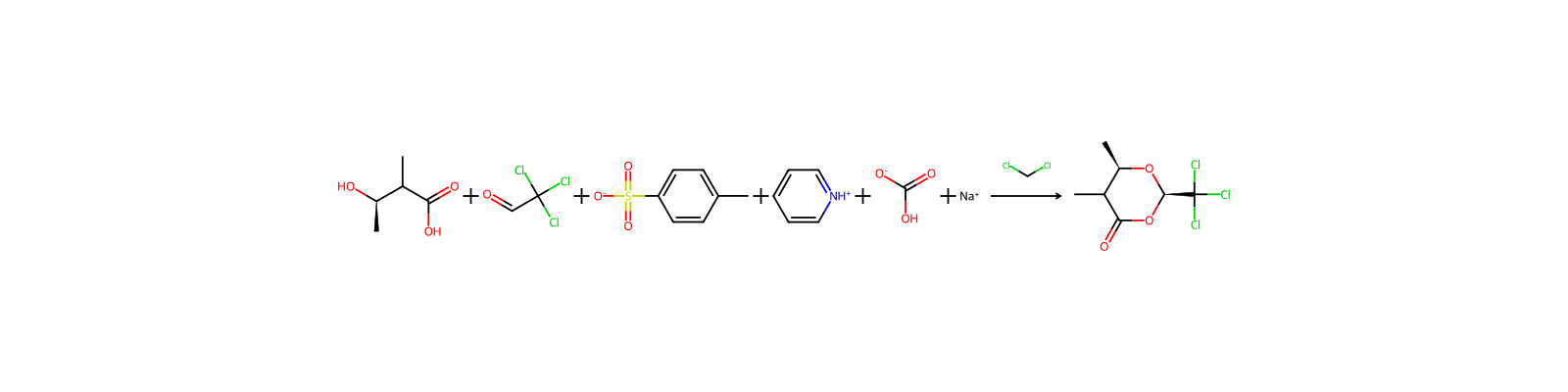
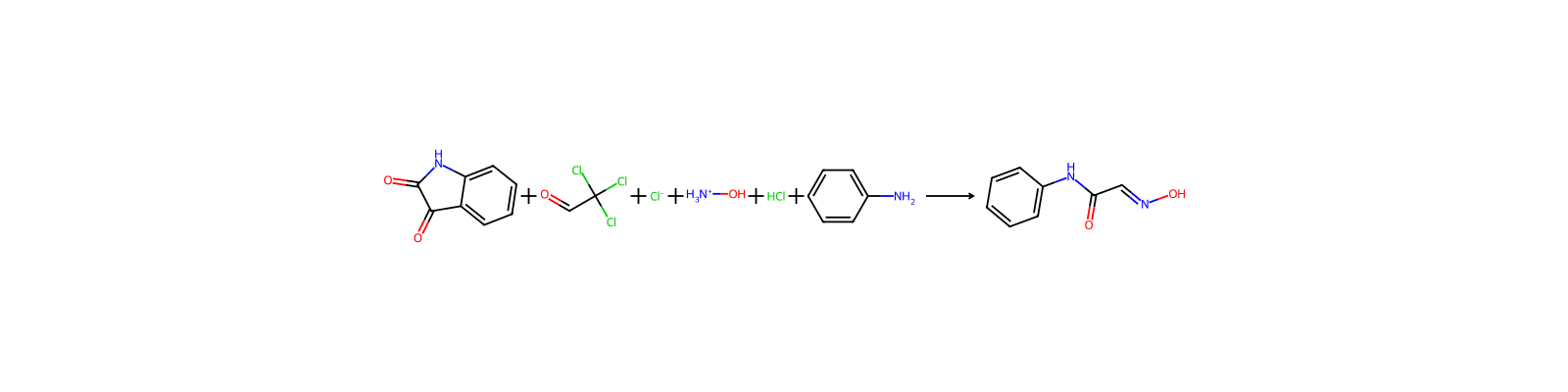
210건




연결된 노트
불러오는 중…