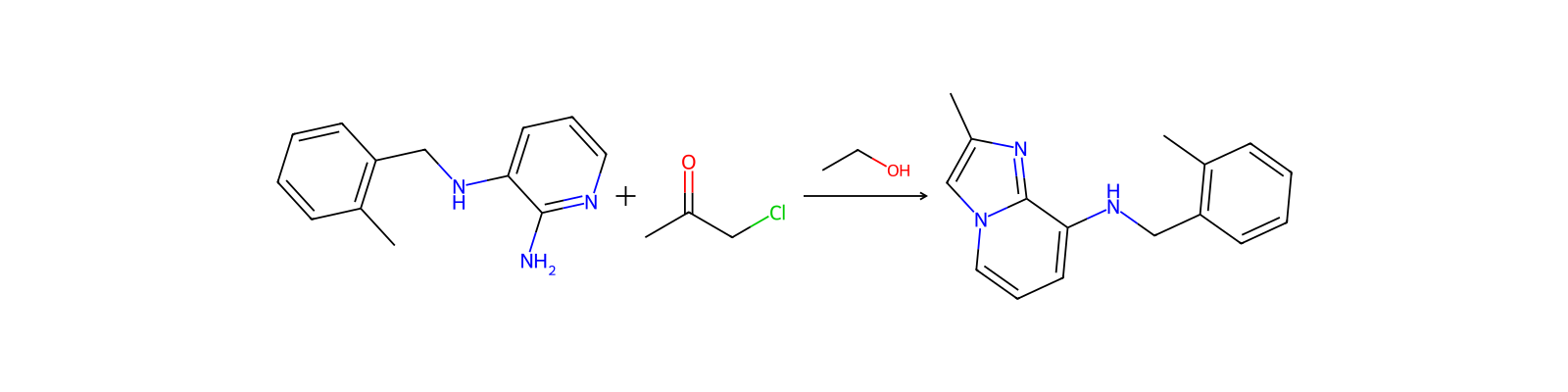

기본 정보
- 표준 SMILES
CC(=O)CCl- InChIKey
BULLHNJGPPOUOX-UHFFFAOYSA-N- 분자식
- C3H5ClO
- 평균 분자량
- 92.52 g/mol
- 단동위원소 질량
- 92.00289246
개요
Chloroacetone, stabilized appears as a yellow-colored liquid with an irritating pungent odor. Light sensitive, but stabilized with the addition of small amounts of water and/or calcium carbonate. Slightly soluble in water and denser than water. Vapors much heavier than air. Irritates skin and eyes. Very toxic by ingestion or inhalation. Used to make other chemicals. A lachrymator.
이름 및 식별자
- 우선 이름
- Chloroacetone
- IUPAC
- 1-chloropropan-2-one
- 현지명
- 클로로아세톤
- 영어명
- Chloroacetone
- 분자식
- C3H5ClO
- 분자량
- 92.52
이름 및 동의어
Chloroacetone1-Chloropropan-2-one78-95-51-ChloroacetoneMonochloroacetoneChloropropanoneAcetonyl chlorideChloro-2-propanone1-CHLORO-2-PROPANONEMonochloracetoneChloromethyl methyl ketoneChloracetone
이름 더 보기
1-클로로-2-프로판온클로로아세톤ToniteCholroacetoneChloroacetone (stabilized with MgO)CH3COCH2Cl
3-Chloro-2-propanoneAcetone, chloro-2-Propanone, 1-chloro-1-ChloropropanoneMonochloropropanoneA-Stoffalpha-Chloroacetone1-Chloro-2-ketopropane
데이터베이스 식별자
- CAS
78-95-5- PubChem CID
- 6571
- DTXSID
DTXSID0021547- ChEMBL
CHEMBL1231084- ChEBI
CHEBI:47220- UNII
- 60ZTR74268
- EC Number
- 201-161-1
- Nikkaji
- J1.487G
물성
구조 계산 물성
- XLogP
- 0.6
- 극성 표면적
- 17.1 Ų
- 수소 결합 공여자 수
- 0
- 수소 결합 수용자 수
- 1
- 회전 가능 결합 수
- 1
- 무거운 원자 수
- 5
- 형식 전하
- 0
- 복잡도
- 42.2
실험 및 물리화학적 성질
Chemical Classes
Other Classes -> Halogenated Ketones
Flammable agents - 3rd degree
SpringerMaterials PropertiesSchoenflies notation
LogP0.28
OdorPungent odor
Density
1.15 g/cu cm at 20 °C
Relative density (water = 1): 1.1
1.162 @ 20°C
Color/FormLiquid
Solubility
Miscible with alcohol, ether and chloroform. Soluble in 10 parts water (wet weight)
In water, 8.25X10+4 mg/L, temperature unspecified
Solubility in water, g/100ml at 20 °C: 10
Flash Point
82 °F
40 °C (open cup)
35 °C closed cup
35 °C c.c.
Boiling Point
248 °F (120 ° C)
119 °C
Turns dark and resinifies on prolonged exposure to light; may be stabilized by addition of 0.1% H2O or 1% CaCO3. BP: 61 °C at 50 mm Hg; 20 °C at 12 mm Hg
120 °C
119 °C @760 [mm Hg]
Decomposition
When heated to decomposition it emits highly toxic fumes.
It decomposes explosively during distillation.
Melting Point
-44.5 °C
Yellow needles from alcohol; mp: 124 °C /Chloroacetone 2,4-dihydrophenylhydrazone/
-45 °C
-44.5 °C
Vapor DensityRelative vapor density (air = 1): 3.2
물리화학적 성질
- 녹는점
- -44.5 °C · -44.5 °C
- 끓는 점
- 120 °C · 120 °C (lit.)
- 밀도
- 1.162 g/mL · 1.162 g/mL at 25 °C (lit.)
- 증기압
- 42 hPa · 42 hPa (20 °C)
- 굴절률
- 20 · n20/D 1.432(lit.)
- 인화점
- 82 °F · 82 °F
- 저장 조건
- 2 · 2-8°C
- 용해도
- 에 용해됨클로로포름, 메탄올 (약간 용해됨)
- 물리적 상태
- 액체
- 색상
- 투명한 노란색에서 황갈색까지
- Specific Gravity
- 1.162 · 1.162
- 수소이온지수(pH)
- 4.3 · 4.3 (124g/l, H2O, 20°C)
- 폭발한계
- 3.4 % · 3.4%(V)
- 수용성
- 124 g/L · 124 g/L (20 ºC)
- Merck
- 14 · 14,2114
- BRN
- 605369 · 605369
- Henry's Law Constant
- 5.8 · 5.8×10-1 mol/(m3Pa) at 25℃, Burkholder et al. (2019)
- Dielectric constant
- 29.8 · 29.8(20℃)
- 안정성
- 안정적인. 강한 산화제, 강한 염기와 호환되지 않습니다. 빛에 노출되면 변색될 수 있습니다. 고약한 냄새.
- InChI
- 1S/C3H5ClO/c1-3(5)2-4/h2H2,1H3
- InChIKey
- BULLHNJGPPOUOX-UHFFFAOYSA-N
- SMILES
- CC(=O)CCl
- LogP
- 2.7 at · 2.7 at 20℃
- NIST
- 2 · 2-Propanone, 1-chloro-(78-95-5)
- EPA
- Chloroacetone (78-95-5)
화학적 성질
colourless to dark yellow liquid
안전 및 규제
GHS 분류
GHS Classification
Danger
H226 (48.1%): Flammable liquid and vapor [Warning Flammable liquids]
P210, P233, P240, P241, P242, P243, P260, P261, P262, P264, P264+P265, P270, P271, P273, P280, P284, P301+P316, P302+P352, P303+P361+P353, P304+P340, P305+P351+P338, P316, P319, P320, P321, P330, P332+P317, P337+P317, P361+P364, P362+P364, P370+P378, P391, P403+P233, P403+P235, P405, and P501 (click each P-code to see the statement)
Aggregated GHS information provided per 241 reports by companies from 14 notifications to the ECHA C&L Inventory. Each notification may be associated with multiple companies.
Danger
H225: Highly Flammable liquid and vapor [Danger Flammable liquids]
유해성 정보
Hazards IdentificationToxic/poison by inhalation (TIH/PIH)
Regulatory Information
Chemical: 2-Propanone, 1-chloro-
2-Propanone, 1-chloro- is listed on the EPA's Chemical Data Reporting (CDR) system. Manufacturers and importers of 2-Propanone, 1-chloro- are required to report information about their production and use of this chemical to the EPA under the Toxic Substances Control Act (TSCA). (40 eCFR Part 711)
Status: Active Update: 09-07-2021 https://echa.europa.eu/registration-dossier/-/registered-dossier/32628
Chloroacetone: HSNO Approval: HSR002933 Approved with controls
The New Jersey Worker and Community Right to Know Act requires public and private employers to provide information about hazardous substances at their workplaces. (N.J.S.A. 34:5A-1 et. seq.)
DOT LabelPoison Inhalation Hazard Flammable Liquid Corrosive
Fire Hazards
Excerpt from ERG Guide 131 [Flammable Liquids - Toxic]:
· HIGHLY FLAMMABLE: Will be easily ignited by heat, sparks or flames.
Flammable. Gives off irritating or toxic fumes (or gases) in a fire. Above 35 °C explosive vapour/air mixtures may be formed.
Fire PotentialFlammable when exposed to heat or flame, or oxidizers.
Health Hazards
Excerpt from ERG Guide 131 [Flammable Liquids - Toxic]:
· TOXIC; may be fatal if inhaled, ingested or absorbed through skin.
Hazards Summary
A lacrimator, vesicant, and irritant of the respiratory tract; Causes lacrimation at 5 ppm and with continued exposure irritation of the skin and upper respiratory tract, but not pulmonary edema at low, irritating concentrations; [ACGIH] Causes lachrymation and severe irritation to the respiratory tract; [ICSC]
The major hazards encountered in the use and handling of 1-chloro-2-propanone stem from its toxicologic properties. Toxic by all routes (ie, inhalation, ingestion, and dermal contact), exposure to this colorless, pungent-smelling liquid may occur from its use in the syntheses of chlorofluoroacetones, perfumes, antioxidants, drugs, insecticides, and vinyl compounds. Effects from exposure may include contact burns to the skin and eyes, nausea, bronchospasm, delayed pulmonary edema, and death. The ACGIH recommends a Ceiling limit of 1 ppm for this compounds. Adequate ventilation to control airborne levels is necessary. However, in activities or situations where over-exposure may occur, wear a self-contained breathing apparatus, and full chemical protective clothing specifically recommended by the shipper or producer. If contact should occur, immediately flush affected skin or eyes with running water for at least 15 minutes, and remove contaminated clothing and shoes at the site. While 1-chloro-2-propanone does not ignite easily, it may explode in the heat of a fire. Also, its thermal degradation may give rise to fumes of phosgene. Fires involving 1-chloro-2-propanone may be extinguished with dry chemical, CO2, Halon, water spray, standard or alcohol foam, and water spray or fog. Prolonged unstabilized storage of this substance may lead to an explosive decomposition product. 1-Chloro-2-propanone should be stored in cool, dark areas, away from sources of ignition and oxidizing materials. Small spills of 1-chloro-2-propanone may be taken up with sand or other noncombustible absorbent and placed into containers for later disposal. Large spills should be diked far ahead of the spill area to prevent 1-chloro-2-propanone from entering water sources and sewers. Before implementing land disposal of waste 1-chloro-2-propanone, consult with environmental regulatory agencies for guidance.
DOT ID and Guide1695 131
Reactive GroupHalogenated Organic Compounds
UN ClassificationUN Hazard Class: 6.1; UN Subsidiary Risks: 3 and 8; UN Pack Group: I
Reactivity AlertsHighly Flammable
Reactivity Profile
CHLOROACETONE turns dark and resinifies on prolonged exposure to light [Merck]. This occurred in a bottle during storage for two years on a shelf in diffused light. A few days after the bottle was moved, it exploded [Ind. Eng. News 9: 184(1931)]. Is stabilized by addition of 0.1% water or 0.1% CaCO3.
안전 및 보호
Fire Fighting
Excerpt from ERG Guide 131 [Flammable Liquids - Toxic]:
Use water spray, powder, alcohol-resistant foam, carbon dioxide. In case of fire: keep drums, etc., cool by spraying with water.
First Aid Measures
Fresh air, rest. Half-upright position. Refer for medical attention.
Remove contaminated clothes. Rinse skin with plenty of water or shower. Refer for medical attention .
Rinse with plenty of water for several minutes (remove contact lenses if easily possible). Refer immediately for medical attention.
Rinse mouth. Do NOT induce vomiting. Give one or two glasses of water to drink. Refer for medical attention .
Accidental Release Measures
· CALL 911. Then call emergency response telephone number on shipping paper. If shipping paper not available or no answer, refer to appropriate telephone number listed on the inside back cover.
· ELIMINATE all ignition sources (no smoking, flares, sparks or flames) from immediate area.
First Aid
Excerpt from ERG Guide 131 [Flammable Liquids - Toxic]:
General First Aid:
Safe StorageStore only if stabilized. Fireproof. Separated from strong oxidants and food and feedstuffs. Keep in the dark.
Exposure Control and Personal Protection
· Wear positive pressure self-contained breathing apparatus (SCBA).
TIH (Toxic Inhalation Hazard) - Term used to describe gases and volatile liquids that are toxic when inhaled. Some are TIH materials themselves, e.g., chlorine, and some release TIH gases when spilled in water, e.g., chlorosilanes. [ERG 2016].
Fire Fighting Procedures
If material on fire or involved in fire: Do not extinguish fire unless flow can be stopped. Extinguish fire using agent suitable for type of surrounding fire. (Material itself does not burn or burns with difficulty.) Cool all affected containers with flooding quantities of water. Apply water from as far a distance as possible. Use foam, dry chemical, or carbon dioxide. Keep run-off water out of sewers and water sources. /Chloroacetone, stabilized/
Wear positive pressure self contained breathing apparatus. Wear appropriate chemical protective gloves, boots and goggles. /Chloroacetone, stabilized/
Storage ConditionsStore only if stabilized. Fireproof. Separated from strong oxidants, food and feedstuffs. Keep in the dark ... Above 35 °C use a closed system, ventilation, and explosion-proof electrical equipment.
Cleanup Methods
Environmental considerations - land spill: Dig a pit, pond, lagoon, holding area to contain liquid or solid material. /SRP: If time permits, pits, ponds, lagoons, soak holes, or holding areas should be sealed with an impermeable flexible membrane liner./ Dike surface flow using soil, sand bags, foamed polyurethane, or foamed concrete. Absorb bulk liquid with fly ash, cement powder, or commercial sorbents. /Chloroacetone, stabilized/
Environmental considerations - water spill: Use natural barriers or oil spill control booms to limit spill travel. Remove trapped material with suction hoses. /Chloroacetone, stabilized/
Environmental considerations - air spill: Apply water spray to knock down vapors. /Chloroacetone, stabilized/
Nonfire Spill ResponseExcerpt from ERG Guide 131 [Flammable Liquids - Toxic]:
Disposal Methods
SRP: The most favorable course of action is to use an alternative chemical product with less inherent propensity for occupational harm/injury/toxicity or environmental contamination. Recycle any unused portion of the material for its approved use or return it to the manufacturer or supplier. Ultimate disposal of the chemical must consider: the material's impact on air quality; potential migration in soil or water; effects on animal and plant life; and conformance with environmental and public health regulations.
Spillage Disposal
Remove all ignition sources. Evacuate danger area! Consult an expert! Personal protection: filter respirator for organic gases and vapours adapted to the airborne concentration of the substance. Ventilation. Collect leaking liquid in covered containers. Absorb remaining liquid in sand or inert absorbent. Then store and dispose of according to local regulations.
독성 정보
Environmental Fate
TERRESTRIAL FATE: Based on a classification scheme(1), an estimated Koc value of 5(SRC), determined from a structure estimation method(2), indicates that 1-chloro-2-propanone is expected to have very high mobility in soil(SRC). Volatilization of 1-chloro-2-propanone from moist soil surfaces is expected to be an important fate process(SRC) given a Henry's Law constant of 1.65X10⁻⁵ atm-cu m/mole(3). 1-Chloro-2-propanone is expected to volatilize from dry soil surfaces(SRC) based upon a vapor pressure of 12 mm Hg at 25 °C(4). 1-Chloro-2-propanone will hydrolyze in moist soil, releasing hydrochloric acid which is related to its irritation as a lachrymator(5). Biodegradation data in soil were not available(SRC, 2010).
AQUATIC FATE: Based on a classification scheme(1), an estimated Koc value of 5(SRC), determined from a structure estimation method(2), indicates that 1-chloro-2-propanone is not expected to adsorb to suspended solids and sediment(SRC). Volatilization from water surfaces is expected(3) based upon a Henry's Law constant of 1.65X10⁻⁵ atm-cu m/mole(4). Using this Henry's Law constant and an estimation method(3), volatilization half-lives for a model river and model lake are 2 and 19 days, respectively(SRC). According to a classification scheme(5), an estimated BCF of 3(SRC), from an estimated log Kow of 0.02(6) and a regression-derived equation(7), suggests the potential for bioconcentration in aquatic organisms is low(SRC). 1-Chloro-2-propanone will hydrolyze, releasing hydrochloric acid which is related to its irritation as a lachrymator(8). Hydrolysis rate constants at 25, 30 and 37 °C are 8X10⁻⁶, 2X10⁻⁵ and 6X10⁻⁵ /hr, respectively(9). Biodegradation data in water were not available(SRC, 2010).
ATMOSPHERIC FATE: According to a model of gas/particle partitioning of semivolatile organic compounds in the atmosphere(1), 1-chloro-2-propanone, which has a vapor pressure of 12 mm Hg at 25 °C(2), is expected to exist solely as a vapor in the ambient atmosphere. Vapor-phase 1-chloro-2-propanone is degraded in the atmosphere by reaction with photochemically-produced hydroxyl radicals(SRC); the half-life for this reaction in air is estimated to be 44 days(SRC), calculated from its rate constant of 3.7X10⁻¹³ cu cm/molecule-sec at 25 °C(SRC) that was derived using a structure estimation method(3). 1-Chloro-2-propanone contains chromophores that absorb at wavelengths >290 nm(4) and therefore may be susceptible to direct photolysis by sunlight(SRC).
Adverse EffectsDermatotoxin - Skin burns.
Exposure RoutesThe substance can be absorbed into the body by inhalation, through the skin and by ingestion.
Signs and Symptoms
Sore throat. Cough. Burning sensation. Shortness of breath.
MAY BE ABSORBED! Redness. Pain. Blisters.
Redness. Watering of the eyes. Pain. Burns.
Burning sensation in the throat and chest.
Effluent Concentrations1-Chloro-2-propanone was identified in the spent chlorination liquor from bleaching of sulphite pulp at high lignin content and in bleaching of sulphite pulp at normal lignin content after oxygen treatment at 0.1 g/ton pulp(1).
Soil Adsorption/Mobility
Using a structure estimation method based on molecular connectivity indices(1), the Koc of 1-chloro-2-propanone can be estimated to be 5(SRC). According to a classification scheme(2), this estimated Koc value suggests that 1-chloro-2-propanone is expected to have very high mobility in soil.
TSCA Test Submissions
Chloroacetone (CAS # 78-95-5) was evaluated for acute oral toxicity in male rats administered single doses (unspecified) by oral gavage. Treatment was associated with clinical signs of toxicity including rough coat, diarrhea, ataxia, prostration, and mortality consistent with an oral LD50 of 141 mg/kg. No further information was provided.
Chloroacetone (CAS # 78-95-5) was evaluated for acute oral toxicity in groups of male mice administered single doses (unspecified) by oral gavage. Treatment was associated with clinical signs of toxicity including rough coat, diarrhea, ataxia, prostration, and mortality consistent with an oral LD50 of 141 mg/kg. No further information was provided.
Chloroacetone (CAS # 78-95-5) was evaluated for systemic toxicity in guinea pigs administered single occluded applications (doses unspecified) upon depilated abdomens. Treatment was associated with signs of strong irritation, and mortality consistent with a dermal LD50 between 0.1 and 1 ml/kg. No further information was provided.
Chloroacetone (CAS # 78-95-5) was evaluated for dermal irritation in guinea pigs administered single occluded applications upon depilated abdomens. Treatment was associated with signs of strong irritation (unspecified). No further information was provided.
For more TSCA Test Submissions (Complete) data for 1-Chloro-2-propanone (9 total), please visit the HSDB record page.
Atmospheric ConcentrationsRURAL/REMOTE: 1-Chloro-2-propanone in the ambient air of Jones State Forest, TX at a concentration of 1.0-2.6 ppb(1).
Human Toxicity Excerpts
/HUMAN EXPOSURE STUDIES/ Chloroacetone was extremely effective as a war gas ... A concn of 2.3 mg/L (605 ppm) was found to be lethal after 10 min and 0.1 mg/L (26 ppm) is intolerable after one min of exposure.
/SIGNS AND SYMPTOMS/ The first effect /is/ lacrimation (at approximately 5 ppm) followed by irritation of the upper resp tract and a burning sensation on exposed skin. ... More serious effects, such as pulmonary edema, do not occur at these low irritating concn. Even small amt in the eyes may result in permanent damage.
/CASE REPORTS/ An employee that received direct exposure to hot chloroacetone required hospitalization; the vapors were immediately irritating to the eyes and upper resp tract, and the hot liq was immediately irritating to the skin. The immediate erythema appeared to subside; however, about 8 hr after exposure, the exposed areas began to blister, and 24 hr post exposure the exposed area had blistered completely. All signs and symptoms disappeared within 7 days, and there was no evidence of pulmonary edema despite irritation to the upper resp tract.
/CASE REPORTS/ Of 25 individuals who reported to health services as a result of exposure to chloroacetone, 8 showed evidence of eye irritation, 7 had localized dermal irritation, 1 showed contact dermatitis, and 9 did not present any clinical sign of exposure.
/BIOMONITORING/ Blood and urine samples were collected in 1990 from 10 people working in four dry cleaning shops in Croatia, where trichloroethylene was used as the cleaning solvent. The concentration of trichloroethylene in the air was 25-40 ppm [134-215 mg/cu m]. The mean blood levels of trichloroethylene were 0.38 umol/L (50 ug/L) on Monday morning (range, 0.15- 3.58 umol/L) [20-70 ug/L] and 3.39 umol/L [445 ug/L] on Wednesday afternoon (range, 0.46- 12.71 umol/L [60-1670 ug/L].
Artificial Pollution Sources
1-Chloro-2-propanone's production and use in the manufacturing of couplers for color photography, as an enzyme inactivator, intermediary in the manufacture of perfumes, antioxidants, drugs, insecticide formulations, as a selective solvent for separating diolefins, and as a proposed catalyst in tetraethyllead production(1) may result in its release to the environment through various waste streams(SRC). Its designation as a proposed tear gas for military and police use(1) will result in its direct release to the environment(SRC).
Carcinogen ClassificationNo indication of carcinogenicity to humans (not listed by IARC).
Environmental Bioconcentration
An estimated BCF of 3 was calculated in fish for 1-chloro-2-propanone(SRC), using an estimated log Kow of 0.02(1) and a regression-derived equation(2). According to a classification scheme(3), this BCF suggests the potential for bioconcentration in aquatic organisms is low(SRC).
안전 데이터
- wgk
- 3
- tsca
- TSCA listed
- rtecs
- UC0700000
- ridadr
- UN 1695
- 독성
- LD50 (14 day) in mice, rats (mg/kg): 127, 100 orally; LC50 (1 hr) in rats (ppm): 262 by inhalation (Sargent)
- HS 번호
- 29147000
- risk_code
- 10-24/25-26-36/37/38-50/53
- hazard_code
- T+,N,T,F,Xi
- safety_code
- 16-23-36/37/39-45-60-61-38-28A-26
- 포장분류
- I
- 위험 등급
- 6.1
- 기존화학 물질
- KE-05880
- F 고인화성물질
- 8-19
- 위험 참고 사항
- Irritant/Flammable/Toxic/Lachrymatory
- 자연 발화 온도
- 610 °C
- Hazard Classifications
- Acute Tox. 2 DermalAcute Tox. 2 InhalationAcute Tox. 3 OralAquatic Acute 1Aquatic Chronic 1Eye Dam. 1Flam. Liq. 3Skin Corr. 1BSTOT SE 3
- 스토리지 클래스
- 3 - Flammable liquids
- 유해 물질 데이터
- 78-95-5(Hazardous Substances Data)
화학 및 산업
약리 정보
Absorption, Distribution and Excretion... There is experimental animal evidence that chloroacetone is absorbed through the skin ....
용도 및 제조
Uses
Used as a catalyst for polymerization and an intermediate for organic synthesis; Used in 1914 as a war gas; [ACGIH]
Has been proposed as tear gas component for police and military use; in the manufacture of couplers for color photography; as enzyme inactivator; intermediate in the manufacture of perfumes, antioxidants, drugs; in insecticide formulations; in photopolymerization of vinyl compounds. Proposed as catalyst in tetraethyl lead production, as selective solvent for separating diolefins.
Organic synthesis; tear gas /former use/
Monochloroacetone was introduced in 1914 as a war gas, and presently it has a number of uses as a chemical intermediate.
CHEM INT FOR CHLOROFLUOROACETONES
For more Uses (Complete) data for 1-Chloro-2-propanone (9 total), please visit the HSDB record page.
ImpuritiesForms binary azeotropes with many organic liquids. Reacts with aryl Grignard reagents to form stilbenes.
U.S. Imports(1977) AT LEAST 4.54X10+5 G
U.S. Production
2023: 500,000 - <1,000,000 lb
(1977) AT LEAST 4.54X10+7 G
(1982) PROBABLY GREATER THAN 4.54X10+6 G
2-Propanone, 1-chloro- is listed as a High Production Volume (HPV) chemical (65FR81686). Chemicals listed as HPV were produced in or imported into the U.S. in >1 million pounds in 1990 and/or 1994. The HPV list is based on the 1990 Inventory Update Rule. (IUR) (40 CFR part 710 subpart B; 51FR21438).
Production volumes for non-confidential chemicals reported under the Inventory Update Rule. [Table#2800]
Production volume for non-confidential chemicals reported under the 2006 Inventory Update Rule. Chemical: 2-Propanone, 1-chloro-. Aggregated National Production Volume: < 500,000 lbs.
Consumption PatternsESSENTIALLY 100 % AS A CHEMICAL INTERMEDIATE
Industry UsesIntermediate
Methods of ManufacturingBy action of chlorine upon diketene. By chlorination of acetone.
Formulations/Preparations5% CaCO3 added as a stabilizer. May contain ca. 5% 1,1-dichloroacetone and/or mesityl oxide.
General Manufacturing Information
Pesticide, Fertilizer, and Other Agricultural Chemical Manufacturing
2-Propanone, 1-chloro-: ACTIVE
Reactions of chlorine with ethylene, propylene, acrolein or paraffin under simulated atmospheric conditions, including UV irradition, gave a large number of products, some more toxic than the initial compounds, for example 1-chloro-2-propanone.
응용 분야
용도Chloroacetone was used in the synthesis of double-chain nonionic surfactants with an acid decomposition function via acid-catalyzed condensation with fatty alcohols (octyl, decyl and dodecyl). It was also used in the synthesis of meso-tetramethyl tetrakis-(4-phenoxy acetone)calix[4]pyrrole. It can also be used to make dye couplers for color photography and used in the Feist-Benary synthesis of furans.
일반 설명A yellow-colored liquid with an irritating pungent odor. Light sensitive, but stabilized with the addition of small amounts of water and/or calcium carbonate. Slightly soluble in water and denser than water. Vapors much heavier than air. Irritates skin and eyes. Very toxic by ingestion or inhalation. Used to make other chemicals. A lachrymator.
상·하류 제품 정보
상류 원료
하류 제품
추가 설명
정의A lachrymator.
관련 반응
750건

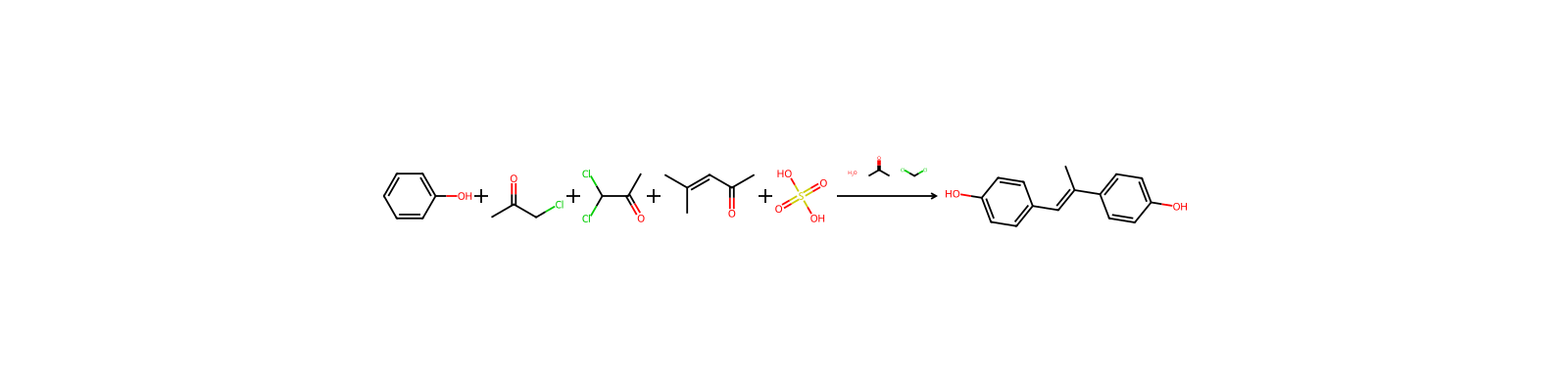

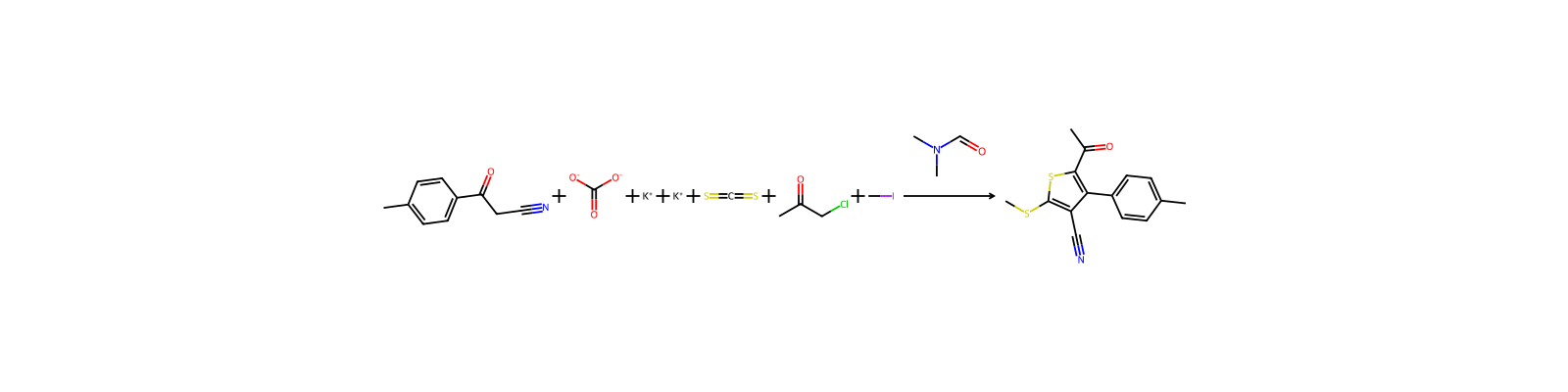


연결된 노트
불러오는 중…