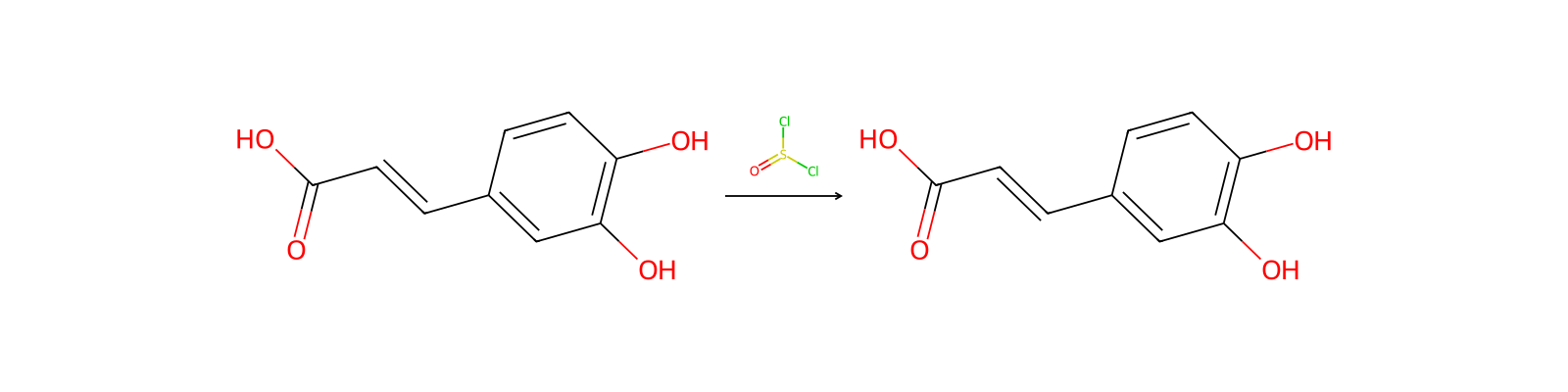

기본 정보
- 표준 SMILES
O=C(O)/C=C/c1ccc(O)c(O)c1- InChIKey
QAIPRVGONGVQAS-DUXPYHPUSA-N- 분자식
- C9H8O4
- 평균 분자량
- 180.16 g/mol
- 단동위원소 질량
- 180.04225874
개요
Caffeic Acid can cause cancer according to The World Health Organization's International Agency for Research on Cancer (IARC).
이름 및 식별자
- 우선 이름
- Caffeic Acid
- IUPAC
- (E)-3-(3,4-dihydroxyphenyl)prop-2-enoic acid
- 영어명
- trans-caffeic acid
- 분자식
- C9H8O4
- 분자량
- 180.16
이름 및 동의어
caffeic acid3,4-Dihydroxycinnamic acid331-39-53,4-Dihydroxybenzeneacrylic acid3-(3,4-Dihydroxyphenyl)-2-propenoic acidCinnamic acid, 3,4-dihydroxy-(E)-3-(3,4-dihydroxyphenyl)prop-2-enoic acid2-Propenoic acid, 3-(3,4-dihydroxyphenyl)-4-(2-Carboxyethenyl)-1,2-dihydroxybenzene3-(3,4-Dihydroxyphenyl)propenoic acid4-(2'-Carboxyvinyl)-1,2-dihydroxybenzeneNSC 57197
이름 더 보기
trans-Caffeic acidC01197AKOS B004050trans-Caffeaterans-Caffeicaci(E)-CAFFEIC ACIDRARECHEM BK HC T335TIMTEC-BB SBB006475LABOTEST-BB LT00233168
U2S3A33KVMNSC-57197NSC-623438CHEBI:36281trans-3,4-Dihydroxycinnamic AcidNSC57197DTXCID10231CHEBI:16433
데이터베이스 식별자
- CAS
331-39-5、501-16-6、71693-97-5- PubChem CID
- 689043
- DTXSID
DTXSID901316055- ChEMBL
CHEMBL145- ChEBI
CHEBI:36281- UNII
- U2S3A33KVM
- EC Number
- 206-361-2、689-473-8
- Nikkaji
- J1.524E、J309.143K
물성
구조 계산 물성
- XLogP
- 1.2
- 극성 표면적
- 77.8 Ų
- 수소 결합 공여자 수
- 3
- 수소 결합 수용자 수
- 4
- 회전 가능 결합 수
- 2
- 무거운 원자 수
- 13
- 형식 전하
- 0
- 복잡도
- 212
실험 및 물리화학적 성질
Chemical ClassesOther Classes -> Organic Acids
DrugsPharmaceuticals -> Listed in ZINC15
CosmeticsCosmetics ingredient -> Conditioning/Emollient
LogP
log Kow = 1.15
1.15
1.29
Color/FormYellow crystals from concentrated aqueous solutions. Alkaline solns turn from yellow to orange.
Solubility
less than 1 mg/mL at 72 °F (NTP, 1992)
Sparingly soluble in cold water. Freely soluble in hot water, cold alcohol.
DecompositionWhen heated to decomposition it emits acrid smoke and fumes.
Melting Point
433 to 437 °F (decomposes) (NTP, 1992)
Decomposes at 223-225 °C (Softens at 194 °C).
225 °C
Vapor Pressure0.00000025 [mmHg]
Physical Description
3,4-dihydroxycinnamic acid appears as yellow prisms or plates (from chloroform or ligroin) or pale yellow granules. Alkaline solutions turn from yellow to orange. (NTP, 1992)
Yellow solid; Slightly soluble in cold water, soluble in hot water; [Merck Index] Light yellow powder; [MSDSonline]
Solid
Dissociation Constants
4.62 (at 25 °C)
pKa = 4.62 at 25 °C
Collision Cross Section
129.9 Ų [M+H-H2O]+ [CCS Type: DT; Method: single field calibrated with Agilent tune mix (Agilent)]
128.84 Ų [M+H]+ [CCS Type: TW; Method: calibrated with polyalanine and drug standards]
133.2 Ų [M-H]-
물리화학적 성질
- 녹는점
- 211 · 211-213 °C (dec.)(lit.)
- 끓는 점
- 416.8 · 416.8±35.0 °C(Predicted)
- 밀도
- 1.478 · 1.478±0.06 g/cm3(Predicted)
- 저장 조건
- 2 · Storage temp. 2-8°C
- 용해도
- 50 mg/mL · 에탄올: 50mg/mL
- 물리적 상태
- 가루
- 산도 계수 (pKa)
- 4.58 · 4.58±0.10(Predicted)
- 색상
- 노란색에서 황갈색까지
- BRN
- 1954563 · 1954563
- 주요 응용
- 음식 및 음료
- InChI
- 1S/C9H8O4/c10-7-3-1-6(5-8(7)11)2-4-9(12)13/h1-5,10-11H,(H,12,13)/b4-2+
- InChIKey
- QAIPRVGONGVQAS-DUXPYHPUSA-N
- SMILES
- OC(=O)\C=C\c1ccc(O)c(O)c1
- LogP
- 1.42 · 1.420 (est)
화학적 성질
Pale yellow crystalline powder
안전 및 규제
GHS 분류
GHS Classification
Warning
H315 (62.7%): Causes skin irritation [Warning Skin corrosion/irritation]
P203, P261, P264, P264+P265, P271, P280, P302+P352, P304+P340, P305+P351+P338, P318, P319, P321, P332+P317, P337+P317, P362+P364, P403+P233, P405, and P501 (click each P-code to see the statement)
Aggregated GHS information provided per 83 reports by companies from 12 notifications to the ECHA C&L Inventory. Each notification may be associated with multiple companies.
Warning
H319 (97.6%): Causes serious eye irritation [Warning Serious eye damage/eye irritation]
유해성 정보
Regulatory Information
Hazard Traits - Carcinogenicity
3,4-Dihydroxycinnamic acid: Does not have an individual approval but may be used under an appropriate group standard
Fire HazardsFlash point data for this chemical are not available; however, it is probably combustible. (NTP, 1992)
Health HazardsACUTE/CHRONIC HAZARDS: When heated to decomposition this compound emits acrid smoke and fumes. (NTP, 1992)
Hazards SummaryCauses epithelial hyperplasia in forestomach of rats given 20 g/kg of diet for 4 weeks; [HSDB] An irritant; Targets G.I. tract and kidneys; [MSDSonline]
Reactive GroupAcids, Carboxylic
Reactivity Profile
3,4-DIHYDROXYCINNAMIC ACID is a carboxylic acid. Carboxylic acids donate hydrogen ions if a base is present to accept them. They react in this way with all bases, both organic (for example, the amines) and inorganic. Their reactions with bases, called "neutralizations", are accompanied by the evolution of substantial amounts of heat. Neutralization between an acid and a base produces water plus a salt. Insoluble carboxylic acids react rapidly with aqueous solutions containing a chemical base and dissolve as the neutralization generates a soluble salt. Carboxylic acids in aqueous solution and liquid or molten carboxylic acids can react with active metals to form gaseous hydrogen and a metal salt. Such reactions occur in principle for solid carboxylic acids as well, but are slow if the solid acid remains dry. Even "insoluble" carboxylic acids may absorb enough water from the air and dissolve sufficiently in it to corrode or dissolve iron, steel, and aluminum parts and containers. Carboxylic acids, like other acids, react with cyanide salts to generate gaseous hydrogen cyanide. The reaction is slower for dry, solid carboxylic acids. Insoluble carboxylic acids react with solutions of cyanides to cause the release of gaseous hydrogen cyanide. Flammable and/or toxic gases and heat are generated by the reaction of carboxylic acids with diazo compounds, dithiocarbamates, isocyanates, mercaptans, nitrides, and sulfides. Carboxylic acids, especially in aqueous solution, also react with sulfites, nitrites, thiosulfates (to give H2S and SO3), dithionites (SO2), to generate flammable and/or toxic gases and heat. Their reaction with carbonates and bicarbonates generates a harmless gas (carbon dioxide) but still heat. Like other organic compounds, carboxylic acids can be oxidized by strong oxidizing agents and reduced by strong reducing agents. These reactions generate heat. A wide variety of products is possible. Like other acids, carboxylic acids may initiate polymerization reactions; like other acids, they often catalyze (increase the rate of) chemical reactions.
Air and Water ReactionsInsoluble in water.
Hazard Classes and Categories
Skin Irrit. 2 (62.7%)
Eye Irrit. 2A (97.6%)
Shipment Methods and Regulations
PRECAUTIONS FOR "CARCINOGENS": Procurement ... of unduly large amt ... should be avoided. To avoid spilling, carcinogens should be transported in securely sealed glass bottles or ampoules, which should themselves be placed inside strong screw-cap or snap-top container that will not open when dropped & will resist attack from the carcinogen. Both bottle & the outside container should be appropriately labelled. ... National post offices, railway companies, road haulage companies & airlines have regulations governing transport of hazardous materials. These authorities should be consulted before ... material is shipped. /Chemical Carcinogens/
PRECAUTIONS FOR "CARCINOGENS": When no regulations exist, the following procedure must be adopted. The carcinogen should be enclosed in a securely sealed, watertight container (primary container), which should be enclosed in a second, unbreakable, leakproof container that will withstand chem attack from the carcinogen (secondary container). The space between primary & secondary container should be filled with absorbent material, which would withstand chem attack from the carcinogen & is sufficient to absorb the entire contents of the primary container in the event of breakage or leakage. Each secondary container should then be enclosed in a strong outer box. The space between the secondary container & the outer box should be filled with an appropriate quantity of shock-absorbent material. Sender should use fastest & most secure form of transport & notify recipient of its departure. If parcel is not received when expected, carrier should be informed so that immediate effort can be made to find it. Traffic schedules should be consulted to avoid ... arrival on weekend or holiday ... /Chemical Carcinogens/
안전 및 보호
Fire FightingFires involving this material can be controlled with a dry chemical, carbon dioxide or Halon extinguisher. (NTP, 1992)
First Aid
EYES: First check the victim for contact lenses and remove if present. Flush victim's eyes with water or normal saline solution for 20 to 30 minutes while simultaneously calling a hospital or poison control center. Do not put any ointments, oils, or medication in the victim's eyes without specific instructions from a physician. IMMEDIATELY transport the victim after flushing eyes to a hospital even if no symptoms (such as redness or irritation) develop.
Cleanup Methods
PRECAUTIONS FOR "CARCINOGENS": A high-efficiency particulate arrestor (HEPA) or charcoal filters can be used to minimize amt of carcinogen in exhausted air ventilated safety cabinets, lab hoods, glove boxes or animal rooms ... Filter housing that is designed so that used filters can be transferred into plastic bag without contaminating maintenance staff is avail commercially. Filters should be placed in plastic bags immediately after removal ... The plastic bag should be sealed immediately ... The sealed bag should be labelled properly ... Waste liquids ... should be placed or collected in proper containers for disposal. The lid should be secured & the bottles properly labelled. Once filled, bottles should be placed in plastic bag, so that outer surface ... is not contaminated ... The plastic bag should also be sealed & labelled. ... Broken glassware ... should be decontaminated by solvent extraction, by chemical destruction, or in specially designed incinerators. /Chemical Carcinogens/
Nonfire Spill Response
SMALL SPILLS AND LEAKAGE: Should a spill occur while you are handling this chemical, FIRST REMOVE ALL SOURCES OF IGNITION, then you should dampen the solid spill material with 60-70% ethanol and transfer the dampened material to a suitable container. Use absorbent paper dampened with 60-70% ethanol to pick up any remaining material. Seal the absorbent paper, and any of your clothes, which may be contaminated, in a vapor-tight plastic bag for eventual disposal. Solvent wash all contaminated surfaces with 60-70% ethanol followed by washing with a soap and water solution. Do not reenter the contaminated area until the Safety Officer (or other responsible person) has verified that the area has been properly cleaned.
Disposal Methods
PRECAUTIONS FOR "CARCINOGENS": There is no universal method of disposal that has been proved satisfactory for all carcinogenic compounds & specific methods of chem destruction ... published have not been tested on all kinds of carcinogen-containing waste. ... summary of avail methods & recommendations ... /given/ must be treated as guide only. /Chemical Carcinogens/
PRECAUTIONS FOR "CARCINOGENS": ... Incineration may be only feasible method for disposal of contaminated laboratory waste from biological expt. However, not all incinerators are suitable for this purpose. The most efficient type ... is probably the gas-fired type, in which a first-stage combustion with a less than stoichiometric air:fuel ratio is followed by a second stage with excess air. Some ... are designed to accept ... aqueous & organic-solvent solutions, otherwise it is necessary ... to absorb soln onto suitable combustible material, such as sawdust. Alternatively, chem destruction may be used, esp when small quantities ... are to be destroyed in laboratory. /Chemical Carcinogens/
PRECAUTIONS FOR "CARCINOGENS": HEPA (high-efficiency particulate arrestor) filters ... can be disposed of by incineration. For spent charcoal filters, the adsorbed material can be stripped off at high temp & carcinogenic wastes generated by this treatment conducted to & burned in an incinerator. ... LIQUID WASTE: ... Disposal should be carried out by incineration at temp that ... ensure complete combustion. SOLID WASTE: Carcasses of lab animals, cage litter & misc solid wastes ... should be disposed of by incineration at temp high enough to ensure destruction of chem carcinogens or their metabolites. /Chemical Carcinogens/
PRECAUTIONS FOR "CARCINOGENS": ... Small quantities of ... some carcinogens can be destroyed using chem reactions ... but no general rules can be given. ... As a general technique ... treatment with sodium dichromate in strong sulfuric acid can be used. The time necessary for destruction ... is seldom known ... but 1-2 days is generally considered sufficient when freshly prepd reagent is used. ... Carcinogens that are easily oxidizable can be destroyed with milder oxidative agents, such as saturated soln of potassium permanganate in acetone, which appears to be a suitable agent for destruction of hydrazines or of compounds containing isolated carbon-carbon double bonds. Concn or 50% aqueous sodium hypochlorite can also be used as an oxidizing agent. /Chemical Carcinogens/
PRECAUTIONS FOR "CARCINOGENS": Carcinogens that are alkylating, arylating or acylating agents per se can be destroyed by reaction with appropriate nucleophiles, such as water, hydroxyl ions, ammonia, thiols & thiosulfate. The reactivity of various alkylating agents varies greatly ... & is also influenced by sol of agent in the reaction medium. To facilitate the complete reaction, it is suggested that the agents be dissolved in ethanol or similar solvents. ... No method should be applied ... until it has been thoroughly tested for its effectiveness & safety on material to be inactivated. For example, in case of destruction of alkylating agents, it is possible to detect residual compounds by reaction with 4(4-nitrobenzyl)-pyridine. /Chemical Carcinogens/
Preventive Measures
PRECAUTIONS FOR "CARCINOGENS": Smoking, drinking, eating, storage of food or of food & beverage containers or utensils, & the application of cosmetics should be prohibited in any laboratory. All personnel should remove gloves, if worn, after completion of procedures in which carcinogens have been used. They should ... wash ... hands, preferably using dispensers of liq detergent, & rinse ... thoroughly. Consideration should be given to appropriate methods for cleaning the skin, depending on nature of the contaminant. No standard procedure can be recommended, but the use of organic solvents should be avoided. Safety pipettes should be used for all pipetting. /Chemical Carcinogens/
PRECAUTIONS FOR "CARCINOGENS": In animal laboratory, personnel should remove their outdoor clothes & wear protective suits (preferably disposable, one-piece & close-fitting at ankles & wrists), gloves, hair covering & overshoes. ... Clothing should be changed daily but ... discarded immediately if obvious contamination occurs ... /also,/ workers should shower immediately. In chemical laboratory, gloves & gowns should always be worn ... however, gloves should not be assumed to provide full protection. Carefully fitted masks or respirators may be necessary when working with particulates or gases, & disposable plastic aprons might provide addnl protection. If gowns are of distinctive color, this is a reminder that they should not be worn outside of lab. /Chemical Carcinogens/
PRECAUTIONS FOR "CARCINOGENS": ... Operations connected with synth & purification ... should be carried out under well-ventilated hood. Analytical procedures ... should be carried out with care & vapors evolved during ... procedures should be removed. ... Expert advice should be obtained before existing fume cupboards are used ... & when new fume cupboards are installed. It is desirable that there be means for decreasing the rate of air extraction, so that carcinogenic powders can be handled without ... powder being blown around the hood. Glove boxes should be kept under negative air pressure. Air changes should be adequate, so that concn of vapors of volatile carcinogens will not occur. /Chemical Carcinogens/
PRECAUTIONS FOR "CARCINOGENS": Vertical laminar-flow biological safety cabinets may be used for containment of in vitro procedures ... provided that the exhaust air flow is sufficient to provide an inward air flow at the face opening of the cabinet, & contaminated air plenums that are under positive pressure are leak-tight. Horizontal laminar-flow hoods or safety cabinets, where filtered air is blown across the working area towards the operator, should never be used ... Each cabinet or fume cupboard to be used ... should be tested before work is begun (eg, with fume bomb) & label fixed to it, giving date of test & avg air-flow measured. This test should be repeated periodically & after any structural changes. /Chemical Carcinogens/
For more Preventive Measures (Complete) data for CAFFEIC ACID (9 total), please visit the HSDB record page.
Personal Protective Equipment (PPE)
RECOMMENDED RESPIRATOR: Where the neat test chemical is weighed and diluted, wear a NIOSH-approved half face respirator equipped with an organic vapor/acid gas cartridge (specific for organic vapors, HCl, acid gas and SO2) with a dust/mist filter. (NTP, 1992)
PRECAUTIONS FOR "CARCINOGENS": ... Dispensers of liq detergent /should be available./ ... Safety pipettes should be used for all pipetting. ... In animal laboratory, personnel should ... wear protective suits (preferably disposable, one-piece & close-fitting at ankles & wrists), gloves, hair covering & overshoes. ... In chemical laboratory, gloves & gowns should always be worn ... however, gloves should not be assumed to provide full protection. Carefully fitted masks or respirators may be necessary when working with particulates or gases, & disposable plastic aprons might provide addnl protection. ... Gowns ... /should be/ of distinctive color, this is a reminder that they are not to be worn outside the laboratory. /Chemical Carcinogens/
독성 정보
Interactions
Caffeic acid enhanced the uptake of radioactive glucose into C2C12 cells in a concentration-dependent manner. Similar effect of phenylephrine on the uptake of radioactive glucose was also observed in C2C12 cells. Prazosin attenuated the action of caffeic acid in a way parallel to the blockade of phenylephrine.
Female ICR/Ha mice, nine weeks of age, were fed a diet containing 0.06 mmol/g (10 g/kg of diet) caffeic acid (purity, 99%). From experimental day 8, the mice were also given 1 mg benzo(a)pyrene by gavage twice a week for four weeks. The diet containing caffeic acid was removed three days after the last benzo(a)pyrene treatment. Mice were killed at 211 days of age. In the 17 effective mice, the number of forestomach tumors (> or = 1 mm)/mouse (histology unspecified) was significantly decreased by caffeic acid (p < 0.05) (3.1 versus 5.0 tumors/mouse among 38 mice treated with benzo(a)pyrene alone).
Environmental Fate
TERRESTRIAL FATE: Based on a classification scheme(1), an estimated Koc value of 100(SRC), determined from a log Kow of 1.15(2) and a regression-derived equation(3), indicates that caffeic acid is expected to have high mobility in soil(SRC). Volatilization of caffeic acid from moist soil surfaces is not expected to be an important fate process(SRC) given an estimated Henry's Law constant of 1.4X10⁻¹⁶ atm-cu m/mole(SRC), using a fragment constant estimation method(4). Caffeic acid is not expected to volatilize from dry soil surfaces(SRC) based upon an estimated vapor pressure of 2.5X10⁻⁷ mm Hg(SRC), determined from a fragment constant method(5). C-14 ring-labeled caffeic acid underwent approximately 55 percent mineralization after two weeks in a sandy loam mixed culture(6).
AQUATIC FATE: Based on a classification scheme(1), an estimated Koc value of 100(SRC), determined from a log Kow of 1.15(2) and a regression-derived equation(3), indicates that caffeic acid is not expected to adsorb to suspended solids and sediment(SRC). Volatilization from water surfaces is not expected(3) based upon an estimated Henry's Law constant of 1.4X10⁻¹⁶ atm-cu m/mole(SRC), developed using a fragment constant estimation method(4). The pKa of caffeic acid is 4.62(5), indicating that this compound will primarily exist in anion form in the environment and anions generally do not adsorb to organic carbon and clay more strongly than their neutral counterparts(6). Caffeic acid is degraded in natural sunlit waters by reaction with photochemically-produced hydroxyl radicals(SRC); the half-life for this reaction in water is 11 days(SRC) at an aquatic hydroxyl radical concentration of 3X10-17 M(7), calculated from its rate constant of 2.41X10+10 per M-sec at 25 °C(8). According to a classification scheme(9), an estimated BCF of 3.2(SRC), from its log Kow(2) and a regression- derived equation(10), suggests the potential for bioconcentration in aquatic organisms is low(SRC).
ATMOSPHERIC FATE: According to a model of gas/particle partitioning of semivolatile organic compounds in the atmosphere(1), caffeic acid, which has an estimated vapor pressure of 2.5X10⁻⁷ mm Hg at 25 °C(SRC), determined from a fragment constant method(2), will exist in both the vapor and particulate phases in the ambient atmosphere. Vapor-phase caffeic acid is degraded in the atmosphere by reaction with photochemically-produced hydroxyl radicals(SRC); the half-life for this reaction in air is estimated to be 8.6 hrs(SRC), calculated from its rate constant of 4.5X10⁻¹¹ cu cm/molecule-sec at 25 °C(SRC) that was derived using a structure estimation method(3). Caffeic acid has been shown to absorb light at 325 nm and 442 nm, indicating the potential for direct photolysis(4).
Food Survey Values
Caffeic acid has been detected in thyme, basil, aniseed, caraway, rosemery tarragon, marojoram, savory, sage, dill, and absinthe at concentrations greater than 1000 ppm(1).
Caffeic acid has been detected in the following vegetables (fresh weight): broad bush bean hulls (12-14 mg/kg); broad bush bean unripe fruit (less than 0.5-9 mg/kg); red beetroot whole vegetable (3-4 mg/kg); red beetroot outside (5 mg/kg); red beetroot heart (4 mg/kg); sugar beetroot whole vegetable (3-4 mg/kg); Broccoli florets (8 mg/kg and 10 mg/kg); brussels sprouts (34-44 mg/kg and 35-50 mg/kg); Chinese cabbage outer leaves (11-42 mg/kg and 52 mg/kg); Chinese cabbage inner leaves (4-11 mg/kg and 11 mg/kg); red cabbage outer leaves (6-11 mg/kg and 16-24 mg/kg); red cabbage head (12-16 mg/kg and 16-17 mg/kg); savoy cabbage outer leaves (9-14 mg/kg and 4-7 mg/kg); savoy cabbage head (4-7 mg/kg); white cabbage outer leaves (less than 0.5-31 mg/kg and less than 0.5-62 mg/kg); white cabbage head (less than 0.5-10 mg/kg and less than 0.5-12 mg/kg); carrot whole vegetable (18-96 mg/kg); carrot rind (27-141 mg/kg); carrot central cylinder (8-73 mg/kg); cauliflower leaves (9-29 mg/kg, 58 mg/kg, and 90 mg/kg); cauliflower florets (1-3 mg/kg, 4 mg/kg, and 6 mg/kg); celery whole vegetable (89-104 mg/kg); celery outside (87-122 mg/kg); celery heart (84-109 mg/kg); celery root (168 mg/kg); chives green leaves (less than 0.5 mg/kg); fennel tuber (100 mg/kg); garlic dry bulb skin (less than 20 mg/kg); garlic fleshy tissue of bulb (14 mg/kg and 7 mg/kg); horseradish whole vegetable (10-11 mg/kg); horseradish peel (14 mg/kg); horseradish heart (4 mg/kg); kale stalk and midrib (9 mg/kg and 13 mg/kg); kale leaf and stalk (77 mg/kg and 92 mg/kg); kale leaf and blade (125 mg/kg, 51-136 mg/kg, and 305 mg/kg); kohlrabi leaves (15-66 mg/kg and 34-113 mg/kg); kohlrabi tuber (less than 0.5-2 mg/kg and 2-5 mg/kg); lettuce leaves (767-1570 mg/kg and 804-1440 mg/kg); onion green leaves (less than 0.5-15 mg/kg, less than 0.5 mg/kg, and 19 mg/kg); parsley whole plant (6 mg/kg); parsley leaf (less than 0.5 mg/kg); pea unripe seeds (less than 0.5-1 mg/kg); pea hulls (less than 0.5 mg/kg); potato peel (163- 280 mg/kg, 167-196 mg/kg, and 205 mg/kg); potato whole tuber (3- 30 mg/kg, 5-33 mg/kg, and 8 mg/kg); radish whole vegetable (13-17 mg/kg); radish peel (47-52 mg/kg); radish heart (3-9 mg/kg); radish leaves (394-396 mg/kg); black radish whole vegetable (5-8 mg/kg); black radish peel (6-7 mg/kg); black radish heart (7 mg/kg); black radish leaves (163-247 mg/kg and 156-220 mg/kg); rhubarb leaves (8-13 mg/kg, 6 mg/kg, and 16 mg/kg); rhubarb outer stem (less than 0.5 mg/kg); rutabaga whole vegetable (2 mg/kg); rutabaga peel (3 mg/kg); rutabaga heart (4 mg/kg); scorzonera whole vegetable (49-212 mg/kg); scorzonera outside (106 mg/kg); scorzonera heart (62 mg/kg)(1).
Caffeic acid has been detected in the following fruits (fresh weight): Blueberry (83-588 mg/kg); corgette (10 mg/kg); black currant (14-93 mg/kg); red currant (8- 16 mg/kg); white currant (10-21 mg/kg); ripe eggplant (360-436 mg/kg; green gooseberry (24-32 mg/kg); red gooseberry (29-32 mg/kg); yellow gooseberry (23-27 mg/kg); grapefruit (11-40 mg/kg); grapefruit peel (14-51 mg/kg); lemon (13-27 mg/kg); lemon peel (16-35 mg/kg); orange (19-50 mg/kg); orange peel (12-36 mg/kg); green sweet pepper (3-7 mg/kg); red sweet pepper (4-10 mg/kg); strawberry (less than 0.5-14 mg/kg); sweet melon (less than 0.5 mg/kg); sweet melon peel (3 mg/kg); unripe green tomato (13-79 mg/kg and 44 mg/kg); ripe red tomato (32-97 mg/kg); tomato peel (97 mg/kg); tomato pulp (41 mg/kg); tomato seeds (119 mg/kg); watermelon or watermelon peel (less than 0.5 mg/kg)(1). Caffeic acid has also been detected in sweet potatoes, sunflower seeds and meal, soya beans, tobacco, spinach, apricots, coconut, and rolled oats(1). Caffeic acid is also found in coffee, fruit juices, and wine(1).
Adverse EffectsIARC Carcinogen - Class 3: Chemicals are not classifiable by the International Agency for Research on Cancer.
Plant Concentrations
Caffeic acid is found in the following species of plants: Umbelliferae, Cruciferae, Cucurbitaceae, Polygonaceae, Compositae, Labiatea, Solanaceae, Leguminosae, Saxifragaceae, Caprifoliaceae, Theaceae, and Valerianaceae(1). Caffeic acid is found in the following plants used to make medicines: Davallia mariesii Moore (Korean medicine for the cold, neuralgia, and stomach cancer; Chinese medicine for lumbago, rheumatism, toothache, and tinnitus); Carissa spinarum L. (Indian purgative and rheumatism treatment); Ixora javanica (Indian antitumor agent, gastric sedative, intestinal antiseptic, and astringent); Centaurium umbellatum Gil. (medicinal plant used in many countries); Artemisia rubripes Nakai (Chinese medicinal plant); Crataegus oxyacantha L. (cardiovascular effects); Cytisus scoparium L.; Melissa officinalis L. (antiviral, antitumor); Phleum pratense L.; Argyreaia speciosa Sweet (hypotensive and spasmolytic activity); Foeniculum vulgare; Veronica chamaedrys L.; and Arctium lappa L. (diuretic)(1).
Medical Surveillance
PRECAUTIONS FOR "CARCINOGENS": Whenever medical surveillance is indicated, in particular when exposure to a carcinogen has occurred, ad hoc decisions should be taken concerning ... /cytogenetic and/or other/ tests that might become useful or mandatory. /Chemical Carcinogens/
Soil Adsorption/Mobility
The Koc of caffeic acid is estimated as 100(SRC), using a log Kow of 1.15(1) and a regression-derived equation(2). According to a classification scheme(3), this estimated Koc value suggests that caffeic acid is expected to have high mobility in soil. The pKa of caffeic acid is 4.62(4), indicating that this compound will primarily exist in anion form in the environment and anions generally do not adsorb to organic carbon and clay more strongly than their neutral counterparts(5).
Natural Pollution SourcesCaffeic acid has been detected in wood smoke condensates(1).
Artificial Pollution SourcesCaffeic acid's production as a laboratory chemical and its use in the development of asthmatic and allergenic drugs(1) may result in its release to the environment through various waste streams(SRC).
Environmental Biodegradation
AEROBIC: C-14 ring-labeled caffeic acid underwent approximately 55 percent mineralization after two weeks in a sandy loam mixed culture indicating the potential for biodegradation in soil(1).
ANAEROBIC: A possible anearobic degradation pathway for caffeic acid is conversion to protocatechuic acid, then to 4-hydroxybenzoic acid, and then to central metabolites(1).
Carcinogen Classification
Caffeic acid
Group 2B: Possibly carcinogenic to humans
Volume 56: (1993) Some Naturally Occurring Substances: Food Items and Constituents, Heterocyclic Aromatic Amines and Mycotoxins
1993
1992
2B, possibly carcinogenic to humans. (L135)
Environmental Bioconcentration
An estimated BCF of 3.2 was calculated for caffeic acid(SRC), using a log Kow of 1.15(1) and a regression-derived equation(2). According to a classification scheme(3), this BCF suggests the potential for bioconcentration in aquatic organisms is low(SRC).
안전 데이터
- wgk
- 3
- rtecs
- GD8950000
- risk_code
- 36/37/38-40-63-68-36
- hazard_code
- Xn
- safety_code
- 26-36/37/39-36/37
- Hazard Classifications
- Carc. 2
- 스토리지 클래스
- 11 - Combustible Solids
화학 및 산업
약리 정보
Mechanism of Action
Caffeic acid phenethyl ester (CAPE) was synthesized from caffeic acid and phenethyl alcohol (ratio 1:5) at room temperature with dicyclohexyl carbodiimide (DCC) as a condensing reagent. The yield was about 38%. CAPE was found to arrest the growth of human leukemia HL-60 cells. It also inhibits DNA, RNA and protein synthesis in HL-60 cells with IC50 of 1.0 M, 5.0 M and 1.5 M, respectively.
In an attempt to understand the antihyperglycemic action of caffeic acid, the myoblast C2C12 cells were employed to investigate the glucose uptake in the present study. Caffeic acid enhanced the uptake of radioactive glucose into C2C12 cells in a concentration-dependent manner. Similar effect of phenylephrine on the uptake of radioactive glucose was also observed in C2C12 cells. Prazosin attenuated the action of caffeic acid in a way parallel to the blockade of phenylephrine. Effect of caffeic acid on alpha1-adrenoceptors was further supported by the displacement of [3H]prazosin binding in C2C12 cells. Moreover, the glucose uptake-increasing action of phenylephrine in C2C12 cells was inhibited by the antagonists of alpha1A-adrenoceptors, both tamsulosin and WB 4101, but not by the antagonist of alpha1B-adrenoceptors, chlorethylclonidine (CEC). The presence of alpha1A-adrenoceptors in C2C12 cells can thus be considered. Similar inhibition of the action of caffeic acid was also obtained in C2C12 cells co-incubating these antagonists. An activation of alpha1A-adrenoceptors seems responsible for the action of caffeic acid in C2C12 cells. In the presence of U73312, the specific inhibitor of phospholipase C, caffeic acid-stimulated uptake of radioactive glucose into C2C12 cells was reduced in a concentration-dependent manner and it was not affected by U73343, the negative control of U73312. Moreover, chelerythrine and GF 109203X diminished the action of caffeic acid at concentrations sufficient to inhibit protein kinase C. Therefore, the obtained data suggest that an activation of alpha1A-adrenoceptors in C2C12 cells by caffeic acid may increase the glucose uptake via phospholipase C-protein kinase C pathway.
Caffeic acid (CA, 3,4-dihydroxycinnamic acid), at 2% in the diet, had been shown to be carcinogenic in forestomach and kidney of F344 rats and B6C3F1 mice. Based on its occurrence in coffee and numerous foods and using a linear interpolation for cancer incidence between dose 0 and 2%, the cancer risk in humans would be considerable. In both target organs, tumor formation was preceded by hyperplasia, which could represent the main mechanism of carcinogenic action. The dose-response relationship for this effect was investigated in male F344 rats after 4-week feeding with CA at different dietary concentrations (0, 0.05, 0.14, 0.40, and 1.64%). Cells in S-phase of DNA replication were visualized by immunohistochemical analysis of incorporated 5-bromo-2'-deoxyuridine (BrdU), 2 hr after intraperitoneal injection. In the forestomach, both the total number of epithelial cells per millimeter section length and the unit length labeling index of BrdU-positive cells (ULLI) were increased, about 2.5-fold, at 0.40 and 1.64%. The lowest concentration (0.05%) had no effect. At 0.14%, both variables were decreased by about one-third. In the kidney, the labeling index in proximal tubular cells also indicated a J-shaped (or U-shaped) dose response with a 1.8-fold increase at 1.64%. In the glandular stomach and in the liver, which are not target organs, no dose-related effect was seen. The data show a good correlation between the organ specificity for cancer induction and stimulation of cell division. With respect to the dose-response relationship and the corresponding extrapolation of the animal tumor data to a human cancer risk, a linear extrapolation appears not to be appropriate.
Metabolism/Metabolites
Enzymes involved in its /caffeic acid/ metabolism have not been identified. In the following, caffeic (CA), chlorogenic (CGA), and dihydrocaffeic (DHCA) acids were incubated with hepatocytes and shown to undergo metabolism by cytochrome P450, catechol-O-methyltransferase (COMT), and beta-oxidation enzymes. Ferulic (FA) or dihydroferulic (DHFA) acids, formed as the result of CA- or DHCA-O-methylation by COMT, were also O-demethylated by CYP1A1/2 but not CYP2E1. DHCA or DHFA also underwent side chain dehydrogenation to form CA and FA, respectively, which was prevented by thioglycolic acid, an inhibitor of the beta-oxidation enzyme acyl CoA dehydrogenase. The rates of glutathione conjugate formation catalyzed by NADPH/microsomes (CYP2E1) in decreasing order DHCA>CA>CGA trend which was in reverse order to the rates of their O-methylation by COMT. The CA- and DHCA-o-quinones formed by NADPH/P450 likely inhibited COMT but can readily form glutathione conjugates. CA, DHCA and DHFA were inter-metabolized to each other and to FA by isolated rat hepatocytes whereas FA was metabolized only to CA but not to DHCA or DHFA. CA, DHCA, FA, DHFA and CGA showed a dose-dependent hepatocyte toxicity and the LD(50) (2 h), determined were in decreasing order of effectiveness DHCA>CA>DHFA>CGA>FA. In summary, evidence has been provided that O-methylation, GSH conjugation, hydrogenation and dehydrogenation are involved in the hepatic metabolism of CA and DHCA. The O-methylation pathway for CA and DHCA is a detoxification route whereas o-quinones formation catalyzed by P450 is the toxification route.
In rats, chlorogenic acid is hydrolysed in the stomach and intestine to caffeic and quinic acids. A number of metabolites have been identified. Glucuronides of meta-coumaric acid and meta-hydroxyhippuric acid appear to be the main metabolites in humans. After oral administration of caffeic acid to human volunteers, O-methylated derivatives (ferulic, dihydroferulic and vanillic acids) were excreted rapidly in the urine, while the meta-hydroxyphenyl derivatives appeared later. The dehydroxylation reactions were ascribed to the action of intestinal bacteria.
Caffeic Acid has known human metabolites that include (2S,3S,4S,5R)-6-[4-[(E)-2-carboxyethenyl]-2-hydroxyphenoxy]-3,4,5-trihydroxyoxane-2-carboxylic acid and (2S,3S,4S,5R)-6-[5-[(E)-2-carboxyethenyl]-2-hydroxyphenoxy]-3,4,5-trihydroxyoxane-2-carboxylic acid.
MeSH Pharmacological ClassificationNaturally occurring or synthetic substances that inhibit or retard oxidation reactions. They counteract the damaging effects of oxidation in animal tissues.
Tissue LocationsEpidermis
용도 및 제조
Uses
A constituent of plants; Can be isolated form green or roasted coffee; [Merck Index] No known significance as commercial product; [HSDB] Caffeic acid is found in many fruits, vegetables, seasonings and beverages consumed by humans, principally in conjugated forms such as chlorogenic acid. [IARC]
Caffeic acid is not know to be a significant commercial product. It is available as the trans isomer in research quantities at purities ranging from 97% to greater than 99%; the cis isomer of caffeic acid is not available commercially.
This is a toxic chemical found in cigarettes or generated by tobacco combustion.
Methods of Manufacturing
Constituent of plants, probably occurs in plants only in conjugated forms, e.g., chlorogenic acid.
Isolation from green coffee: Wolfrom et al., J. Agr. Food Chem. 8, 58 (1960); from roasted coffee: Krasemann, Arch. Pharm. 293, 721 (1960). Formation by acid hydrolysis of chlorogenic acid: Fiedler, Arzneimittel-Forsch. 4, 41 (1954); Whiting, Carr, Nature 180, 1479 (1957); Guern, C.A. 61, 9965h (1964).
Household ProductsCosmetics product ingredient: Caffeic acid
응용 분야
용도trans-Caffeic Acid is a useful synthetic intermediate. It was used as a reactant to synthesize N-caffeoylphenalkylamide derivatives as bacterial efflux pump inhibitors. It is also used to prepare caffeic acid phenethyl ester analogs with antitumor structures.
일반 설명This substance is a primary reference substance with assigned absolute purity (considering chromatographic purity, water, residual solvents, inorganic impurities). The exact value can be found on the certificate. Produced by PhytoLab GmbH & Co. KG
공급사50 곳
衢州润东化工有限公司0570-8789886 18892685668 · [email protected]
苏州道澜生物医药科技有限公司15952404857 · [email protected]
艾吉析科技(上海)有限公司17717235263 · [email protected]
上海麦克林生化科技股份有限公司021-50706066 15221275939 · [email protected]
成都彼样生物科技有限公司18108052721 · [email protected]
杭州品高化工有限公司0571-87658025 · [email protected]
江苏艾康生物医药研发有限公司025-66061636 19370895928 · [email protected]
武汉众志诚生物技术有限公司13628624121 13628604890 · [email protected]
Dayang Chem (Hangzhou) Co.,Ltd.+86-0571-88938639 17705817739 · [email protected]
上海钰源生物化学有限公司021-13814116 13814116708 · [email protected]
湖北丹鼎医药科技有限公司17701422019 17701422019 · [email protected]
武汉易泰科技有限公司上海分公司18930552037 · [email protected]
安耐吉化学&3A(安徽泽升科技有限公司)021-58432009 400-005-6266 · [email protected]
梯希爱(上海)化工贸易有限公司021-61109150 · [email protected]
上海瀚鸿科技股份有限公司021-54306202 13764082696 · [email protected]
湖北魏氏化学试剂股份有限公司027-59102966 18717199209 · [email protected]
济南鸿康达化工有限公司0531-88901705 18753193522 · [email protected]
上海沛灵生物科技有限公司13127581762 13127581762 · [email protected]
武汉丰泰威远科技有限公司027-87465837 19945049750 · [email protected]
佛山宝诺生物科技有限公司0757-85921206 18520245316 · [email protected]
厦门欣达诺生物科技有限公司0592-6266840 15750707980 · [email protected]
Apeloa Pharmaceutical Co., Ltd.+86-0571-87635730 +8615858229168 · [email protected]
TargetMol 中国(陶术生物)400-821-0310 15002144251 · [email protected]
PT CHEM GROUP LIMITED+86-85511178; +86-85511178 · [email protected]
Labnetwork lnc.+86-27-50766799 +86-18062016861 · [email protected]
雷丁试剂0510-85629785 18013409632 · [email protected]
天津普西唐生物医药科技有限公司010-60605840 · [email protected]
上海孚一生物科技有限公司+86 (21) 61124340
梯尔希(南京)药物研发有限公司18012923235 · [email protected]
Sigma-Aldrich西格玛奥德里奇(上海)贸易有限公司021-61415566 800-8193336 · [email protected]
武汉天植生物技术有限公司18607101326 15172504745 · [email protected]
XIAMEN EQUATION CHEMICAL CO.,LTD+86-5926515854 +86-18060954864 · [email protected]
武汉峰耀同辉化学制品有限公司027-87466205 15377579727 · [email protected]
厦门志信化学有限公司+86-5922680277 +86-13806087780 · [email protected]
北京建强伟业科技有限公司(FUSION弗珍试剂品牌)0531-88924771 15614660963 · [email protected]
泰安嘉岳生物化工有限公司15318151873 · [email protected]
Alfa Chemistry+1-5166625404 · [email protected]
OpChem(Changzhou) Co.,Ltd.+86-18112346326 · [email protected]
EMMX Biotechnology LLC888-539-0666 · [email protected]
陕西缔都医药化工有限公司+86-29-81139210 +86-17392587031 · [email protected]
上海炎泽化工有限公司15345144255 19901447308 · [email protected]
武汉克米克生物医药技术有限公司027-13163388153 13163388153 · [email protected]
南京博米尔生物科技有限公司025-83453382-8005 · [email protected]
上海澄绍生物科技有限公司021-61847300 13341622919 · [email protected]
巴师傅(上海)生物医药科技有限公司60662071 18117346937 · [email protected]
上海泰坦科技股份有限公司18616708014 · [email protected]
杭州洁汉化工有限公司+86-571-86217390; +8618058761490 · [email protected]
武汉峰耀同辉化学制品有限公司027-87466105 15377573527 · [email protected]
河南天孚化工有限公司+86-0371-55170693 +86-19937530512 · [email protected]
厦门盈融达化工有限公司+86-0592-6210733 · [email protected]
관련 반응
37건


연결된 노트
불러오는 중…