홈MCP워크벤치Skills
홈워크벤치알림마이페이지
llms.txt · MCP 가이드개인정보처리방침 · 이용약관 · 지원v1.8.0
  1. 홈
  2. /화합물

tert-부틸페놀

2-Tert-Butylphenol

HCID 6923
새 노트새 반응견적 요청하기
인쇄 미리보기

데이터를 보충하는 중입니다. 잠시 후 페이지를 새로 고치면 최신 내용을 볼 수 있습니다

기본 정보개요이름 및 식별자물성안전 및 규제화학 및 산업관련 반응화합물 노트
부분 구조 검색유사 구조 찾기

기본 정보

CAS
27178-34-3
표준 SMILES
CC(C)(C)c1ccccc1O
InChIKey
WJQOZHYUIDYNHM-UHFFFAOYSA-N
분자식
C10H14O
평균 분자량
150.22 g/mol
단동위원소 질량
150.10446507

개요

2-tert-Butylphenol is an alkylbenzene.

이름 및 식별자

우선 이름
2-Tert-Butylphenol
IUPAC
2-tert-butylphenol
현지명
tert-부틸페놀
영어명
tert-butylphenol
분자식
C10H14O
분자량
150.21756

이름 및 동의어

2-TERT-BUTYLPHENOL88-18-62-t-Butylphenolo-tert-Butylphenolo-t-ButylphenolPhenol, 2-(1,1-dimethylethyl)-Phenol, o-tert-butyl-2-(1,1-Dimethylethyl)phenol2-tert-Butyl-1-hydroxybenzeneDTXSID2026525Phenol, o-(tert-butyl)-NL2FPV3N0Z
이름 더 보기
tert-부틸페놀(1,1-dimethylethyl)-Phenoltert-butyl phenol (mixed isomers)
Benzene, 1-tert-butyl-2-hydroxy-DTXCID206525RefChem:910268201-807-22-(tert-butyl)phenolTERT-BUTYLPHENOLPhenol, (1,1-dimethylethyl)-27178-34-3

데이터베이스 식별자

CAS
27178-34-3、88-18-6
PubChem CID
6923
DTXSID
DTXSID2026525
ChEMBL
CHEMBL108851
ChEBI
CHEBI:34305
UNII
NL2FPV3N0Z
EC Number
201-807-2、248-300-2
Nikkaji
J44.174K

물성

구조 계산 물성보충 중

XLogP
3.3
극성 표면적
20.2 Ų
수소 결합 공여자 수
1
수소 결합 수용자 수
1
회전 가능 결합 수
1
무거운 원자 수
11
형식 전하
0
복잡도
123

실험 및 물리화학적 성질

Chemical ClassesOther Classes -> Phenols
SpringerMaterials Properties13C nuclear magnetic resonance spectrum
FragrancesFragrance Ingredient (Phenol, 2-(1,1-dimethylethyl)-) -> IFRA transparency List
LogP · 2건

log Kow = 3.31

3.3

Density · 2건

0.9783 @ 20 °C/4 °C

Relative density (water = 1): 0.98

Color/Form · 2건

LIGHT YELLOW LIQUID

Amber-colored liquid

Solubility · 4건

SOL IN ALCOHOL; VERY SOL IN ETHER; SOL IN ALKALI, CARBON TETRACHLORIDE

SOL IN ISOPENTANE, TOLUENE & ETHYL ALCOHOL

INSOL IN WATER

Solubility in water, g/100ml at 20 °C: 0.2 (poor)

Flash Point · 3건

110 °C

230 °F OC

80 °C c.c.

Boiling Point · 2건

223 °C @ 760 mm Hg

223 °C

안전 및 규제

안전 정보는 참고용이며, 공급업체의 물질안전보건자료(SDS), 관련 법규 및 전문가 평가를 대체하지 않습니다.

GHS 분류

GHS Classification · 6건

Danger

H302 (99.4%): Harmful if swallowed [Warning Acute toxicity, oral]

P260, P261, P262, P264, P264+P265, P270, P271, P273, P280, P284, P301+P317, P301+P330+P331, P302+P352, P302+P361+P354, P304+P340, P305+P351+P338, P305+P354+P338, P316, P317, P320, P321, P330, P332+P317, P337+P317, P361+P364, P362+P364, P363, P391, P403+P233, P405, and P501 (click each P-code to see the statement)

Aggregated GHS information provided per 798 reports by companies from 16 notifications to the ECHA C&L Inventory. Each notification may be associated with multiple companies.

Danger

H302 (100%): Harmful if swallowed [Warning Acute toxicity, oral]

유해성 정보

Regulatory Information · 5건

Chemical: Phenol, 2-(1,1-dimethylethyl)-

Phenol, 2-(1,1-dimethylethyl)- is listed on the EPA's Chemical Data Reporting (CDR) system. Manufacturers and importers of Phenol, 2-(1,1-dimethylethyl)- are required to report information about their production and use of this chemical to the EPA under the Toxic Substances Control Act (TSCA). (40 eCFR Part 711)

Status: Active Update: 21-07-2021 https://echa.europa.eu/registration-dossier/-/registered-dossier/14446

Phenol, (1,1-dimethylethyl)-: Does not have an individual approval but may be used as a component in a product covered by a group standard. It is not approved for use as a chemical in its own right.

2-t-Butylphenol: Does not have an individual approval but may be used under an appropriate group standard

Other Safety InformationEvaluation - Propyl and butyl phenols
Fire HazardsCombustible. Above 80 °C explosive vapour/air mixtures may be formed.
Hazards Summary · 1건

Causes somnolence, tremor, and respiratory depression in lethal-dose feeding studies of rats; [RTECS] A moderate skin and eye irritant; Emergency treatment: irritants; [HSDB] A corrosive substance that can cause injury to the skin and eyes; A respiratory tract irritant; [ICSC] A corrosive substance that can cause injury to the skin, eyes, and respiratory tract; May be absorbed through skin; Inhalation may cause chemical pneumonitis; [MSDSonline]

화학 및 산업

용도 및 제조

Uses · 6건

Used as a chemical intermediate for synthetic resins, plasticizers, surface-active agents, perfumes, antioxidants, and agrochemicals; Also used as an antioxidant for aviation gasoline; [HSDB]

Petroleum Production and Refining [Category: Industry]

CHEMICAL INTERMEDIATE FOR SYNTHETIC RESINS, PLASTICIZERS, SURFACE-ACTIVE AGENTS, PERFUMES, & OTHER PRODUCTS

PERMISSIBLE ANTIOXIDANT FOR AVIATION GASOLINE

2-t-Butylphenol is a starting material for the synthesis of antioxidants and agrochemicals. Fragrance compounds are made from cis-2-t-butylcyclohexanol which is obtained by hydrogenation of 2-t-butylphenol in the presence of catalysts.

Derivatives: 2-t-butylcyclohexyl acetate; dinoterb; ethylene glycol bis(3,3-bis(3-t-butyl-4-hydroxyphenyl)butyrate); 2,2'-methylenebis(4-ethyl-6-t-butyl-phenol)

U.S. Production2023: 1,000,000 - <8,500,000 lb
Industry UsesIntermediate
Methods of Manufacturing · 3건

Isobutylene + phenol (orthoalkylation; coproduced with 2,6-di-t-butylphenol

2-t-Butylphenol is obtained as the main alkylation product if phenol is reacted with isobutene in the presence of sulfonated polystyrene-polydivinylbenzene ion-exchange resins. Reaction of phenol and isobutene in a 1:0.42 molar ratio at 95 °C gives a product mixture. ... 2-t-Butylphenol is obtained in a purity of 99% by distillation. 2-t-Butylphenol is formed with relatively high selectivity by reaction of phenol and isobutene over a gamma aluminum trioxide-catalyst that has been tabletted with 10% graphite and preconditioned by heating to 650 °C in an air stream. ... The selectivity for 2-t-butylphenol is 88% based on phenol conversion.

2-t-Butylphenol is formed with relatively high selectivity by reaction of phenol and isobutene over a gamma aluminum trioxide-catalyst that has been tabletted with 10% graphite and preconditioned by heating to 650 °C in an air stream. ... The selectivity for 2-t-butylphenol is 88% based on phenol conversion.

Use ClassificationFragrance Ingredients
General Manufacturing Information

관련 반응

170건
반응 기록 만들기
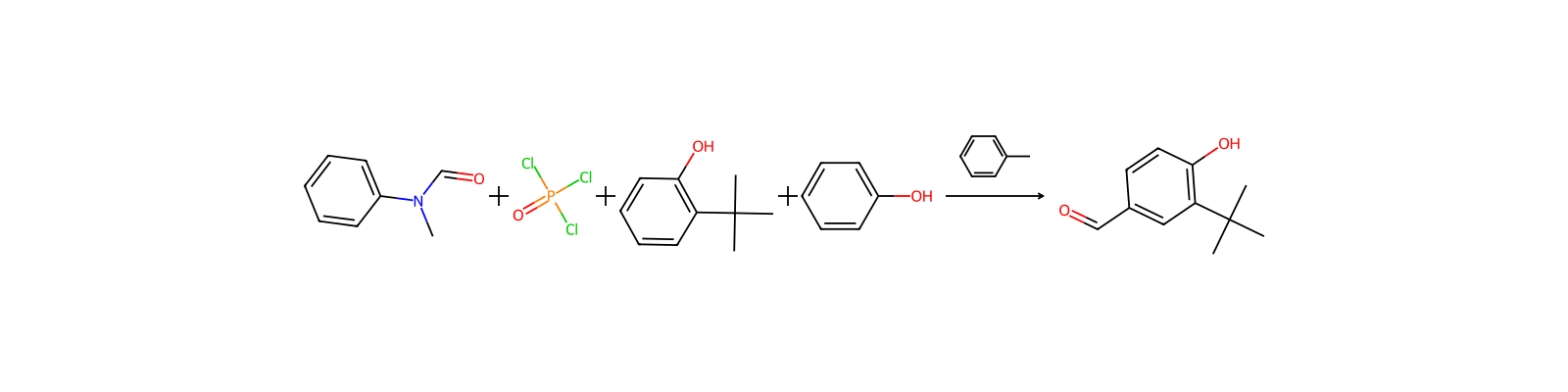
HRID 2951 반응식
HRID 2951반응물로uspto-grants-1998_03
HRID 2953 반응식
HRID 2953반응물로uspto-grants-1998_03
HRID 2954 반응식
HRID 2954반응물로uspto-grants-1998_03
HRID 4183 반응식
HRID 4183반응물로uspto-grants-1988_02
HRID 19216 반응식
HRID 19216반응물로uspto-grants-2010_06
HRID 51092 반응식
HRID 51092반응물로uspto-grants-2004_03
HRID 53267 반응식
HRID 53267반응물로uspto-grants-1997_04
HRID 73996 반응식
HRID 73996반응물로uspto-grants-2014_09
1 / 22 페이지

화합물 노트

불러오는 중…

이 페이지에서기본 정보개요이름 및 식별자물성안전 및 규제화학 및 산업관련 반응화합물 노트
더보기
새 노트새 반응견적 요청하기
Melting Point · 2건

-6.8 °C

-6.8 °C

Vapor DensityRelative vapor density (air = 1): 5.2
Vapor Pressure · 3건

0.00015 [mmHg]

1.5X10⁻⁴ mm Hg @ 25 °C

Vapor pressure, Pa at 20 °C: 5

물리화학적 성질

EPA
Phenol, (1,1-dimethylethyl)- (27178-34-3)
UN ClassificationUN Hazard Class: 8; UN Pack Group: III
Chemical DangersReacts violently with strong oxidants, bases, acid anhydrides and acid chlorides. Attacks copper and its alloys.
Physical DangersThe vapour is heavier than air.
Packaging and LabellingDo not transport with food and feedstuffs. Marine pollutant.
Hazard Classes and Categories · 3건

Acute Tox. 4 (100%)

Acute Tox. 4 (99.4%)

Flammable liquids - Category 4

Shipment Methods and Regulations · 3건

No person may /transport,/ offer or accept a hazardous material for transportation in commerce unless that person is registered in conformance ... and the hazardous material is properly classed, described, packaged, marked, labeled, and in condition for shipment as required or authorized by ... /the hazardous materials regulations (49 CFR 171-177)./

The International Air Transport Association (IATA) Dangerous Goods Regulations are published by the IATA Dangerous Goods Board pursuant to IATA Resolutions 618 and 619 and constitute a manual of industry carrier regulations to be followed by all IATA Member airlines when transporting hazardous materials.

The International Maritime Dangerous Goods Code lays down basic principles for transporting hazardous chemicals. Detailed recommendations for individual substances and a number of recommendations for good practice are included in the classes dealing with such substances. A general index of technical names has also been compiled. This index should always be consulted when attempting to locate the appropriate procedures to be used when shipping any substance or article.

Shipping Name/ Number DOT/UN/NA/IMO · 3건

UN 3145; Alkyl phenols, liquid, NOS

UN 2430; Alkyl phenols, solid, NOS

IMO 8.0; Alkyl phenols, liquid or solid, NOS

안전 및 보호

Fire FightingUse powder, carbon dioxide, foam.
First Aid Measures · 4건

Fresh air, rest. Half-upright position. Refer for medical attention.

Remove contaminated clothes. Rinse skin with plenty of water or shower. Refer for medical attention .

First rinse with plenty of water for several minutes (remove contact lenses if easily possible), then refer for medical attention.

Rinse mouth. Give one or two glasses of water to drink. Do NOT induce vomiting. Refer for medical attention .

Safe StorageSeparated from strong oxidants, strong bases, acid anhydrides, acid chlorides, metals and food and feedstuffs.
Fire Fighting ProceduresIf material involved in fire: Extinguish fire using agent suitable for type of surrounding fire. (Material itself does not burn or burns with difficulty.) Keep run-off water out of sewers and water sources. /Butyl phenols, liquid/
Disposal Methods · 1건

SRP: At the time of review, criteria for land treatment or burial (sanitary landfill) disposal practices are subject to significant revision. Prior to implementing land disposal of waste residue (including waste sludge), consult with environmental regulatory agencies for guidance on acceptable disposal practices.

Spillage Disposal · 1건

Personal protection: chemical protection suit including self-contained breathing apparatus. Do NOT let this chemical enter the environment. Collect leaking liquid in sealable plastic containers. Carefully collect remainder. Then store and dispose of according to local regulations.

Preventive Measures · 2건

If material not on fire and not involved in fire: Keep material out of water sources and sewers. Build dikes to contain flow as necessary. Attempt to stop leak if without undue personnel hazard. /Butyl phenols, liquid/

Personnel protection: keep upwind. Avoid breathing vapors. ... Do not handle broken packages unless wearing appropriate personal protective equipment. Avoid bodily contact with the material. /Butyl phenols, liquid/

Eye PreventionWear face shield or eye protection in combination with breathing protection.
Fire PreventionNO open flames. Above 80 °C use a closed system and ventilation.
Inhalation RiskEvaporation at 20 °C is negligible; a harmful concentration of airborne particles can, however, be reached quickly on spraying.
Skin PreventionProtective gloves. Protective clothing.
Exposure PreventionPREVENT GENERATION OF MISTS! IN ALL CASES CONSULT A DOCTOR!

독성 정보

InteractionsINHIBITORY EFFECTS OF 18 SYNTHETIC PHENOLIC CMPD, ADDED TO DIET, ON BENZO[A]PYRENE-INDUCED NEOPLASIA OF THE FORESTOMACH OF FEMALE MICE WERE DETERMINED. GROUP OF CMPD WITH WEAKER INHIBITORY ACTION INCLUDED 2-TERT-BUTYLPHENOL.
Environmental Fate · 3건

TERRESTRIAL FATE: Based on a recommended classification scheme(1), an estimated Koc value of 1500(SRC), determined from an experimental log Kow(2) and a recommended regression-derived equation(3), indicates that 2-t-butylphenol will have low mobility in soil(SRC). Limited data, mainly derived by analogy to 4-t-butylphenol, indicate that 2-t-butylphenol may be resistant to biodegradation(SRC). 4-t-Butylphenol (at 30 mg/L) was not biodegraded over a 2 week period using an activated sludge inoculum(4); in river and sea water 4-t-butylphenol showed 11% biodegradation over 3 days(5). However, resting cells of a Pseudomonas strain obtained by selective enrichment with 4-hydroxybenzoate as the sole carbon source, were able to biodegrade 2-t-butylphenol (oxygen uptake rate 26 nmol O2/min/mg protein)(6). Volatilization of 2-t-butylphenol from moist soil surfaces would be slow(SRC) given an estimated Henry's Law constant of 1.4X10⁻⁶ atm-cu m/mole(7,SRC).

AQUATIC FATE: Based on a recommended classification scheme(1), an estimated Koc value of 1500(SRC), determined from an experimental log Kow(2) and a recommended regression-derived equation(3), indicates that 2-t-butylphenol would adsorb to suspended solids and sediment(SRC) in the water. 2-t-Butylphenol would volatilize slowly from water surfaces based on an estimated Henry's Law constant of 1.4X10⁻⁶ atm-cu m/mole(SRC), developed using a fragment constant estimation method(4). Estimated half-lives for a model river and model lake are 31 and 230 days, respectively(3,SRC). An estimated BCF value of 190(3,SRC), from an experimental log Kow(2), suggests that 2-t-butylphenol may bioconcentrate in aquatic organisms(SRC) according to a recommended classification scheme(5). Limited data, mainly derived by analogy to 4-t-butylphenol, indicate that 2-t-butylphenol may be resistant to biodegradation(SRC). 4-t-Butylphenol (at 30 mg/L) was not biodegraded over a 2 week period using an activated sludge inoculum(6); in river and sea water 4-t-butylphenol showed 11% biodegradation over 3 days(7).

ATMOSPHERIC FATE: According to a suggested classification scheme(1), an experimental vapor pressure of 1.5X10⁻⁴ mm Hg at 25 °C(2) indicates that 2-t-butylphenol will exist in both the vapor and particulate phases in the ambient atmosphere(SRC). Vapor-phase 2-t-butylphenol is degraded in the atmosphere by reaction with photochemically produced hydroxyl radicals(SRC); the half-life for this reaction in air is estimated to be about 9.5 hours(3,SRC). Particulate-phase 2-t-butylphenol may be physically removed from the air by wet and dry deposition(SRC).

Adverse EffectsDermatotoxin - Skin burns.
Exposure RoutesThe substance can be absorbed into the body by inhalation, through the skin and by ingestion.
Signs and Symptoms · 4건

Cough. Sore throat. Shortness of breath.

Redness. Pain. Burning sensation. Skin burns.

Redness. Pain. Severe deep burns.

Burning sensation in the throat and chest. Abdominal pain. Shock or collapse.

Effluent Concentrations2-t-Butylphenol was reported in the finished water from an advanced wastewater treatment plant at Lake Tahoe, CA at unreported concentrations(1).
ICSC Environmental DataThe substance is toxic to aquatic organisms.
Soil Adsorption/Mobility · 1건

The Koc of 2-t-butylphenol is estimated as approximately 1500(SRC), using an experimental log Kow of 3.31(1) and a regression-derived equation(2,SRC). According to a recommended classification scheme(3), this Koc value suggests that 2-t-butylphenol has low mobility in soil(SRC).

Human Toxicity ExcerptsMODERATE IRRITANT TO EYES & SKIN.
Artificial Pollution Sources · 1건

2-t-Butylphenol's production and use as an intermediate in the manufacture of synthetic resins, plasticizers, surface-active agents, and perfumes(1) or as a starting material for antioxidants and agrochemicals(2) may result in its release to the environment through various waste streams(SRC).

Environmental Biodegradation · 1건

Resting cells of a Pseudomonas strain obtained by selective enrichment with 4-hydroxybenzoate as the sole carbon source, were able to biodegrade 2-t-butylphenol (oxygen uptake rate 26 nmol O2/min/mg protein)(1). 4-t-Butylphenol (at 30 mg/l) was not biodegraded over a 2 week period using an activated sludge inoculum; in river and sea water 4-t-butylphenol showed 11% biodegradation over 3 days(3). By analogy to 4-t-butylphenol, 2-t-butylphenol may be recalcitrant to biodegradation in the environment(SRC).

Carcinogen ClassificationNo indication of carcinogenicity to humans (not listed by IARC).

안전 데이터

tsca
TSCA listed
· 4건

All Other Basic Organic Chemical Manufacturing

Phenol, 2-(1,1-dimethylethyl)-: ACTIVE

Phenol, (1,1-dimethylethyl)-: ACTIVE

2-TERT-BUTYLPHENOL WAS PREPARED AND EVALUATED AS INTRAVENOUS ANESTHETIC AGENT.